
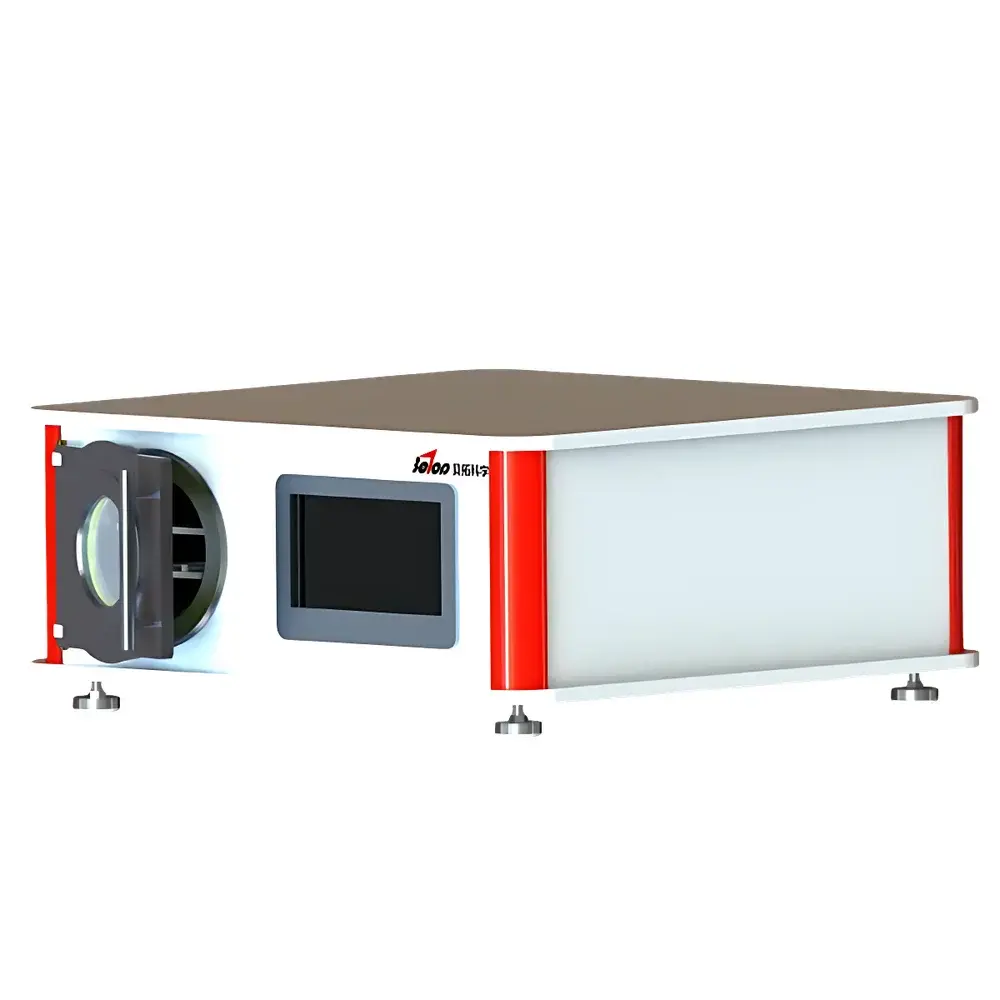
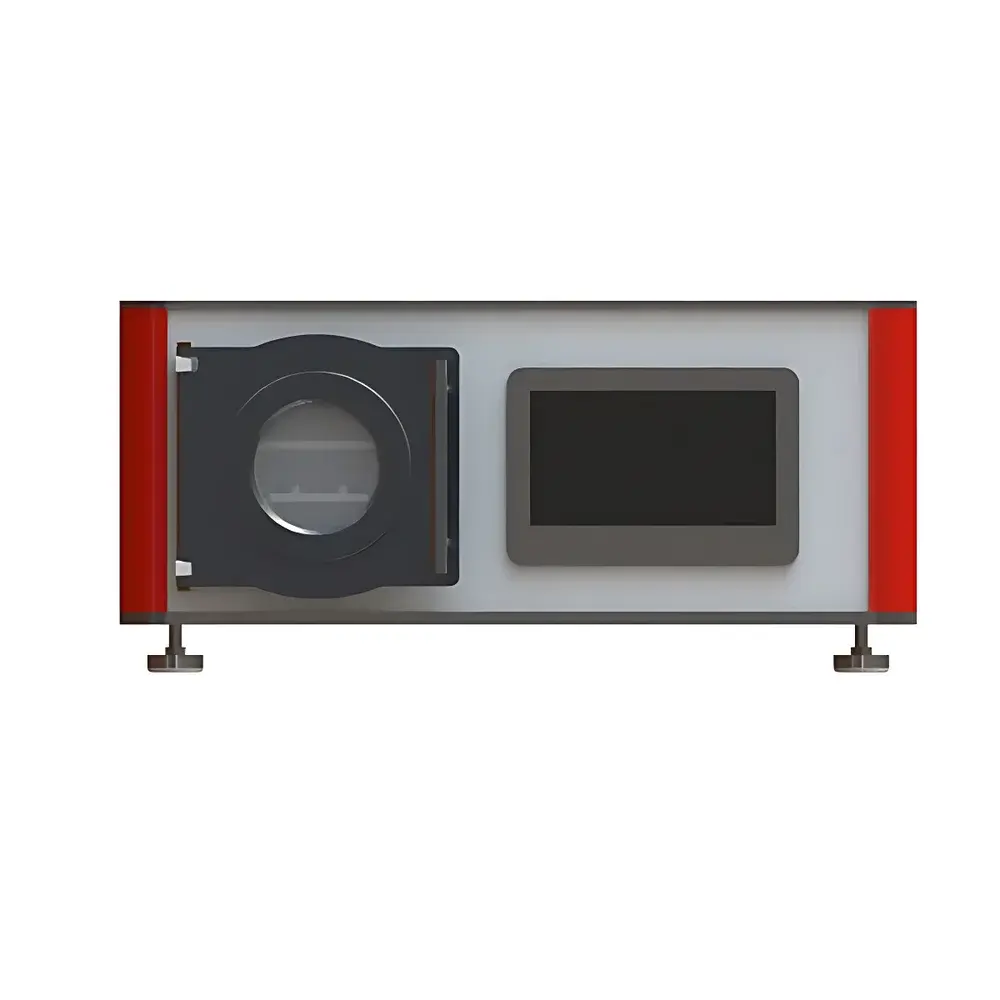
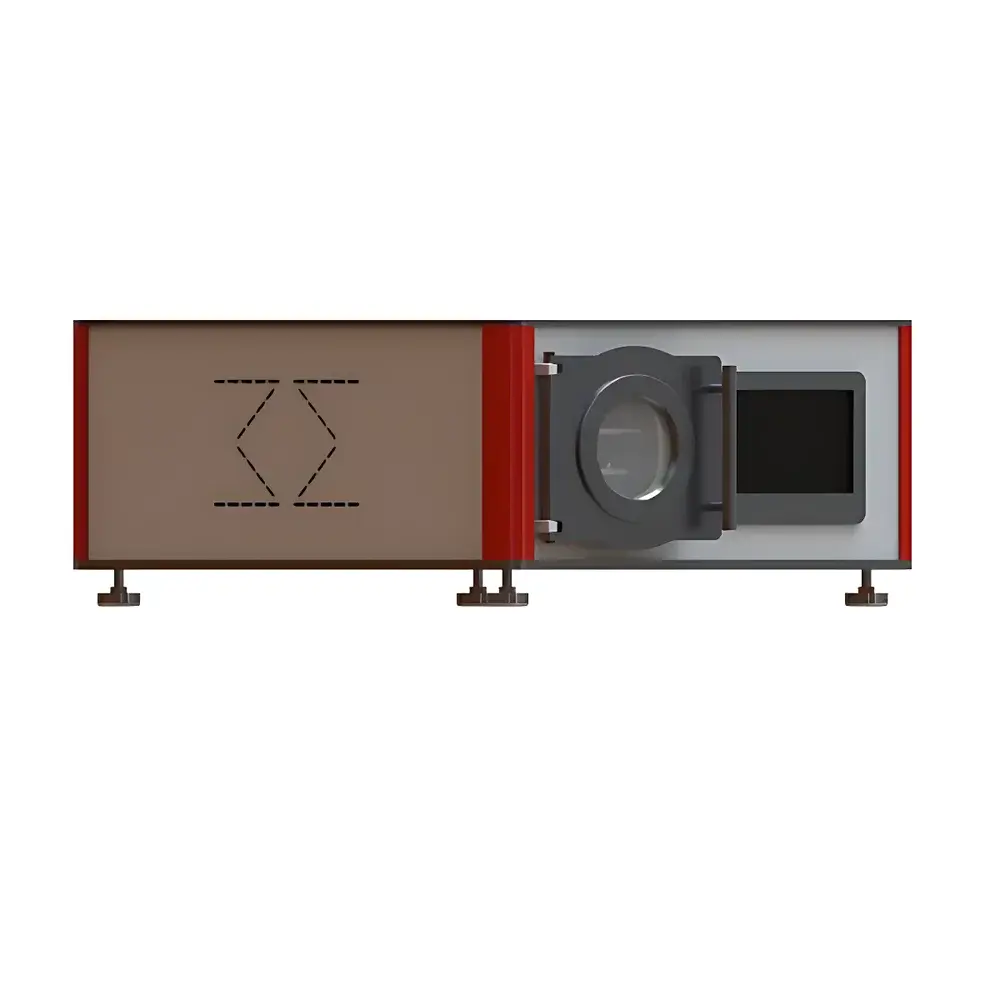
Betop Scientific VPC30M RF Plasma Cleaner
| Brand | Betop Scientific |
|---|---|
| Origin | Guangdong, China |
| Manufacturer Type | Direct Manufacturer |
| Country of Origin | China |
| Model | VPC30M |
| Instrument Type | Domestic RF Plasma Cleaner |
| RF Frequency | 13.56 MHz |
| Power Output | 0–150 W (adjustable) |
| Chamber Volume | 2.4 L |
| Dimensions (W×D×H) | 50 × 54 × 24 cm |
| Chamber Material | 6061 Aluminum Alloy |
| Electrode Type | Parallel-Plate Flat Electrode with Water-Cooled Design |
| Working Gas | Single-Channel Controlled via Solenoid Valve & Float Flowmeter |
| Flow Rate Range | 0–500 mL/min (optional) |
| Flow Accuracy | ±1% FS |
| Operating Vacuum Range | 20–60 Pa |
| Ultimate Vacuum (No Load) | ≤0.5 Pa |
| Pump-Down Time (No Load) | ≤40 s |
| Venting Time | ≤20 s |
| Control Mode | Fully Automatic Touchscreen Interface with Preset Process Sequencing |
| Rated Power Consumption | 1 kW |
| Input Voltage | AC 220 V |
| Net Weight | ~48 kg |
Overview
The Betop Scientific VPC30M RF Plasma Cleaner is a benchtop vacuum plasma surface treatment system engineered for precision cleaning, surface activation, and functional modification of solid substrates under controlled low-pressure environments. It operates on the principle of capacitively coupled radio-frequency (CCRF) plasma generation at 13.56 MHz — an ISM band frequency widely adopted in industrial and research-grade plasma systems for its stable energy coupling and minimal electromagnetic interference. In a dynamically evacuated chamber (20–60 Pa operating range), process gas — typically argon, oxygen, nitrogen, or forming gas — is ionized by RF power (0–150 W adjustable), generating a uniform, low-temperature plasma composed of reactive species (ions, electrons, radicals, and UV photons). Unlike thermal or chemical methods, this non-destructive, solvent-free process removes sub-monolayer organic contaminants, breaks C–H/C–C bonds, introduces polar functional groups (e.g., –OH, –COOH), and enhances surface energy without altering bulk material properties. Its design adheres to fundamental plasma physics constraints for reproducible sheath formation and uniform power deposition across the electrode gap.
Key Features
- Robust 6061 aluminum alloy vacuum chamber with integrated water-cooled parallel-plate electrodes — optimized for thermal stability and long-term RF impedance consistency
- Modular 13.56 MHz RF generator with automatic impedance matching network — ensures efficient power transfer across varying plasma loads and gas compositions
- Integrated float-type mass flow controller (0–500 mL/min, ±1% FS accuracy) with solenoid valve actuation — enables precise, repeatable gas dosing for process standardization
- Full-touch HMI interface with pre-programmable cleaning/activation protocols — supports user-defined time, power, gas type, and pressure profiles
- Fast-cycle vacuum architecture: ≤40 s pump-down and ≤20 s venting — minimizes idle time between sequential treatments
- Compliance-ready control architecture — supports audit trails, parameter locking, and operator-level access control for GLP/GMP-aligned workflows
Sample Compatibility & Compliance
The VPC30M accommodates substrates up to Ø100 mm (or equivalent planar area), including silicon wafers, glass slides, polymer films (PET, PDMS, PC), metal foils (Al, Cu, Ti), ceramic substrates, and biomedical devices. Its low-power, low-pressure operation prevents thermal damage or sputtering-induced surface roughening on temperature-sensitive or nanostructured materials. The system meets mechanical and electrical safety requirements per IEC 61010-1 and CE marking directives. While not certified to ISO 13485 or FDA 21 CFR Part 11 out-of-the-box, its data logging and parameter traceability features support validation under ISO 14644 (cleanroom-compatible operation), ASTM F2069 (plasma surface treatment of medical polymers), and IPC-CH-65B (printed circuit board cleaning standards).
Software & Data Management
The embedded control firmware records all critical process parameters — RF forward/reflected power, chamber pressure, gas flow rate, treatment duration, and timestamp — into a local CSV-accessible log file. Optional Ethernet or USB export enables integration with laboratory information management systems (LIMS) or electronic lab notebooks (ELN). Process recipes can be password-protected and version-controlled; system events (e.g., vacuum failure, over-temperature alarm, RF arc detection) are logged with millisecond-resolution timestamps. Audit trail functionality satisfies basic ALCOA+ (Attributable, Legible, Contemporaneous, Original, Accurate, Complete, Consistent, Enduring, Available) principles required for regulated R&D environments.
Applications
- Pre-bonding surface activation of PDMS, PMMA, and polyimide for microfluidic device fabrication
- Removal of photoresist residuals and organic residues from semiconductor wafers prior to metallization or ALD
- Enhancement of adhesion strength in fiber-reinforced composites and printed electronics substrates
- Hydrophilization of hydrophobic membranes for filtration performance calibration
- Sterilization of reusable surgical tools via oxidative plasma species (O•, OH•) without thermal degradation
- Surface reduction of native oxides on copper or silver films for improved interfacial conductivity
- Controlled etching of thin polymer layers for nanoscale pattern transfer in soft lithography
FAQ
What gases are compatible with the VPC30M?
Argon, oxygen, nitrogen, air, and forming gas (N₂/H₂) are routinely used. Gas selection depends on the desired surface chemistry: O₂ for oxidation/ashing, Ar for physical sputtering, N₂ for amine-group incorporation.
Can the VPC30M handle fragile or high-aspect-ratio samples?
Yes — its low-power RF mode (≤50 W) and absence of high-energy ions minimize mechanical stress and charging effects, making it suitable for MEMS devices, OLED substrates, and porous scaffolds.
Is vacuum pump included?
No — the VPC30M requires an external two-stage rotary vane or dry scroll vacuum pump capable of reaching ≤0.5 Pa base pressure and sustaining ≥20 L/min pumping speed at 20 Pa.
How is process repeatability ensured across multiple users?
Through recipe-based automation, calibrated flow/pressure sensors, and real-time RF power monitoring — eliminating manual knob adjustments and subjective endpoint judgment.
Does the system support remote monitoring or integration with SCADA?
Standard configuration includes RS232/USB communication; optional Modbus TCP or OPC UA gateway modules enable factory-floor integration and centralized process supervision.



