
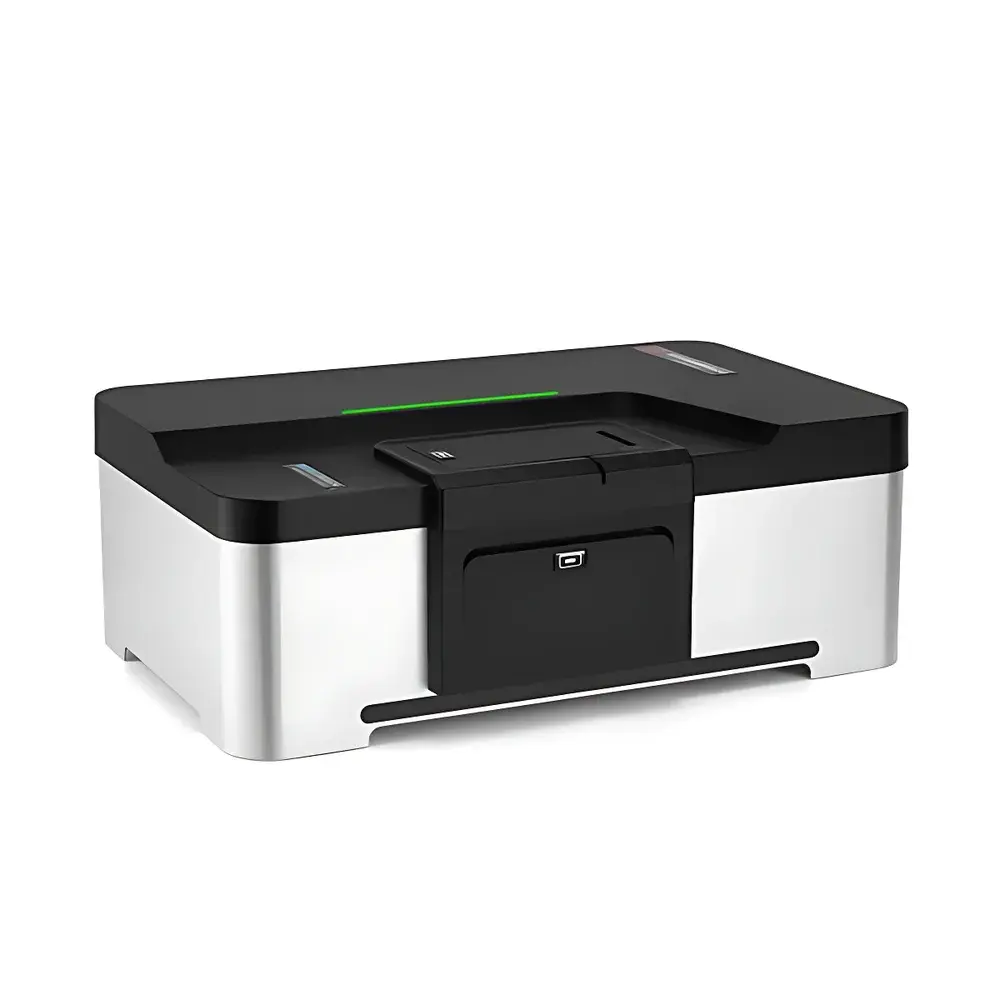
Bettersize BeNano Zeta Electrophoretic Light Scattering (ELS) Zeta Potential Analyzer
| Brand | Bettersize |
|---|---|
| Origin | Liaoning, China |
| Manufacturer | Bettersize Instruments Co., Ltd. |
| Model | BeNano Zeta |
| Particle Size Range | 1 nm – 120 µm |
| Temperature Control Range | −15°C to 120°C |
| Temperature Stability | ±0.1°C |
| Zeta Potential Measurement Range | No practical limitation |
| Electrophoretic Mobility Range | > ±20 µm·cm/V·s |
| Conductivity Range | 0 – ≥270 mS/cm |
| Laser Wavelength | 671 nm (solid-state laser, optional wavelengths available) |
| Detection Angle | 12° |
| Correlator | Multi-mode (fast/medium/slow), 25 ns minimum sampling interval, up to 4000 channels, 10¹¹ dynamic linear range |
| Detector | APD |
| Intensity Control | 0.0001% – 100%, auto/manual |
| Measurement Principle | Phase Analysis Light Scattering (PALS) |
Overview
The Bettersize BeNano Zeta Electrophoretic Light Scattering (ELS) Zeta Potential Analyzer is a high-precision optical instrument engineered for the quantitative determination of electrophoretic mobility and derived zeta potential in colloidal dispersions and nanoparticle suspensions. It operates on the principle of Phase Analysis Light Scattering (PALS), a refined variant of electrophoretic light scattering (ELS), which enables superior resolution and sensitivity—particularly for low-mobility or highly conductive samples. In PALS mode, a modulated electric field is applied across the sample cell, inducing directional particle motion; the resulting Doppler shift in scattered light—detected at a fixed 12° angle—is converted into phase shift data via real-time correlation analysis. This approach delivers enhanced signal-to-noise ratio and robustness against multiple scattering artifacts compared to conventional frequency-domain ELS. The system is designed for rigorous physical property characterization in R&D, QC, and formulation development laboratories where colloidal stability, surface charge behavior, and interfacial interactions are critical performance indicators.
Key Features
- Wide operational temperature range from −15°C to 120°C with ±0.1°C thermal stability, enabling controlled studies of temperature-dependent zeta potential trends and accelerated stability screening.
- No practical lower or upper limit on measurable zeta potential magnitude—validated across diverse systems including polyelectrolytes, liposomes, metal oxides, and biological nanoparticles.
- Extended conductivity tolerance up to ≥270 mS/cm, supporting measurements in high-salt formulations, biological buffers, and industrial process streams without dilution.
- Integrated solid-state 671 nm laser source with optional wavelength variants for optimized scattering efficiency across varied refractive index contrasts.
- High-dynamic-range digital correlator (10¹¹ linear range, 4000 channels, 25 ns minimum sampling) ensures accurate resolution of broad electrophoretic mobility distributions.
- Automated intensity control (0.0001%–100%) and adaptive signal processing minimize operator bias and enhance measurement reproducibility across heterogeneous samples.
Sample Compatibility & Compliance
The BeNano Zeta accommodates aqueous and non-aqueous dispersions across a broad particle size spectrum—from sub-nanometer macromolecules (e.g., proteins, dendrimers) to micron-scale emulsion droplets and agglomerates (1 nm – 120 µm). Its compatibility with high-conductivity media and wide pH tolerance supports regulatory-compliant testing under physiologically relevant or industrially representative conditions. When configured with the optional BAT-1 automated titrator, the system performs GLP-aligned pH-, time-, and temperature-resolved zeta potential profiling—fully traceable via audit trail-enabled software. All measurement protocols align with ISO 13099-2:2012 (Colloidal systems — Methods for determining zeta-potential — Part 2: Optical methods) and ASTM D7825-14 (Standard Test Method for Zeta Potential of Nanoparticles in Aqueous Media). Data integrity meets FDA 21 CFR Part 11 requirements when deployed with validated software configurations and electronic signature workflows.
Software & Data Management
Control and analysis are performed using BeNano Studio—a modular, Windows-based platform supporting instrument calibration, method definition, real-time monitoring, and advanced statistical reporting. The software provides native support for multi-parameter trend analysis (zeta vs. pH, temperature, time), distribution deconvolution (intensity-, volume-, and number-weighted zeta histograms), and export to CSV, PDF, or XML formats compliant with LIMS integration. Audit trails record all user actions, parameter changes, and raw correlator data with timestamps and operator IDs. For regulated environments, optional 21 CFR Part 11 modules provide electronic signatures, role-based access control, and immutable data archiving. Raw correlation functions and phase spectra are stored for retrospective reanalysis, ensuring full traceability from acquisition to final report.
Applications
- Formulation optimization of drug delivery systems (liposomes, polymeric nanoparticles, micelles) through zeta-pH titration and stability mapping.
- Quality control of pigment dispersions, ceramic slurries, and battery electrode materials to ensure batch-to-batch charge consistency.
- Surface modification verification—e.g., quantifying charge reversal after silane or PEG grafting on silica or gold nanoparticles.
- Colloidal stability prediction via zeta potential thresholds (±30 mV) combined with IUS (Instability Index) from co-deployed BeScan stability analyzers.
- Environmental nanomaterial risk assessment, including fate and transport modeling based on surface charge behavior in natural waters.
- Academic research in soft matter physics, interfacial electrochemistry, and polymer colloids requiring high-fidelity electrophoretic mobility data.
FAQ
What is the minimum particle size detectable for zeta potential measurement?
The theoretical lower detection limit is governed by Brownian motion dominance rather than instrument optics; reliable zeta potential data have been obtained for molecules as small as 1 nm (e.g., globular proteins) under optimized buffer conditions.
Can the BeNano Zeta measure samples with high salt content?
Yes—the system supports conductivity up to ≥270 mS/cm without signal saturation or electrode polarization artifacts, making it suitable for physiological saline, seawater analogs, and industrial electrolyte solutions.
Is the 12° detection angle fixed or adjustable?
The 12° geometry is fixed and optimized for maximum phase sensitivity in PALS mode; angular variation is not supported, as it would compromise the phase-based signal fidelity central to the technique.
How does the BeNano Zeta integrate with the BAT-1 automatic titrator?
The BAT-1 connects via USB/RS232 and is fully synchronized within BeNano Studio; it executes pre-programmed acid/base addition sequences while triggering concurrent zeta and size measurements, with full metadata logging for each titration step.
Does the system comply with ISO or ASTM standards for zeta potential reporting?
Yes—measurements adhere to ISO 13099-2:2012 and ASTM D7825-14; validation reports and uncertainty budgets are available upon request for method transfer and regulatory submissions.



