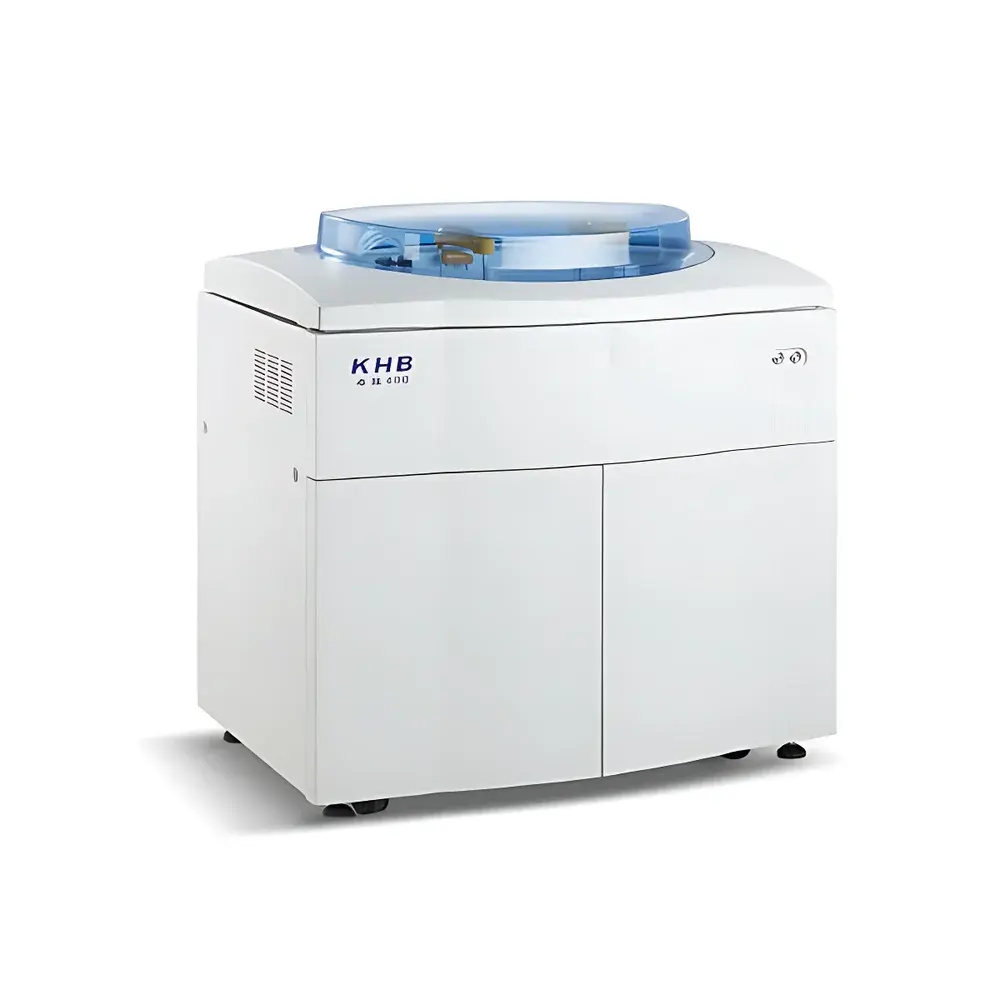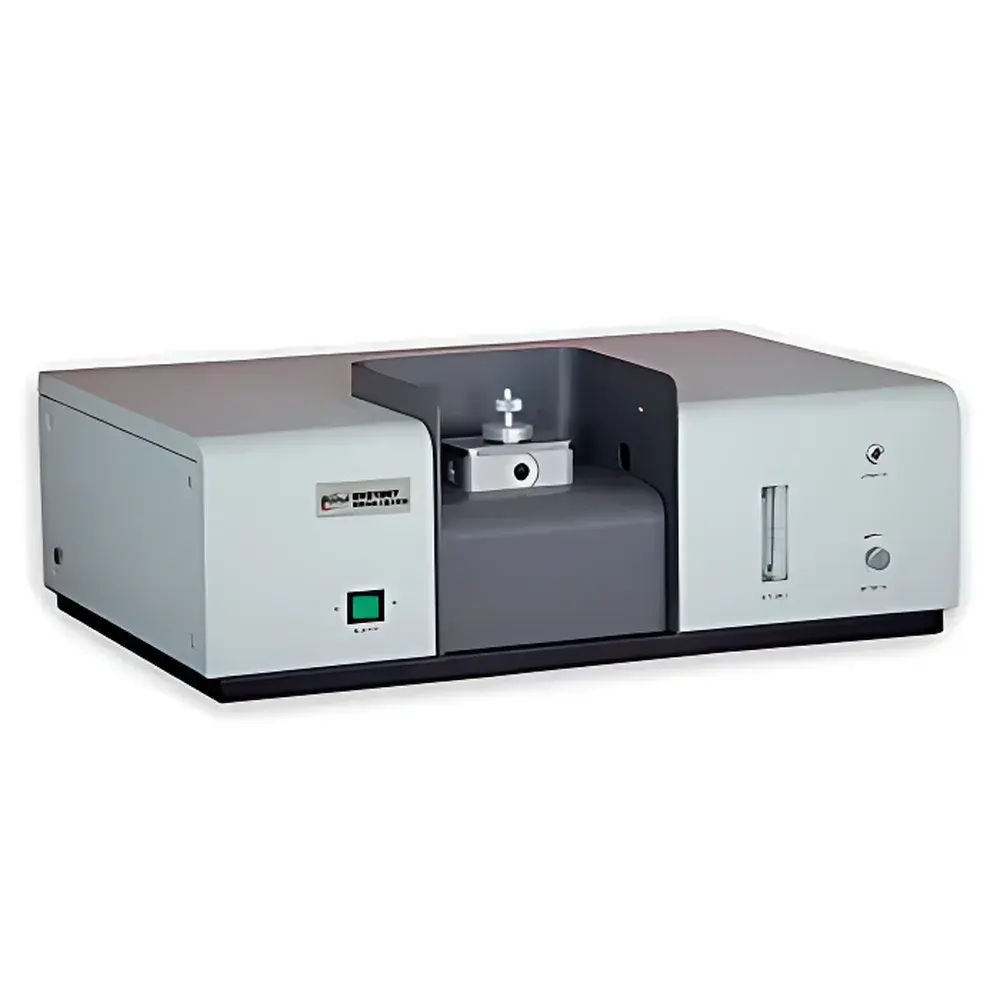
BH2100T Tungsten-Boat Atomic Absorption Spectrometer
| Brand | Bohui Innovation |
|---|---|
| Origin | Beijing, China |
| Model | BH2100T |
| Absorbance Range | 0–2 Abs |
| Wavelength Range | 190–650 nm |
| Baseline Stability | ≤0.009 A (after 30-min preheat, 20-min measurement) |
| Sensitivity (Pb) | ≥0.055 Abs at ≤50 µL |
| Sensitivity (Cd) | ≥0.025 Abs at ≤50 µL |
| Precision (Pb/Cd) | ≤4.5% (Abs > 0.1) |
| Background Correction Capacity | >30× at ~1.0 Abs background |
| Measurement Mode | Dual-channel simultaneous detection |
| Power Input | 500 VA, AC 220 V ±10%, 50 Hz ±1 Hz |
| Dimensions | 782 × 560 × 338 mm |
| Operating Environment | 10–30 °C, 0.070–0.106 MPa, vibration-free, non-corrosive, low-EMI |
Overview
The BH2100T Tungsten-Boat Atomic Absorption Spectrometer is a dedicated clinical instrument engineered for rapid, reliable quantification of toxic heavy metals—specifically lead (Pb) and cadmium (Cd)—in whole blood samples. It operates on the principle of electrothermal atomic absorption spectroscopy (ETAAS), utilizing a tungsten boat atomizer to achieve controlled, high-temperature pyrolysis and atomization of microvolume biological specimens (as low as 40 µL). In this process, analyte elements are thermally volatilized into ground-state free atoms within an inert argon atmosphere; these atoms absorb characteristic radiation emitted by element-specific hollow cathode lamps (e.g., Pb 283.3 nm, Cd 228.8 nm). The resulting absorbance is measured photometrically and converted into quantitative concentration values using calibrated calibration curves. Designed exclusively for clinical toxicology screening, the BH2100T meets the functional requirements of point-of-care and reference laboratory environments where turnaround time, reproducibility, and regulatory traceability are critical.
Key Features
- Tungsten boat atomization system: Constructed from high-purity tungsten, the boat-shaped furnace enables rapid thermal ramping (up to 2800 °C), low power consumption (500 VA), and inherent resistance to oxidation—eliminating the need for external water cooling.
- Integrated high-precision temperature control: Multi-stage programmable heating (drying, pyrolysis, atomization, cleaning) ensures optimal thermal conditions for each step, minimizing matrix interference and maximizing analytical accuracy.
- Argon gas flow regulation: Precisely metered inert purge gas protects the tungsten surface during atomization, suppresses molecular background absorption, and extends consumable lifetime.
- High-temperature oxygen ashing: Automated post-analysis oxygen injection combusts residual organic carbon deposits, maintaining consistent atomization efficiency across sequential runs.
- Self-reversal background correction: A single-beam, same-optical-path design enables robust background subtraction without mechanical moving parts—delivering high signal-to-noise ratio and excellent precision (RSD ≤4.5% for Pb/Cd at Abs > 0.1).
- Dual-channel simultaneous detection: Independent photomultiplier detection channels allow concurrent measurement of Pb and Cd in one sample aspiration cycle—reducing total assay time to under 3 minutes per specimen.
- Open-access sample introduction: Large-diameter sampling port simplifies manual pipetting and supports seamless integration with optional robotic autosamplers (RSD <1%).
Sample Compatibility & Compliance
The BH2100T is validated for use with anticoagulated whole blood (EDTA-K₂ or heparin), requiring only 40 µL per analysis. Its method performance aligns with clinical laboratory quality standards including CLIA ’88 analytical validity criteria and ISO 15197:2013 principles for quantitative in vitro diagnostic devices. While not FDA 510(k)-cleared for U.S. clinical use, the instrument complies with IEC 61010-1:2010 safety requirements (Overvoltage Category II) and electromagnetic compatibility per IEC 61326-1:2020. Its software architecture supports audit-trail-enabled data handling suitable for GLP-compliant workflows. Regulatory documentation includes China NMPA registration certificate No. Jing Yao Jian Xie (Zhun) Zi 2011 Di 2400259 Hao.
Software & Data Management
The BH2100T is operated via dedicated Windows-based clinical software featuring intuitive workflow navigation, real-time spectral visualization, and automated calibration curve generation. All raw absorbance data, method parameters, instrument logs, and user actions are timestamped and stored in a secure local database. Reporting modules generate printable PDF reports compliant with ISO/IEC 17025 documentation requirements—including patient ID, sample ID, test date/time, operator ID, calibration verification status, and result uncertainty estimates. Data export supports CSV and XML formats for LIS/HIS integration. Software validation documentation (IQ/OQ/PQ protocols) is available upon request for GxP-regulated installations.
Applications
Primary applications include pediatric and occupational blood lead level (BLL) monitoring, environmental exposure assessment, and cadmium toxicity screening in high-risk populations (e.g., battery manufacturing workers, e-waste recyclers). The system supports public health surveillance programs requiring high-throughput, low-volume analysis with minimal reagent consumption. Its robustness and ease of operation make it suitable for decentralized laboratories in resource-constrained settings where refrigerated storage or complex maintenance infrastructure is unavailable.
FAQ
What sample volume is required for accurate Pb and Cd quantification?
A minimum of 40 µL of EDTA-anticoagulated whole blood is sufficient for dual-element analysis.
Does the BH2100T require water cooling or external gas cylinders?
No—tungsten boat design eliminates water cooling; argon supply is provided via standard compressed gas cylinder with pressure regulator.
Can the instrument be integrated into a hospital LIS?
Yes—bidirectional HL7 v2.x and ASTM E1384-compliant interfaces are supported via optional configuration.
What is the typical lifetime of the tungsten boat under routine clinical use?
With proper argon flow and periodic oxygen ashing, average service life exceeds 300 analyses per boat.
Is method validation support available for regulatory submissions?
Comprehensive validation kits—including linearity, LOD/LOQ, carryover, and inter-day precision protocols—are provided with instrument delivery.