
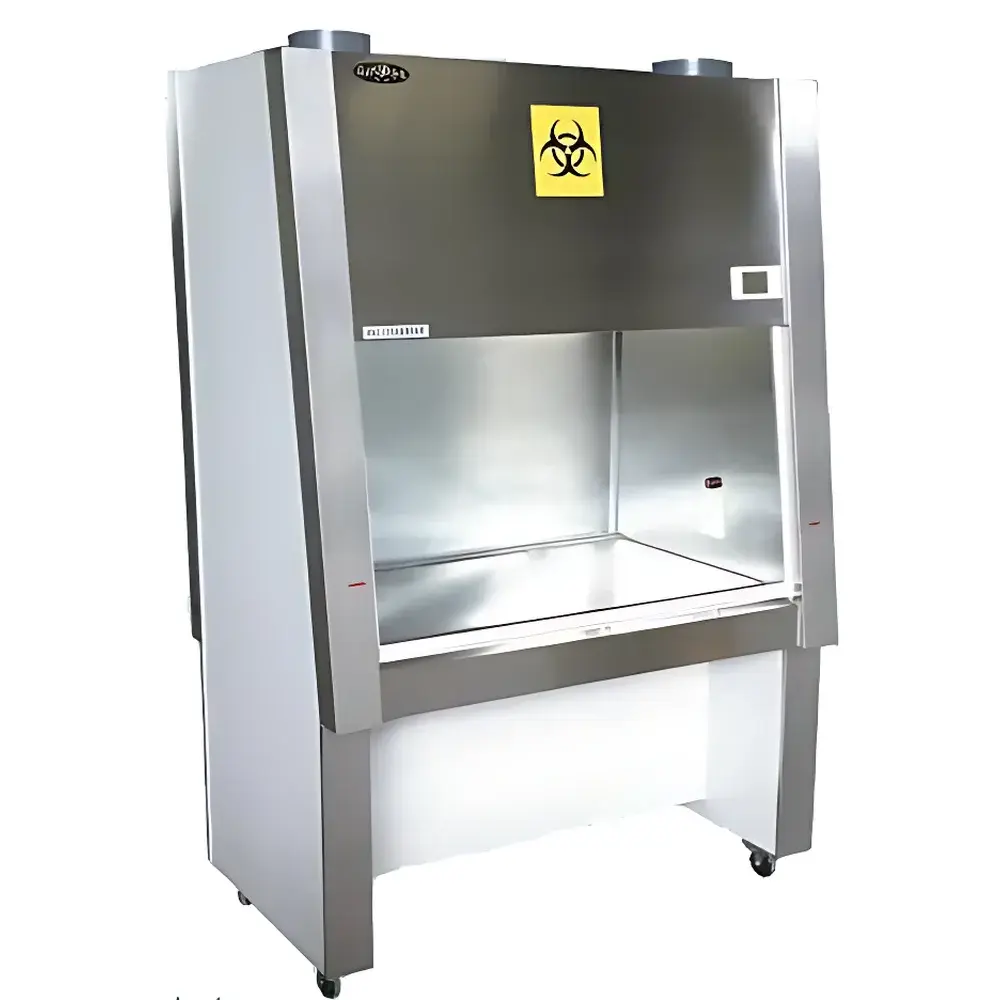
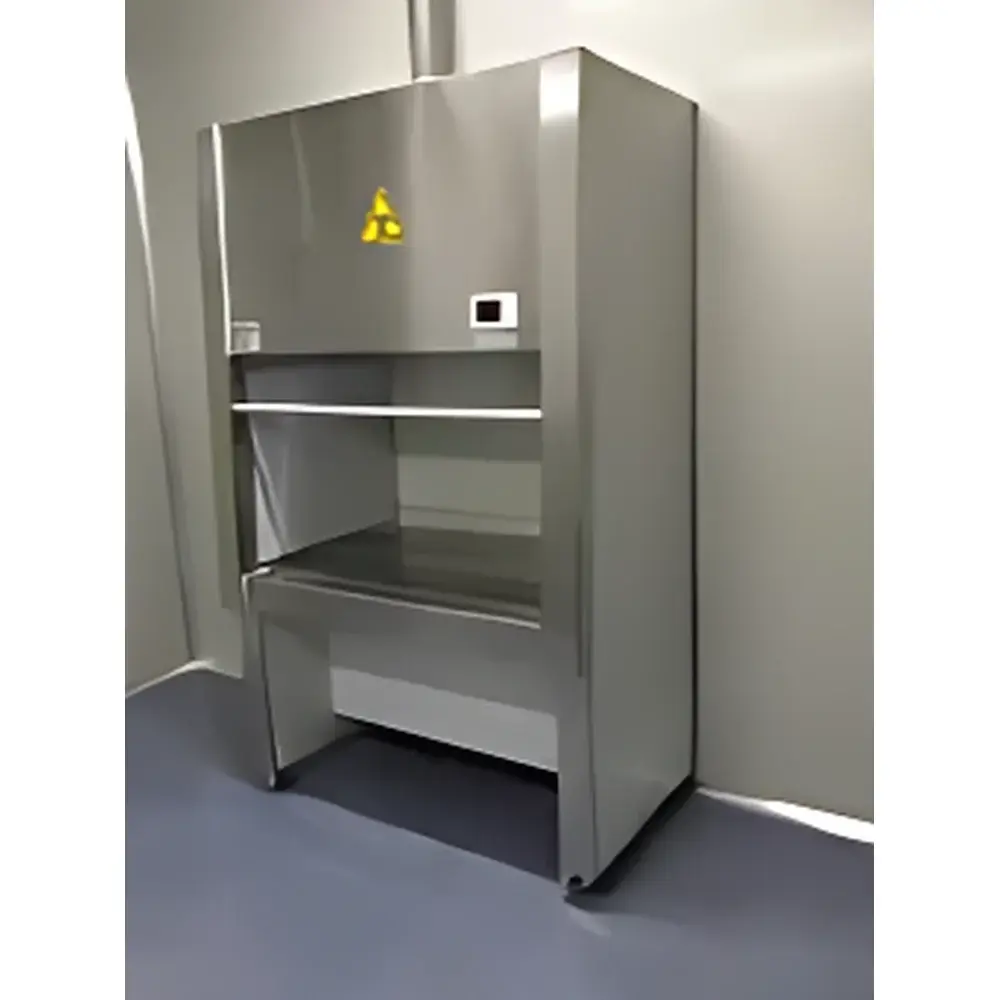
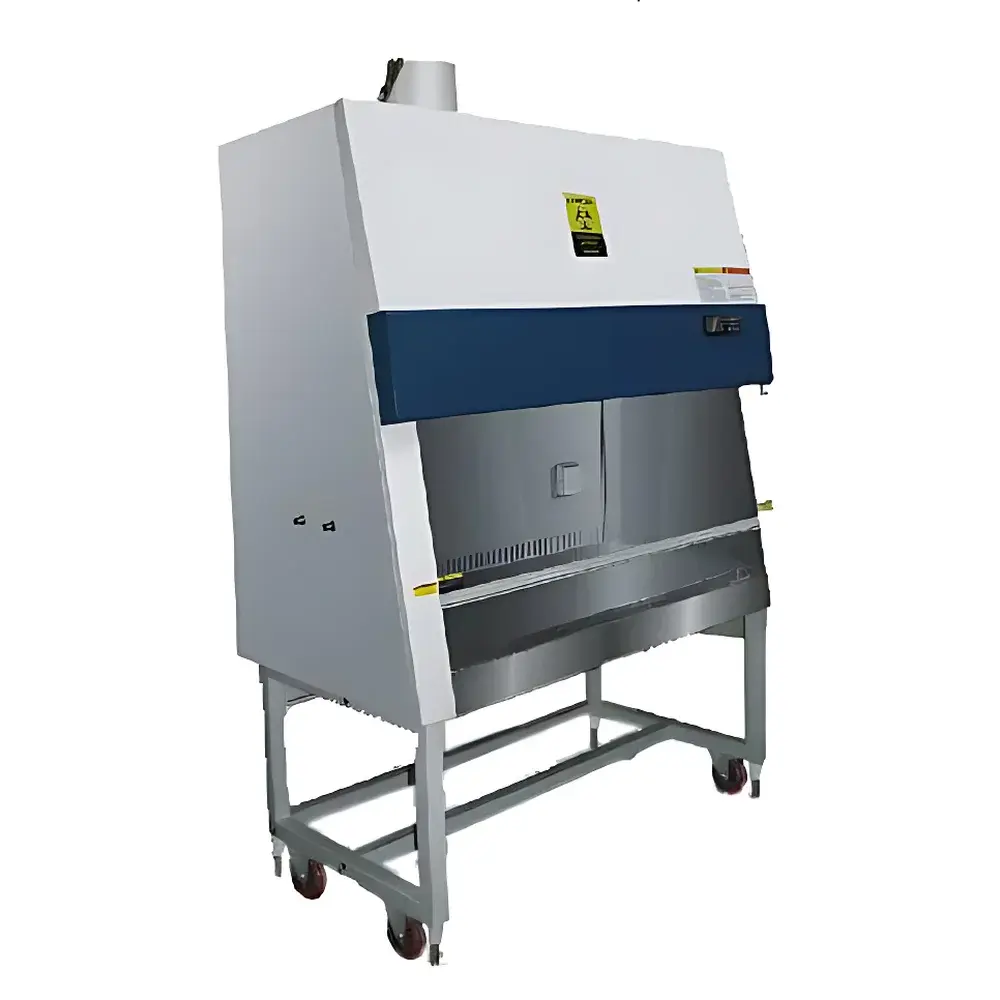
BHC-1000IIA2 Class II Type A2 Biological Safety Cabinet
| Origin | Zhejiang, China |
|---|---|
| Manufacturer Type | Authorized Distributor |
| Product Origin | Domestic (China) |
| Model | BHC-1000IIA2 |
| Price | USD 4,200 (FOB) |
| Cabinet Class | Class II, Type A2 |
| External Dimensions (L×W×H) | 1200 × 780 × 1950 mm |
| Internal Work Area (L×W×H) | 1000 × 700 × 680 mm |
| HEPA Filter Efficiency | ≥99.99% @ 0.3 µm (EN 1822-1 |
| Inflow Velocity | 0.35 ± 0.025 m/s |
| Downflow Velocity (Center) | 0.26 ± 0.025 m/s |
| Downflow Velocity (Rear) | 0.27 ± 0.025 m/s |
| Side Airflow Velocity | 0.38 ± 0.025 m/s |
| Air Leakage Rate | ≤1×10⁻⁶ m/s @ 500 Pa |
| Sound Pressure Level | ≤62 dB(A) |
| Vibration Amplitude (Half-Peak) | ≤5 µm |
| Illumination | ≥300 lux |
| Power Supply | AC 220 V, 50 Hz, Single Phase |
| Power Consumption | 0.6 kW |
| Net Weight | <200 kg |
| HEPA Filter Size & Qty | 995 × 600 × 38 mm × 1 |
| Fluorescent Lamp / UV Lamp | 20 W × 1 / 20 W × 1 |
Overview
The BHC-1000IIA2 Class II Type A2 Biological Safety Cabinet is engineered for reliable personnel, product, and environmental protection during manipulations of Risk Group 1–2 biological agents and low-to-moderate-risk recombinant DNA materials. Operating on the principle of laminar downflow combined with inward front airflow, it maintains a negative-pressure work chamber isolated from the laboratory environment via dual HEPA filtration—70% of recirculated air passes through a supply HEPA filter, while 30% is exhausted externally after passing through a second HEPA filter. This configuration complies with NSF/ANSI 49-2022 and EN 12469:2000 standards for Type A2 cabinets, ensuring containment integrity under normal operating conditions and during minor procedural deviations. The cabinet’s structural design incorporates seamless stainless steel work surfaces, double-walled construction with insulated airflow plenums, and a fully sealed sash assembly to prevent cross-contamination and maintain consistent aerodynamic stability.
Key Features
- Class II, Type A2 certified airflow architecture with independent inflow and downflow velocity control, validated per NSF/ANSI 49 and EN 12469 test protocols
- Single-piece 304 stainless steel work surface and monolithic inner chamber with radiused corners for seamless decontamination
- Dual-stage HEPA filtration system: supply HEPA (99.99% @ 0.3 µm) and exhaust HEPA (same specification), both tested and certified per EN 1822-1
- Microprocessor-based control panel with real-time airflow monitoring, sash position sensing, UV lamp interlock, and filter life estimation algorithm
- Integrated UV germicidal lamp (254 nm, 20 W) with motion-sensing safety cutoff and timer function
- Front access sash with counterbalanced vertical lift mechanism and ergonomic stop positions (200 mm nominal working height)
- Low-noise centrifugal blower assembly with vibration-dampened mounting and acoustic insulation
- Compliance-ready documentation package including factory calibration report, airflow validation summary, and conformity declaration
Sample Compatibility & Compliance
The BHC-1000IIA2 supports a broad range of biosafety applications involving microbial cultures, primary cell lines, diagnostic specimens, and low-concentration viral vectors. It is suitable for use with non-volatile chemical agents at concentrations below OSHA PEL thresholds when compatible with stainless steel and HEPA media. The cabinet meets ISO 14644-1 Class 5 (Fed Std 209E Class 100) cleanroom performance requirements within the work area. Regulatory alignment includes NSF/ANSI 49-2022 (U.S.), EN 12469:2000 (EU), and GB/T 25135–2010 (China). It supports GLP-compliant workflows through audit-trail-capable operation logs and optional data export functionality. Note: For volatile organic compounds, radioactive isotopes, or high-hazard pathogens (RG3+), connection to dedicated ducted exhaust or supplemental local ventilation is required per institutional biosafety committee (IBC) directives.
Software & Data Management
The embedded controller provides continuous logging of operational parameters—including inflow/downflow velocities, sash height, UV exposure time, filter differential pressure, and runtime hours—with timestamped entries stored in non-volatile memory. Data export is supported via USB interface in CSV format for integration into LIMS or electronic lab notebooks (ELN). Optional firmware upgrade enables compliance with FDA 21 CFR Part 11 requirements, including user authentication, electronic signatures, and immutable audit trails for critical events (e.g., sash breach, airflow deviation >±10%, filter saturation alert). All system alerts are displayed on the LCD interface with multilingual support (English default) and configurable alarm thresholds.
Applications
- Handling of bacterial and fungal cultures in clinical microbiology and pharmaceutical QC labs
- Preparation of sterile cell culture reagents and transfection complexes in academic and biotech research settings
- Processing of human serum, CSF, and other diagnostic biospecimens under CLIA- and CAP-aligned protocols
- Safe manipulation of lentiviral and AAV vectors during preclinical gene therapy development
- Support of ISO 13485-certified medical device manufacturing processes requiring controlled microbial environments
- Integration into ISO/IEC 17025-accredited testing laboratories performing AOAC or USP <1117> compliant procedures
FAQ
What biosafety level (BSL) applications is the BHC-1000IIA2 rated for?
It is validated for BSL-1 and BSL-2 agents as defined by CDC/NIH Biosafety in Microbiological and Biomedical Laboratories (BMBL), 6th Edition.
Can this cabinet be used with volatile chemicals?
No—Type A2 cabinets are not designed for routine use with volatile toxic or corrosive chemicals; ducted Type B2 or hard-ducted Type A2 configurations are required per ANSI Z9.5 and local EH&S policies.
Is third-party certification included with purchase?
Yes—each unit ships with a factory-issued NSF/ANSI 49 compliance certificate and initial airflow verification report performed under ISO/IEC 17025-accredited conditions.
How often must the HEPA filters be replaced?
Filter service intervals depend on usage intensity and ambient air quality; typical replacement occurs every 3–5 years. The built-in filter life estimator calculates remaining service life based on cumulative runtime and pressure drop trends.
Does the cabinet support remote monitoring or IoT integration?
Standard configuration includes local USB data export; optional Ethernet-enabled controllers with Modbus TCP or MQTT support are available for enterprise-level building management system (BMS) integration.





