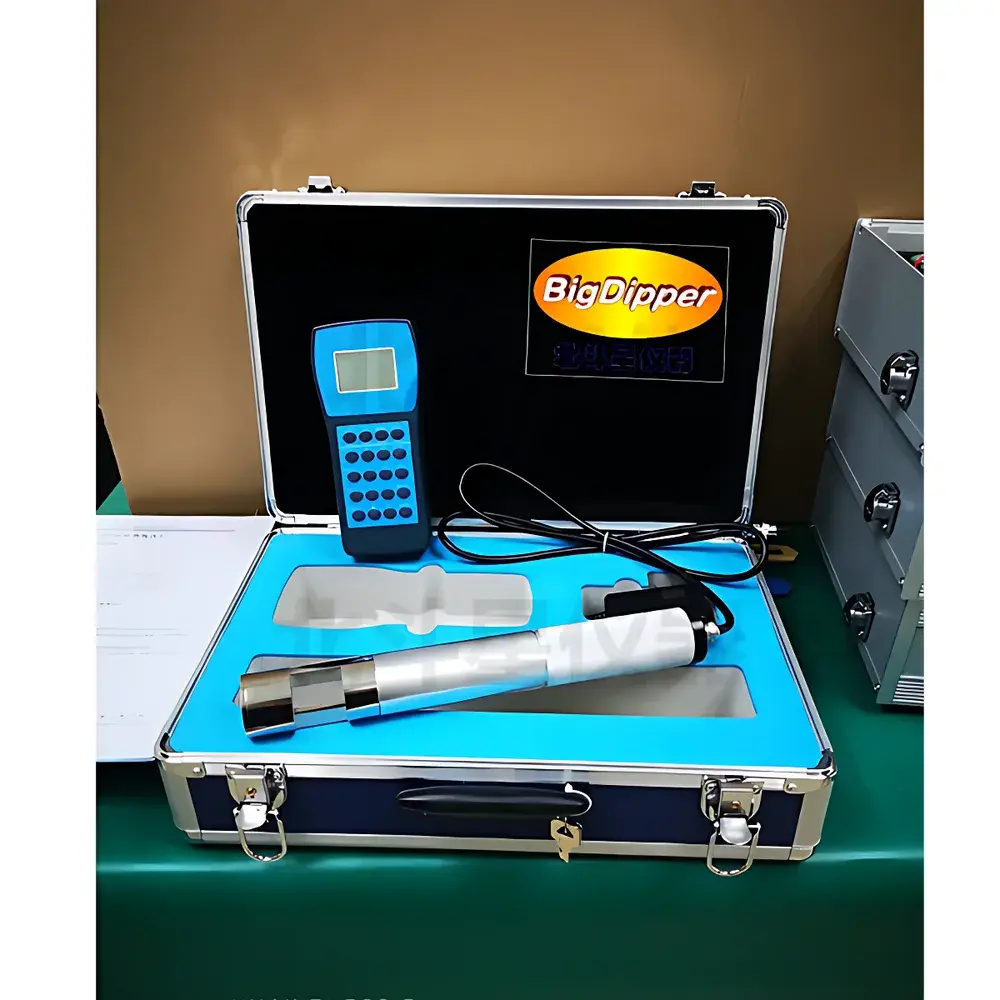
Bigdipper HBD5-Turb4210_90D Portable Turbidimeter
| Brand | Bigdipper |
|---|---|
| Origin | Beijing, China |
| Manufacturer Type | Manufacturer |
| Product Category | Domestic |
| Model | HBD5-Turb4210_90D |
| Price Range | USD 1,400–2,800 |
| Type | Portable |
| Measurement Range | 0–2000 FNU |
| Resolution | 1.0 FNU |
| Operating Temperature | −30 °C to +70 °C |
| Accuracy | ±2.0% of reading |
| Detection Principle | 90° Nephelometric Scattering (ISO 7027-compliant) |
| Display | 2×16 LCD |
| Keypad | 4×5 membrane keypad |
| Response Time | <1 ms |
| Power Supply | Rechargeable 9 V battery or external DC 9 V adapter |
| Battery Life | >10 hours continuous operation |
| Dimensions (H×W×D) | 180 mm × 98 mm × 35 mm |
| IP Rating | IP68 (fully submersible sensor probe) |
| Probe Interface | ZG1″ (BSPP) threaded fitting for in-line pipe insertion |
| Sample Compatibility | Clear to moderately turbid aqueous samples |
Overview
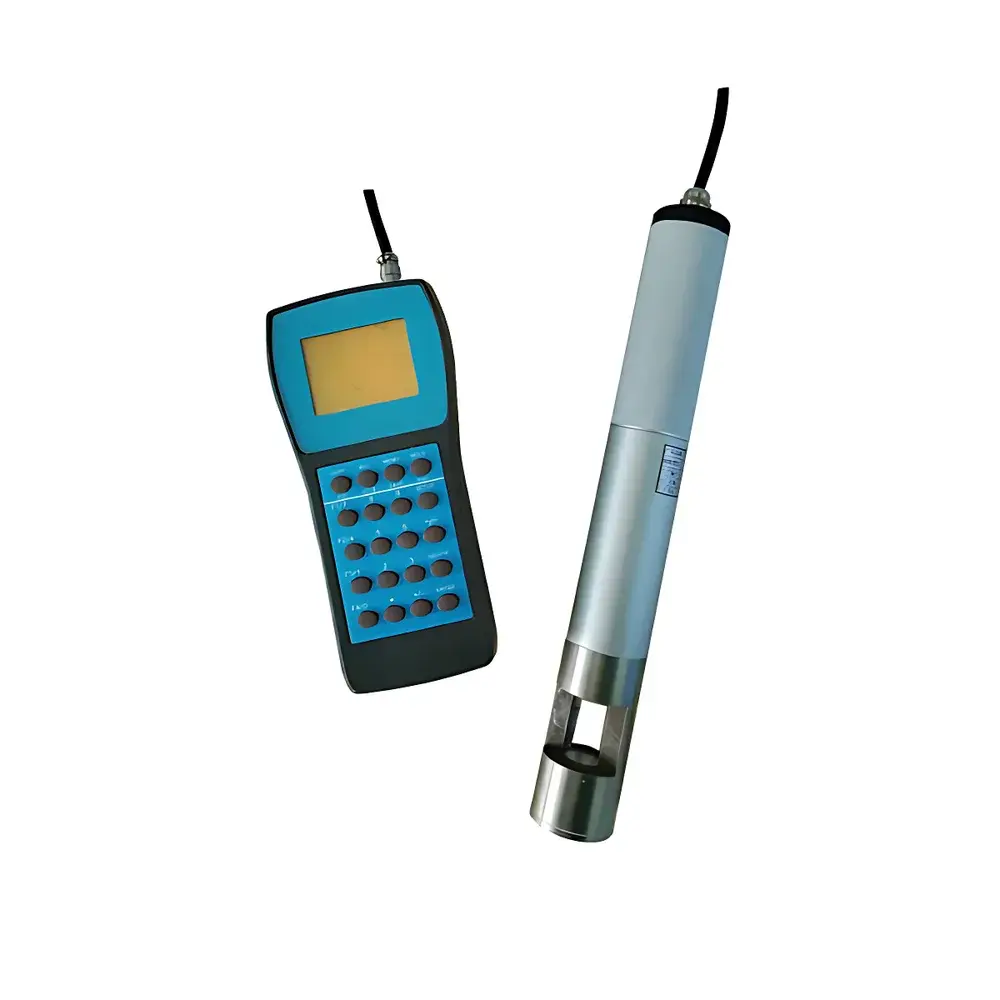
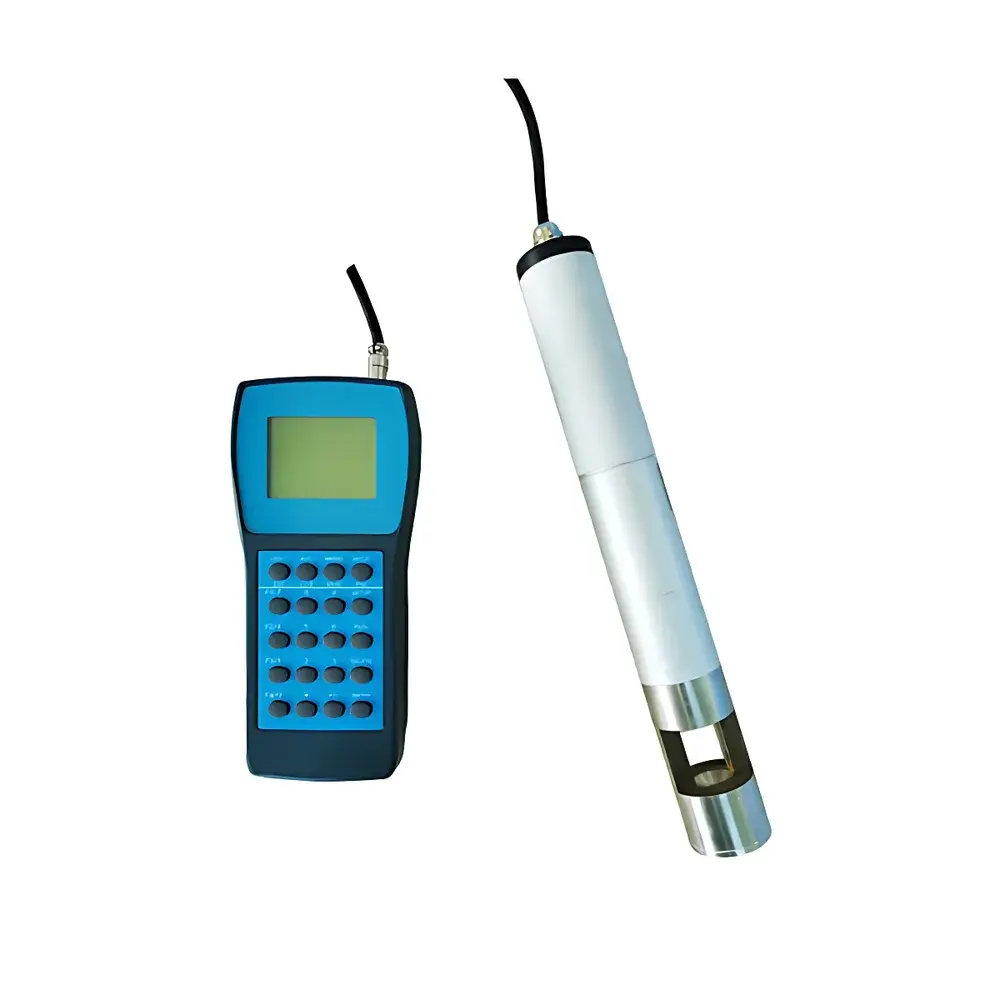
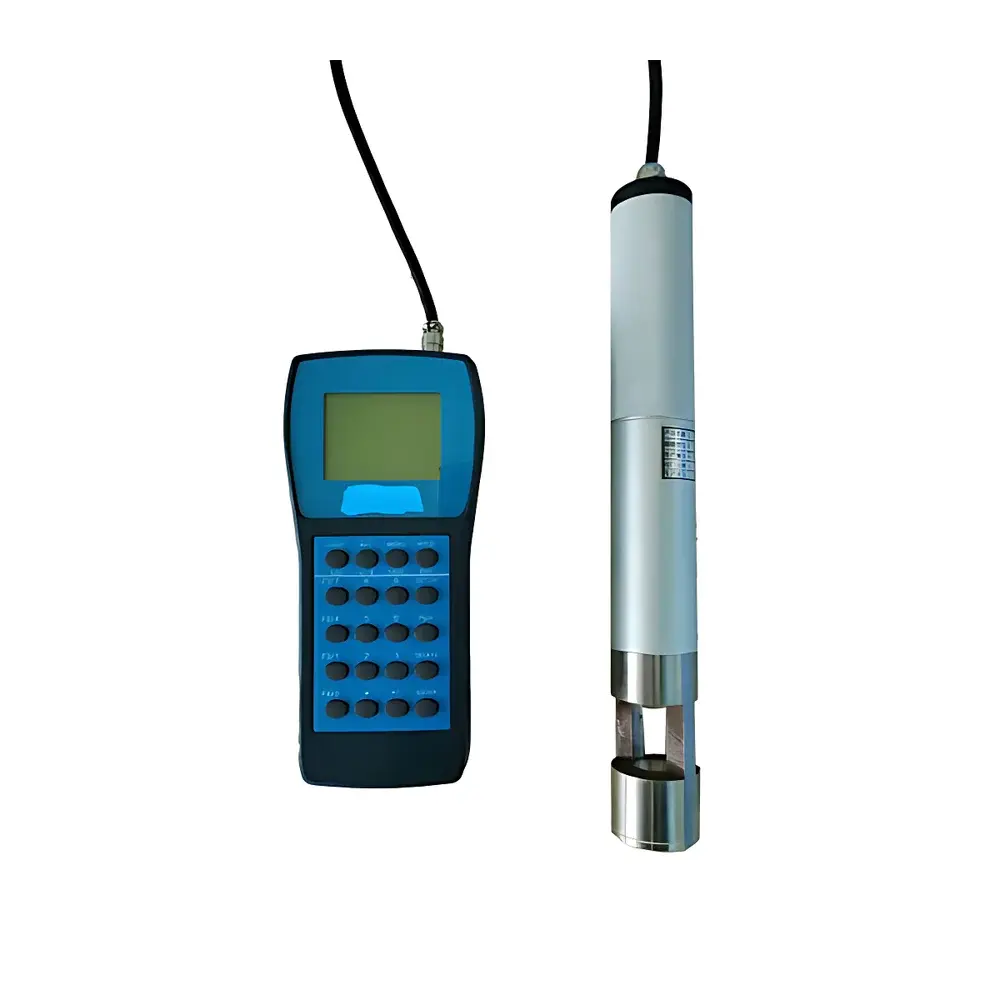
The Bigdipper HBD5-Turb4210_90D is a field-deployable, ISO 7027-compliant portable turbidimeter engineered for high-reproducibility nephelometric measurement of suspended solids in water and wastewater. It employs a calibrated 90° light scattering detection geometry using an 850 nm infrared LED source and precision photodiode detector—minimizing interference from color, dissolved organics, and ambient light. Unlike transmittance-based systems, this design ensures compliance with international standard methods for drinking water (e.g., US EPA Method 180.1, ISO 7027-1:2016) and municipal effluent monitoring. The instrument’s ruggedized architecture supports both handheld spot measurements and permanent in-situ deployment via its ZG1″ BSPP-threaded probe interface, enabling real-time monitoring in pipelines, clarifiers, distribution networks, and open-channel environments without flow interruption.
Key Features
- ISO 7027-1:2016 certified 90° nephelometric optical path with temperature-compensated 850 nm LED source
- IP68-rated submersible probe with full waterproofing—capable of continuous immersion up to 10 m depth
- ZG1″ (BSPP) threaded mechanical interface for direct insertion into pressurized pipes or reaction vessels
- Integrated 2×16 character LCD display with backlight and tactile 4×5 membrane keypad for glove-compatible operation
- Real-time response time <1 ms—optimized for dynamic process control and rapid field screening
- Onboard calibration memory stores up to three user-defined calibration points (including factory default)
- Auto-zero function with dry-cell reference compensation eliminates drift during extended deployments
- Low-power microcontroller architecture supporting >10 hours of continuous operation on rechargeable 9 V battery
Sample Compatibility & Compliance
The HBD5-Turb4210_90D is validated for use with potable water, groundwater, surface water, treated wastewater, industrial process water, and aquaculture effluents—provided samples contain no undissolved particulates exceeding 100 µm in diameter. Samples with coarse debris require pre-filtration through 100 µm mesh or ISO 5667-12-compliant sieving prior to analysis. The instrument meets GLP data integrity requirements: all measurements include timestamp, probe ID, temperature, and operator code (if enabled). Its optical configuration satisfies regulatory mandates under US EPA 40 CFR Part 136, ASTM D6508, and China’s HJ 1075-2019 standard for turbidity measurement in environmental monitoring. For GMP-regulated applications (e.g., pharmaceutical water systems), optional audit-trail firmware enables 21 CFR Part 11–compliant electronic records.
Software & Data Management
Data export is supported via USB-C serial interface compatible with Windows/Linux host systems. The included PC utility software (TurbView v3.2) provides batch calibration curve generation, statistical reporting (mean, SD, CV%), trend plotting, and CSV/Excel export. All raw readings are stored with metadata—including ambient temperature, battery voltage, and calibration validity flag—to support traceability per ISO/IEC 17025 Clause 7.7. Firmware updates are delivered via signed binary packages with SHA-256 verification. No cloud dependency: all processing occurs locally on the device or host PC to ensure data sovereignty and network isolation in secure facilities.
Applications
- Municipal water treatment: raw intake monitoring, coagulation/flocculation optimization, filter backwash endpoint detection, and finished water compliance verification
- Wastewater plants: activated sludge concentration profiling, return sludge turbidity tracking, and final effluent discharge verification against local NPDES limits
- Industrial process control: boiler feedwater clarity assurance, cooling tower suspended solids trending, and ceramic/cement plant wash-water recycling
- Environmental field studies: river sediment transport modeling, stormwater runoff characterization, and coastal salinity-turbidity correlation mapping
- Aquaculture and hydroponics: real-time plankton density estimation, feed dispersion efficiency assessment, and biofilter performance validation
- Regulatory sampling: EPA Region 9 field audits, EU WFD Article 5 reporting, and China’s “Blue Sky & Clear Water” campaign enforcement checks
FAQ
Is the probe compatible with pressurized water mains?
Yes—the ZG1″ BSPP thread and IP68-rated housing support continuous operation at pressures up to 10 bar (145 psi) when properly sealed with PTFE tape.
Can it measure seawater or brine solutions?
Yes, provided salinity does not exceed 50 g/L and particulate load remains within the 0–2000 FNU range; no correction factor required due to IR wavelength immunity to ionic absorption.
Does it require annual recalibration by an accredited lab?
No—field verification using NIST-traceable Formazin or AMCO-AE standards is sufficient per ISO 7027-2:2016; factory calibration remains valid for 24 months under normal use.
How is temperature compensation implemented?
An integrated Pt1000 RTD sensor adjacent to the optical cell provides real-time thermal correction across the full −30 °C to +70 °C operating range, referenced to ISO 7027 Annex B algorithms.
What maintenance is required for long-term reliability?
Quarterly inspection of O-ring integrity, monthly cleaning of the optical window with lint-free tissue and isopropanol, and annual verification of zero offset using dry-air purge.