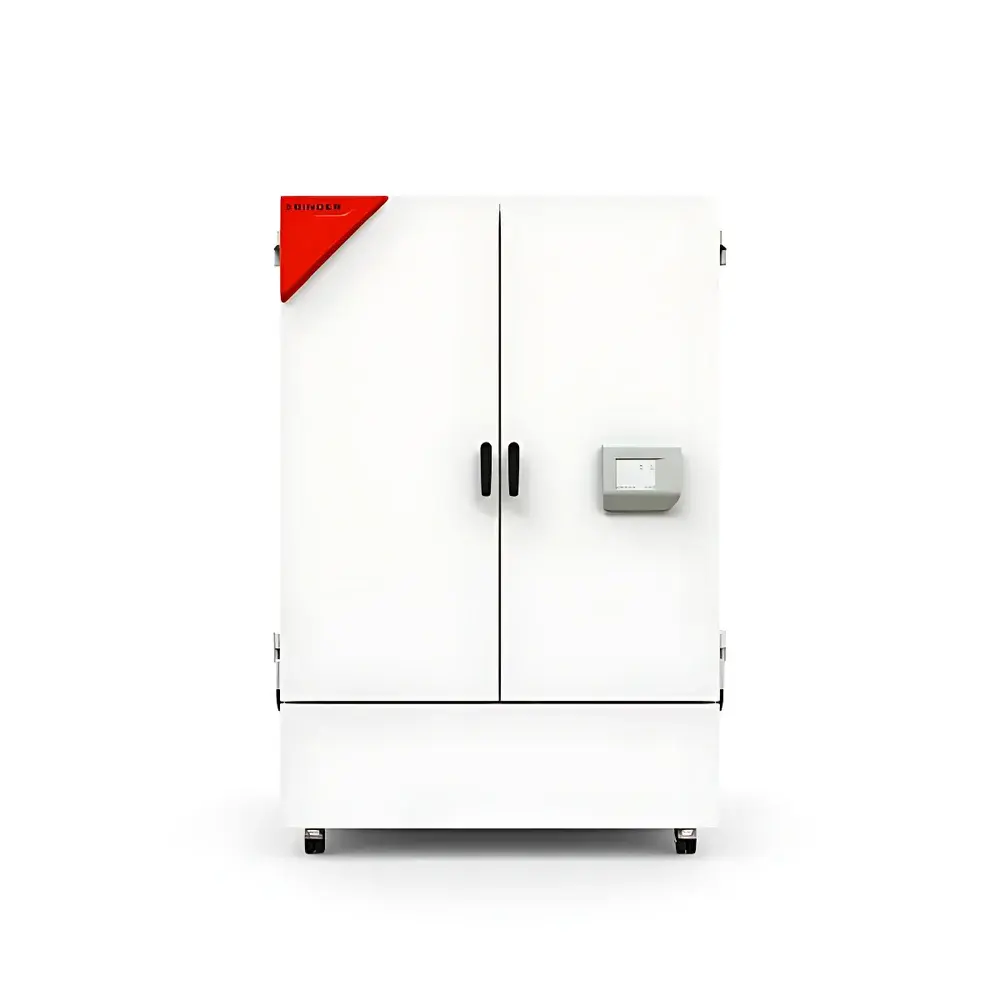
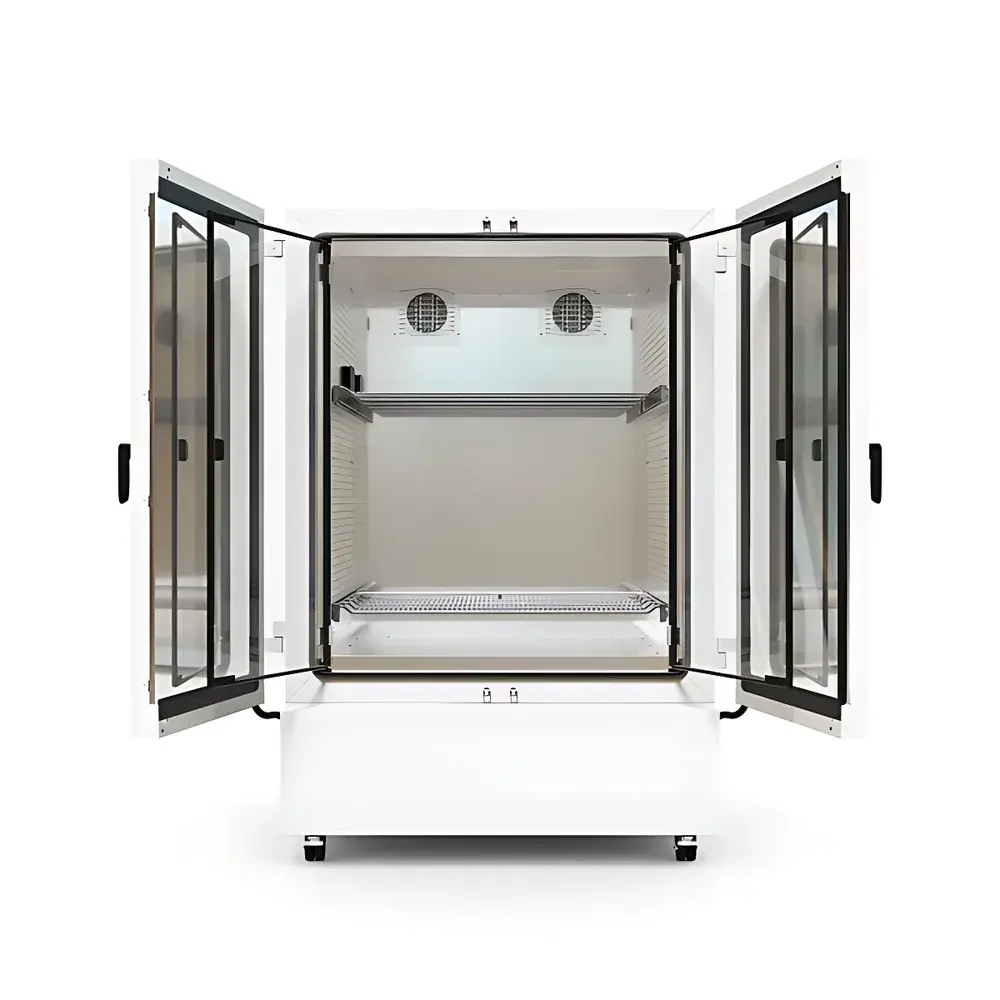
BINDER KB PRO 720 Low Temperature Incubator
| Brand | BINDER |
|---|---|
| Origin | Germany |
| Manufacturer | BINDER GmbH |
| Type | Imported Instrument |
| Model | KB PRO 720 |
| Cooling Method | Compressor-based refrigeration |
| Heating Method | Water-jacketed heating |
| Temperature Range | −20 °C to +100 °C |
| Temperature Stability | ±0.1 K |
| Temperature Uniformity | ±0.2 K (at 37 °C) |
| Chamber Volume | 727 L |
| External Dimensions (W × H × D) | 1285 mm × 1951 mm × 900 mm |
Overview
The BINDER KB PRO 720 Low Temperature Incubator is an engineered platform for precise, stable, and reproducible environmental control across life science, pharmaceutical, and regulatory-compliant research applications. Designed and manufactured in Germany, it integrates dual-mode thermal management—compressor-driven refrigeration coupled with water-jacketed heating—to deliver continuous, seamless operation from −20 °C to +100 °C. Its core architecture centers on the APT.line™ preheating chamber technology, which ensures rapid thermal equilibration and minimizes internal gradients during ramp-up or setpoint transitions. The stainless-steel interior chamber, combined with HIT (High Insulation Technology) double-wall construction, provides mechanical robustness, long-term corrosion resistance, and superior thermal inertia—critical for maintaining stability during power fluctuations or frequent door openings. Unlike conventional air-jacketed incubators, the KB PRO 720’s water-jacketed heating system delivers exceptional uniformity (±0.2 K at 37 °C) and reduces overshoot during temperature recovery, making it suitable for sensitive cell cultures, stability studies, and extended-duration assays where thermal fidelity directly impacts experimental reproducibility.
Key Features
- APT.line™ preheating chamber technology for accelerated thermal stabilization and minimized axial/radial gradients
- Compressor-based refrigeration system with variable-speed inverter drive, using environmentally compliant R-290 refrigerant
- Water-jacketed heating circuit ensuring high thermal mass and uniform heat distribution
- Stainless-steel interior chamber (AISI 304), fully welded and electropolished for cleanability and chemical resistance
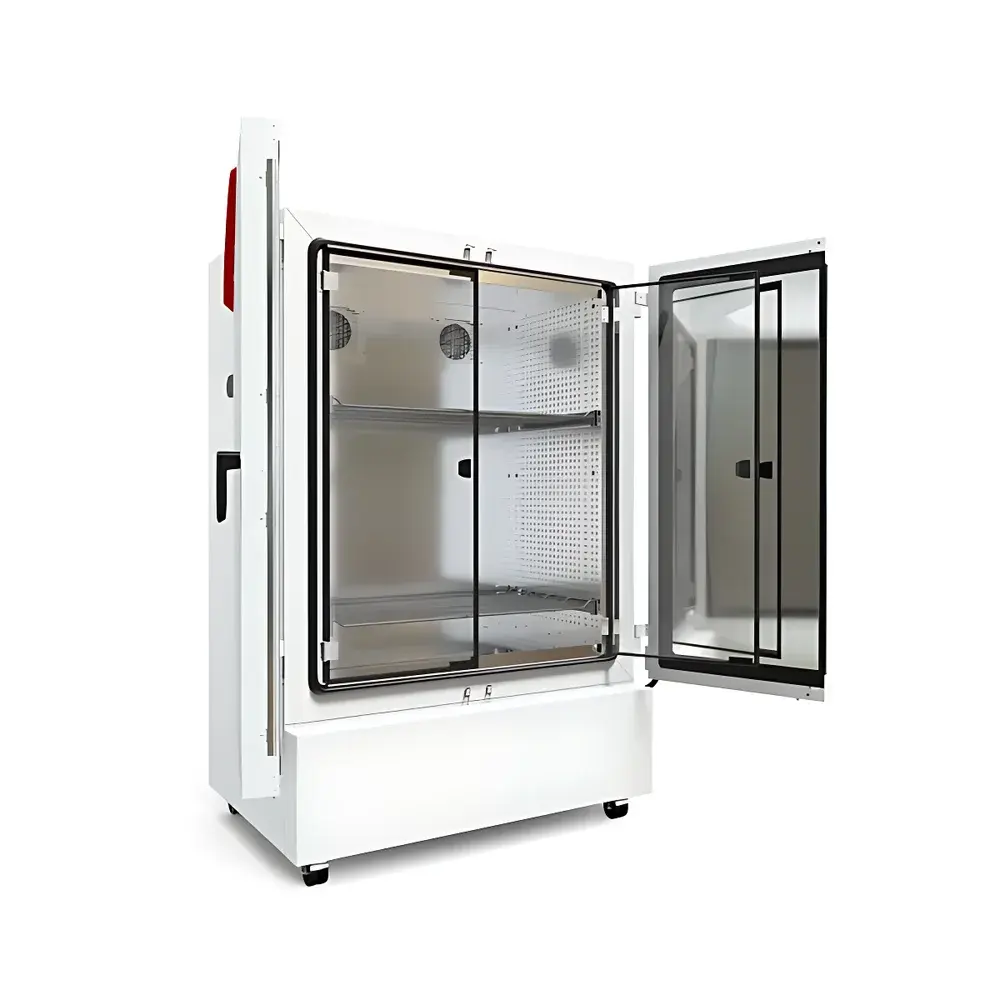
- Double-glazed inner door with metal oxide coating for enhanced thermal insulation and UV protection
- Two telescopic stainless-steel shelves with smooth glide rails and load capacity up to 25 kg per shelf
- Large-diameter access port (Ø 100 mm) with silicone plug for sensor feedthrough or gas line integration
- Red status indicator triangle with LED signaling—compliant with DIN EN 61000-6-4 for electromagnetic compatibility
- Ergonomically adjustable touchscreen controller (tilt angle: 15°–30°) with real-time multi-segment programming capability
- Independent triple-level temperature safety system (DIN 12880 Class 3.3), featuring optical/audible alarm, hardware cut-off, and self-monitoring diagnostics
Sample Compatibility & Compliance
The KB PRO 720 supports a broad range of sample formats—including stacked Petri dishes, multi-well plates, roller bottles, and flasks—without compromising airflow or thermal homogeneity. Its large 727 L chamber volume accommodates up to six standard ISO 554-compliant climate test racks or custom shelving configurations. The unit meets key international standards for laboratory equipment: DIN 12880 (incubator safety), IEC 61000-6-2/-6-4 (EMC immunity/emission), and EN 61010-1 (safety requirements for electrical equipment). Optional ICH Q1A(R3)-aligned light modules enable compliance with ICH Q5C photostability testing protocols when configured with calibrated LED arrays (320–800 nm, irradiance ≤ 1.2 W/m²). For GxP environments, the integrated data logger records timestamped temperature values at user-defined intervals (1 s–24 h), exportable via USB in CSV format; Ethernet connectivity enables remote monitoring and audit-trail-capable integration with LIMS or SCADA systems under FDA 21 CFR Part 11-compliant workflows.
Software & Data Management
The onboard controller runs BINDER’s APT-COM™ Basic software suite, supporting local configuration, real-time graphing, and event-triggered logging (e.g., door open/close, alarm activation, setpoint change). All measurement data are stored internally with non-volatile memory retention (>10 years at 25 °C). USB export yields plain-text CSV files compatible with Excel, MATLAB, or statistical analysis platforms. For enterprise deployment, optional APT-COM™ Professional licenses provide centralized fleet management, role-based user permissions, electronic signature support, and automated report generation aligned with GLP/GMP documentation requirements. Firmware updates are delivered via secure HTTPS download and validated through SHA-256 checksum verification prior to installation.
Applications
- Long-term low-temperature storage and growth of psychrophilic microorganisms and cryopreserved cell lines
- Accelerated stability testing per ICH Q1A(R3) and USP <1151> under controlled cold/hot-humid conditions
- Enzyme kinetics studies requiring sub-zero reaction temperatures with minimal thermal drift
- Plant physiology research using optional full-spectrum LED modules (PAR 400–700 nm, PPFD 0–800 µmol/m²/s)
- Material aging tests for polymers, adhesives, and packaging components under thermal cycling profiles
- Reference standard conditioning in metrology labs adhering to ISO/IEC 17025 calibration traceability requirements
FAQ
What is the maximum permissible ambient temperature for continuous operation?
The KB PRO 720 is rated for continuous operation at ambient temperatures up to 30 °C (with relative humidity ≤ 80 %, non-condensing).
Can the unit be validated for IQ/OQ/PQ protocols?
Yes—BINDER provides factory-issued as-built documentation, sensor calibration certificates (traceable to DKD/DAkkS), and a comprehensive validation support package including URS templates, test scripts, and deviation handling guidance.
Is remote monitoring supported over corporate networks?
Ethernet interface supports TCP/IP communication via Modbus TCP or BINDER’s native APT protocol; integration with building management systems (BMS) or cloud-based monitoring platforms is achievable through API-enabled middleware.
How often does the internal data logger require recalibration?
Per DIN EN ISO/IEC 17025, the integrated Pt100 sensors are factory-calibrated and do not require routine user recalibration; however, periodic verification against NIST-traceable references is recommended annually.
Are replacement parts available globally?
All critical components—including compressors, water-jacket manifolds, touchscreens, and safety controllers—are stocked in regional distribution centers across EMEA, North America, and APAC, with typical lead time of 3–5 business days.