
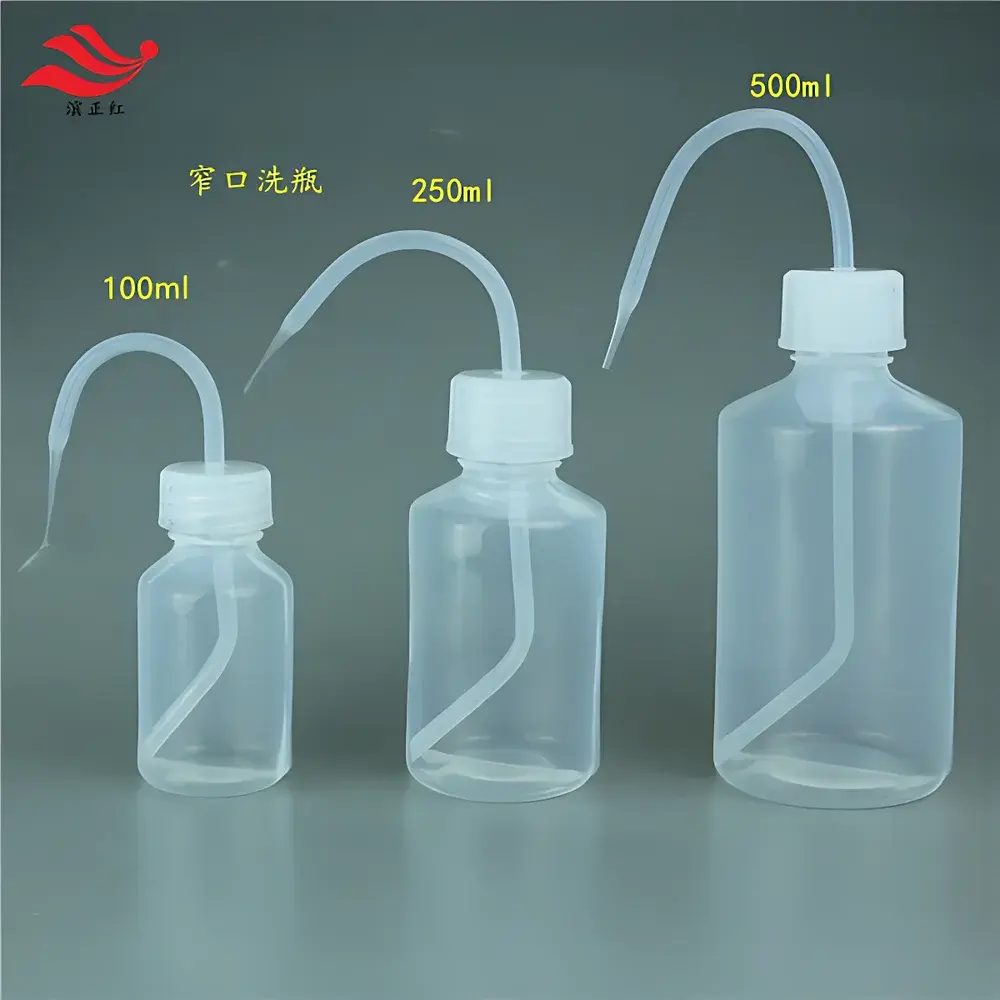
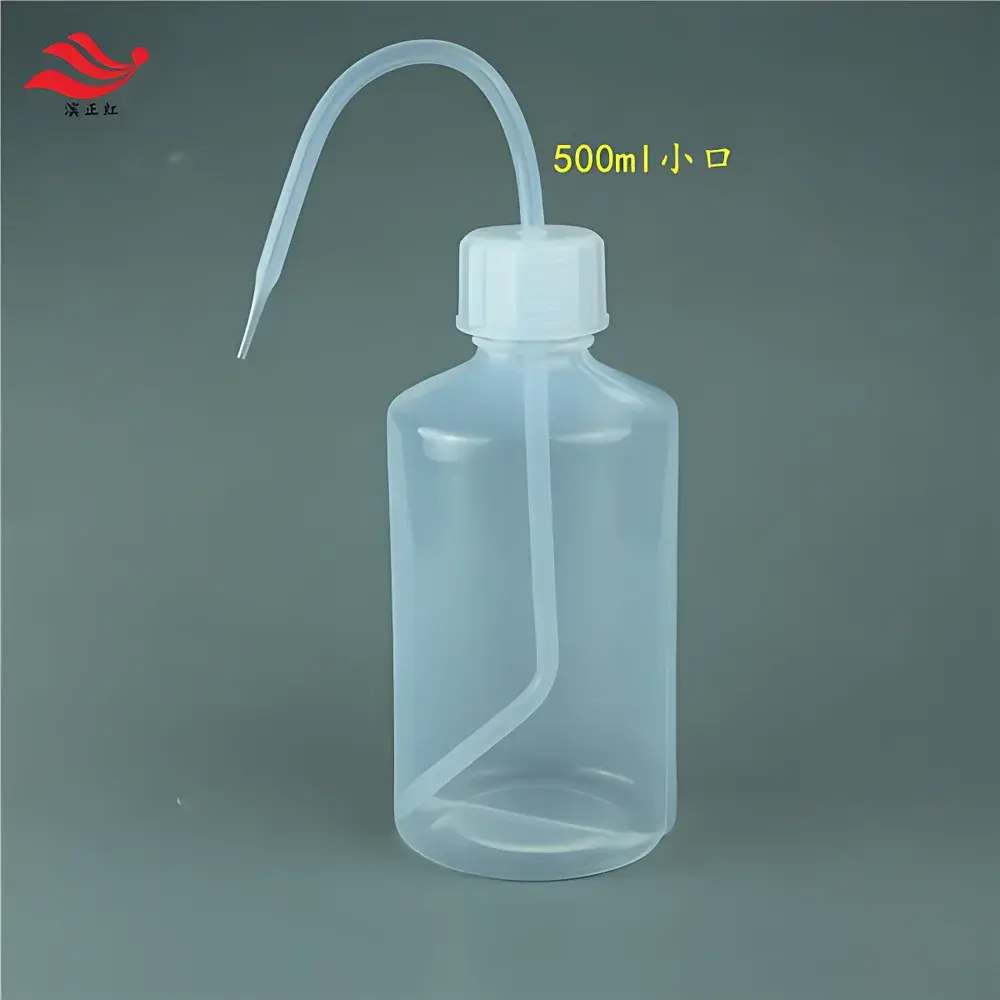
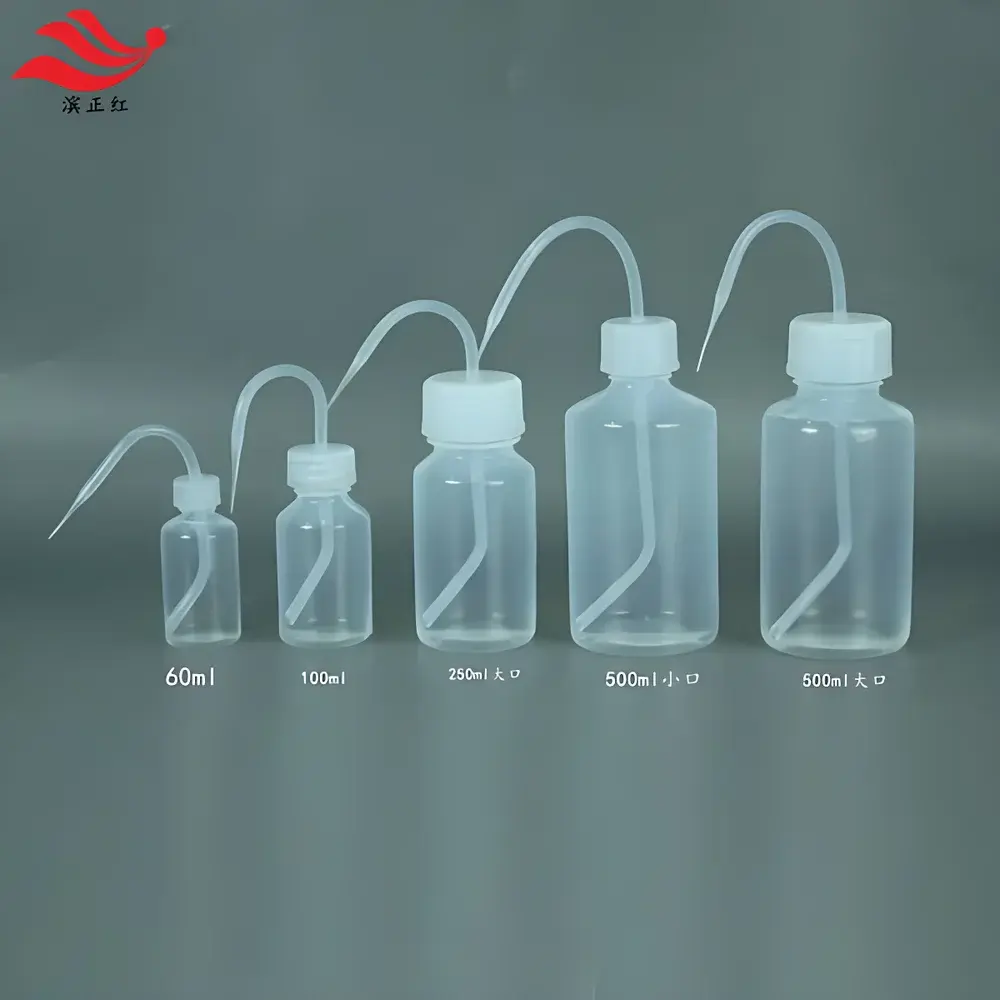
Binzhenghong FEP Wash Bottle for ICP-MS/OES/AAS Instrumentation (500 mL, Narrow-Neck, Fluorinated Ethylene Propylene)
| Brand | Binzhenghong |
|---|---|
| Origin | Jiangsu, China |
| Manufacturer Type | Direct Producer |
| Region Classification | Domestic (China) |
| Volume Options | 100 mL, 250 mL, 500 mL, 1000 mL |
| Temperature Resistance | −200 °C to +205 °C |
| Material | Fluorinated Ethylene Propylene (FEP) |
| Neck Type | Narrow-neck (standardized to match Agilent, Shimadzu, PerkinElmer, Thermo Fisher reagent bottle thread specifications) |
| Transparency | Optically clear, colorless |
| Cap & Nozzle | Integrated single-piece molded design |
| Compliance | Suitable for trace-metal analysis, isotopic studies, and ultra-low-contamination workflows |
Overview
The Binzhenghong FEP Wash Bottle is an ultra-high-purity laboratory consumable engineered specifically for trace elemental analysis workflows requiring stringent contamination control. Constructed entirely from fluorinated ethylene propylene (FEP), a perfluoropolymer with exceptional chemical inertness and thermal stability, this wash bottle serves as a critical component in sample preparation, instrument rinsing, and standard solution dilution for inductively coupled plasma mass spectrometry (ICP-MS), optical emission spectrometry (ICP-OES), and atomic absorption spectroscopy (AAS). Unlike conventional polyethylene or polypropylene bottles, FEP exhibits negligible leaching of metals—including Na, K, Ca, Fe, Cr, Ni, Cu, Zn, and rare earth elements—even under aggressive acid conditions (e.g., 1–10% HNO₃, HCl, HF) and elevated temperatures. Its non-wetting surface ensures precise dropwise dispensing, enabling volumetric accuracy comparable to Class A volumetric flasks when used for serial dilution or final rinse steps in cleanroom-grade analytical protocols.
Key Features
- FEP construction provides full compatibility with high-purity acids (HNO₃, HCl, HF, H₂O₂) and organic solvents without degradation or extractables.
- Narrow-neck design conforms to internationally standardized thread dimensions (e.g., GL45, GL32), ensuring secure fit and leak-free operation on reagent bottles and autosampler vials from Agilent, Shimadzu, PerkinElmer, and Thermo Fisher ICP platforms.
- Integrated cap-and-nozzle assembly eliminates gasket interfaces, reducing particulate shedding and cross-contamination risk during repeated actuation.
- Thermal stability range of −200 °C to +205 °C supports cryogenic storage and hot-acid rinsing applications without deformation or stress cracking.
- Optical clarity enables real-time volume monitoring and bubble detection during dispensing—critical for low-volume (<1 mL) rinse protocols in collision-cell ICP-MS.
- Dropwise flow control allows reproducible delivery at ~0.02–0.05 mL per drop, supporting ISO/IEC 17025-compliant calibration verification and matrix-matched standard preparation.
Sample Compatibility & Compliance
This FEP wash bottle is validated for use in laboratories operating under ISO/IEC 17025, USP /, EPA Method 200.8, and ASTM D5673. It meets the material purity requirements specified in CLSI EP29-A for trace metal analysis and is routinely employed in accredited environmental testing labs, pharmaceutical QC facilities, and nuclear geochemistry laboratories where sub-ppt detection limits are required. The absence of plasticizers, antioxidants, or mold-release agents ensures compliance with FDA 21 CFR Part 11 data integrity expectations when used in GMP-regulated method development workflows involving ICP-based elemental impurity testing.
Software & Data Management
While the FEP wash bottle itself is a passive consumable, its performance directly impacts data integrity in instrument software environments such as Agilent MassHunter, Thermo Fisher Qtegra, and PerkinElmer Syngistix. Consistent, contaminant-free rinsing minimizes memory effects and baseline drift—key parameters logged in audit trails for GLP/GMP validation reports. Laboratories integrating this bottle into automated liquid handling systems (e.g., CETAC ASX-560, Elemental Scientific Labs FAST-ICP) report improved reproducibility in carryover assessments and reduced frequency of system suitability failures during daily startup sequences.
Applications
- Rinsing nebulizer chambers, spray chambers, and torch injectors prior to and between samples in ICP-OES/ICP-MS analysis.
- Preparing matrix-matched calibration standards and internal standard additions with minimal blank contribution.
- Performing blank verification and procedural recovery checks in EPA 6020B and ISO 17294-2 compliant water analysis.
- Dispensing high-purity rinse solutions in clean benches for quartz crucible conditioning in geological sample digestion.
- Supporting certified reference material (CRM) homogeneity testing where bottle-to-bottle variability must be excluded as a source of uncertainty.
FAQ
Is this FEP wash bottle compatible with hydrofluoric acid (HF)?
Yes—FEP exhibits excellent resistance to HF up to 40% concentration at room temperature, making it suitable for post-digestion quartzware cleaning in silicate dissolution workflows.
Can it be autoclaved?
No—autoclaving exceeds the 121 °C limit for sustained pressure exposure; however, dry-heat sterilization at ≤150 °C for ≤2 hours is permissible without dimensional change.
Does the narrow-neck version support integration with automated dispensing modules?
Yes—its standardized GL45 thread interface is mechanically compatible with third-party robotic grippers and peristaltic pump adapters used in ICP sample introduction automation.
What is the shelf life under ambient storage?
When stored sealed and protected from UV exposure, FEP maintains structural and chemical integrity for ≥5 years with no measurable increase in blank signal for Al, Cr, Fe, or Ni.
How does it compare to PFA wash bottles?
FEP offers superior flexibility and lower compression set than PFA, resulting in more consistent nozzle rebound and longer service life in high-frequency usage environments—but slightly lower tensile strength under mechanical load.



