
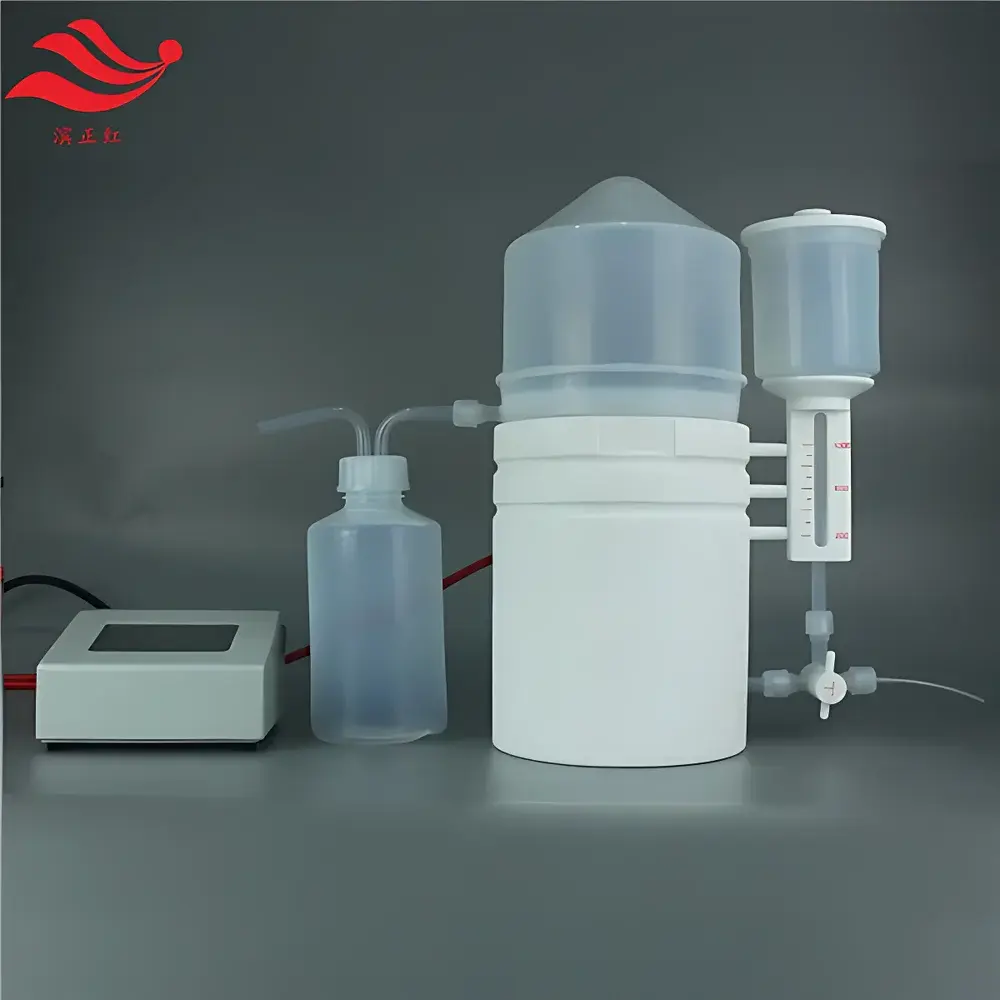
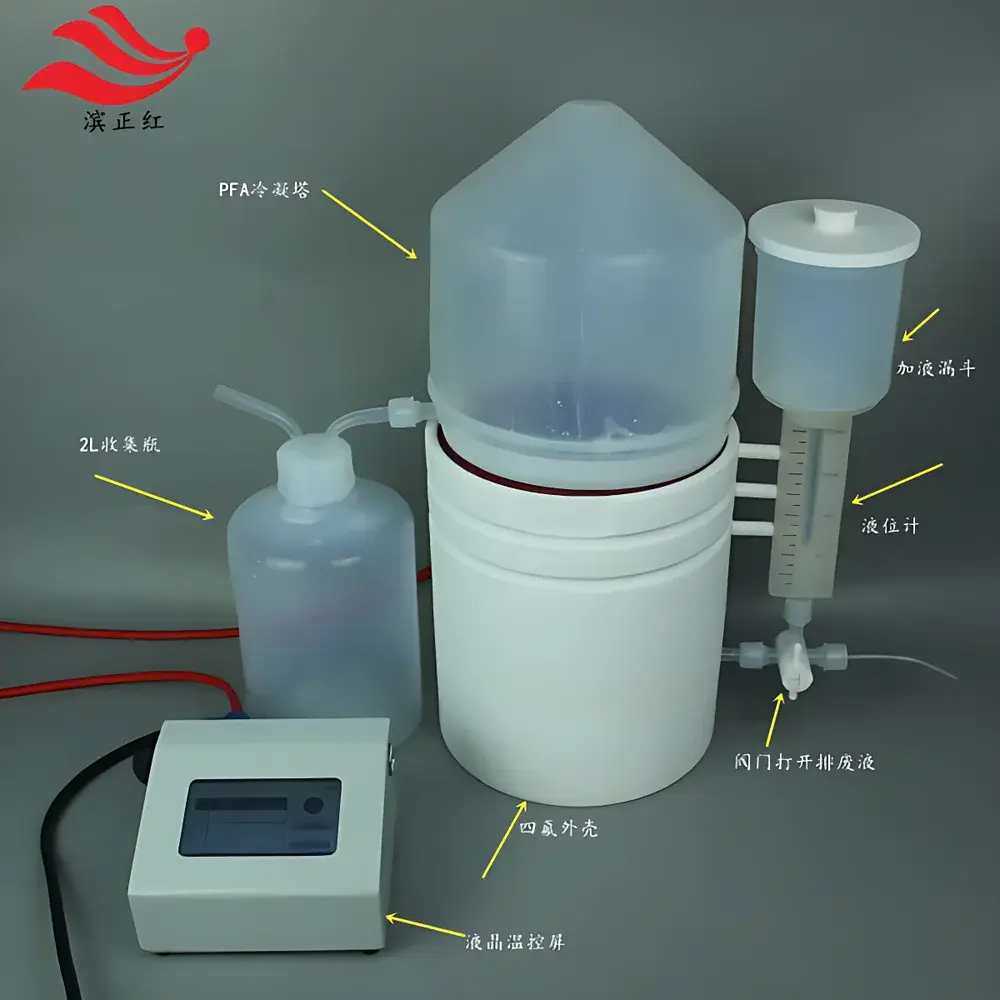
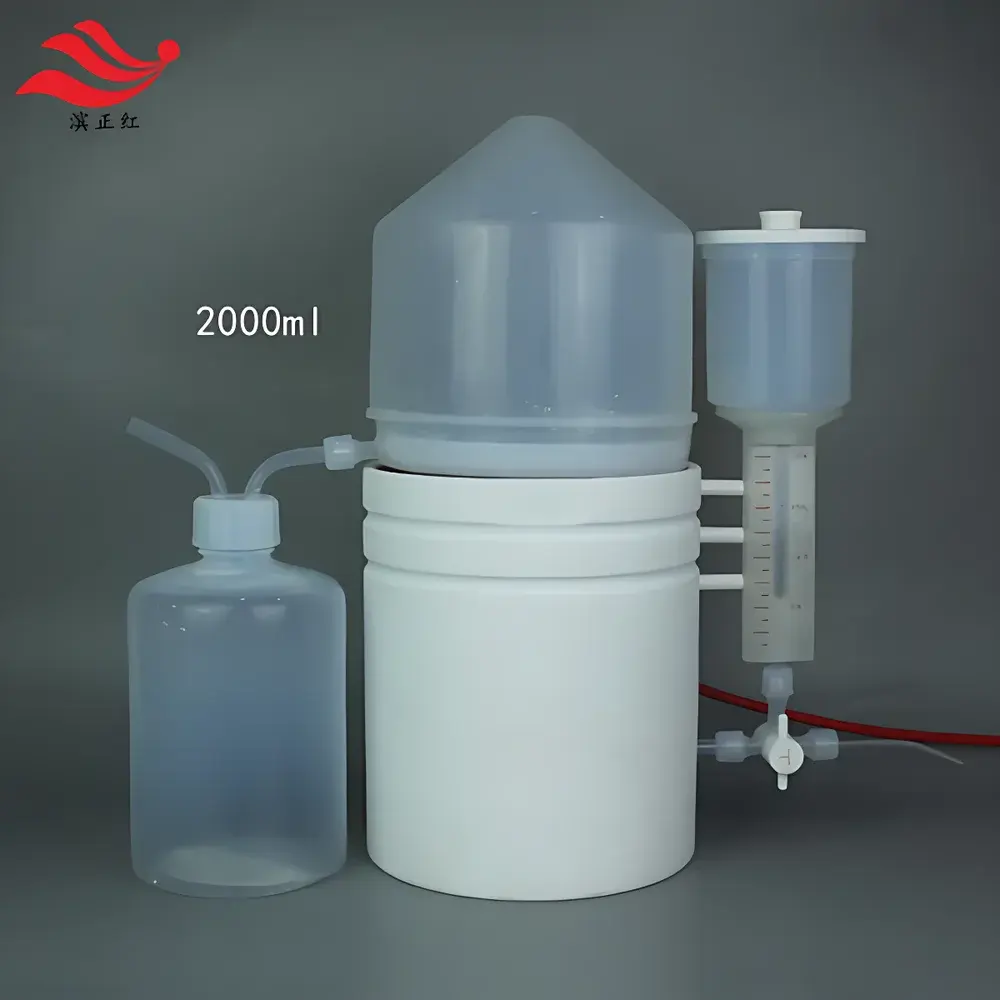
Binzhenghong NJ-PFA-SCH Series Sub-Boiling Acid Purifier (1000 mL / 2000 mL / 4000 mL PFA Distillation Apparatus)
| Brand | Binzhenghong |
|---|---|
| Origin | Jiangsu, China |
| Manufacturer Type | Direct Manufacturer |
| Instrument Type | Sub-boiling Distillation Apparatus |
| Models | 1000 mL, 2000 mL, 4000 mL |
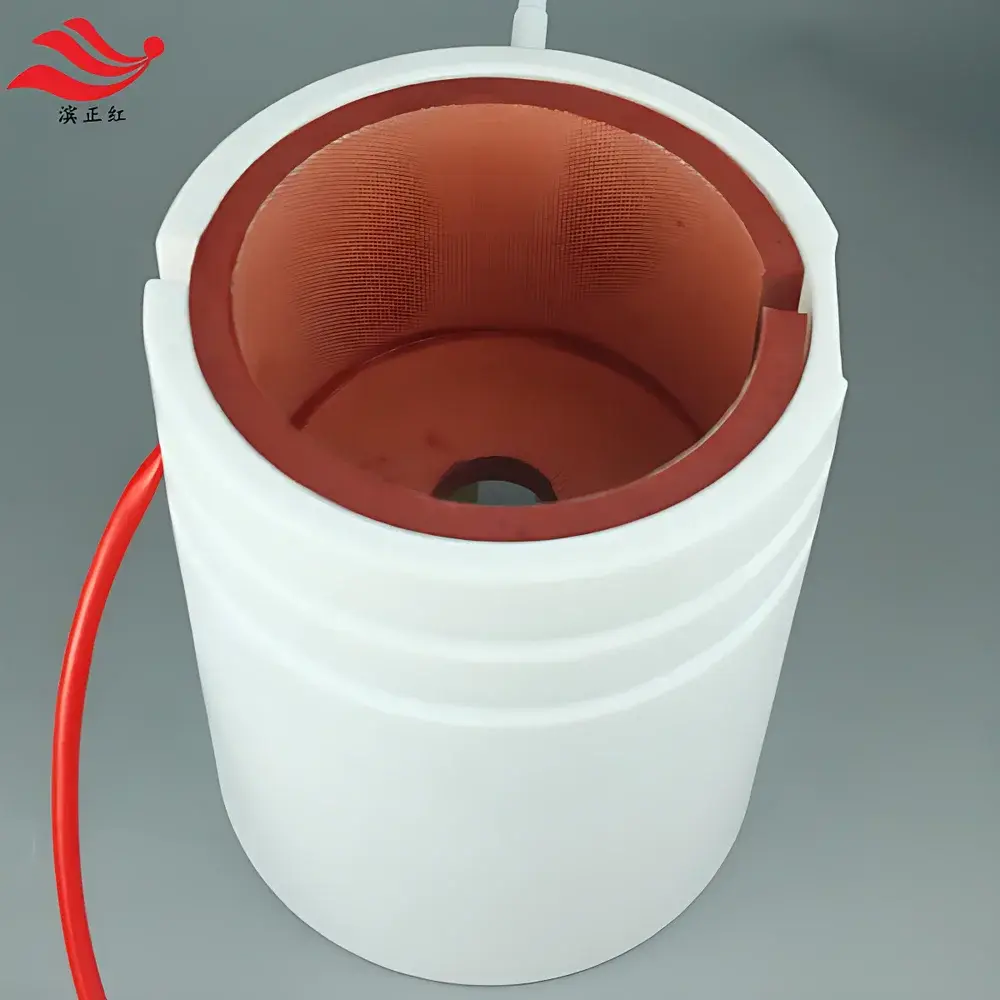
| Heating Method | Silicone Rubber Heating Sleeve |
| Cooling Method | Passive Ambient Air Cooling |
| Distillation Rate | 50–100 mL/h (model-dependent) |
| Temperature Control | PID Digital Display with ±1 °C Accuracy |
| Max Operating Temperature | Up to 180 °C |
| Power Consumption | ≤400 W (1000 mL), ≤500 W (2000/4000 mL), Variable Frequency Adjustable |
| Voltage | 220 V / 50 Hz |
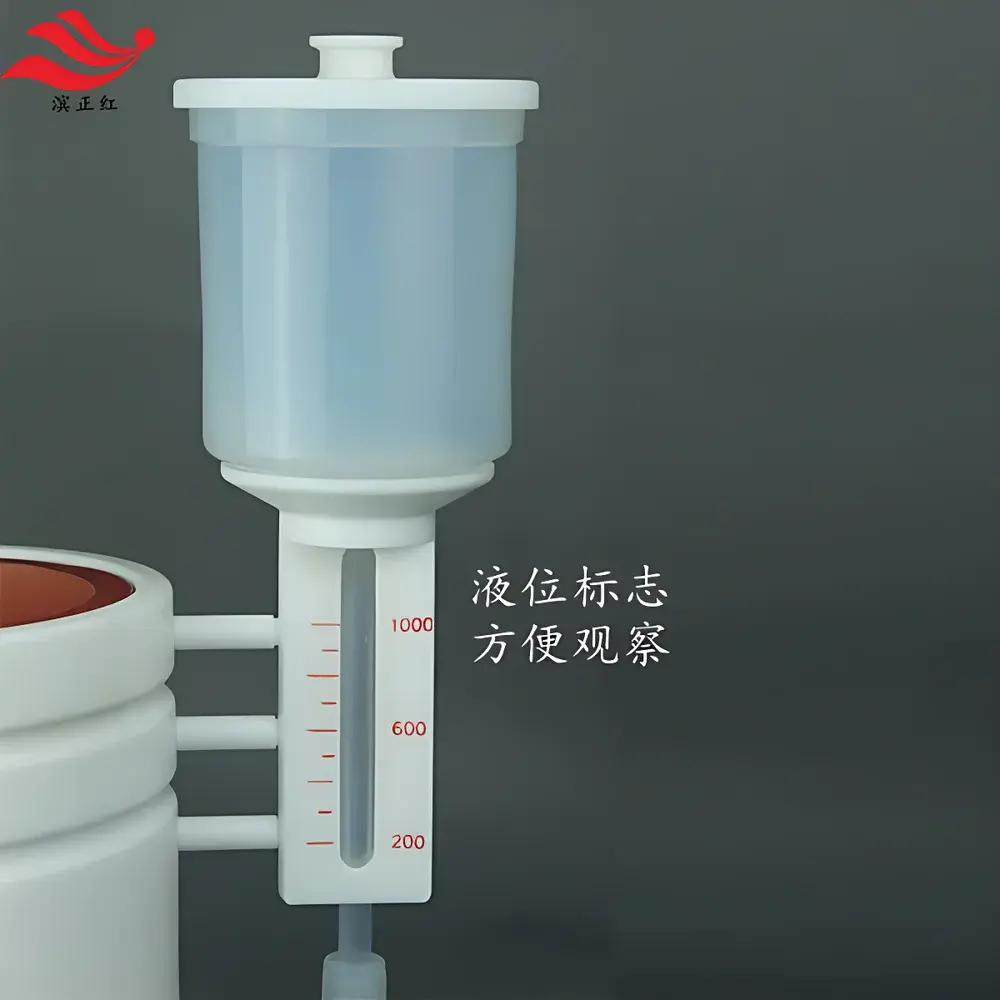
| Liquid Level Options | Triple-level (1000 mL), Quadruple-level (2000/4000 mL) |
| Material | All-Wetted Parts Constructed from High-Purity Perfluoroalkoxy (PFA) |
| Safety Features | Dry-run Protection, Overheat Cutoff, Integrated Ventilation-Cabinet Compatibility |
| Metal Impurity Reduction | From ~10 ppb to ≤0.01 ppb (single-pass, ICP-MS-grade acids) |
Overview
The Binzhenghong NJ-PFA-SCH Series Sub-Boiling Acid Purifier is an ultra-trace metal analysis–grade distillation system engineered for the production of high-purity inorganic acids and ultrapure water in trace-element-sensitive laboratories. It operates on the principle of sub-boiling (or near-boiling) distillation—a thermally controlled evaporation process conducted at temperatures just below the atmospheric boiling point of the target reagent. This technique minimizes aerosol entrainment, volatile impurity carryover, and thermal decomposition while maximizing selective vapor-phase separation of ultra-pure condensate. Unlike conventional reflux or vacuum distillation, sub-boiling operation ensures that only the most volatile, low-boiling-point fraction—free of non-volatile cationic contaminants (e.g., Al, Fe, Cr, Ni, Pb)—transfers to the condensation zone. The entire fluid path—from evaporation chamber to condenser to collection vessel—is fabricated exclusively from ASTM D4897–compliant, high-molecular-weight PFA resin, eliminating metallic leaching and ensuring compatibility with aggressive media including hydrochloric acid (HCl), nitric acid (HNO₃), hydrofluoric acid (HF), and deionized water.
Key Features
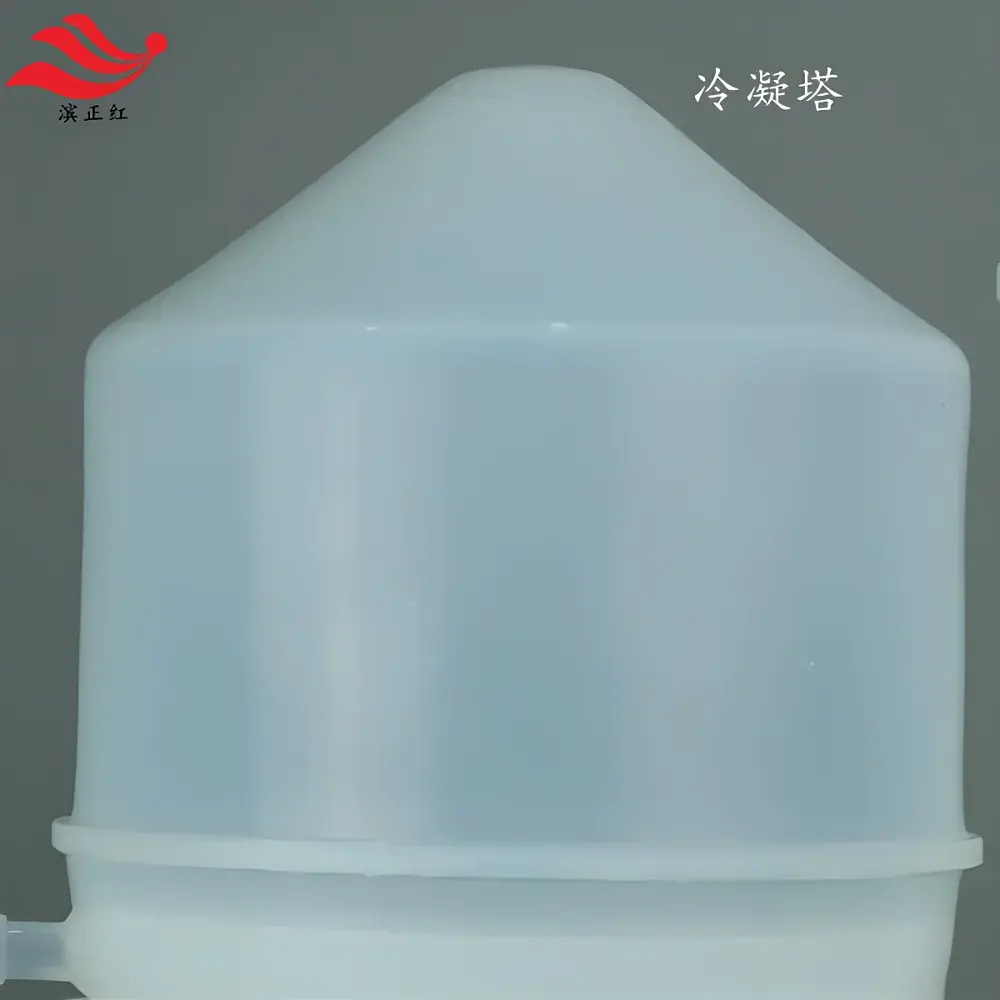
- Monolithic PFA architecture: Evaporator and condenser are thermally fused into a single, seamless unit via precision hot-gas welding—no gaskets, seals, or threaded joints in the wetted path.
- Intelligent PID temperature control with digital LCD interface; programmable setpoints from ambient to 180 °C (optimized for HCl: 110 °C; HNO₃/HF mixtures: 175–180 °C).
- Encapsulated silicone rubber heating sleeve with uniform thermal distribution and built-in overtemperature cutoff (≥200 °C trip point).
- Passive air-cooling design—no external chiller, recirculating water, or coolant lines required—enabling silent, maintenance-free operation inside fume hoods.
- Dry-run protection circuit automatically deactivates heating upon liquid level depletion, supporting unattended overnight operation under GLP-compliant conditions.
- Multi-tier calibrated fill levels (e.g., 200/600/1000 mL for NJ-PFA-SCH-II; 1000/2000/3000/4000 mL for NJ-PFA-SCH-IV) enable precise volumetric dosing via integrated PFA funnel with engraved scale.
- GL45-threaded PFA collection bottles manufactured via biaxial stretch-blow molding—guaranteeing hermetic seal without secondary liners or O-rings.
- Three-way waste valve with directional flow indicators simplifies residue disposal and prevents cross-contamination during multi-batch runs.
Sample Compatibility & Compliance
The NJ-PFA-SCH series is validated for sub-boiling purification of hydrochloric acid (ACS/ISO 3696 Grade 1), nitric acid (including mixed HNO₃/HF formulations), hydrofluoric acid (≤49 wt%), and ultrapure water (resistivity ≥18.2 MΩ·cm). Its all-PFA construction meets stringent requirements for trace-metal analysis workflows per ISO/IEC 17025, ASTM D1193 Type I, and USP . When operated under controlled cleanroom or laminar-flow hood conditions, it consistently reduces baseline metal contamination—from initial levels of ~10 ppb (as verified by ICP-MS) to ≤0.01 ppb post-distillation—meeting specifications for semiconductor wafer cleaning, geochemical standard preparation, and nuclear fuel cycle analytics. The system’s passive cooling and dry-run safety features support compliance with OSHA 1910.1200 and EU Directive 2004/40/EC for enclosed laboratory use.
Software & Data Management
While the NJ-PFA-SCH operates as a stand-alone analog-digital hybrid instrument (no embedded firmware or network interface), its PID controller provides full audit trail capability via manual logbook recording of setpoint, actual temperature, runtime, and batch volume. For laboratories implementing electronic lab notebooks (ELN) or LIMS integration, optional RS-485/Modbus RTU output modules (sold separately) enable real-time temperature telemetry and event-triggered logging—supporting 21 CFR Part 11–aligned electronic records when paired with validated acquisition software. All operational parameters—including power-on sequence, temperature ramp profiles, and shutdown events—are fully traceable through the front-panel display history buffer (retains last 10 cycles).
Applications
- Preparation of calibration standards for ICP-OES and ICP-MS trace metal quantification (e.g., EPA Method 200.8, ISO 17294-2).
- Ultra-low-background acid matrices for digestion of geological, biological, and environmental samples prior to elemental speciation analysis.
- Production of high-purity etchants in microelectronics fabrication (e.g., HF-based solutions for SiO₂ removal).
- Generation of blank-matched solvents for LC-MS mobile phase preparation and HPLC column conditioning.
- On-site reagent purification in field-deployable analytical labs where supply-chain purity assurance is unavailable.
FAQ
Can this system purify hydrofluoric acid (HF)?
Yes—NJ-PFA-SCH models are fully compatible with ≤49% aqueous HF solutions. All-wetted PFA components resist HF corrosion up to 200 °C, and the sub-boiling mode prevents hazardous HF vapor concentration spikes.
Is water cooling required?
No. The unit relies solely on natural convection cooling; no plumbing, chillers, or external heat sinks are needed.
What is the typical metal impurity reduction efficiency?
Single-pass distillation reduces common transition metals (Al, Fe, Cu, Zn, Pb) from ~10 ppb in commercial ultrapure acid to ≤0.01 ppb, as confirmed by sector-field ICP-MS validation studies.
How is operator safety ensured during unattended operation?
Integrated dry-run detection, overtemperature shutoff, and ventilation-hood-rated enclosure design comply with EN 61000-6-4 EMC and IEC 61010-1 safety standards for Class II laboratory equipment.
Are replacement PFA parts available?
Yes—Binzhenghong supplies certified PFA evaporator-condenser assemblies, GL45 collection bottles, and silicone heating sleeves with full material traceability (CoA provided per lot).



