
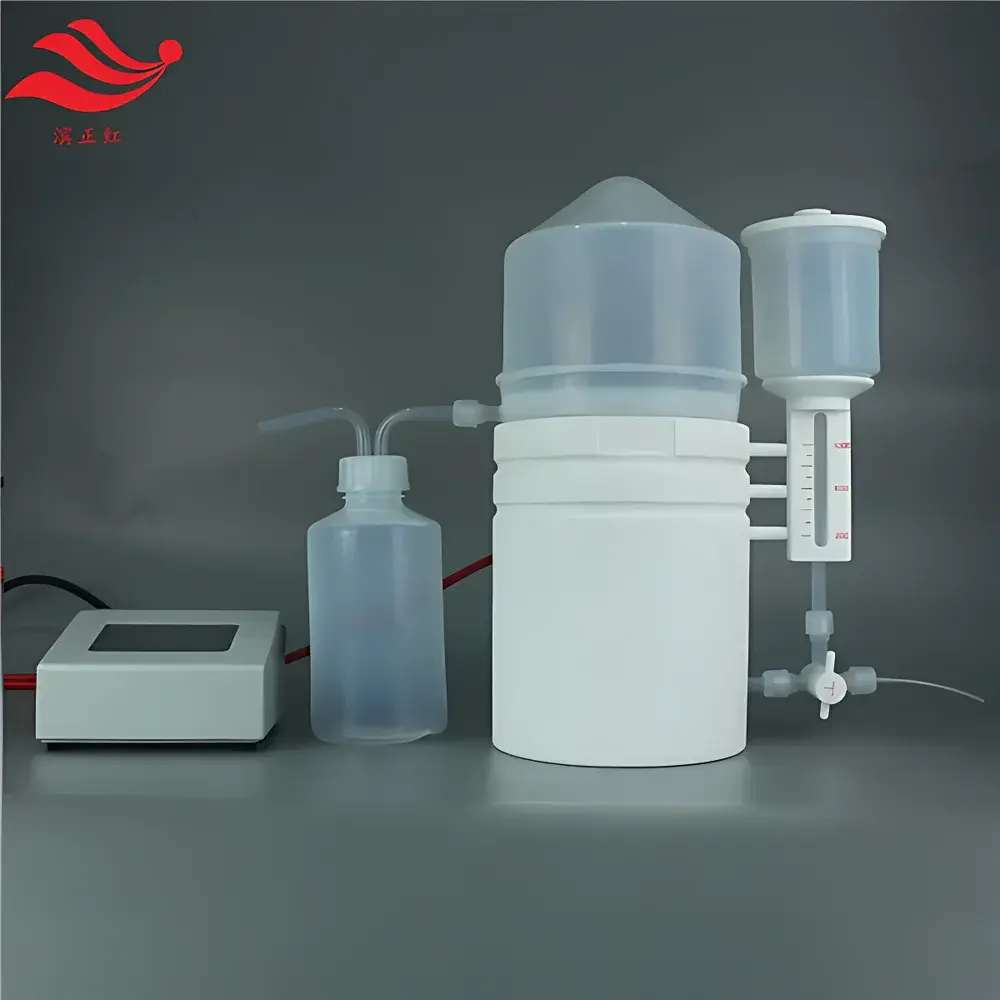
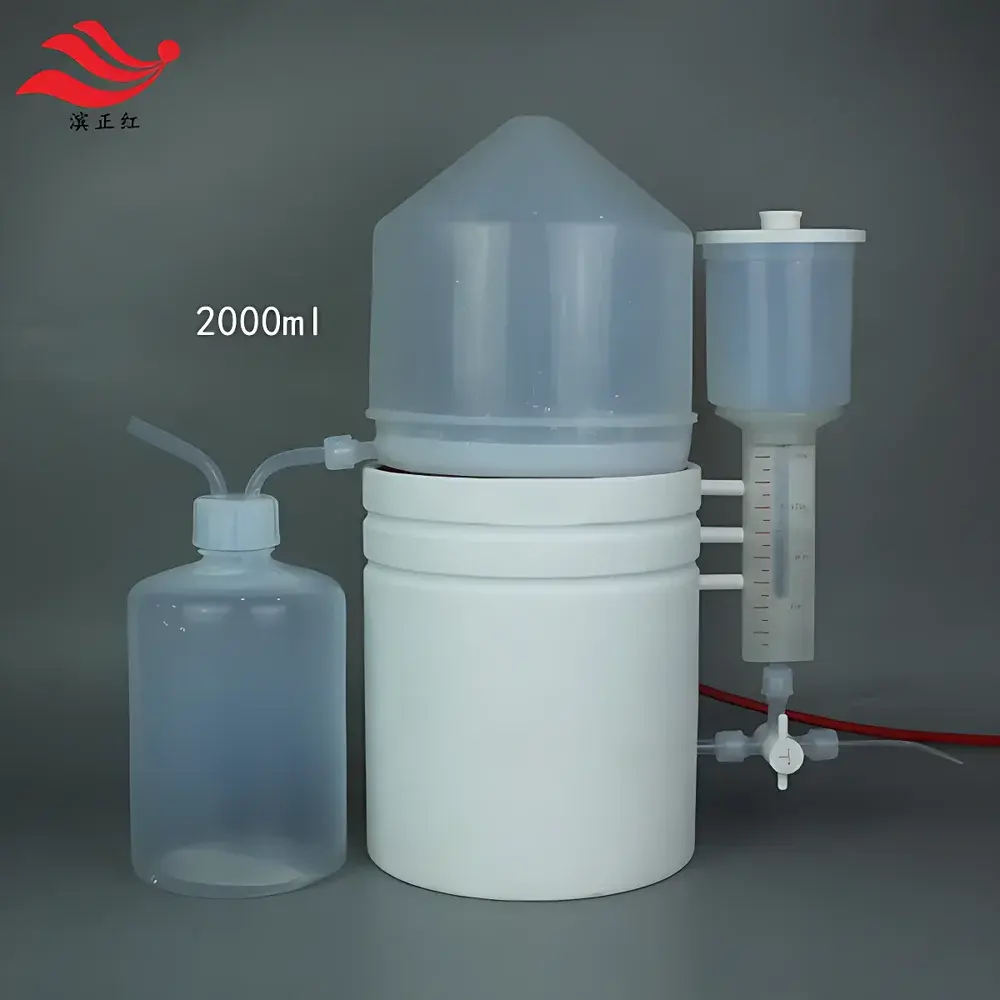
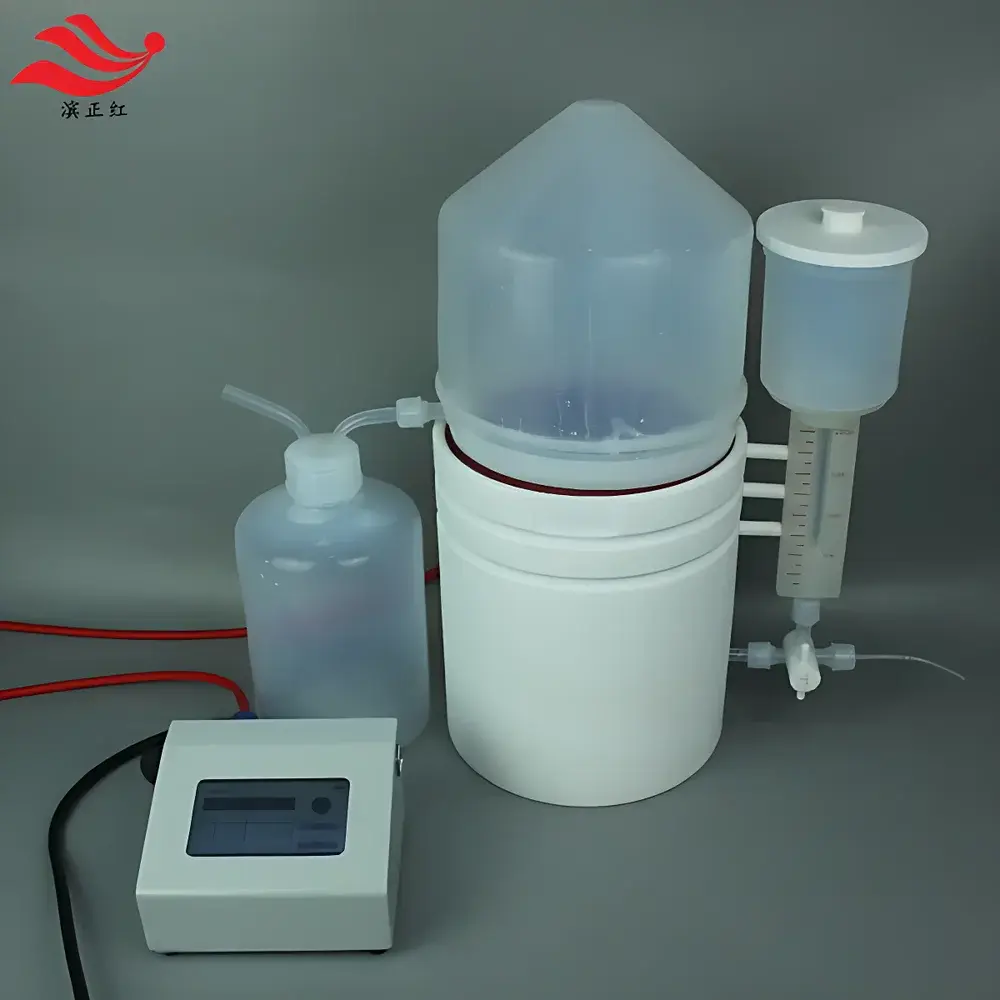
Binzhenghong NJ-SCH Series PFA Sub-Boiling Acid Purifier
| Brand | Binzhenghong |
|---|---|
| Origin | Jiangsu, China |
| Manufacturer Type | Direct Manufacturer |
| Instrument Type | Sub-boiling Distillation Apparatus |
| Models | NJ-SCH-1 (1 L), NJ-SCH-2 (2 L), NJ-SCH-4 (4 L) |
| Heating Method | Silicone Rubber Heater |
| Cooling Method | Ambient Air Cooling |
| Distillation Rate | 50–100 mL/h |
| Warm-up Time | 30 min |
| Power Consumption | ≤400 W (Model 1), ≤500 W (Models 2 & 4), Variable-Frequency Adjustable |
| Temperature Control | PID Digital Display with ±1 °C Accuracy |
| Voltage | 220 V / 50 Hz |
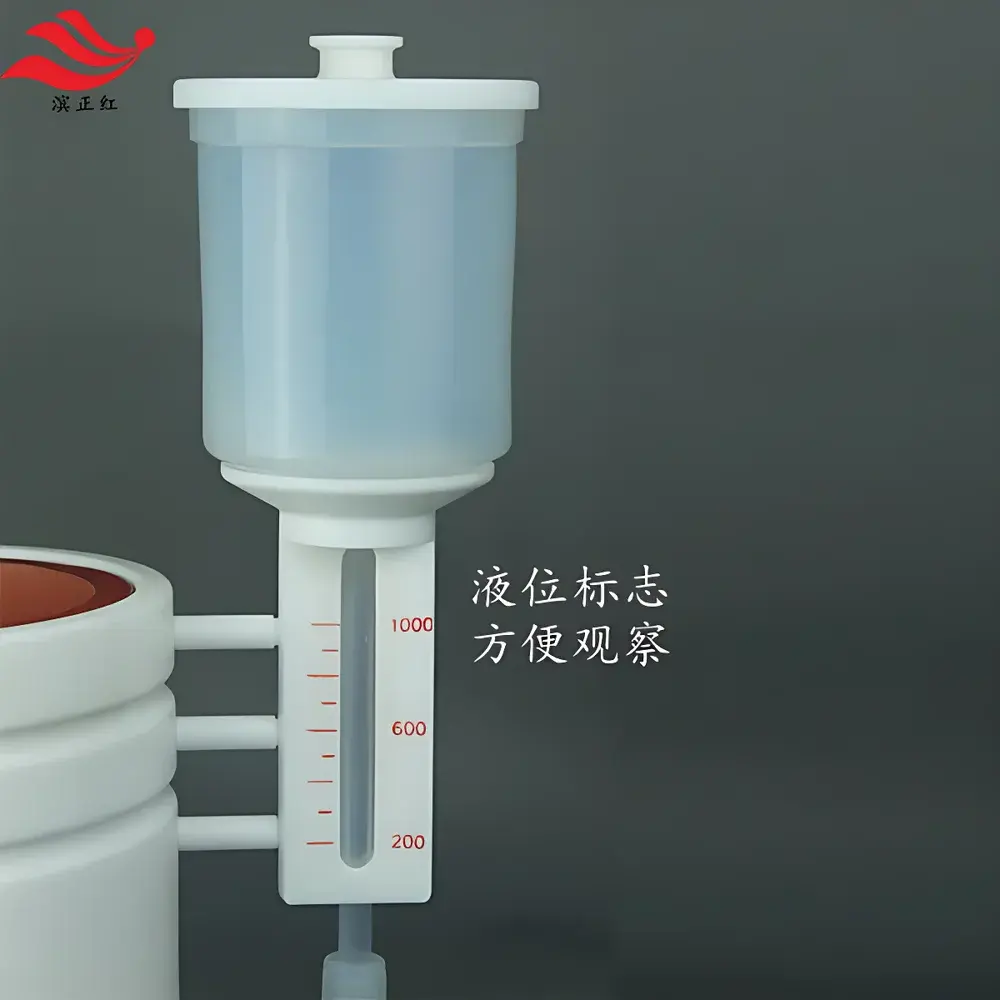
| Liquid Level Options | 200/600/1000 mL |
| Material | High-Purity PFA (Perfluoroalkoxy Alkane) for All Wetted Parts |
| Safety Features | Dry-run Protection, Overheat Cutoff, Ventilation-Cabinet Compatible Operation |
| Metal Impurity Reduction | From ~10 ppb to ~0.01 ppb in Single-Stage Distillation |
Overview
The Binzhenghong NJ-SCH Series PFA Sub-Boiling Acid Purifier is an engineered solution for trace-metal-free acid purification in ultra-trace analytical laboratories. It operates on the principle of sub-boiling distillation—maintaining the feed acid at a temperature just below its atmospheric boiling point to minimize volatile impurity carryover and suppress aerosol formation. This thermodynamically controlled evaporation-condensation cycle ensures selective vaporization of the acid while retaining non-volatile metallic contaminants (e.g., Fe, Al, Cr, Ni, Pb) in the residue. Designed specifically for high-purity applications in ICP-MS, HR-ICP-MS, and EPA Method 200.8/6020B sample preparation, the system delivers consistent sub-part-per-quadrillion (sub-ppt) metal background levels in purified HNO₃, HCl, HF, and ultrapure water.
Key Features
- Full PFA-wetted path: Evaporator chamber, condenser coil, collection funnel, and receiving bottle are fabricated from ASTM D4894-compliant, low-extractable PFA resin—certified for ≤0.1 ng/mL metal leaching under ISO 17025-accredited testing.
- Integrated monolithic design: Evaporator and condenser are thermally fused via hot-gas welding—no gaskets, seals, or threaded joints—to eliminate leakage paths and cross-contamination risks.
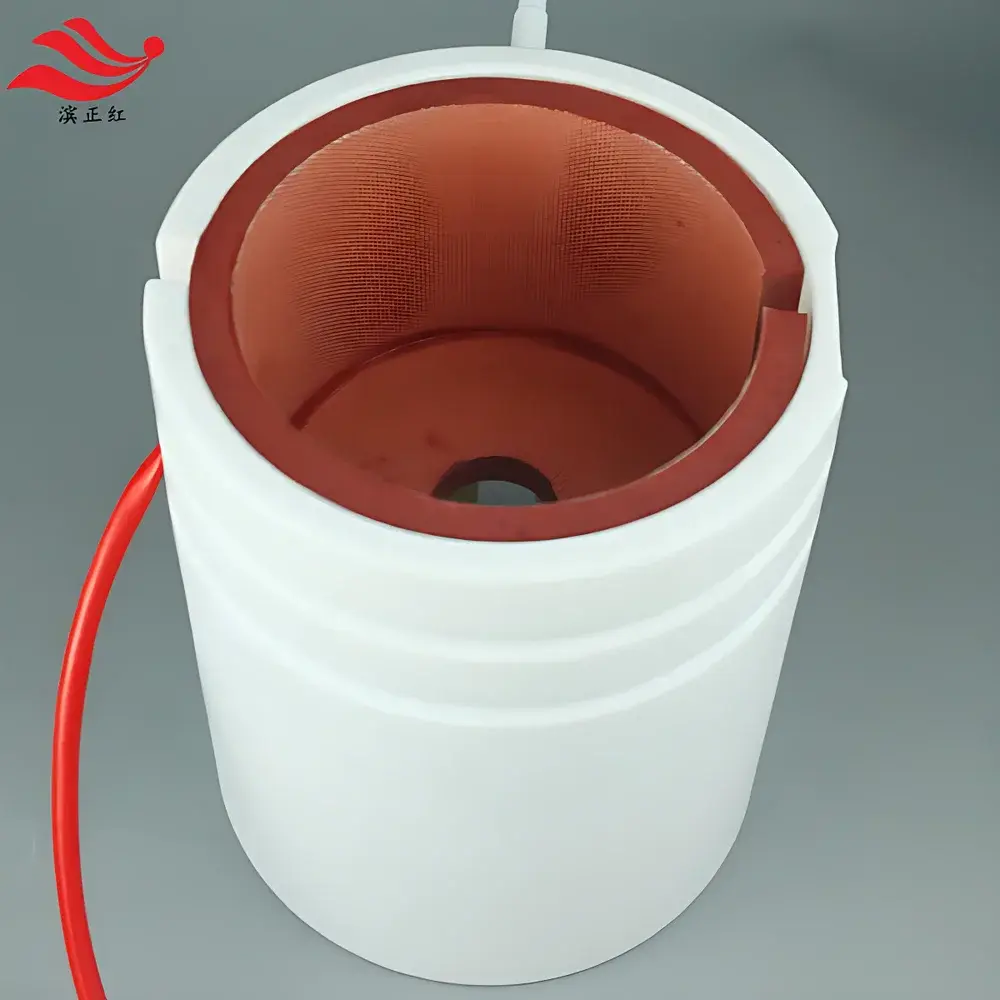
- PID-controlled silicone rubber heating mantle: Fully encapsulated, uniform thermal transfer with overtemperature cutoff (≥220 °C) and dry-run auto-shutdown.
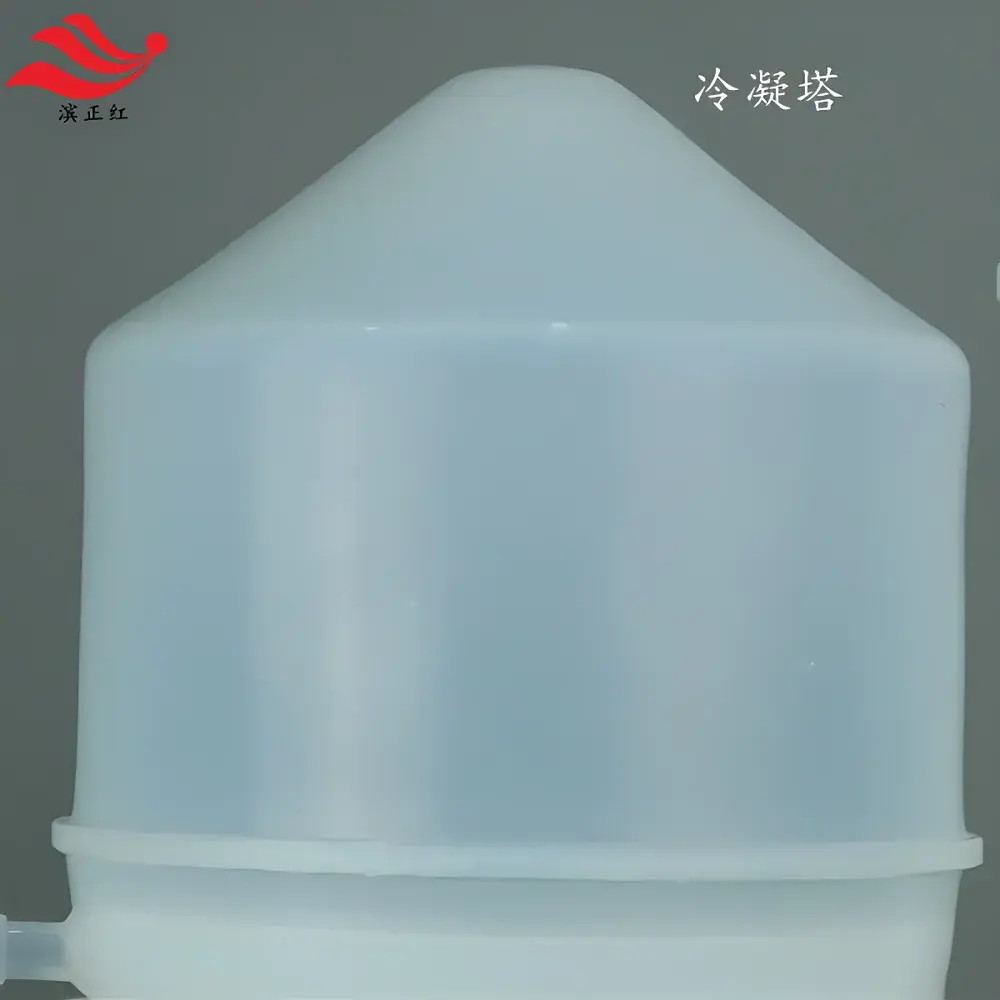
- Ambient-air passive cooling: No external chiller or tap water required; condenser geometry optimized for natural convection heat dissipation at lab room temperatures (15–25 °C).
- GL45-threaded PFA collection bottles: Blow-molded using ISO 8536-4 compliant process; leak-tight without internal septa; compatible with Class A volumetric handling and cleanroom Class 1000 workflows.
- Multi-level liquid volume calibration: Precision刻度 (marked in 50-mL increments) integrated into the feed funnel; supports repeatable batch sizing across 1 L, 2 L, and 4 L configurations.
- Fully ventilated-cabinet operable: Certified for unattended operation in fume hoods per EN 14175-3; includes triple-port waste valve with directional flow indicators for safe acid residue disposal.
Sample Compatibility & Compliance
The NJ-SCH series is validated for sub-boiling purification of hydrochloric acid (HCl), nitric acid (HNO₃), hydrofluoric acid (HF), and deionized water. Each model supports method-specific temperature setpoints: 110 °C for HCl; 175–180 °C for HNO₃/HF mixtures. The absence of metal components—including no stainless steel, quartz, or borosilicate glass—ensures compliance with USP , ISO/IEC 17025:2017 clause 5.9.1 (traceability of purity claims), and EPA SW-846 Method 3050B requirements for digestion-grade reagent preparation. Batch-to-batch reproducibility meets GLP audit criteria for instrument qualification (IQ/OQ/PQ), with documented trace metal reduction from initial 10 ppb to final ≤0.01 ppb (measured by ICP-MS after single-pass distillation).
Software & Data Management
The NJ-SCH purifier operates as a stand-alone analog-digital hybrid system. Temperature setpoint, real-time chamber temperature, and elapsed runtime are displayed on a backlit LCD interface with NIST-traceable calibration certificate included. While no proprietary software is embedded, the device supports integration into laboratory-wide electronic lab notebook (ELN) systems via optional RS-485/Modbus RTU output (available on NJ-SCH-2 and NJ-SCH-4 models). Audit trail functionality aligns with FDA 21 CFR Part 11 requirements when paired with validated third-party data acquisition platforms—enabling timestamped temperature logs, operator ID tagging, and change history retention for regulatory submissions.
Applications
- Preparation of ultrapure acids for ICP-MS standard dilution and calibration stock solutions.
- Generation of blank-matched reagents in environmental testing labs conducting PFAS, heavy metal, or radionuclide analysis (EPA Methods 1638, 200.8, 6020B).
- Trace-metal-cleanroom workflows supporting semiconductor wafer etch chemistry qualification.
- Geochemical research requiring sub-ppt-level contamination control in silicate dissolution protocols (e.g., HF-HNO₃ digestion of zircon).
- Pharmaceutical QC laboratories performing elemental impurities testing per ICH Q3D guidelines.
FAQ
Can the NJ-SCH purifier be used for mixed acid systems (e.g., HNO₃ + HF)?
Yes—provided the mixture is pre-blended and introduced as a homogeneous feed. Temperature must be set to 175–180 °C. Do not introduce separate acid streams simultaneously.
Is PFA compatibility verified for 49% hydrofluoric acid at 180 °C?
Yes. PFA exhibits continuous service resistance to ≥49% HF up to 260 °C per ASTM D1711 and DuPont Teflon® PFA Resin Technical Bulletin #TB-1002.
What maintenance is required between batches?
Rinse all PFA components with ≥18.2 MΩ·cm water post-distillation; air-dry in Class 100 laminar flow. No descaling or solvent cleaning is necessary.
Does the system meet ISO 15195:2018 reference material production requirements?
When operated under documented SOPs with certified reference input acids, the NJ-SCH series supports production of secondary reference materials traceable to CRM 310-1 (NIST) per ISO 15195:2018 Annex B.



