
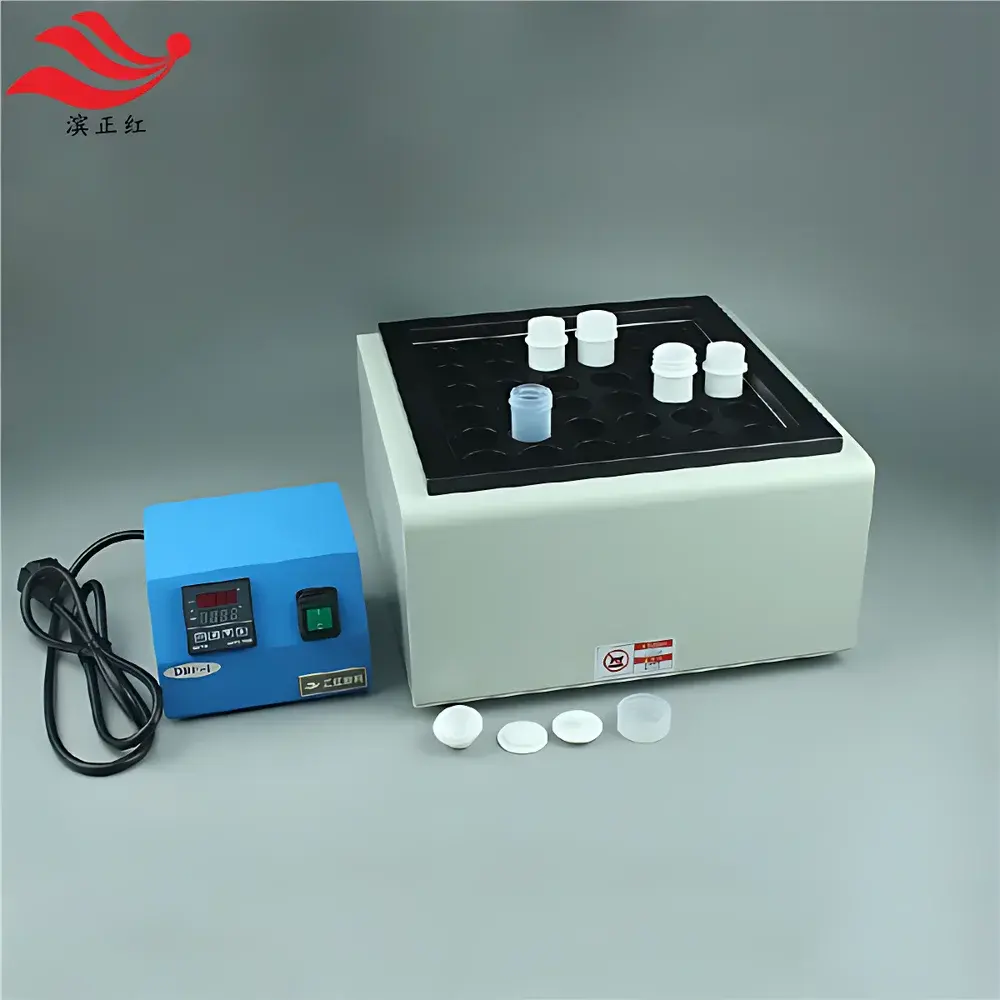
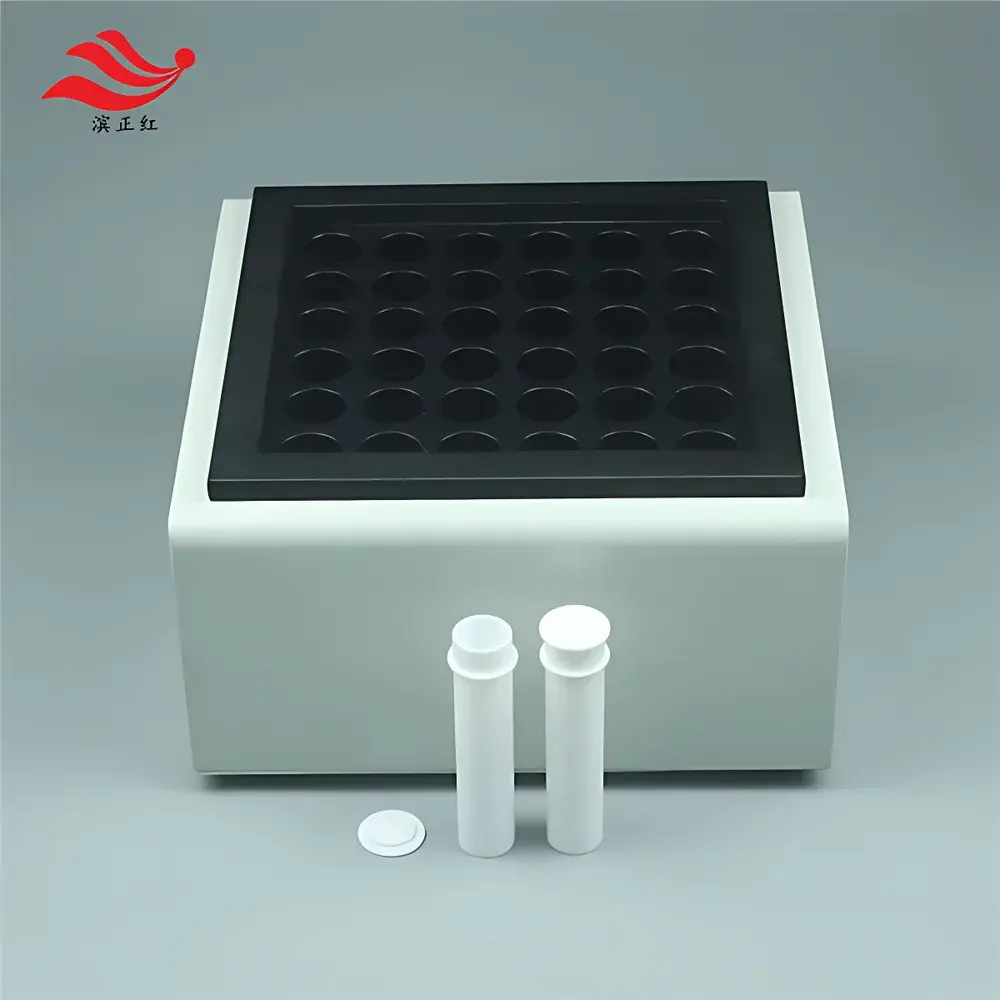
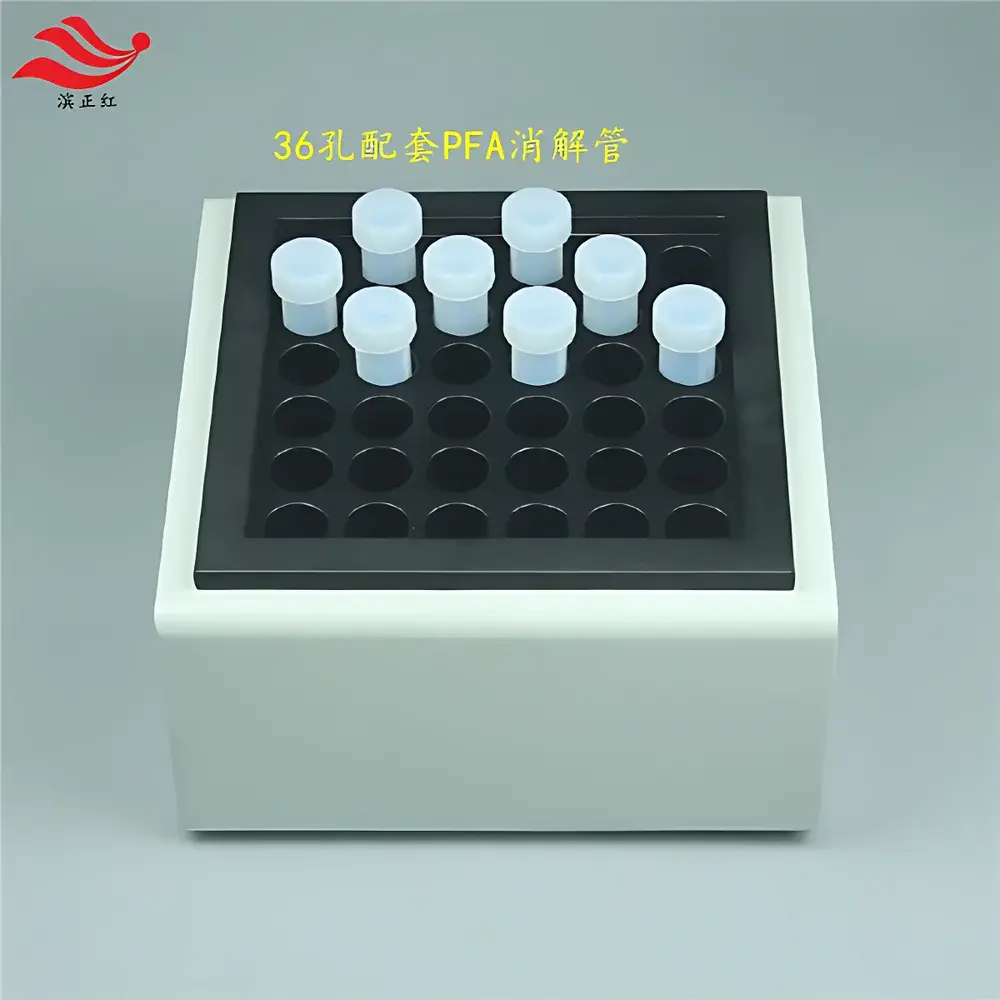
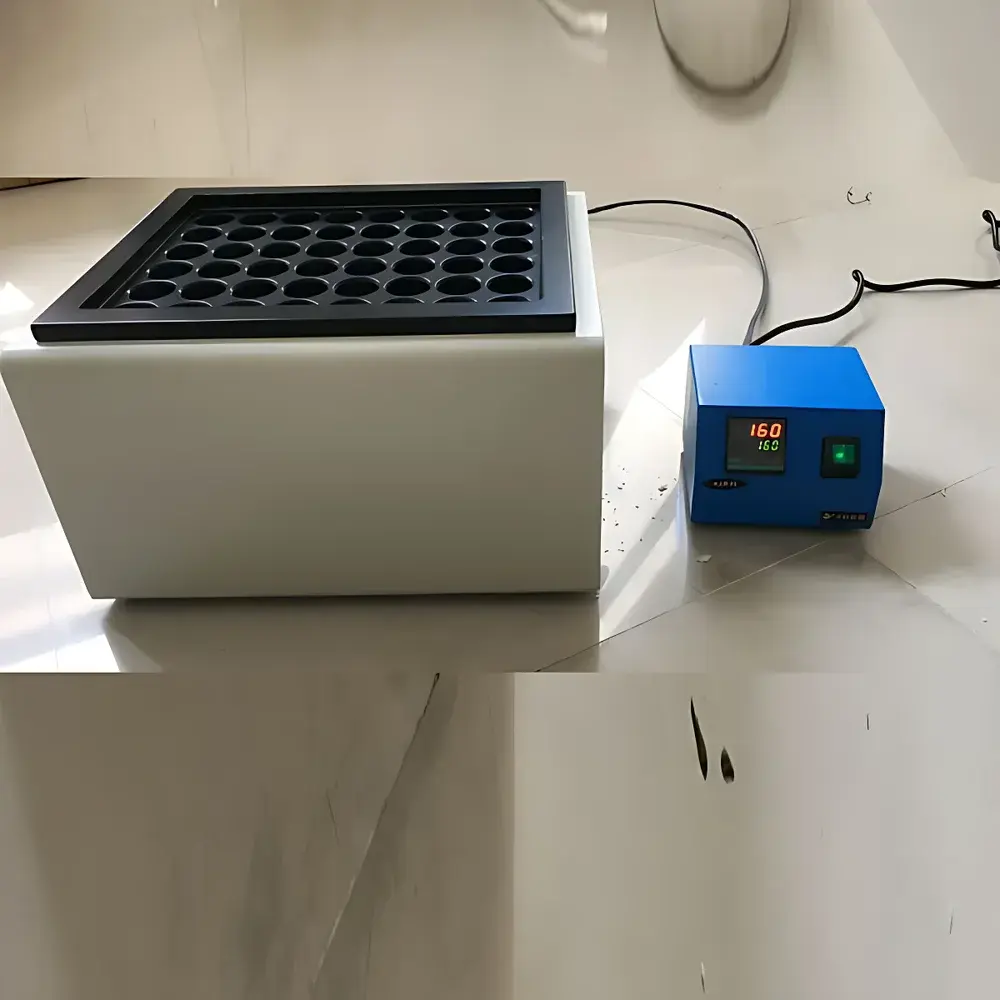
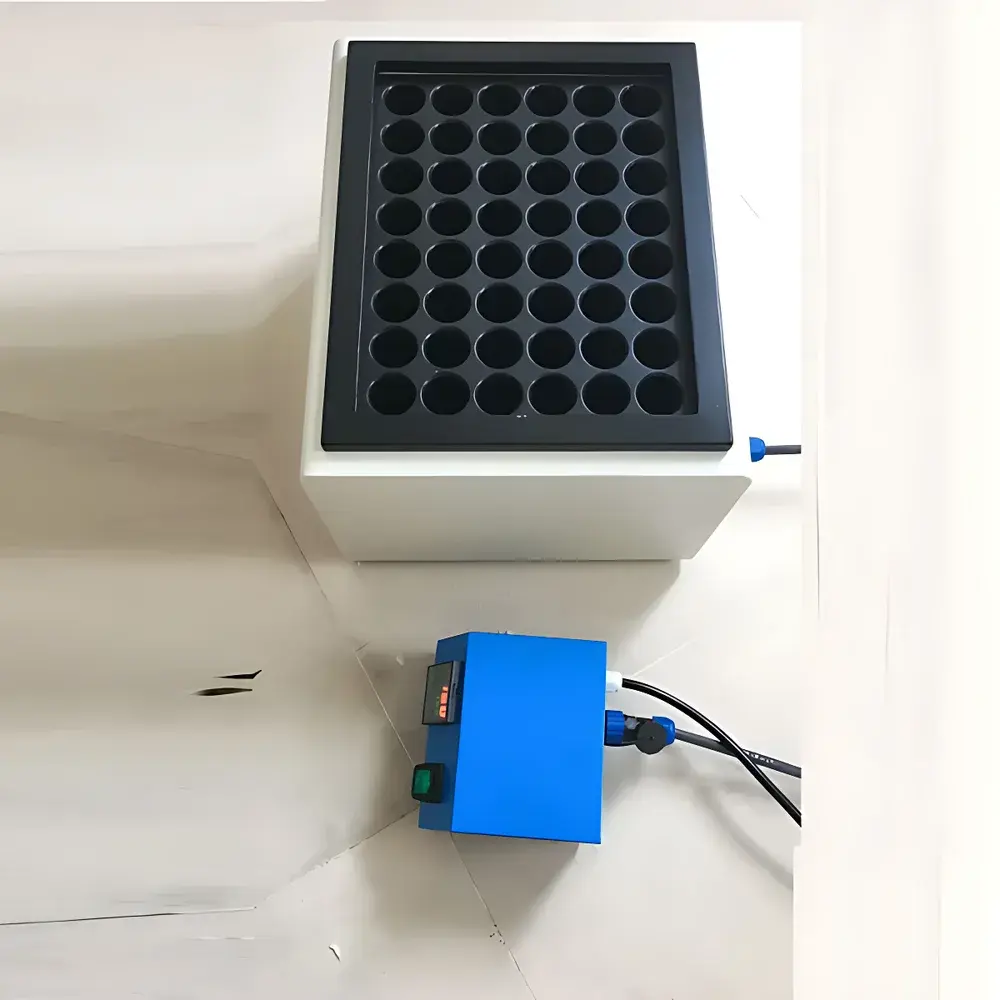
Binzhenghong NJ-XJ-48 Graphite Block Digestion System with 50 mL Digestion Tubes
| Brand | Binzhenghong |
|---|---|
| Origin | Jiangsu, China |
| Manufacturer Type | Direct Manufacturer |
| Instrument Type | Graphite Heating Digestion System |
| Automation Level | Semi-Automatic |
| Digestion Capacity | 48 Positions (Customizable to 36 or 48) |
| Max Operating Temperature | 260 °C (Recommended ≤200 °C for routine use) |
| Temperature Control Accuracy | ±1 °C (Uniformity across block: ±1.5 °C |
| Max surface delta T | ≤5 °C) |
| Heating Principle | Uniform Surrounding Graphite Block with PTFE-Coated Cavity |
| Power Supply | 220 V / 50 Hz |
| Digestion Tube Dimensions | Ø28 mm × 135 mm (L) |
| Block Well Dimensions | Ø31.5 mm × 100 mm (D × H) |
| Unit Dimensions (W×D×H) | 490 × 410 × 160 mm |
| Configuration | Split Design — Main Heating Block + Remote PID Controller (Signal cable: 1.5 m |
| Power cable | 1.5 m) |
Overview
The Binzhenghong NJ-XJ-48 Graphite Block Digestion System is an engineered solution for high-throughput, thermally stable, and chemically resistant sample preparation in regulated and research laboratories. It operates on the principle of conductive heating via a monolithic, high-density graphite block—designed to deliver uniform thermal energy distribution across all digestion positions. Unlike ceramic or metal-heated units, graphite offers superior thermal mass, low thermal gradient, and exceptional resistance to thermal shock. The system’s split architecture isolates the PID temperature controller from the digestion zone, mitigating degradation from acidic vapors generated during open-vessel digestion protocols. This design directly supports compliance with ISO/IEC 17025 method validation requirements for trace metal analysis, where temperature homogeneity and long-term stability are critical for reproducible acid digestion outcomes.
Key Features
- High-Integrity Graphite Block: Manufactured from isotropic, high-purity graphite with electrostatically applied PTFE coating—resistant to HNO₃, HCl, HF (≤5%), H₂O₂, and organic solvents under standard digestion conditions.
- Precision PID Temperature Control: Digital microprocessor-based controller with real-time feedback loop ensures setpoint accuracy of ±1 °C across the full range (room temperature to 260 °C), validated per ASTM E220-22 calibration methodology.
- Thermal Uniformity Optimized: Measured inter-well temperature variation ≤±1.5 °C at 180 °C; maximum surface delta-T across active zone ≤5 °C—critical for parallel digestion of certified reference materials (CRMs) and multi-element ICP-MS workflows.
- Semi-Automated Workflow Support: Compatible with standardized 50 mL borosilicate or quartz digestion tubes (Ø28 mm × 135 mm); accommodates optional tube racks, cooling stands, and fume hood integration kits.
- Corrosion-Resistant Enclosure & Cabling: All external surfaces feature epoxy-powder-coated steel housing; signal and power cables utilize acid-resistant PVC sheathing with IP54-rated connectors.
- Energy-Efficient Thermal Architecture: 360° circumferential heating minimizes thermal loss; average power draw remains ≤1.8 kW during ramp-to-temperature phase, reducing operational cost over batch cycles.
Sample Compatibility & Compliance
The NJ-XJ-48 supports digestion of solid and semi-solid matrices including soil, sediment, plant tissue, cereal grains (e.g., rice), wastewater sludge, and biological tissues using EPA Methods 3050B, 3051A, and 3052, as well as ISO 11466 and GB/T 17134–2022. Its PTFE-coated wells prevent cross-contamination and leaching of trace metals (e.g., Cr, Ni, Pb) during prolonged heating. The system meets mechanical safety requirements per IEC 61010-1:2010 and is suitable for GLP-compliant environments when operated with documented SOPs, calibration logs, and periodic verification using NIST-traceable thermocouples (Type K, Class 1). Optional audit-trail-capable data loggers can be integrated to satisfy FDA 21 CFR Part 11 requirements for electronic records.
Software & Data Management
While the base unit operates via standalone PID controller with LED display, optional RS-485/Modbus RTU interface enables connection to laboratory information management systems (LIMS) or SCADA platforms. Third-party software packages—including LabVIEW-compatible drivers and Python API libraries—are available for automated temperature ramping, hold-time sequencing, and CSV export of time-stamped thermal profiles. All firmware updates are delivered via secure USB dongle with SHA-256 signature verification. Calibration certificates include uncertainty budgets traceable to national metrology institutes (NIM, China).
Applications
- Environmental testing labs performing heavy metal quantification (As, Cd, Cu, Pb, Zn) in soils per ISO 11466 and EPA 6010D.
- Food safety laboratories digesting rice and cereal samples for total arsenic speciation prior to HPLC-ICP-MS.
- Geochemical research requiring reproducible dissolution of silicate-rich rocks using HF-HNO₃ mixtures.
- Wastewater treatment facilities validating sludge metal content against EU Directive 86/278/EEC limits.
- Academic core facilities supporting multi-user access with customizable temperature/time protocols stored in non-volatile memory.
FAQ
What is the recommended maximum operating temperature for routine digestion?
For optimal longevity of the PTFE coating and consistent temperature uniformity, operation above 200 °C is discouraged unless required by specific method protocols (e.g., EPA 3052).
Can the system accommodate custom tube geometries beyond Ø28 mm?
Yes—custom well inserts (stainless steel or quartz-lined) are available for tubes ranging from Ø16 mm to Ø35 mm; lead time is 4–6 weeks.
Is the PID controller compatible with external data acquisition systems?
Yes—Modbus RTU output is standard; analog 4–20 mA and 0–5 V outputs are available as factory options.
How often should temperature uniformity verification be performed?
Per ISO/IEC 17025 Clause 6.4.10, verification is recommended before each analytical batch when processing CRMs or regulatory samples; annual full calibration is advised.
Does the system support programmable multi-step temperature ramps?
The base controller supports single-setpoint operation; multi-step ramping requires the optional PC-based control module (Model NJ-CTRL-PRO) with preloaded EPA/ISO method templates.



