
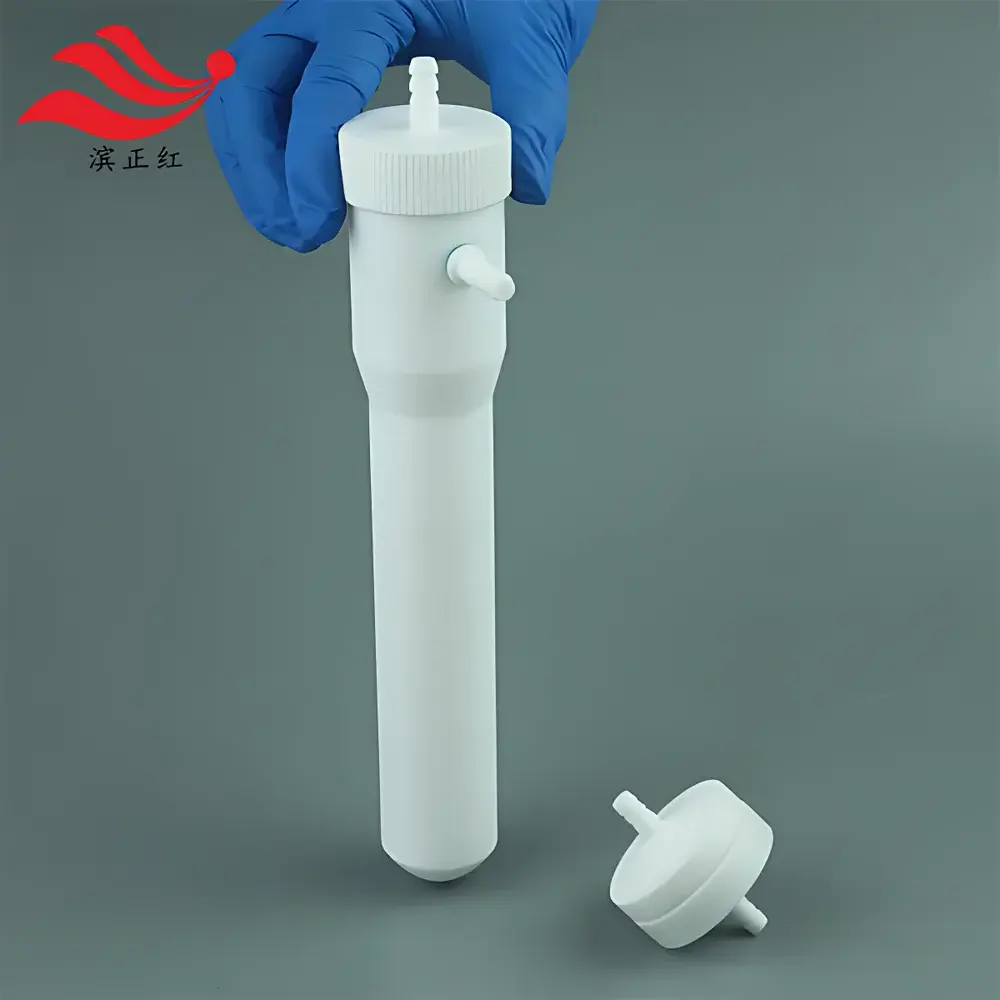
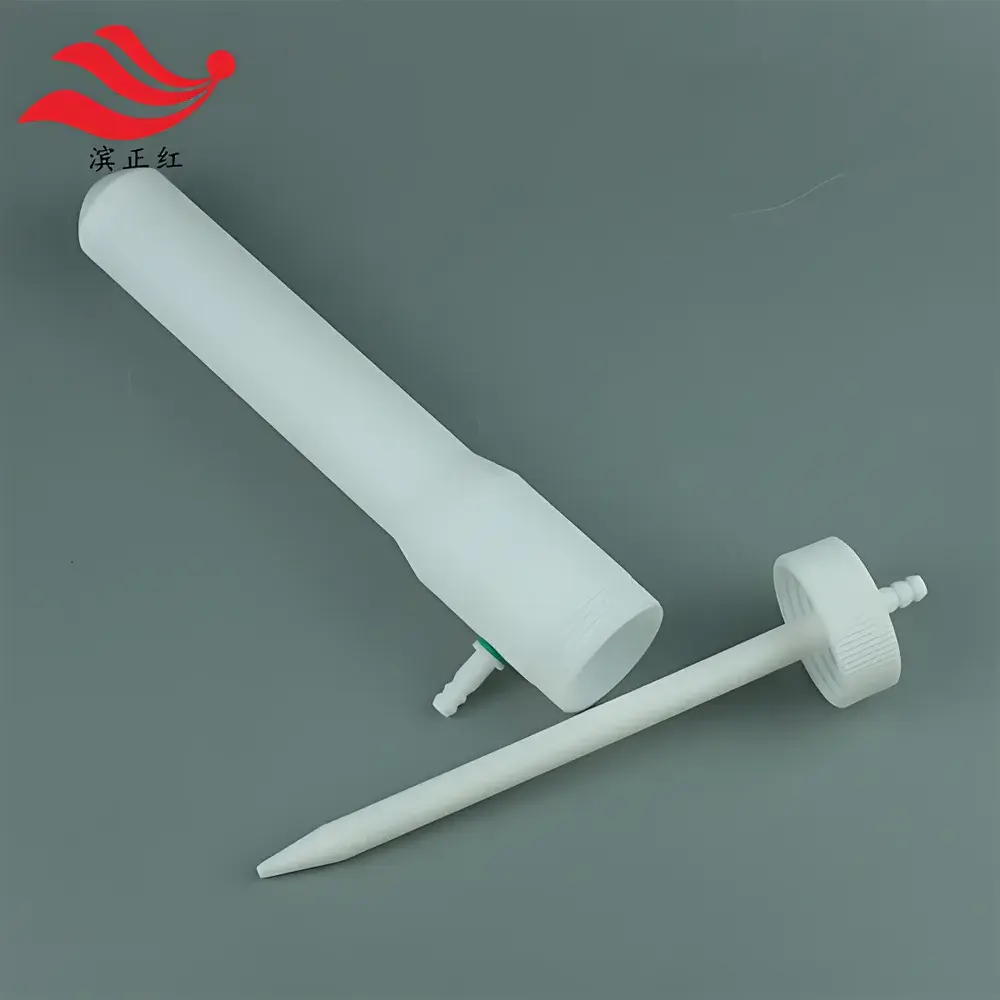
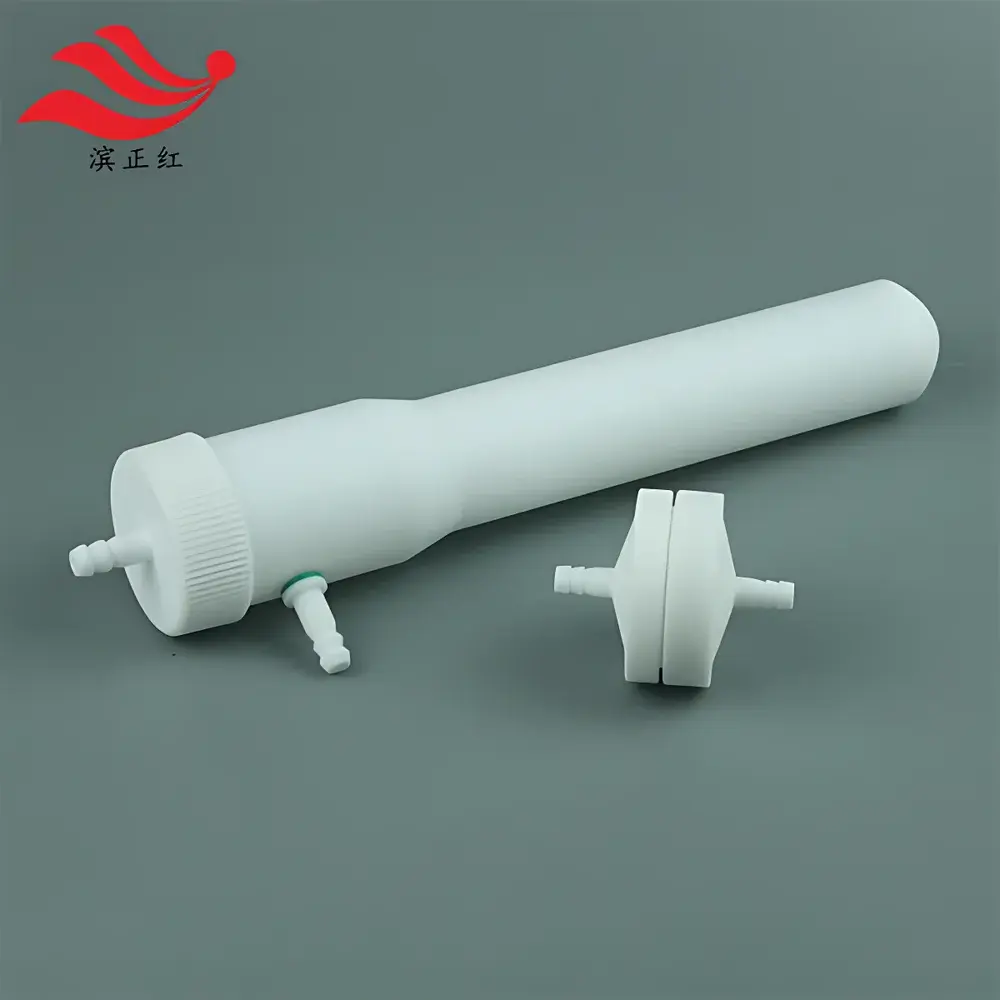
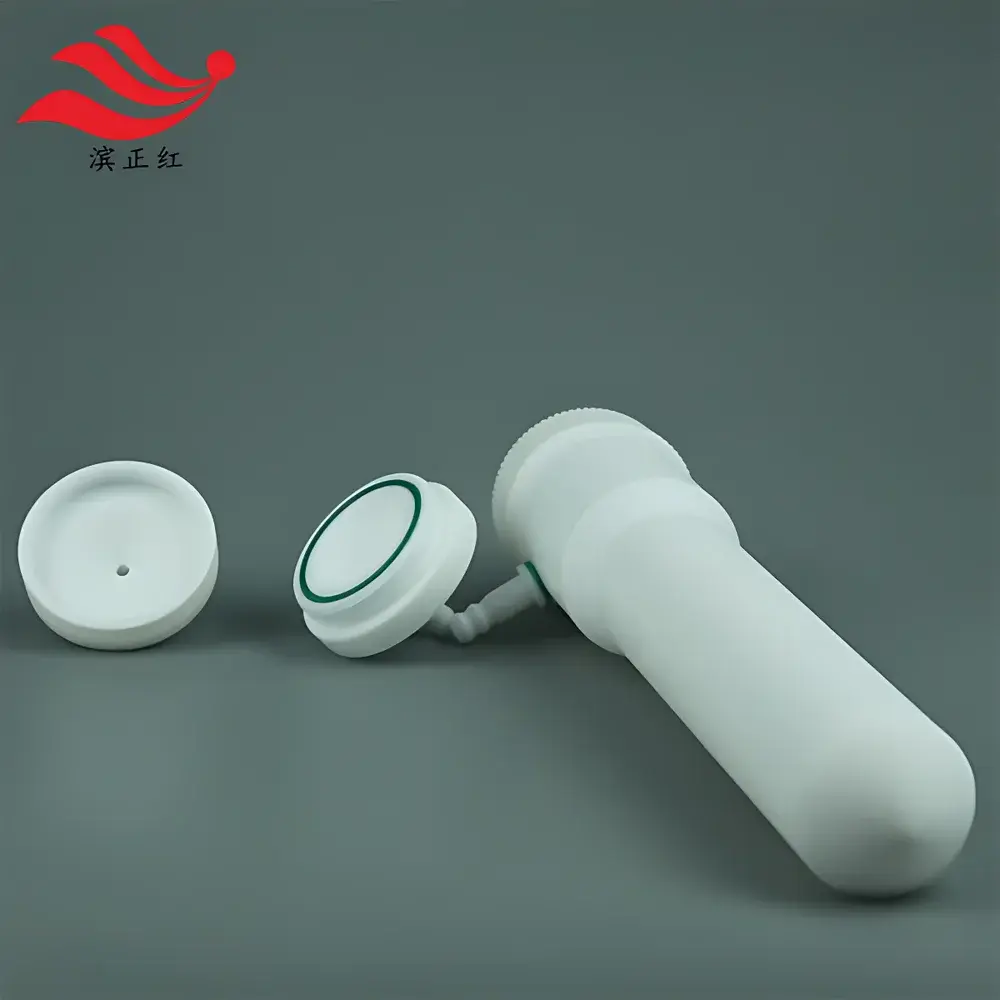
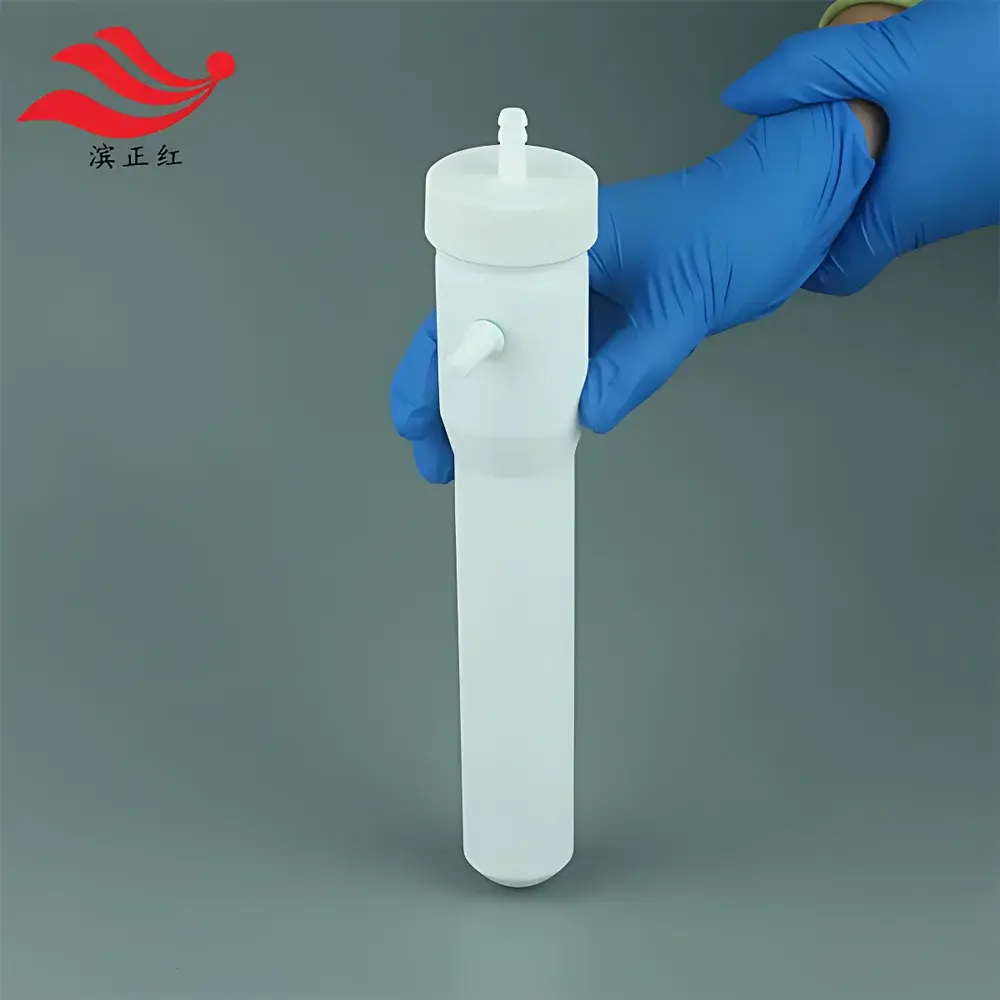
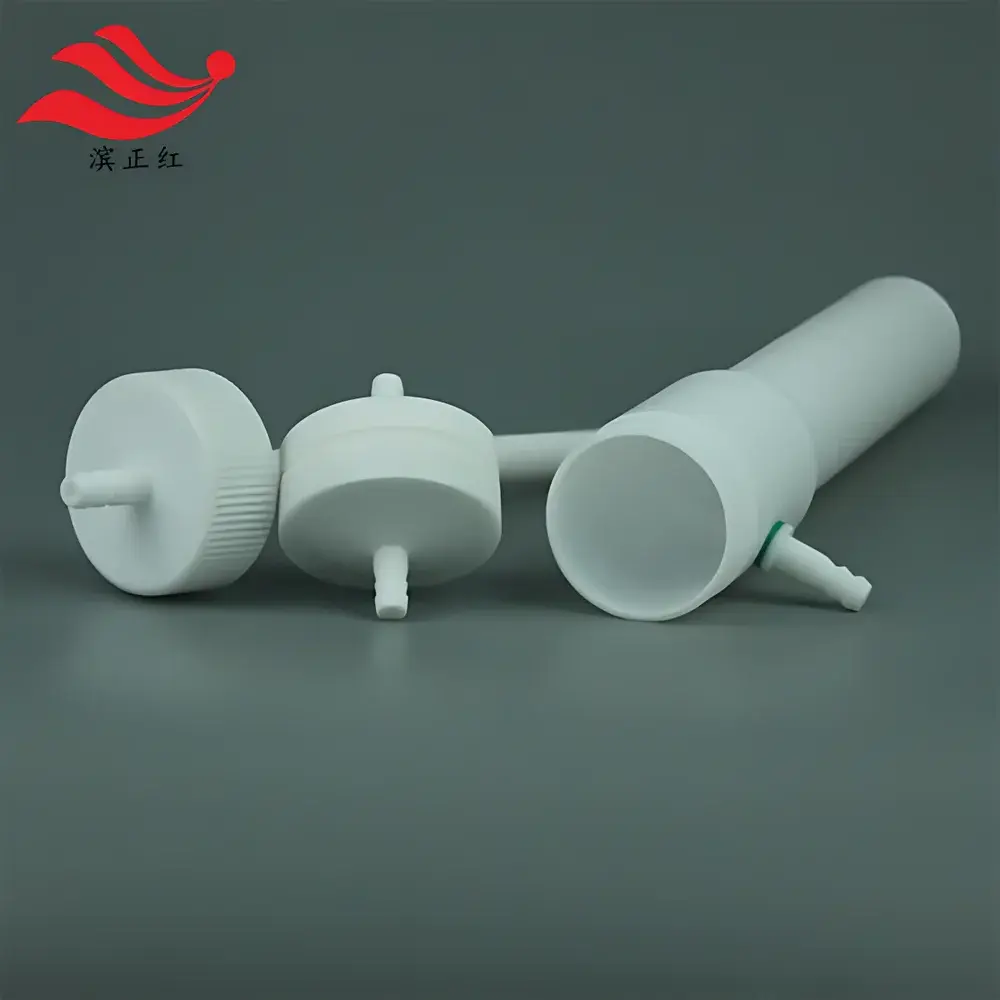
Binzhenghong PTFE Bubble Absorption Bottle, 75 mL — Compliant with HJ 549–2016 for Hydrogen Fluoride (HF) Emission Monitoring
| Brand | Binzhenghong |
|---|---|
| Origin | Jiangsu, China |
| Manufacturer Type | OEM Producer |
| Product Category | Domestic |
| Capacity | 75 mL |
| Pricing | Upon Request |
Overview
The Binzhenghong PTFE Bubble Absorption Bottle (75 mL) is a chemically inert sampling device engineered for the quantitative collection and stabilization of gaseous hydrogen fluoride (HF) and fluorides from stationary source emissions—specifically designed to meet the analytical requirements of Chinese Environmental Standard HJ 549–2016, “Determination of Hydrogen Fluoride in Ambient Air and Exhaust Gas — Ion Chromatography Method.” Unlike conventional borosilicate glass or polyethylene absorption bottles, this unit is fabricated entirely from high-purity polytetrafluoroethylene (PTFE), offering complete resistance to HF, hydrofluoric acid, alkaline absorbents (e.g., NaOH or Na₂CO₃ solutions), and aggressive oxidants. Its bubble-type configuration ensures controlled gas dispersion through a fine-pore PTFE frit, maximizing interfacial contact time between the sampled flue gas and the alkaline absorption medium—thereby achieving ≥95% collection efficiency under standardized flow conditions (0.3–0.5 L/min, per HJ 549–2016 Section 7.3). The bottle operates on the principle of solution-phase scrubbing: gaseous HF dissolves into the alkaline absorbent, forming stable fluoride ions (F⁻), which are subsequently quantified via ion chromatography (IC) with conductivity detection.
Key Features
- Monolithic PTFE construction—no adhesives, coatings, or metallic components—to eliminate trace metal contamination and ensure ultra-low blank values (<0.05 µg F⁻/bottle)
- Optimized bubble dispersion geometry: precision-machined PTFE frit (nominal pore size: 10–25 µm) enables uniform gas distribution and minimizes channeling or bypass flow
- Thermal stability across −200 °C to +250 °C—suitable for use with heated sampling lines up to 180 °C without deformation or outgassing
- Surface energy <18 mN/m—the lowest among solid polymers—preventing analyte adsorption, droplet retention, or carryover between samples
- Chemical resistance validated against 40% HF, concentrated HNO₃/H₂SO₄, aqua regia, and polar organic solvents (e.g., acetonitrile, methanol); zero leachable fluorides or cations (ICP-MS tested)
- Autoclavable and compatible with laboratory-grade cleaning protocols (e.g., hot 10% NaOH rinse followed by ASTM D1193 Type I water triple-rinse)
Sample Compatibility & Compliance
This absorption bottle is validated for use in regulated emission testing workflows compliant with HJ 549–2016, GB/T 16157–1996 (stationary source exhaust sampling), and ISO 10177:2021 (air quality — determination of fluoride compounds). It integrates seamlessly with heated PTFE or titanium sampling probes, quartz fiber filters (for particulate fluoride removal), and inline ice-cooled condensate traps. Each unit undergoes individual batch certification: certificate of conformance includes IC-determined fluoride blank, extractable metal profile (Al, Fe, Ca, Mg < 0.1 ng/mL), and dimensional verification per ISO 2859-1 AQL 1.0. Not intended for direct connection to vacuum pumps exceeding 15 kPa differential pressure; requires inline pressure regulation per EPA Method 26A guidelines.
Software & Data Management
While the PTFE absorption bottle itself is a passive hardware component, its use is embedded within auditable analytical workflows. When deployed in GLP- or ISO/IEC 17025-accredited laboratories, sample identification, absorbent volume, sampling duration, flow rate, and ambient temperature/pressure must be recorded in electronic lab notebooks (ELNs) compliant with FDA 21 CFR Part 11. Data generated from subsequent ion chromatography analysis—including calibration curves, system suitability checks (e.g., %RSD of retention time < 0.5%), and peak integration parameters—must be traceable to each bottle’s unique lot number. Binzhenghong provides batch-specific QC documentation (available upon request) supporting full chain-of-custody integrity.
Applications
- Regulatory monitoring of HF emissions from aluminum smelters, phosphate fertilizer plants, semiconductor etching facilities, and coal-fired power stations
- Method validation studies for alternative fluoride capture matrices (e.g., comparison of PTFE vs. quartz wool impregnated with NaOH)
- Field-deployed stack testing where glass breakage risk or HF-induced corrosion compromises data reliability
- Reference material preparation for fluoride standard addition experiments
- Research on HF partitioning behavior between gaseous, aerosol, and particulate phases in thermal process off-gases
FAQ
Is this bottle certified for use in China’s official environmental monitoring network (i.e., CNAS-accredited labs)?
Yes—each production lot is accompanied by a conformity report referencing HJ 549–2016 Annex B validation criteria and meets CNAS-CL01:2018 requirements for reference material traceability.
Can it be reused after cleaning?
Yes, provided rigorous decontamination (hot 10% NaOH → DI water ×3 → oven-dried at 120 °C) and post-cleaning blank verification (IC detection limit ≤0.02 µg F⁻) are performed per laboratory SOP.
What absorbent solution is recommended for HF capture?
0.1 mol/L NaOH or 0.05 mol/L Na₂CO₃—both yield quantitative F⁻ recovery (>98.5%) when sampled at ≤0.4 L/min for ≤60 min, as verified per HJ 549–2016 Section 8.2.
Does the bottle include a calibration certificate?
No—calibration applies to flow meters and IC systems; however, dimensional and material certification (including pore size verification and elemental blank data) is supplied with each shipment.



