
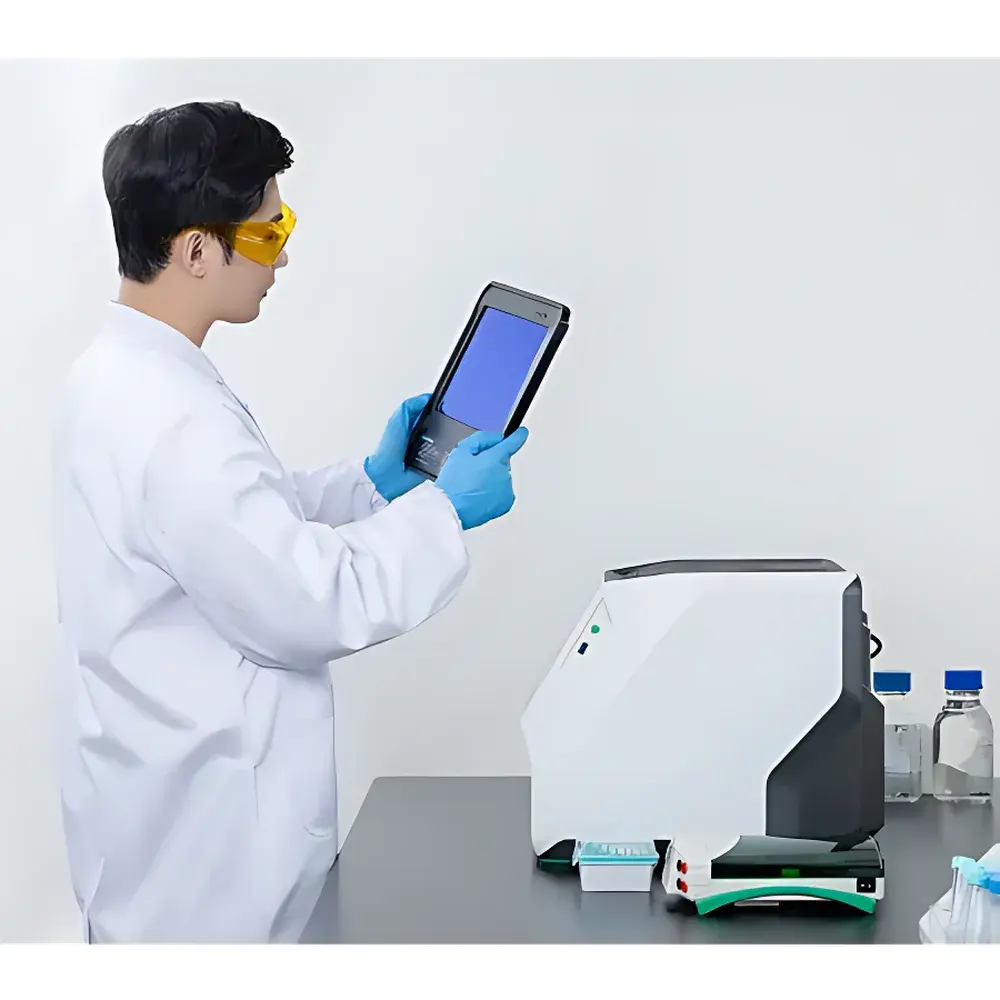
Bio-Rad GelDoc Go Blue-Light Safe Gel Imaging and Excision System
| Brand | Bio-Rad |
|---|---|
| Origin | USA |
| Model | GelDoc Go Blue-Light Safe Gel Imaging System |
| CCD Resolution | 6.3 MP |
| Bit Depth | 16-bit |
| Dynamic Range | 0–4.8 OD |
| Light Sources | Dual-mode transilluminator (UV 302 nm + Blue Light 470 nm) |
| Safety Configuration | Integrated blue-light excitation with amber safety goggles |
| Instrument Type | Benchtop gel documentation system |
| Compliance | Designed for ISO/IEC 17025-aligned lab environments |
Overview
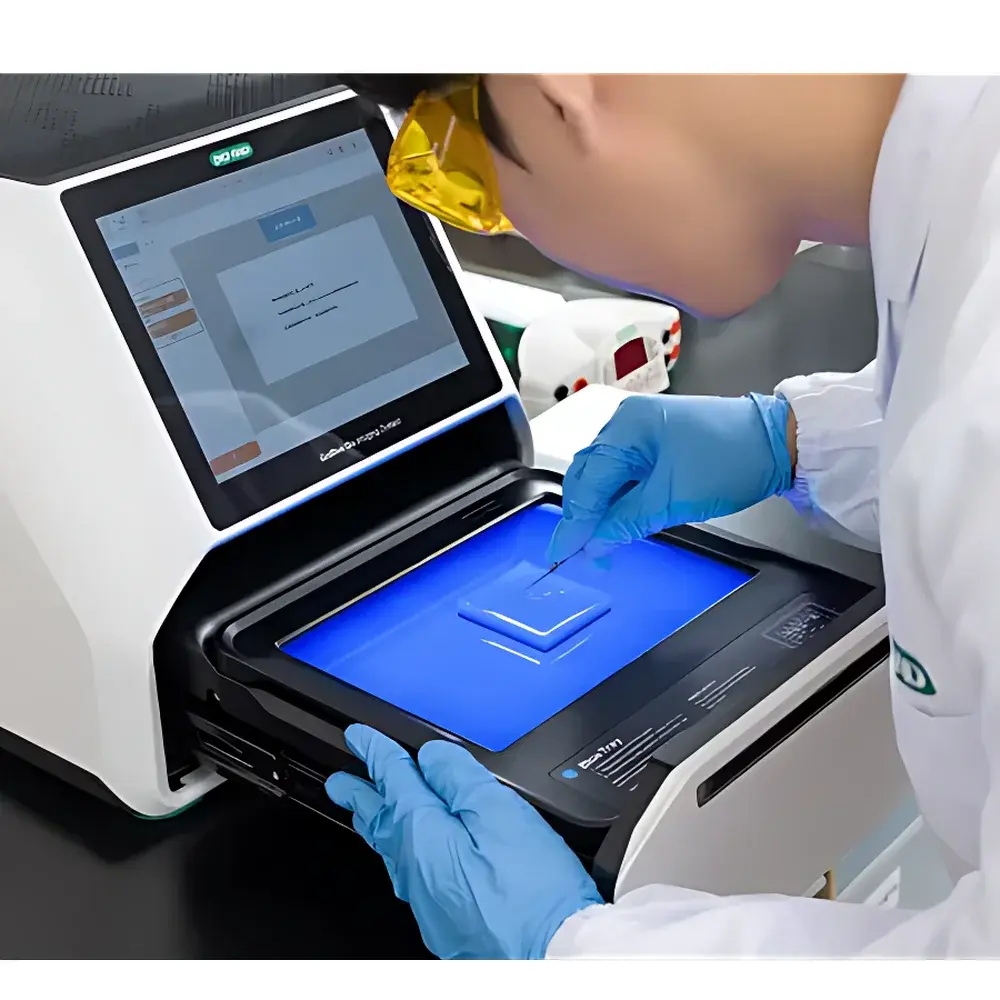
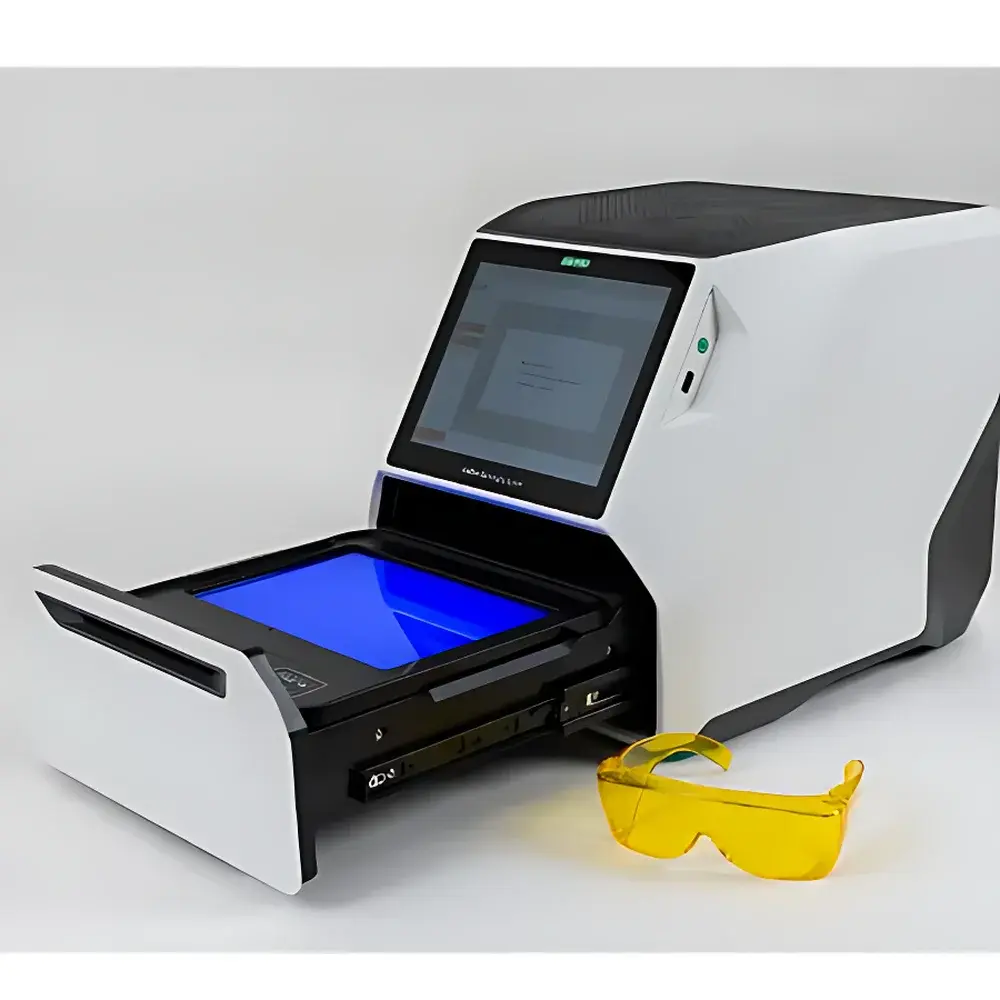
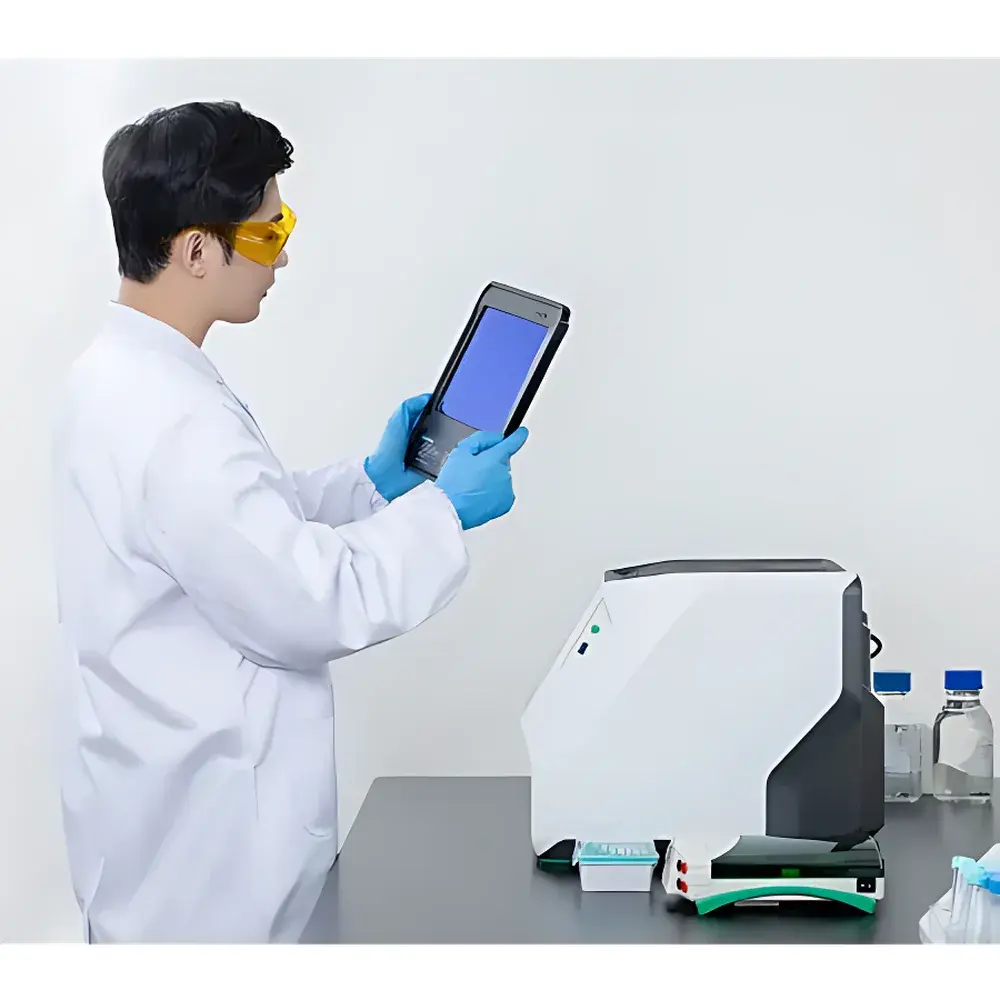
The Bio-Rad GelDoc Go Blue-Light Safe Gel Imaging and Excision System is a compact, benchtop-grade gel documentation platform engineered for precision nucleic acid visualization and direct band excision under non-UV illumination. It operates on the principle of blue-light-induced fluorescence—utilizing high-intensity 470 nm LED transillumination to excite common nucleic acid stains (e.g., SYBR Safe, GelGreen, and BlueView dyes) without generating mutagenic UV-C or UV-B radiation. Unlike conventional UV-based systems requiring rigid shielding, interlocked enclosures, and mandatory PPE, the GelDoc Go enables real-time imaging and physical gel excision within an open, unshielded workspace—significantly reducing procedural latency while maintaining analytical fidelity. Its optical architecture integrates a thermoelectrically stabilized 6.3-megapixel monochrome CCD sensor with 16-bit digitization and a calibrated dynamic range spanning 0–4.8 optical density (OD), ensuring quantitative linearity across low- and high-intensity bands. The system is purpose-built for molecular biology core facilities, academic teaching labs, and QC/QA units where throughput, operator safety, and regulatory traceability are co-prioritized.
Key Features
- Blue-light transillumination (470 nm) optimized for SYBR-class dyes—eliminates need for UV-blocking hoods, interlocks, or disposable gloves rated for UV exposure
- Dual-source transilluminator: switchable 302 nm UV and 470 nm blue-light modes via software-controlled relay, enabling side-by-side comparison of stain performance and sensitivity
- 6.3 MP scientific-grade CCD with 16-bit analog-to-digital conversion and hardware binning support for improved signal-to-noise ratio in low-light conditions
- QuickSight real-time preview engine—sub-second frame acquisition with live histogram feedback and auto-exposure optimization
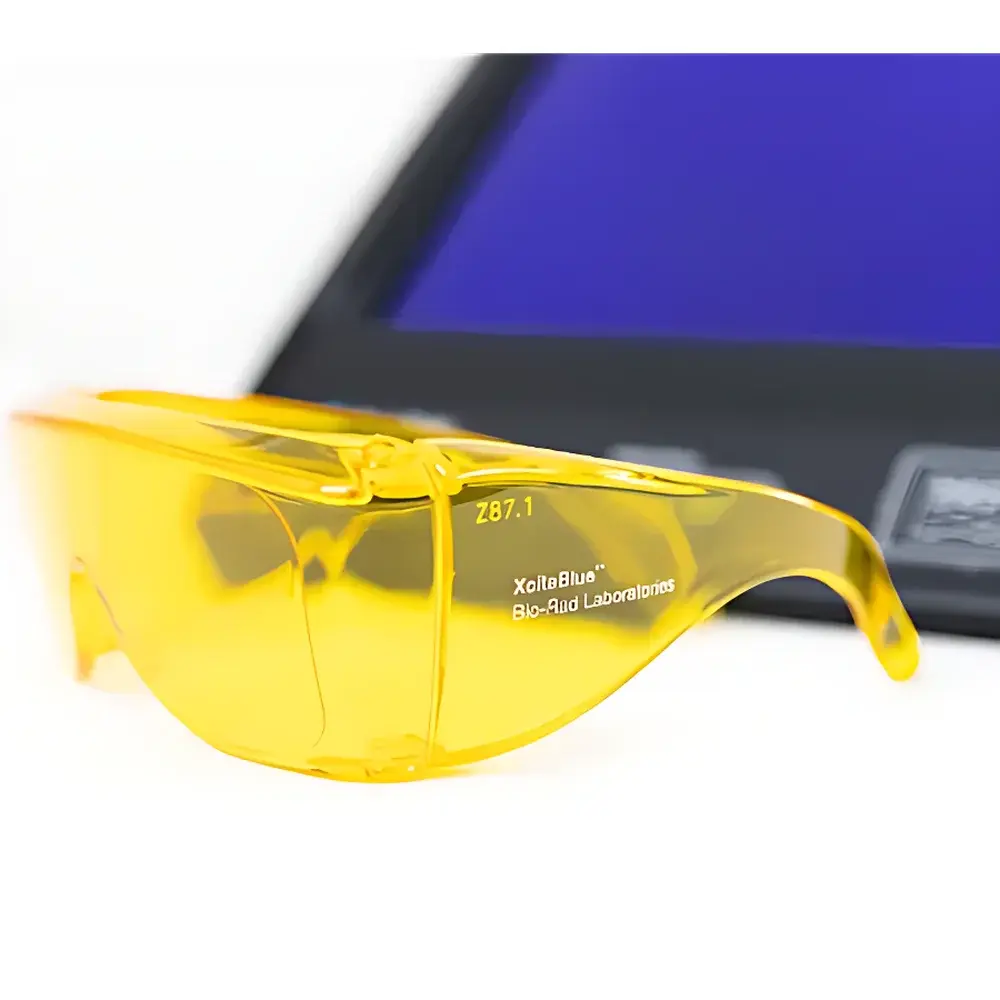
- Ergonomic open-bay design with integrated amber-tinted safety goggles (included), providing >99% attenuation of 400–500 nm ambient scatter while preserving visual acuity for precise excision
- Embedded firmware with timestamped image metadata, user ID logging, and audit-ready export (TIFF, JPEG, PNG) compliant with FDA 21 CFR Part 11 requirements when paired with Bio-Rad’s Image Lab Touch software
Sample Compatibility & Compliance
The GelDoc Go accommodates standard electrophoresis formats including mini-gels (up to 10 × 10 cm), midi-gels (up to 15 × 15 cm), and multi-well comb configurations (1–26 lanes). It supports agarose (0.7–3.0%) and polyacrylamide (8–20%) matrices stained with DNA/RNA-selective fluorescent dyes compatible with blue-light excitation. No modification to standard electrophoresis protocols is required. From a compliance perspective, the system aligns with ISO/IEC 17025 clause 5.9 (assuring measurement traceability), supports GLP-compliant data archiving through encrypted file headers, and meets IEC 61000-6-3 electromagnetic compatibility standards for laboratory instrumentation. Its blue-light emission profile conforms to IEC 62471 Photobiological Safety Classification (Risk Group 1—exempt from labeling requirements for occupational exposure).
Software & Data Management
Controlled exclusively via Bio-Rad’s Image Lab Touch software (v6.1+), the GelDoc Go supports full workflow automation: image capture, background subtraction, lane/band detection, molecular weight estimation, and relative quantification against internal standards. All images retain embedded EXIF metadata—including exposure time, gain setting, light source mode, date/time stamp, and operator login ID—enabling retrospective validation and audit trail reconstruction. Export options include lossless TIFF (for publication), annotated PDF reports, and CSV-formatted quantification tables compatible with LIMS integration. When deployed in regulated environments, optional software modules provide electronic signature enforcement, change control logs, and 21 CFR Part 11-compliant audit trails—fully validated for GxP laboratories.
Applications
- Routine PCR product verification and size confirmation in teaching and diagnostic labs
- Preparative DNA fragment isolation for cloning, sequencing library construction, and CRISPR gRNA validation
- Quality control of plasmid preps, restriction digests, and RNA integrity assays (RIN estimation via denaturing gels)
- Comparative expression analysis using ethidium bromide–free staining in undergraduate molecular biology curricula
- High-throughput screening support for genotyping pipelines where rapid turn-around and operator safety are critical KPIs
FAQ
Does the GelDoc Go require UV protective shielding during blue-light operation?
No. The 470 nm blue-light source emits no UV radiation and poses no photodamage risk to DNA or operator skin/eyes when used with supplied amber safety goggles.
Can I use standard ethidium bromide with the blue-light mode?
Ethidium bromide exhibits minimal excitation at 470 nm; we recommend SYBR Safe, GelGreen, or BlueView for optimal sensitivity and safety in blue-light workflows.
Is the 6.3 MP resolution sufficient for publication-quality figures?
Yes—the system captures at native 6.3 MP with 16-bit depth and supports spatial calibration via included reference grid; exported TIFFs meet journal requirements for figure submission.
How is data integrity maintained during instrument sharing across multiple users?
Each image embeds immutable metadata (user ID, timestamp, acquisition parameters); Image Lab Touch enforces role-based access control and encrypted local storage to prevent unauthorized modification.
What maintenance is required for long-term optical stability?
The LED light sources have >20,000-hour lifespans with no intensity drift; CCD sensor is sealed and thermally stabilized—no routine recalibration is needed per ISO 10993-12 guidelines.





