
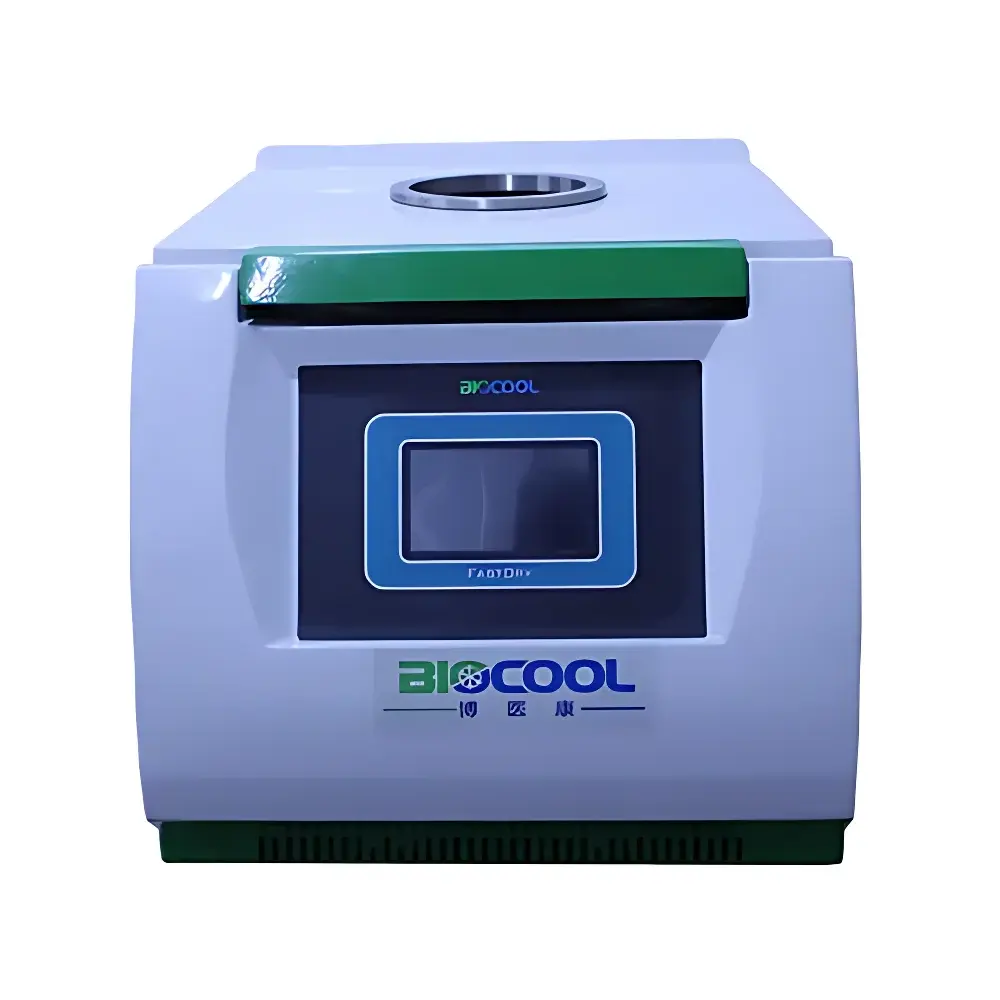
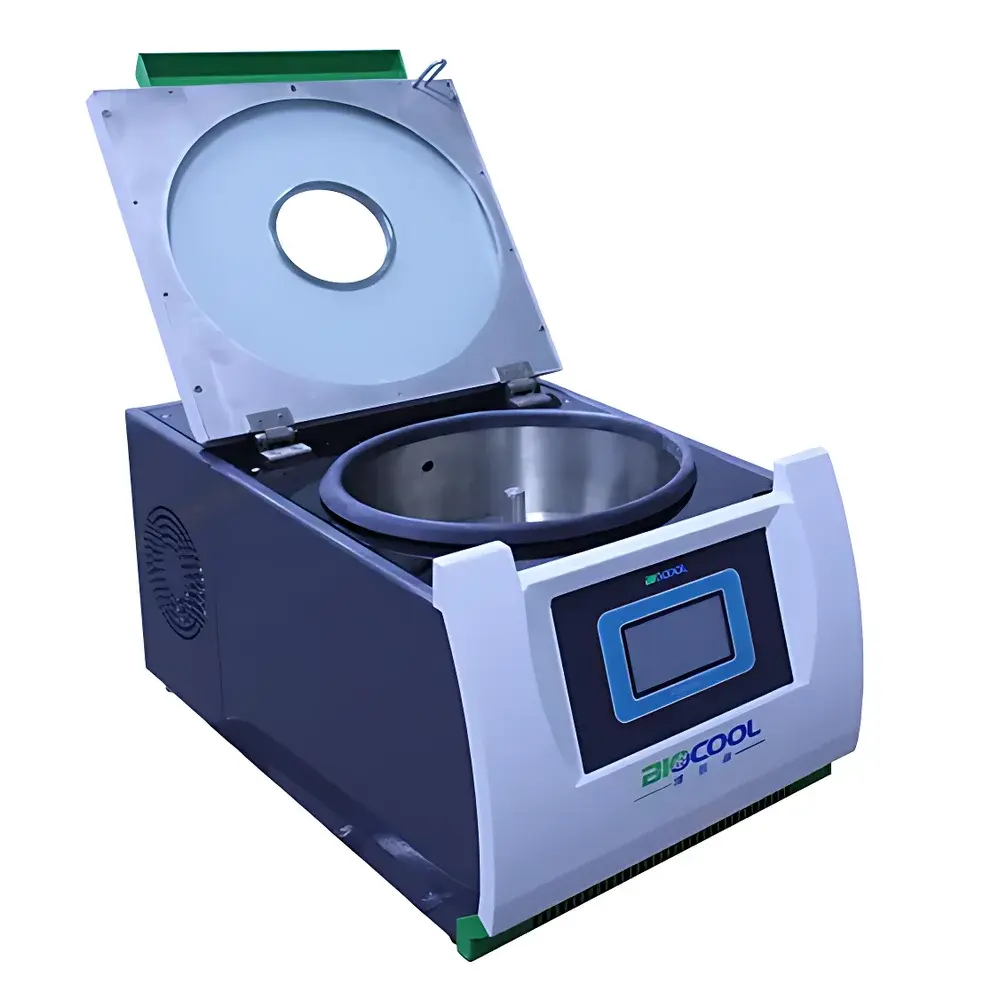
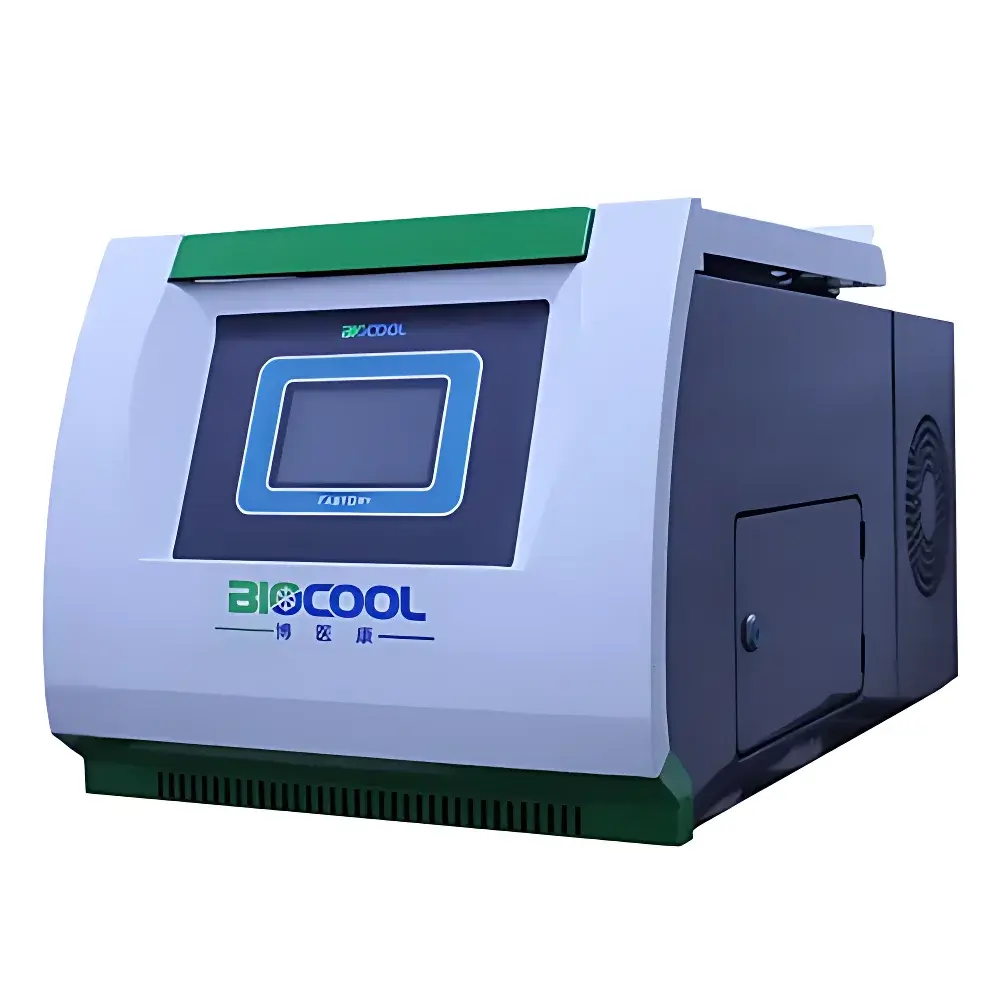
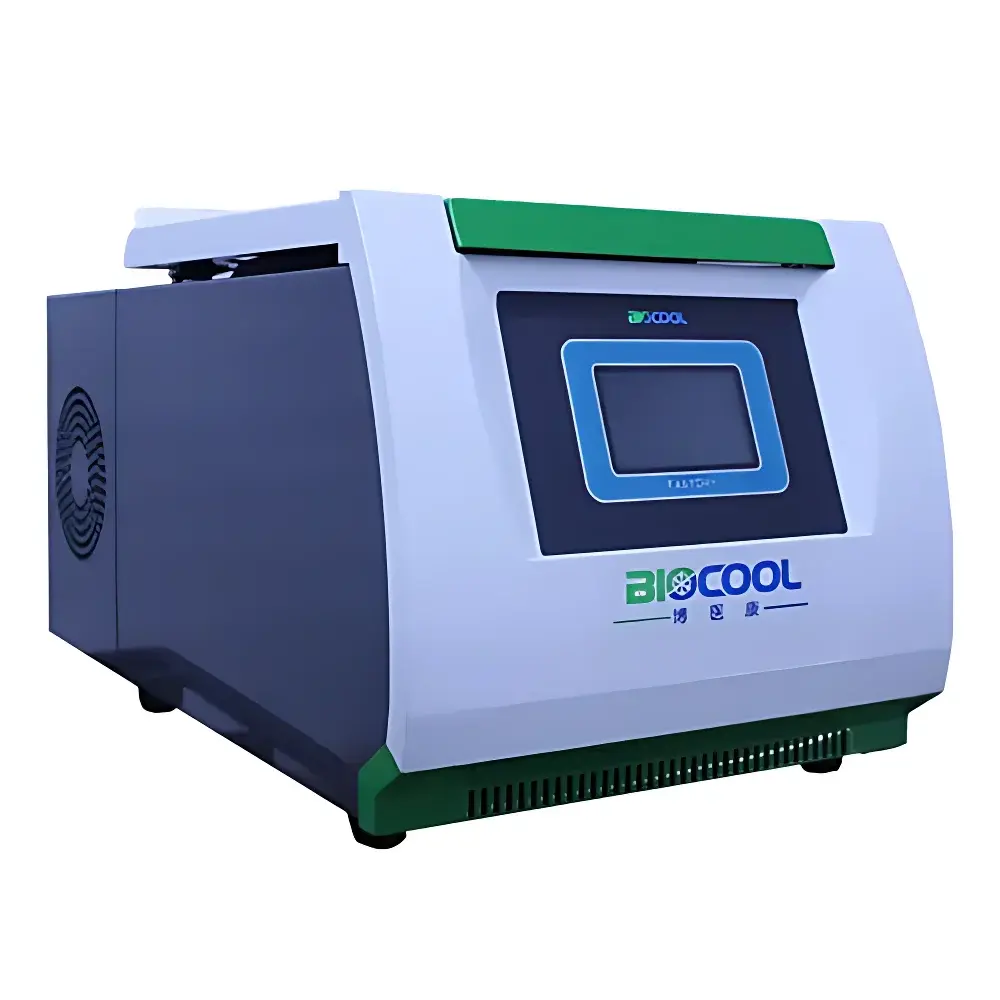
BIOCOOL FastDry-4 Vacuum Centrifugal Concentrator
| Brand | BIOCOOL |
|---|---|
| Origin | Tianjin, China |
| Model | FastDry-4 |
| Instrument Type | Vacuum Centrifugal Concentrator |
| Temperature Range | 4°C to 80°C |
| Temperature Control | Gradient PID Control |
| Sample Capacity | 132 × 1.5 mL tubes |
| Vacuum Pump Options | Diaphragm or Direct-Coupled Rotary Vane Pump |
| Cold Trap Compatibility | Optional −50°C / −80°C / <−110°C cryo-traps |
| Safety Features | Vacuum-delayed spin-up, Auto venting, Magnetic drive seal, Corrosion-resistant PTFE-coated chamber & rotors |
| Control Interface | Industrial touchscreen + PLC |
| Programmability | 12-step customizable protocol per run (speed, temp, vacuum, time) |
| Rotor Recognition | Supports ~50 rotor types |
| Mobile Monitoring | Remote status tracking via smartphone app |
| Compliance | Designed for GLP/GMP environments |
Overview
The BIOCOOL FastDry-4 Vacuum Centrifugal Concentrator is an engineered solution for high-efficiency, low-temperature solvent removal from biological and chemical samples under controlled vacuum and rotational conditions. It operates on the principle of simultaneous centrifugal force, vacuum-induced evaporation, and precise thermal management—enabling rapid concentration without thermal degradation or sample foaming. Unlike conventional speed vac systems, the FastDry-4 integrates gradient PID temperature control (4–80°C), variable-speed magnetic-drive rotation (400–1800 rpm), and programmable multi-stage vacuum profiles to optimize mass transfer kinetics across diverse analyte classes—including nucleic acids, proteins, peptides, metabolites, and small-molecule organics. Its modular architecture separates the concentrator, vacuum pump, and cold trap into interoperable units, allowing configuration flexibility for labs requiring −50°C, −80°C, or ultra-low −110°C condensation performance.
Key Features
- PTFE-coated centrifuge chamber and rotor surfaces ensure long-term resistance to acidic, basic, and organic solvents—eliminating corrosion concerns during repeated use.
- Magnetic drive coupling maintains absolute vacuum integrity while delivering smooth, low-vibration rotation—critical for sensitive biomolecules and viscous samples.
- 12-segment programmable touchscreen interface enables granular control over rotational speed, chamber temperature, vacuum setpoint, and dwell time per stage—supporting complex drying protocols such as gentle RNA dehydration or stepwise peptide desalting.
- Vacuum-delayed spin-up logic prevents ice crystal formation: rotation reaches target speed before vacuum initiation—preserving structural integrity of frozen or cryopreserved samples.
- Auto venting system performs controlled nitrogen or ambient-air backfill at process completion—ensuring safe, reproducible sample recovery without manual intervention.
- Integrated rotor identification system recognizes up to 50 distinct rotor configurations—automatically loading validated parameters for tube geometry, max speed, and thermal load compensation.
- Mobile monitoring capability allows real-time remote observation of runtime status, error logs, and active protocol progress—facilitating unattended overnight operation in shared core facilities.
Sample Compatibility & Compliance
The FastDry-4 accommodates standard 1.5 mL microcentrifuge tubes (132 positions) and supports alternative rotor formats for PCR strips, deep-well plates, and custom vials via optional accessories. Its temperature range (4–80°C) and gradient control support both cryo-stabilized workflows (e.g., enzyme preservation at 4°C) and accelerated evaporation of high-boiling-point solvents (e.g., DMSO at 60°C). All wetted components—including O-rings, gaskets, and chamber seals—are manufactured from USP Class VI-certified elastomers. The PTFE-coated interior meets ISO 13485 design requirements for medical device manufacturing environments and is compatible with autoclave sterilization (121°C, 20 min), supporting GMP-compliant purification processes. When configured with audit-trail-enabled software (optional), the system satisfies FDA 21 CFR Part 11 requirements for electronic records and signatures.
Software & Data Management
Control firmware runs on a deterministic industrial PLC platform, ensuring stable execution of multi-hour protocols without latency or crash risk. Protocol files are stored locally on encrypted internal memory and exportable via USB in CSV format for LIMS integration. Optional BIOVAC Connect software provides extended functionality: real-time vacuum/temperature trend logging, automated endpoint detection (via pressure slope analysis), and electronic batch record generation—including operator ID, timestamped parameter changes, and deviation alerts. All data entries include immutable timestamps and user authentication—meeting GLP documentation standards for regulated bioanalytical laboratories.
Applications
- Nucleic acid concentration and buffer exchange prior to sequencing library prep or qPCR.
- Protein precipitation cleanup following enzymatic digestion or affinity purification.
- Removal of acetonitrile, methanol, or ethyl acetate from HPLC fractions without denaturation.
- Lyophilization pre-concentration of monoclonal antibodies and viral vectors under controlled thermal stress.
- Routine solvent exchange in synthetic chemistry workflows—especially for air-sensitive intermediates requiring inert gas backfill.
- Pre-analytical sample preparation for LC-MS/MS metabolomics, where residual solvents must be eliminated below detection thresholds.
FAQ
What vacuum level can the FastDry-4 achieve?
The system achieves ≤10 Pa ultimate vacuum when paired with a direct-coupled rotary vane pump; performance varies slightly with cold trap temperature and solvent vapor load.
Is the chamber suitable for autoclaving?
Yes—the stainless-steel chamber and PTFE-coated rotor are rated for 121°C, 20-minute autoclave cycles per ISO 17665 validation protocols.
Can I monitor multiple instruments remotely from one dashboard?
With the optional BIOVAC Connect Enterprise license, up to 16 FastDry units can be managed concurrently via centralized web-based interface with role-based access control.
Does the system support method validation for regulated environments?
Yes—when used with IQ/OQ documentation packages and the audit-trail software module, it supports full 21 CFR Part 11 compliance for pharmaceutical QC labs.
How does the gradient temperature control improve reproducibility?
By dynamically adjusting heater output to match evaporative cooling rates, gradient PID minimizes thermal overshoot and ensures consistent energy input—critical for avoiding aggregation in protein concentrates.
Related Products



