
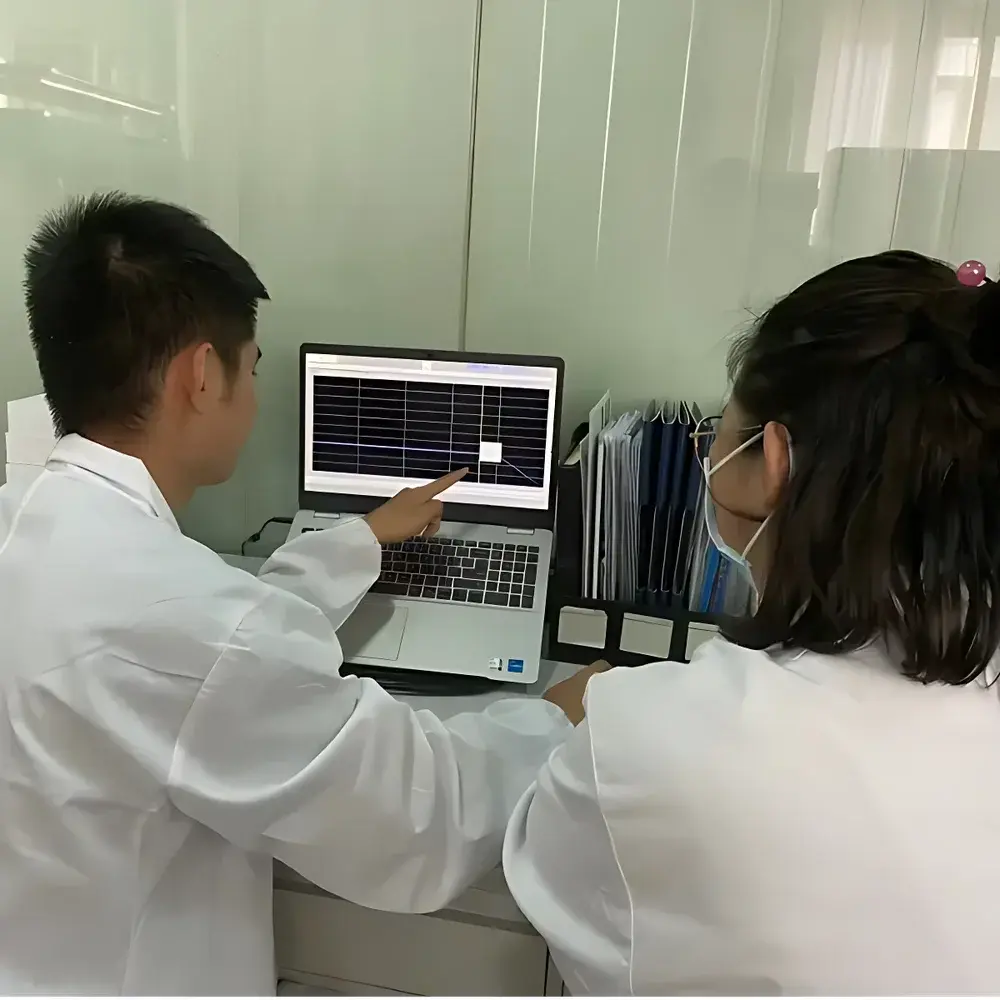
BIOCOOL Freeze Drying Process Development Service
| Brand | BIOCOOL |
|---|---|
| Origin | Tianjin, China |
| Manufacturer Type | Authorized Distributor |
| Product Origin | Domestic (China) |
| Model | BIOCOOL Freeze Drying Technology Research Center – Custom Process Development Service |
| Pricing | Upon Request |
Overview
The BIOCOOL Freeze Drying Process Development Service is a comprehensive, science-driven technical support offering designed for pharmaceutical, biotechnology, diagnostic, cosmetic, and advanced materials laboratories requiring robust, scalable, and regulatory-compliant lyophilization solutions. Unlike standalone equipment sales, this service integrates deep domain expertise in freeze drying thermodynamics, mass and heat transfer kinetics, and formulation science with hands-on process engineering. The service is anchored by the BIOCOOL Freeze Drying Technology Research Center—led by Dr. Minghui Ye, a recognized specialist with over 15 years of applied lyophilization experience spanning antibody therapeutics, diagnostic reagents, nucleic acid formulations, and GMP-compliant commercial product launch. Core methodology follows first-principles-based cycle design: thermal analysis (DSC/TMA) informs primary drying endpoint determination; controlled ice nucleation and annealing protocols optimize cake structure; and real-time pressure rise tests (PRT) or tunable diode laser absorption spectroscopy (TDLAS) support dynamic endpoint detection. All development workflows are structured to align with ICH Q5C, Q8(R2), and FDA Guidance for Industry: Lyophilization Process Validation.
Key Features
- End-to-end lyo process development—from analytical characterization to full-scale cycle transfer
- Thermal property profiling: Determination of critical temperatures including collapse temperature (Tc), glass transition onset (Tg’), eutectic melting (Te), and crystalline melt (Tm) via differential scanning calorimetry (DSC)
- Formulation optimization: Systematic screening and rational design of cryoprotectants (e.g., sucrose, trehalose), bulking agents (mannitol, glycine), and surfactants (polysorbate 20/80) tailored to protein stability, assay activity retention, and reconstitution time
- Lyophilization cycle design & optimization: Empirical and mechanistic modeling of shelf temperature ramping, chamber pressure control, and condenser load management to ensure consistent sublimation rates and minimize residual moisture (<2.0% w/w)
- GMP-aligned pilot-scale manufacturing: Available under ISO 9001-certified infrastructure for clinical trial material (CTM) production and commercial batch release support
- Scale-up validation: Data-rich bridging studies from lab-scale (0.1–2 L) to production-scale (≥20 L) freeze dryers using PAT-enabled monitoring (e.g., NIR, capacitance manometry)
Sample Compatibility & Compliance
The service accommodates diverse sample classes including monoclonal antibodies, recombinant enzymes, viral vectors, PCR/qPCR master mixes, ELISA reagents, ophthalmic formulations, cosmetic actives (e.g., peptides, growth factors), nanocellulose suspensions, and soil/environmental matrices. Sample submission follows strict biosafety and integrity protocols: sterile vials with silicone-sealed caps, validated cold-chain shipping (dry ice or phase-change materials at ≤−70°C), and documented chain-of-custody. All analytical and developmental activities adhere to GLP principles where applicable; documentation packages include raw DSC thermograms, cycle log files, moisture content (Karl Fischer titration), residual solvent analysis (GC), and structural integrity assessment (FTIR, SEC-HPLC). For regulated submissions, reports may be generated per FDA 21 CFR Part 11 requirements with electronic signatures and audit trails.
Software & Data Management
Process data acquisition utilizes BIOCOOL’s proprietary LyoControl™ software suite—compatible with standard industrial controllers (Eurotherm, Watlow)—enabling synchronized logging of shelf temperature, chamber pressure, condenser temperature, and product thermocouple signals at ≥1 Hz resolution. Raw datasets are archived in vendor-neutral .csv and .tdms formats. Final deliverables include annotated cycle files, thermal analysis reports with metadata (sample ID, buffer composition, fill volume), and a comprehensive Development Report (DR) containing rationale for all parameter selections, risk assessment (FMEA), and recommendations for future process validation. Electronic records comply with ALCOA+ principles (Attributable, Legible, Contemporaneous, Original, Accurate, Complete, Consistent, Enduring, Available).
Applications
- Biopharmaceuticals: Stabilization of mAbs, fusion proteins, and viral vaccines for long-term storage and global distribution
- In vitro diagnostics: Lyophilized controls, calibrators, and assay kits for molecular (RT-PCR), immunoassay (CLIA), and point-of-care platforms
- Cosmeceuticals: Preservation of labile peptides, stem cell lysates, and botanical extracts without thermal degradation
- Academic research: Cryopreservation of microbial cultures, tissue homogenates, and extracellular vesicles for omics applications
- Materials science: Solvent-free drying of MOFs, aerogels, and catalytic nanoparticles to prevent aggregation and retain surface area
- Food & environmental analytics: Preparation of reference standards and homogenized matrices for pesticide residue, heavy metal, and mycotoxin testing
FAQ
What sample quantity is required for initial feasibility assessment?
Typically 5–10 mL of liquid formulation (or equivalent solid mass) is sufficient for thermal analysis and small-batch trials. Larger volumes may be requested for scale-up verification.
Can you support regulatory filing documentation?
Yes—we generate ICH-aligned development reports, process descriptions, and risk assessments suitable for inclusion in IND, BLA, or CE-IVD dossiers. Optional GxP-compliant documentation packages are available upon request.
Do you offer technology transfer support to third-party CMOs?
Yes—our team provides detailed protocol handover, on-site training, and joint qualification runs (IQ/OQ/PQ) at client or contract manufacturing sites.
How long does a typical development project take?
Standard formulation + cycle development requires 6–10 weeks; GMP pilot runs and full analytical package delivery extend timelines to 12–16 weeks depending on complexity and iteration needs.
Is confidentiality protected throughout the engagement?
All projects commence under a bilateral NDA; intellectual property generated during development remains the sole property of the client unless otherwise contracted.



