
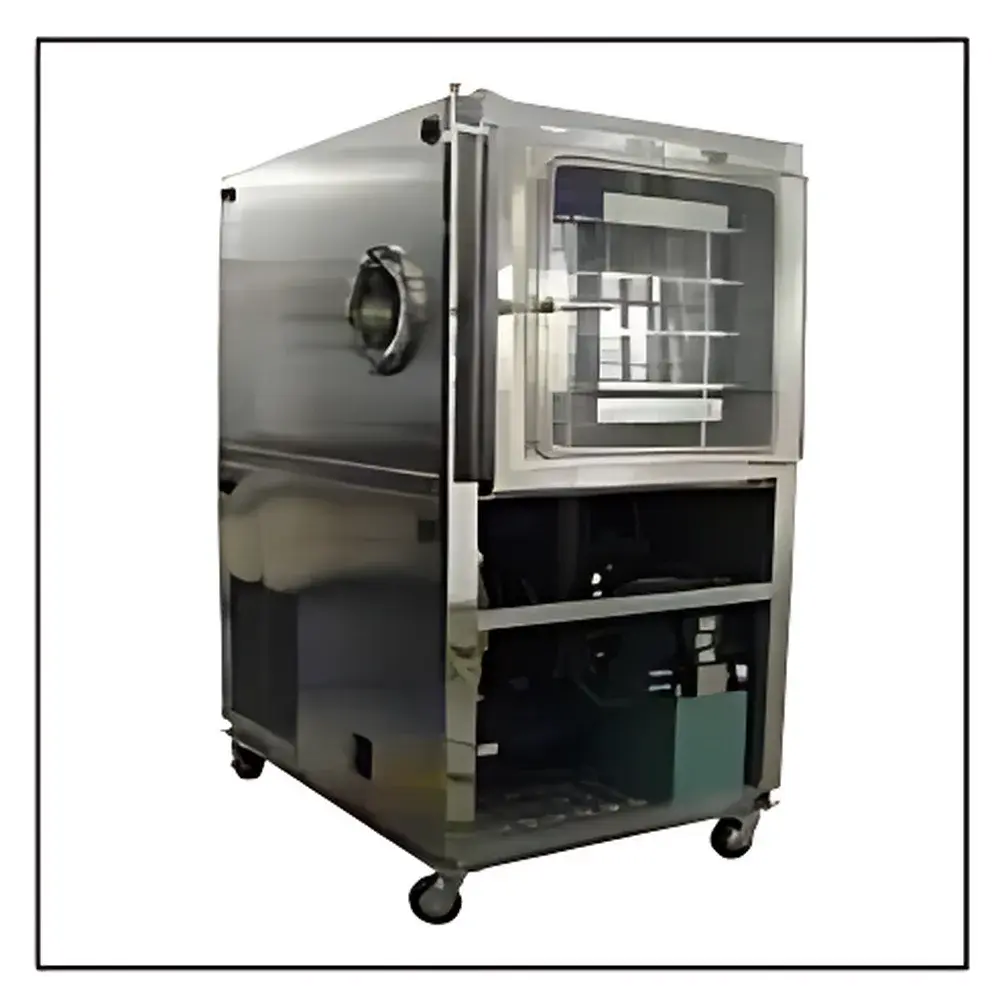
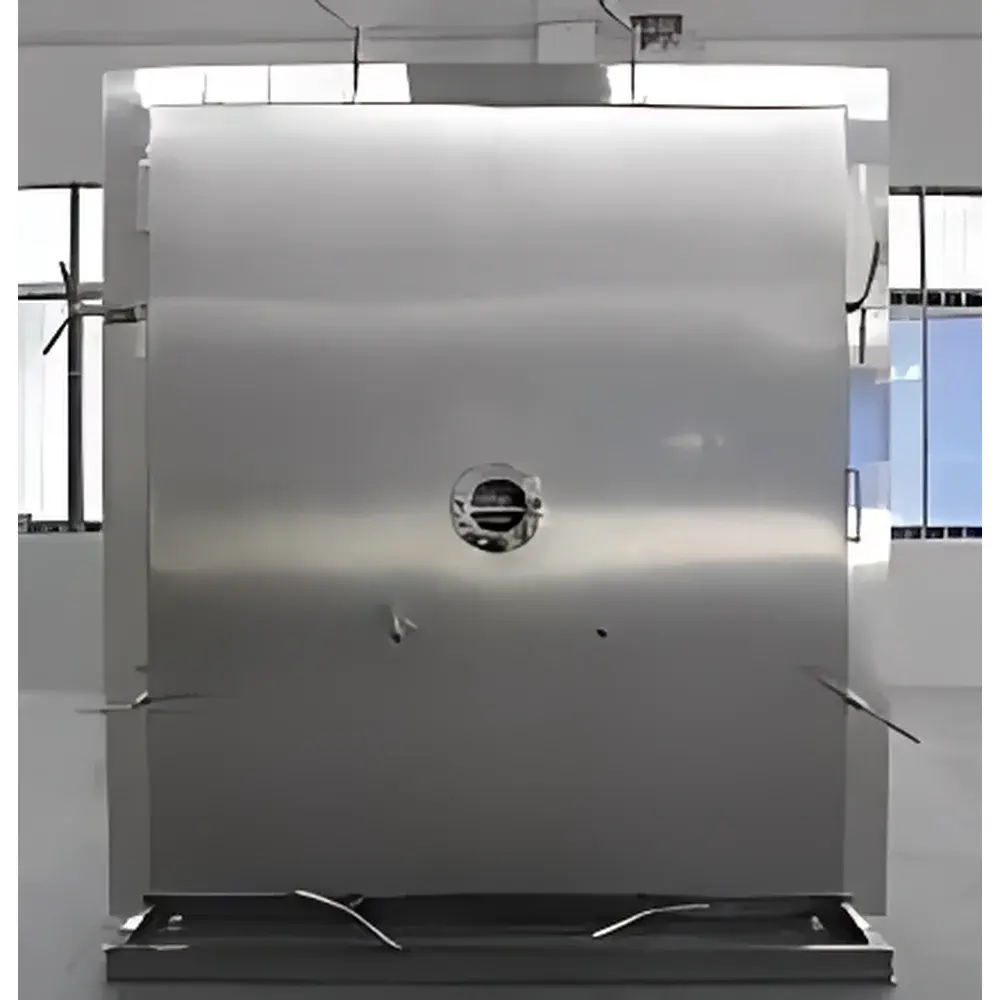
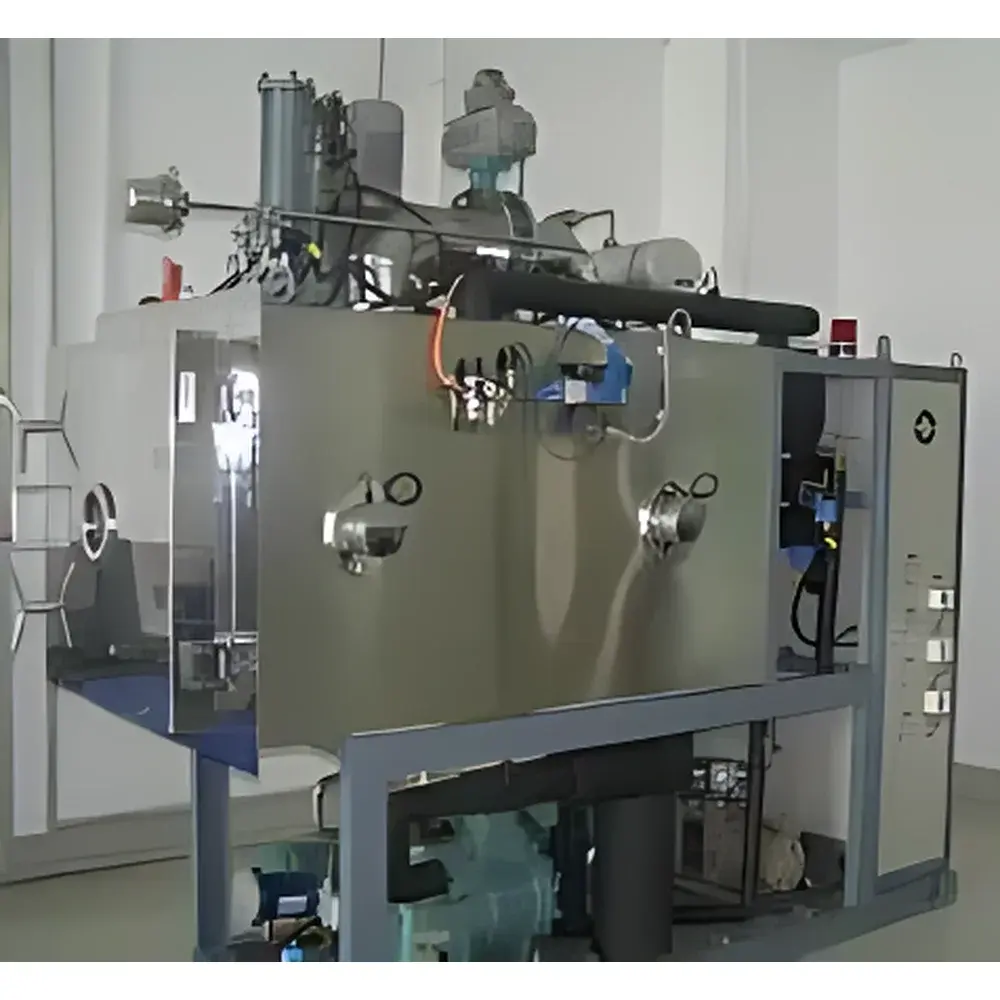
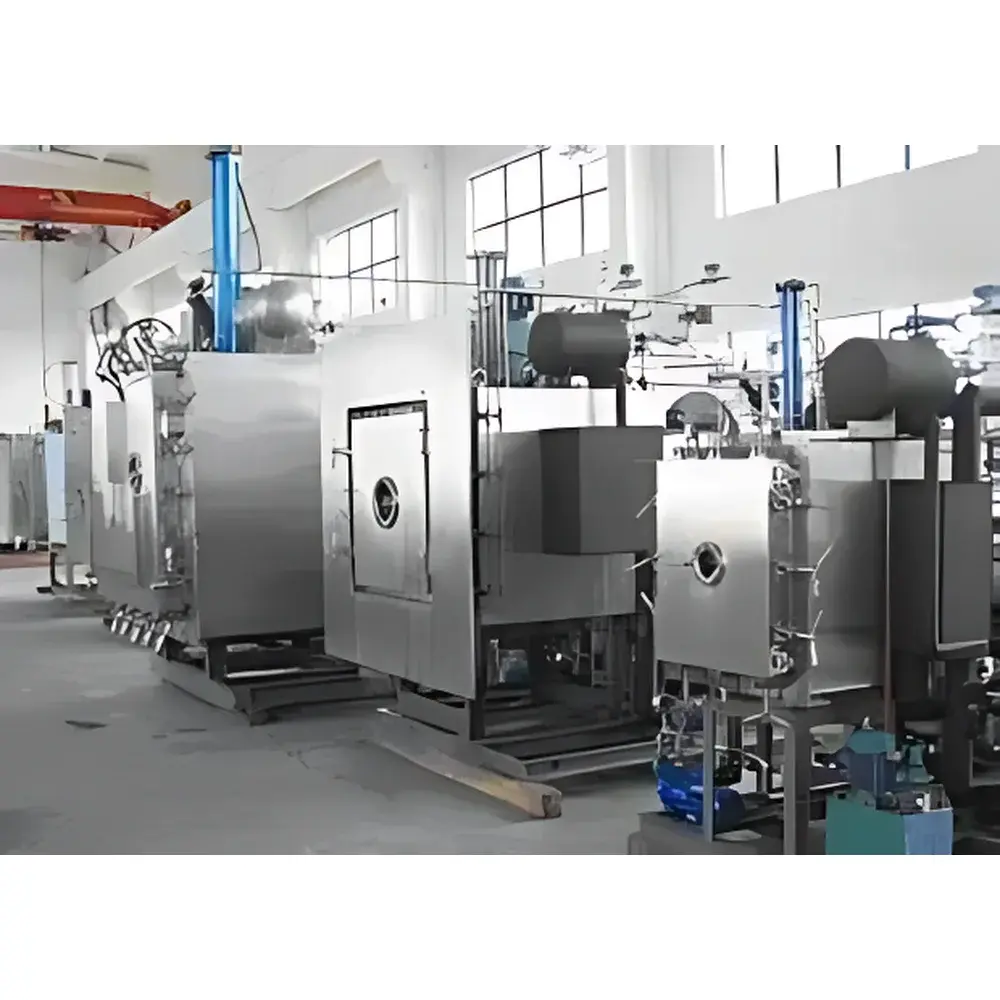
BIOCOOL Pilot10-15T Pilot-Scale Freeze Dryer (1 m² Shelf Area)
| Brand | BIOCOOL |
|---|---|
| Origin | Beijing, China |
| Manufacturer Type | Authorized Distributor |
| Product Category | Domestic |
| Model | Pilot10-15T (1 m² Pilot-Scale Freeze Dryer) |
| Instrument Type | Standard Shelf-Type Freeze Dryer |
| Application Scope | Pilot-Scale Processing |
| Freeze-Drying Area | 1 m² |
| Ultimate Vacuum | < 2.5 Pa |
| Condensate Capacity (24 h) | 15 kg/24 h |
| Cold Trap Temperature | < −80 °C |
| Shelf Minimum Temperature (Empty Load) | ≤ −50 °C |
| Shelf Dimensions | 350 mm × 600 mm |
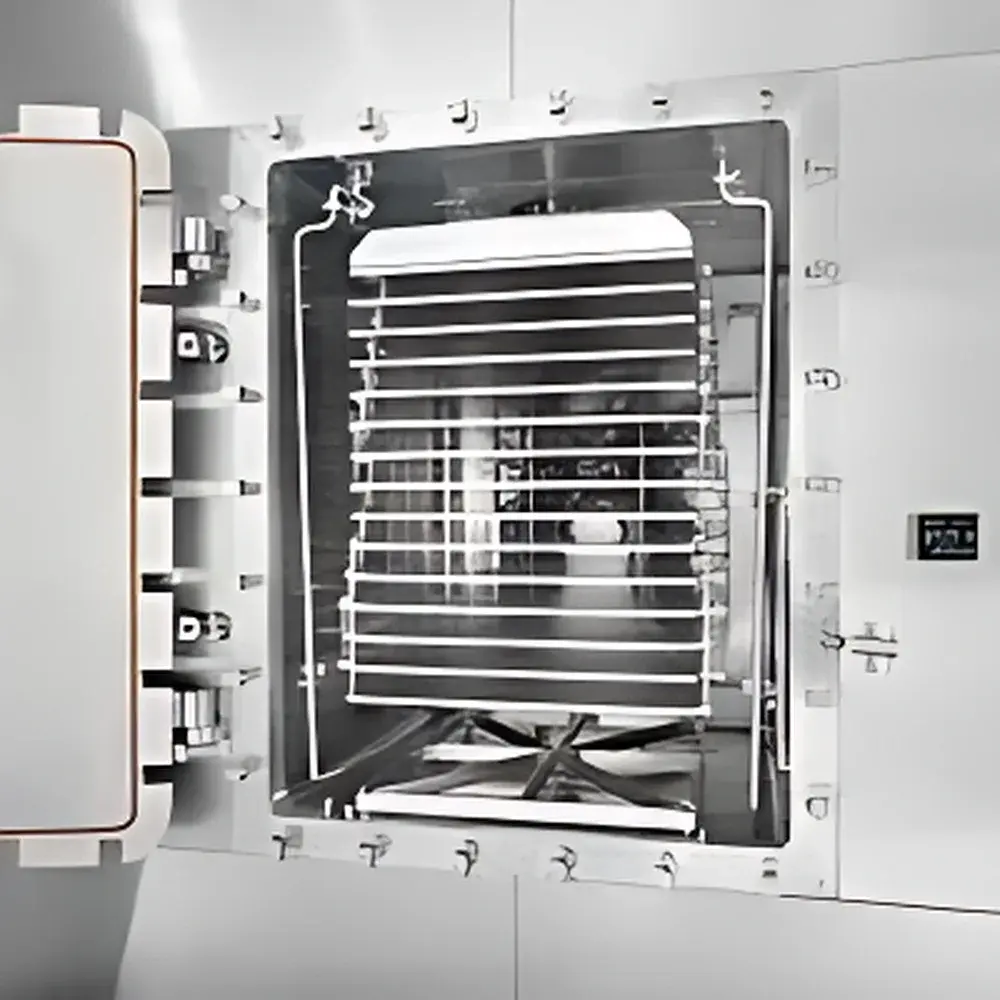
| Number of Shelves | 5 + 1 Radiant Shelf |
| Shelf Spacing | 70 mm |
| Installed Power | 8 kW (3-phase) |
| Cooling Method | Air-Cooled (Required Heat Dissipation Area: 8 m²) |
| Overall Dimensions (W×D×H) | ≈ 880 × 2200 × 1900 mm |
| Unit Weight | ≈ 1200 kg |
| Sound Pressure Level | ≤ 70 dB(A) |
| Compliance Standards | GMP Guidelines, GMP Implementation Manual for Pharmaceutical Production, GB/T 5226.1–1996 |
Overview
The BIOCOOL Pilot10-15T is a fully integrated, pilot-scale shelf-type freeze dryer engineered for reproducible, scalable lyophilization under controlled thermal and vacuum conditions. Designed to bridge laboratory development and commercial manufacturing, it operates on the fundamental principles of sublimation-based primary drying and desorption-based secondary drying—enabling removal of water from thermolabile biopharmaceuticals, diagnostics, and functional food matrices without phase transition through liquid state. Its 1 m² total shelf area supports batch processing aligned with ICH Q5C stability requirements and USP lyophilization validation expectations. The system features a dual-stage oil-lubricated vacuum pump, a high-efficiency air-cooled condenser capable of maintaining ≤ −80 °C cold trap temperature under full load, and five actively controlled stainless-steel shelves plus one radiant shelf for uniform heat transfer. All critical process parameters—including shelf temperature (−50 °C to +80 °C), chamber pressure (0.1–100 Pa range), and condenser temperature—are continuously monitored and logged in accordance with FDA 21 CFR Part 11 data integrity requirements.
Key Features
- Five precision-machined 316L stainless-steel shelves (350 mm × 600 mm each) with ±0.5 °C temperature uniformity across surface (measured per ISO 13485 Annex A.3)
- Additional radiant shelf for enhanced thermal coupling during low-load or heterogeneous product configurations
- Shelf spacing optimized at 70 mm to accommodate standard 22 mm vials (up to 2268 units per batch) while ensuring adequate vapor flow path and pressure gradient
- Integrated vacuum control system with capacitance manometer and PID-regulated butterfly valve for dynamic pressure modulation during ramp-hold cycles
- Robust air-cooled refrigeration circuit rated for continuous operation at ambient temperatures up to 32 °C, requiring only 8 m² of unobstructed ventilation space
- GMP-compliant construction: electropolished internal surfaces (Ra ≤ 0.4 µm), slope-drain design, SIP-compatible sealing, and non-shedding gasket materials meeting USP Class VI criteria
Sample Compatibility & Compliance
The Pilot10-15T accommodates a broad spectrum of pre-formulated products including monoclonal antibody solutions, live attenuated vaccines, enzyme powders, probiotic suspensions, and sterile APIs. Its validated operating envelope supports formulations with collapse temperatures (Tc) ranging from −35 °C to −15 °C and eutectic points down to −45 °C. System qualification follows ASTM F2697–22 for lyophilizer performance mapping and includes IQ/OQ documentation packages compliant with EU Annex 15 and WHO TRS 986. All wetted parts conform to ASME BPE-2022 surface finish standards; electrical safety complies with GB/T 5226.1–1996 (equivalent to IEC 60204-1). Full factory acceptance testing includes vacuum leak rate verification ( 99.2% at 15 kg/24 h load).
Software & Data Management
Equipped with BIOCOOL LyoControl™ v4.2 SCADA-grade software, the system delivers real-time visualization of 32+ process variables, automated cycle execution, and electronic batch record (EBR) generation. Audit trails are immutable and time-stamped per ALCOA+ principles. Data export formats include CSV, PDF, and XML for integration into LIMS or MES platforms. Optional 21 CFR Part 11 compliance package includes role-based user authentication, digital signature workflows, and electronic record retention for ≥ 25 years. Software architecture supports remote monitoring via TLS-encrypted web interface and integrates with DeltaV, Siemens Desigo, or Rockwell FactoryTalk environments using OPC UA protocol.
Applications
- Process development and scale-up studies for parenteral biologics under QbD frameworks
- Stability batch production per ICH Q1–Q5 guidelines for registration submissions
- Contract manufacturing of clinical trial materials (Phases I–III) requiring GMP traceability
- Lyophilized diagnostic reagent production with defined residual moisture specifications (≤ 1.5% w/w)
- Academic research on cryoprotectant efficacy, ice nucleation kinetics, and mass transfer limitations in porous matrices
FAQ
What is the maximum allowable vial fill volume per batch?
Based on standard 22 mm serum vials filled to 10 mL, the system supports up to 2268 units across the 1 m² shelf area while maintaining ≤ 1.2 cm liquid depth for optimal sublimation front propagation.
Does the system support steam-in-place (SIP) sterilization?
Yes—the chamber, shelves, and condenser manifold are rated for SIP at 121 °C / 2 bar(g) for 30 minutes; validation includes thermocouple mapping and biological indicator challenge per ISO 14937.
Can shelf temperature be ramped independently per shelf zone?
No—shelves operate in synchronized mode to ensure uniform thermal history; however, the radiant shelf may be decoupled for specialized drying profiles requiring differential heating.
Is third-party calibration certification included with delivery?
Yes—NIST-traceable calibration certificates for all RTDs, pressure transducers, and load cells are provided upon commissioning, along with as-found/as-left reports.
What maintenance intervals are recommended for the vacuum pump?
Oil change every 500 operational hours; full pump service (including vanes and seals) every 3000 hours or annually—whichever occurs first—using original manufacturer lubricants and components.



