
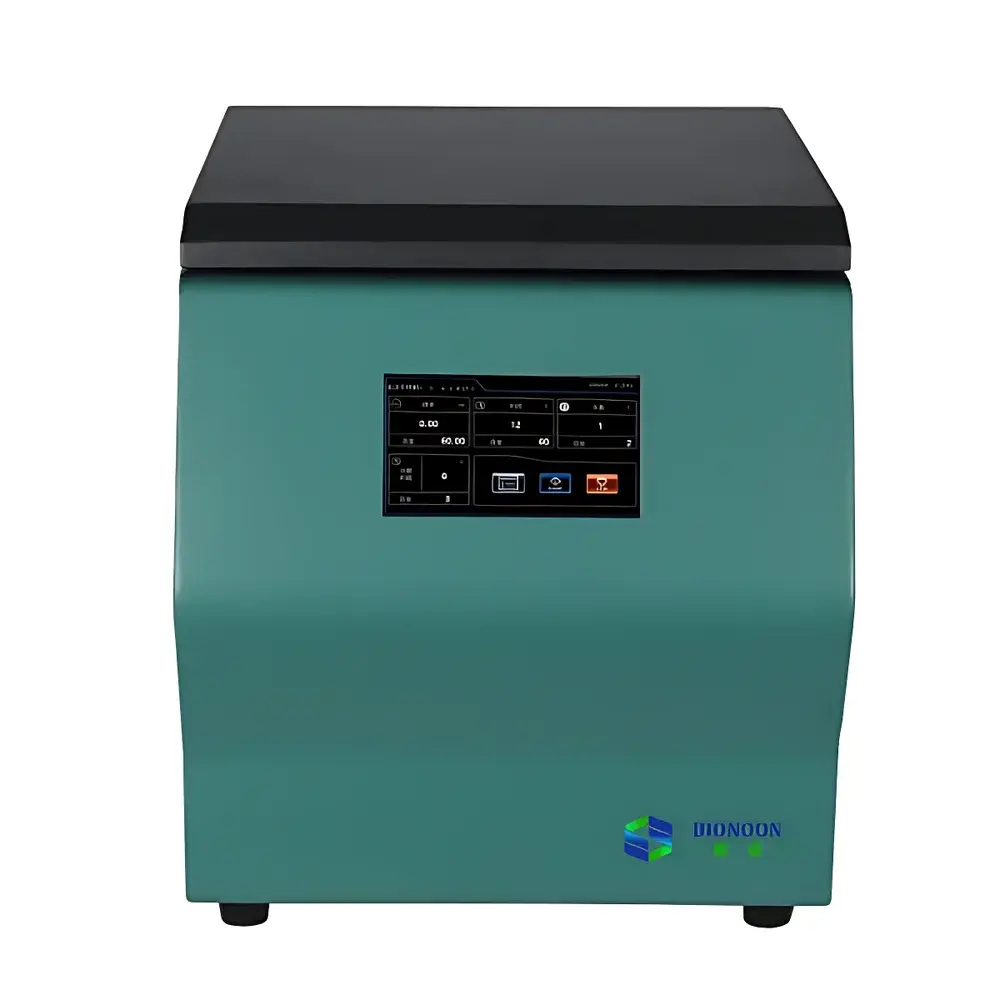
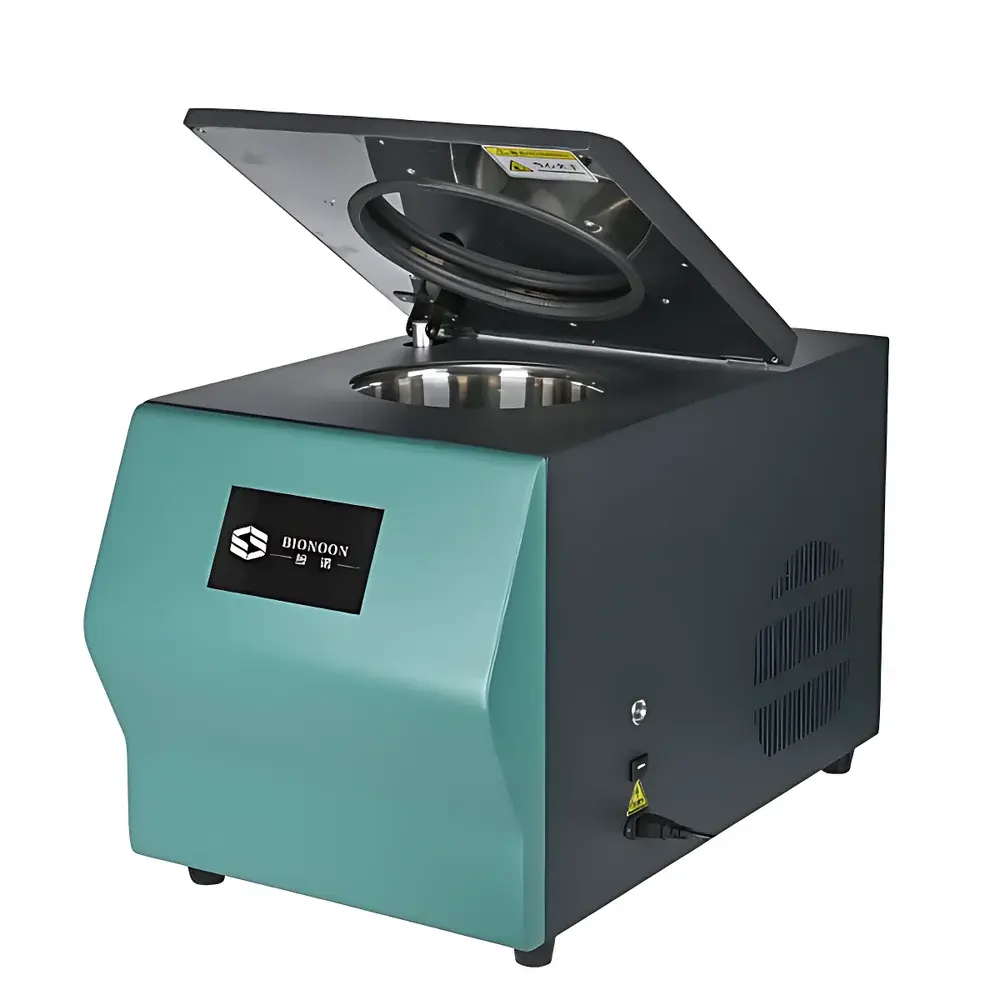
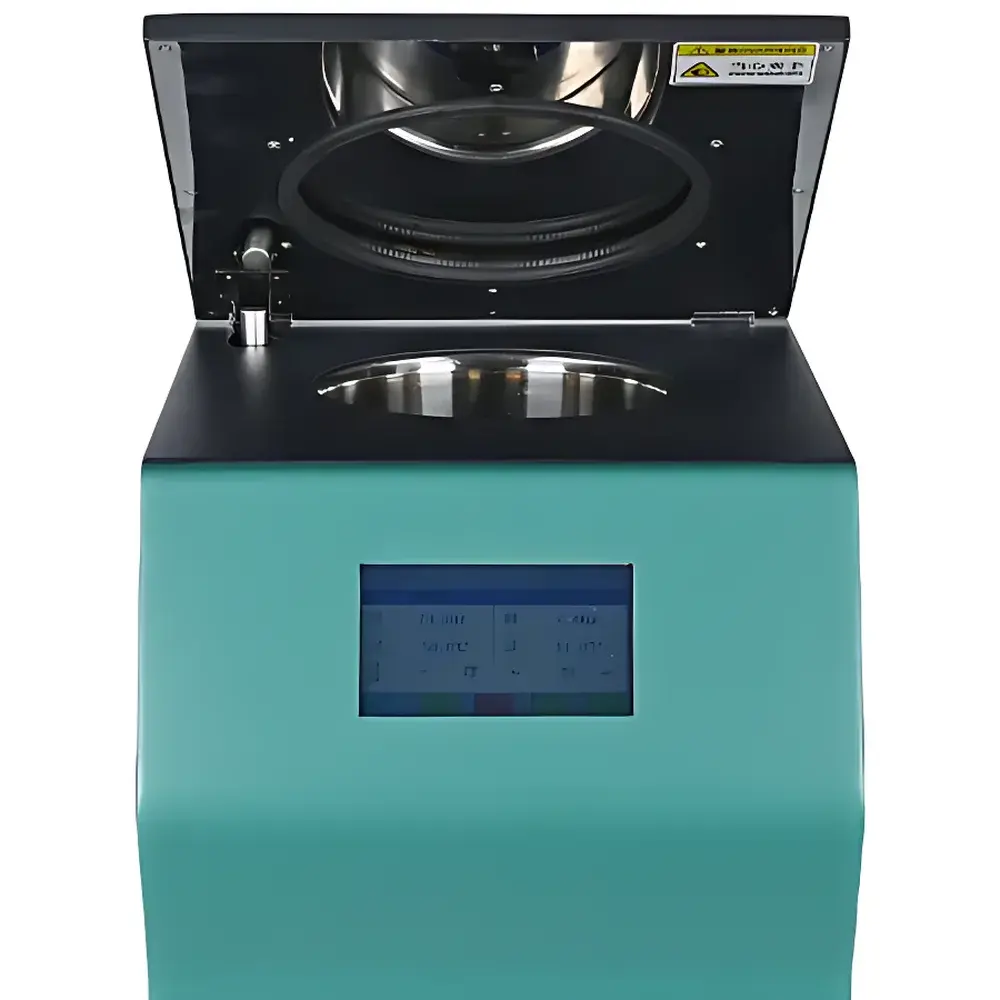
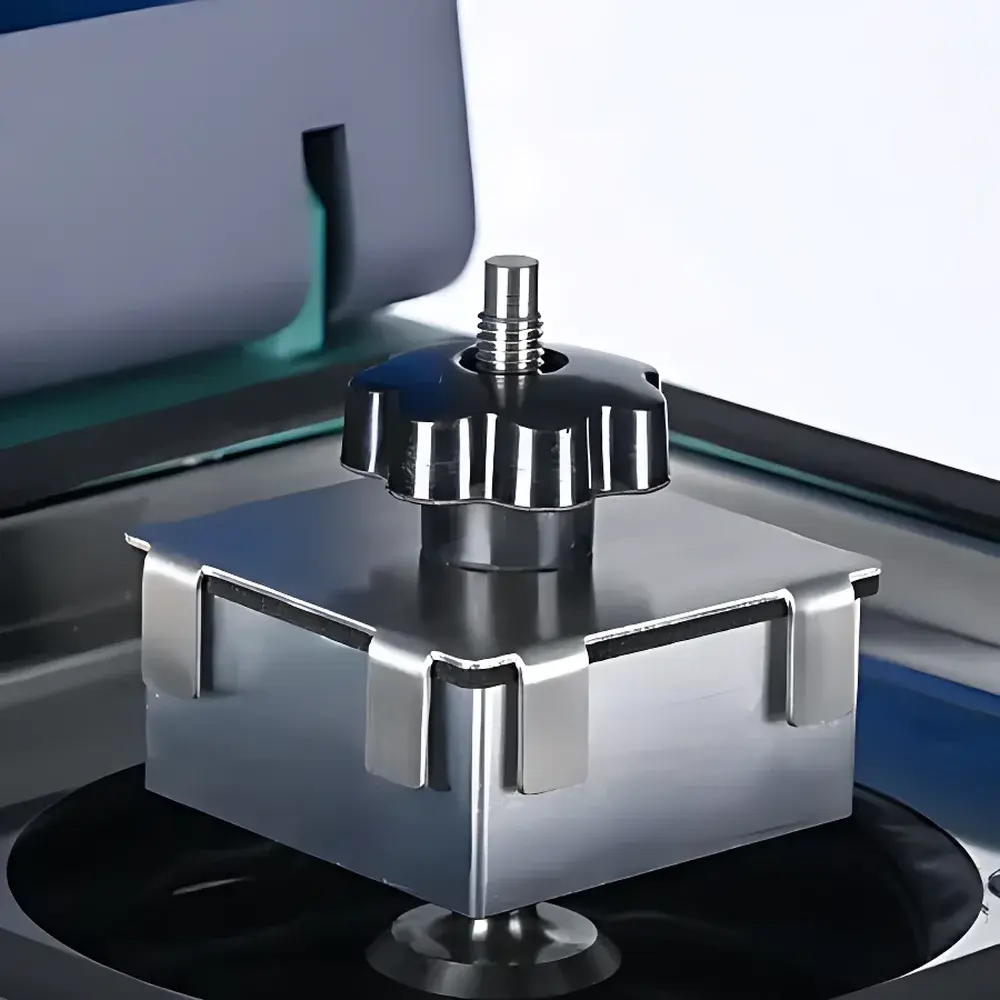
BIONOON BIONOON-24LD High-Throughput Cryogenic Tissue Grinder
| Brand | BIONOON |
|---|---|
| Origin | Shanghai, China |
| Manufacturer Type | Original Equipment Manufacturer (OEM) |
| Product Category | Domestic |
| Model | BIONOON-24LD |
| Price Range | USD 5,600 – 7,000 |
| Cooling Temperature | −50 °C |
| Vibration Frequency | 0–70 Hz (0–2100 rpm) |
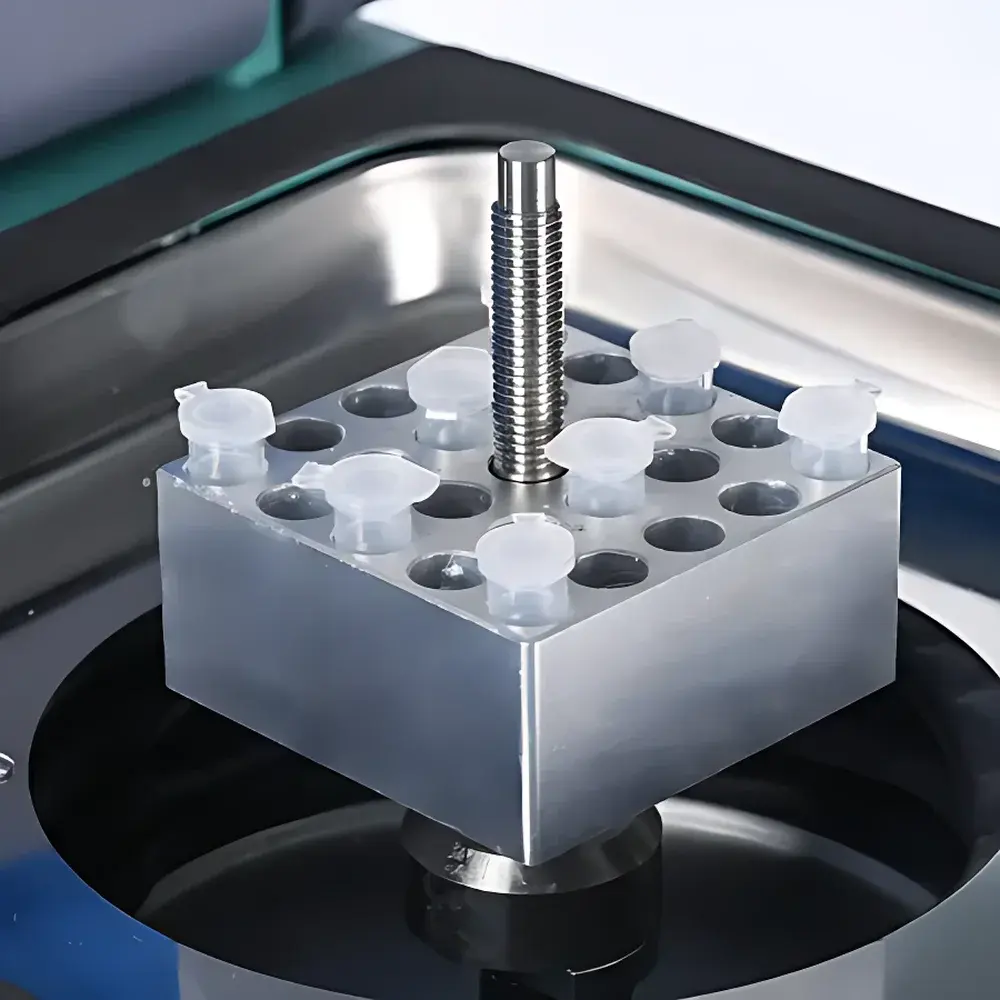
| Sample Capacity | 24 × 2 mL tubes |
| Final Particle Size | < 5 µm |
| Display | Touchscreen Interface |
| Safety | Electromagnetic Lid Lock, IP30 Rating |
| Power Supply | 220 V / 50 Hz |
Overview
The BIONOON BIONOON-24LD High-Throughput Cryogenic Tissue Grinder is an engineered solution for rapid, reproducible, and temperature-controlled mechanical homogenization of biological and heterogeneous samples. It operates on the principle of high-frequency vertical and lateral vibration—generating controlled impact and shear forces between grinding beads and sample material within sealed vessels. Unlike conventional rotor-stator or blade-based homogenizers, this instrument delivers uniform energy input without localized heating, making it especially suitable for thermolabile analytes such as native proteins, intact RNA, labile metabolites, and epigenetically sensitive nucleic acid fragments. Its cryogenic capability—achieving and maintaining temperatures down to −50 °C—enables stabilization of enzymatic activity, suppression of proteolytic degradation, and preservation of structural integrity during cell lysis and tissue disruption. Designed for integration into high-volume sample preparation workflows—including genomic DNA isolation, transcriptomic library prep, and targeted proteomics—the BIONOON-24LD supports GLP-compliant laboratories requiring traceable, auditable, and repeatable sample processing.
Key Features
- Cryogenic operation with precise temperature control (−50 °C ± 0.5 °C), enabling stabilization of heat-sensitive biomolecules during grinding.
- High-throughput capacity: simultaneous processing of up to 24 × 2 mL sample tubes in a single run, with typical cycle times ranging from 15 seconds to 2 minutes.
- Touchscreen interface with programmable parameters—including vibration frequency (0–70 Hz), duration (0–9999 min), and ramp profiles—ensuring method standardization across users and shifts.
- Hermetically sealed grinding vessels prevent cross-contamination; compatible with disposable polypropylene tubes and a wide range of bead materials (stainless steel, tungsten carbide, zirconia, PTFE, agate).
- Robust stainless-steel chamber with IP30 ingress protection, electromagnetic lid interlock, and auto-centering clamping mechanism for operational safety and mechanical stability.
- No consumable drive components—gear-free electromagnetic actuation ensures long-term reliability and minimal maintenance requirements.
- Low acoustic emission (< 50 dB(A)) suitable for shared laboratory environments without dedicated acoustic enclosures.
Sample Compatibility & Compliance
The BIONOON-24LD accommodates diverse sample types across life sciences and analytical chemistry domains. Validated applications include plant tissues (roots, leaves, seeds), animal organs (liver, brain, kidney), microbial pellets (E. coli, yeast, filamentous fungi), environmental matrices (soil, sludge, fecal matter), pharmaceutical tablets, polymers (PE, PS, resins), and volatile organic-rich materials (coal, bitumen, waxes). Its closed-tube architecture complies with ISO 17025 requirements for contamination control in accredited testing labs. When used with validated protocols, the system supports data integrity frameworks aligned with FDA 21 CFR Part 11—particularly when paired with LIMS-integrated software logging timestamped parameter sets, operator IDs, and run completion status. The absence of moving seals or lubricated bearings eliminates risk of particulate shedding, satisfying USP <788> particulate matter criteria for pharmaceutical sample prep.
Software & Data Management
The embedded controller stores up to 100 user-defined protocols with full parameter recall—including frequency, duration, pre-cooling delay, and post-grind hold time. Each run generates a local log file containing start/stop timestamps, actual chamber temperature, real-time vibration amplitude deviation, and lid-lock engagement status. Export options include CSV-formatted metadata compatible with ELN platforms (e.g., LabArchives, Benchling) and downstream statistical analysis tools (R, Python pandas). Optional USB-to-PC connectivity enables remote monitoring via BIONOON’s proprietary LabControl Suite, which provides audit-trail functionality compliant with ALCOA+ principles (Attributable, Legible, Contemporaneous, Original, Accurate, Complete, Consistent, Enduring, Available).
Applications
- Routine extraction of high-molecular-weight genomic DNA from fibrous or lipid-rich tissues (e.g., adipose, heart, plant stems).
- Preparation of single-cell suspensions for flow cytometry or scRNA-seq where membrane integrity must be preserved until lysis.
- Homogenization of frozen food matrices for pesticide residue analysis per EN 15662:2018 guidelines.
- Particle size reduction of polymer standards prior to GPC/SEC calibration or FTIR spectral library generation.
- Disruption of biofilm-embedded bacteria for antibiotic susceptibility profiling under physiologically relevant cold conditions.
- Pre-analytical processing of clinical biobank specimens under ISO 20387:2018 biobanking standards.
FAQ
What is the minimum achievable particle size after grinding?
Typical final particle size distribution falls below 5 µm for most soft-to-medium hardness biological tissues when processed with 2 mm stainless steel beads at 60 Hz for 60 seconds.
Can the instrument operate without liquid nitrogen pre-cooling?
Yes—the integrated Peltier cooling system maintains −50 °C independently; liquid nitrogen is optional for ultra-rapid thermal quenching or sub-60 s freeze-grind cycles.
Is validation documentation available for GMP environments?
IQ/OQ documentation templates are provided upon request; PQ protocols must be developed per site-specific sample matrix and endpoint assay requirements.
How is cross-contamination prevented between runs?
Each grinding vessel remains sealed throughout processing; cleaning validation is performed using ATP bioluminescence assays per CLSI EP21-A protocol.
What bead materials are recommended for RNA extraction?
Zirconia or ceramic beads (0.5–1.0 mm) are preferred for minimizing RNase activation and ensuring efficient cell wall rupture without excessive shearing.
Related Products



