
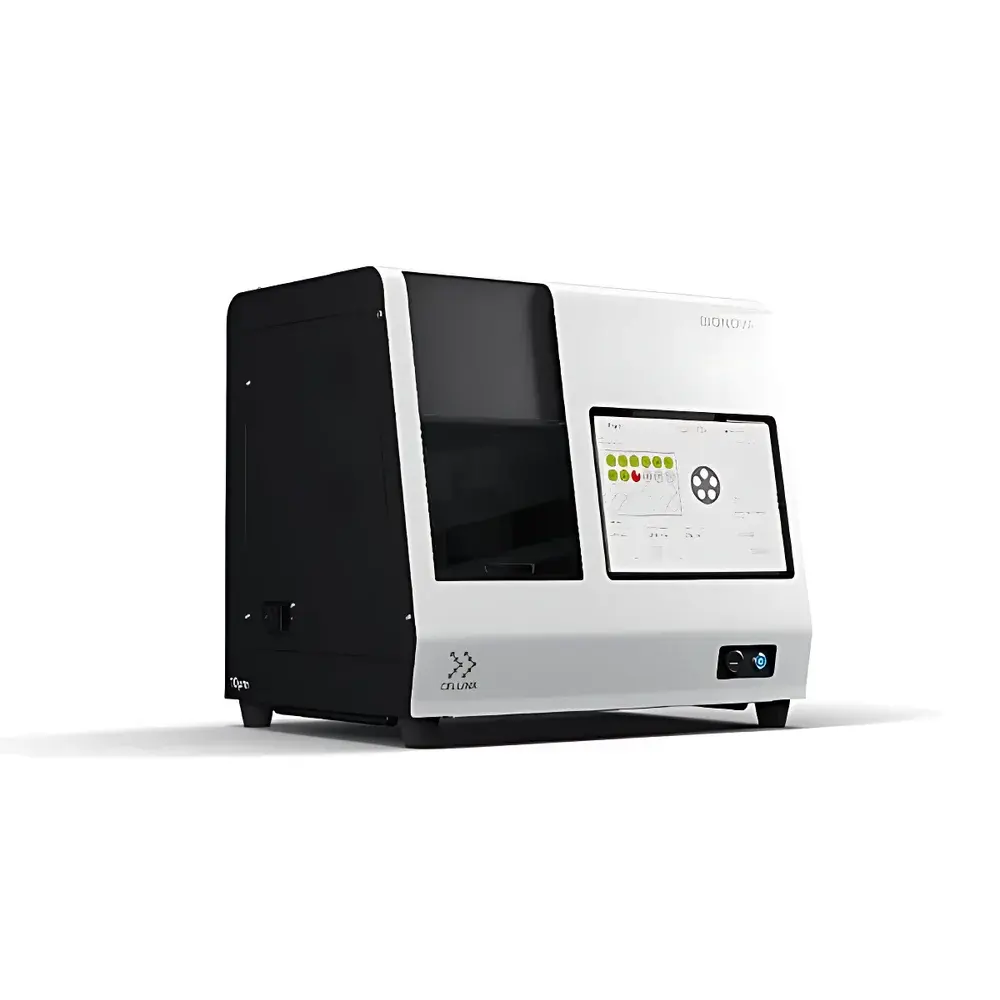
BIONOVA X High-Throughput Optical 3D Bioprinter by CELLINK
| Brand | CELLINK |
|---|---|
| Origin | Sweden |
| Model | BIONOVA X |
| Printing Technology | Visible-Light-Based Digital Light Processing (DLP) |
| Throughput | Up to 24-well plate format |
| Core Function | Cell-laden hydrogel fabrication with spatial control of mechanical properties via grayscale photopolymerization |
| Compliance | Designed for GLP-compliant research environments |
| Software Integration | Compatible with DICOM, STL, and CAD-based workflows |
| Regulatory Context | Intended for research use only (RUO) |
Overview
The BIONOVA X High-Throughput Optical 3D Bioprinter is an advanced digital light processing (DLP) bioprinting platform engineered by CELLINK — a Swedish biotechnology company founded in 2016 and publicly listed on Nasdaq First North. Unlike extrusion-based or inkjet bioprinters, the BIONOVA X utilizes visible-light photopolymerization to solidify cell-laden bioinks layer-by-layer with sub-50 µm lateral resolution and precise z-axis control. This optical approach enables rapid volumetric fabrication—achieving full 24-well plate prints in under 15 minutes—while maintaining high cell viability (>90% post-printing across multiple primary and stem cell lines). The system is purpose-built for reproducible generation of physiologically relevant 3D tissue constructs, supporting translational applications in regenerative medicine, disease modeling, and personalized therapeutic development.
Key Features
- Visible-light DLP engine operating at 405 nm wavelength, eliminating UV-induced cytotoxicity and enabling use of clinically compatible photo-initiators.
- Grayscale intensity modulation for spatially resolved mechanical tuning—allowing regional stiffness gradients (e.g., 1–20 kPa) within a single construct to mimic native tissue heterogeneity.
- Integrated multi-well plate stage supporting standardized SBS-format plates (6-, 12-, 24-, 48-, and 96-well), enabling parallelized experimental design and statistical robustness in drug screening or toxicity assays.
- Automated calibration suite ensuring consistent voxel fidelity across print volumes; real-time monitoring of light intensity and exposure time per layer.
- Modular hardware architecture permitting future upgrades including environmental control (temperature, CO₂, humidity) for extended culture-integrated printing.
- Pre-configured bioink compatibility with CELLINK’s full portfolio of hyaluronic acid-, alginate-, gelatin-methacryloyl (GelMA)-, and collagen-based hydrogels.
Sample Compatibility & Compliance
The BIONOVA X accommodates a broad range of human and animal-derived primary cells, iPSCs, organoids, and co-cultures embedded in photocrosslinkable hydrogels. Its open-materials policy allows integration with third-party bioinks meeting ISO 10993-5 cytocompatibility standards. All firmware and motion control subsystems comply with IEC 61000-6-2/6-3 electromagnetic compatibility requirements. For regulated environments, optional software packages provide electronic signatures, change control logs, and audit trail generation aligned with FDA 21 CFR Part 11 and EU Annex 11 expectations. The instrument is classified as Research Use Only (RUO) under current CE and US regulatory frameworks.
Software & Data Management
Controlled via CELLINK’s proprietary BioPrint Suite v4.x, the BIONOVA X supports direct import of medical imaging data (DICOM CT/MRI), segmented 3D reconstructions (STL/OBJ), and parametric CAD models. Slice preparation includes automatic support structure generation, adaptive layer thickness adjustment (25–100 µm), and dose mapping algorithms that compensate for light scattering in turbid bioinks. All print jobs are timestamped and associated with user credentials, material lot numbers, and environmental metadata. Raw image stacks and log files export in HDF5 format for downstream analysis in MATLAB, Python (NumPy/SciPy), or commercial platforms such as Imaris or Amira.
Applications
- Regenerative Medicine: Fabrication of transplantable-scale scaffolds with anatomically accurate geometry and regionally tuned biomechanics—validated in preclinical models of cartilage repair and dermal regeneration.
- Precision Oncology: High-throughput generation of tumor spheroid arrays in 24-well plates for compound screening, with integrated perfusion-compatible designs enabling long-term maturation up to 21 days.
- Disease Modeling: Reproduction of pathological microarchitectures—such as fibrotic liver nodules or calcified vascular plaques—via controlled pore geometry and stiffness mapping.
- Vascularization Research: Co-printing of endothelial and mural cells within hierarchical channel networks (diameter range: 50–500 µm), supporting lumen formation and barrier function assessment.
- Neural Interface Development: Alignment-guided printing of neuronal projections using topographical cues embedded in GelMA matrices, facilitating electrophysiological interrogation.
FAQ
What bioinks are validated for use with the BIONOVA X?
CELLINK’s full range of visible-light–responsive bioinks—including HYDROGEL™, GelMA, and Collagen-Methacrylate—is pre-qualified. Third-party formulations must demonstrate ≥95% crosslinking efficiency under 405 nm illumination at ≤15 mW/cm² irradiance.
Can the BIONOVA X print directly inside standard cell culture plates?
Yes—the system features motorized Z-stage positioning calibrated for ANSI/SBS-compliant plates, enabling unattended printing in 6–96-well formats without manual alignment.
Is remote operation supported?
BioPrint Suite supports secure remote access via TLS-encrypted WebSocket connections, with role-based permissions configured through LDAP or local user management.
How is print accuracy verified?
Each unit undergoes factory calibration using NIST-traceable micropatterned silicon wafers; users may run quarterly verification protocols using supplied ISO 17025–compliant test objects.
Does the system support live-cell imaging during printing?
While not equipped with integrated microscopy, the transparent build chamber and standardized plate interface allow seamless integration with inverted epifluorescence or confocal systems for real-time viability monitoring post-printing.



