
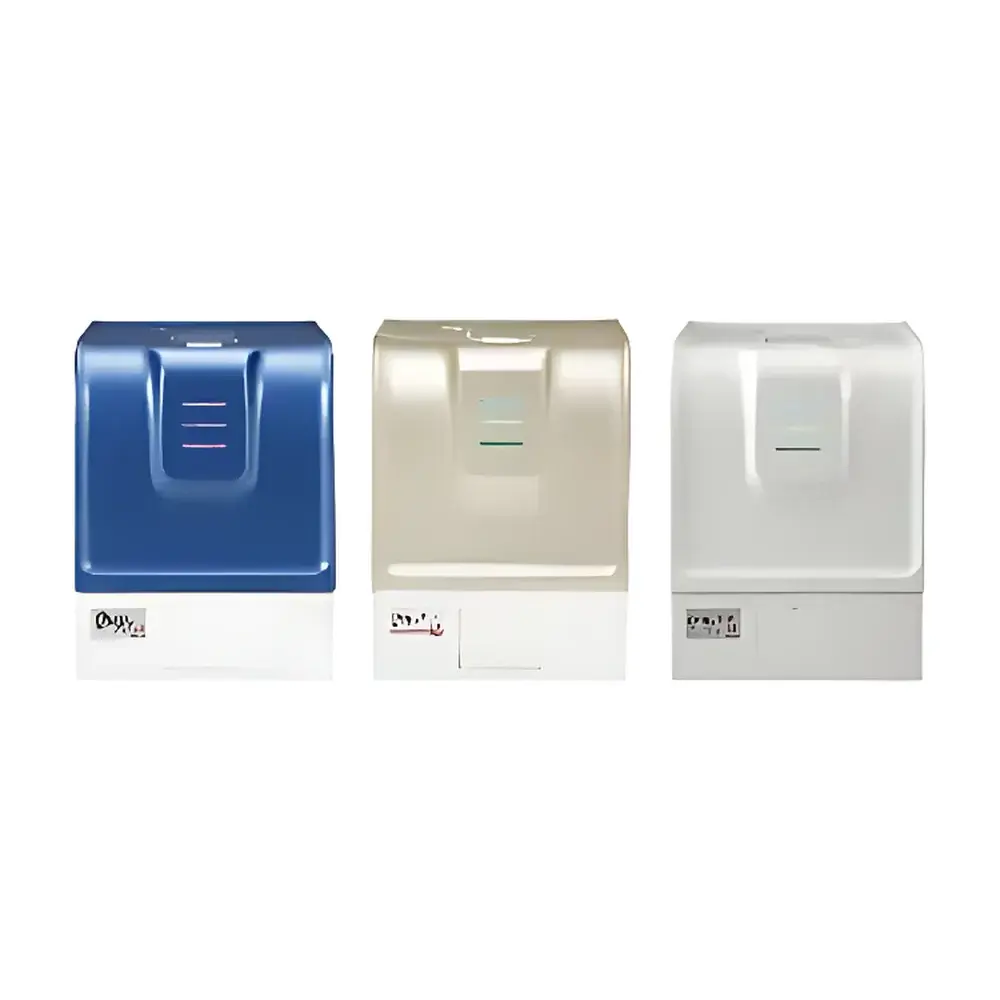
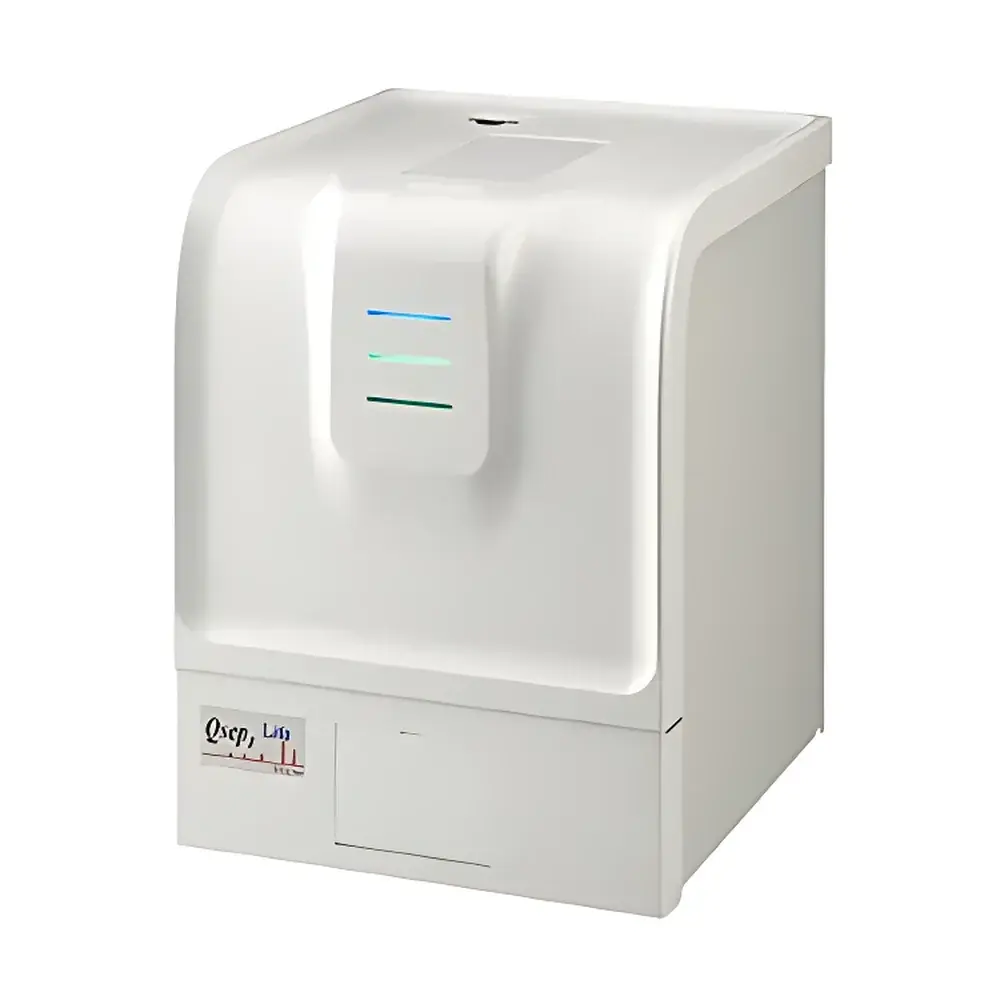
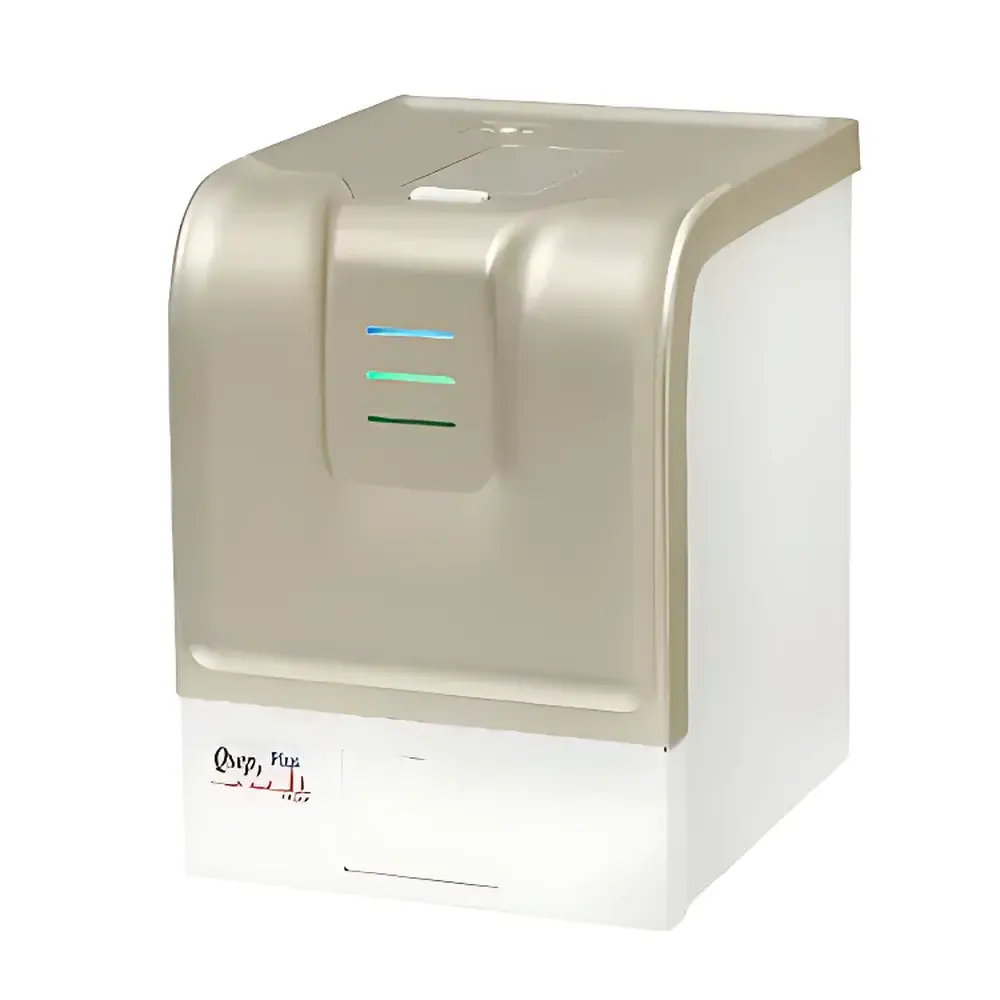
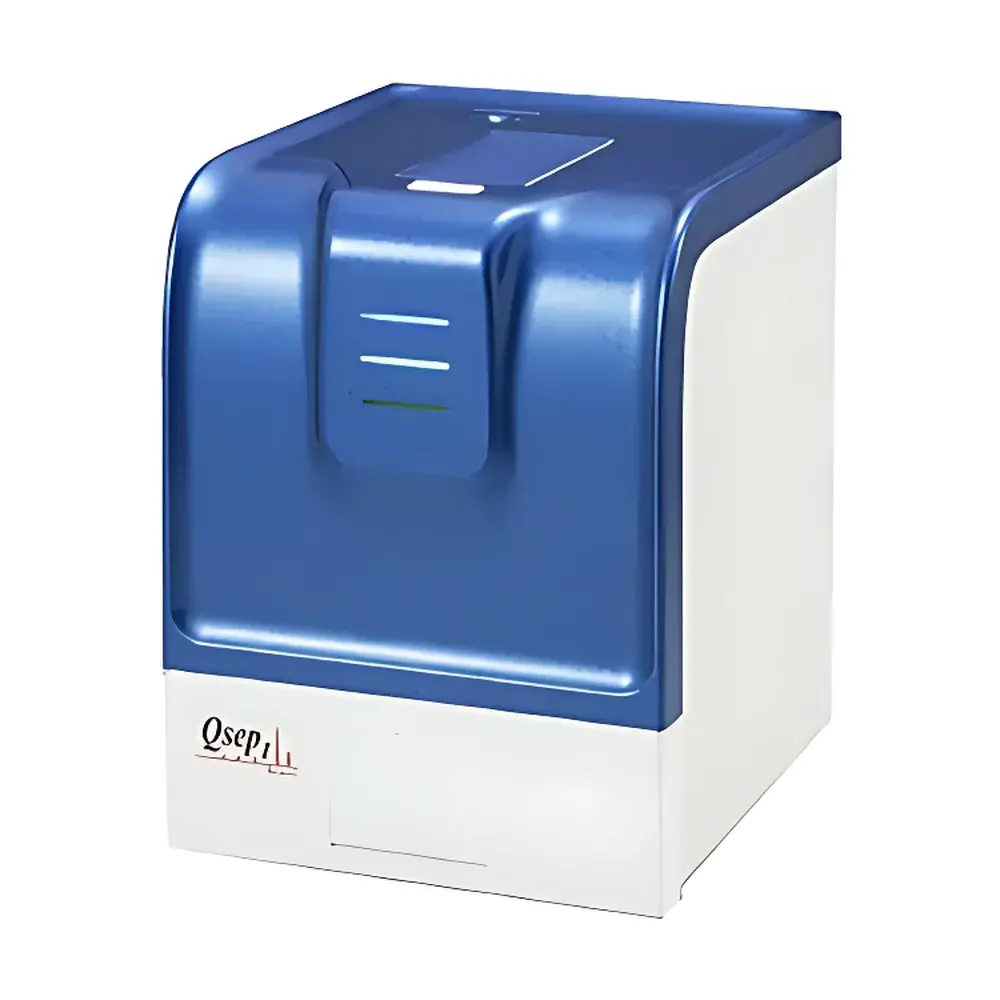
Bioptic Qsep1 Ultra-Micro Nucleic Acid and Protein Analyzer
| Brand | Bioptic |
|---|---|
| Origin | Jiangsu, China |
| Manufacturer Type | Authorized Distributor |
| Product Category | Domestic |
| Model | Qsep1 |
| Instrument Classification | Conventional Nucleic Acid and Protein Analyzer |
| Minimum Sample Volume | 1 µL |
| Compatible Capillary Cartridges | 8-well, 12-well templates (Qsep1/Qsep1 Advance/Qsep1-Lite) |
| Form Factor | Portable Benchtop Analyzer |
Overview
The Bioptic Qsep1 Ultra-Micro Nucleic Acid and Protein Analyzer is a compact, capillary electrophoresis–based platform engineered for rapid, high-resolution analysis of nucleic acids and proteins with minimal sample consumption. Leveraging microfluidic capillary electrophoresis (CE) principles, the system separates biomolecules by charge-to-size ratio under controlled electric fields within polymer-based sieving matrices. Unlike slab-gel or microplate-based UV absorbance readers, the Qsep1 delivers quantitative electrophoretic profiles—including fragment size estimation, concentration determination, and integrity assessment—within 2–5 minutes per run. Its optical detection module employs high-sensitivity LED excitation and CCD-based fluorescence imaging, enabling detection of dsDNA, ssDNA, RNA, and proteins labeled with standard intercalating or covalent dyes (e.g., SYBR® Gold, GelRed™, or Alexa Fluor® conjugates). Designed for field-deployable operation, the Qsep1 series maintains analytical performance comparable to laboratory-grade CE systems while operating on standard USB power or optional external battery packs.
Key Features
- Ultra-low sample requirement: Quantitative analysis from just 1 µL of undiluted sample—ideal for precious clinical isolates, single-cell lysates, or limited FFPE-derived nucleic acids.
- Modular cartridge compatibility: Supports standardized 8-well and 12-well capillary array cartridges across Qsep1, Qsep1 Advance, and Qsep1-Lite variants; Qsep1-Plus extends support to 19-well cartridges for higher throughput without compromising portability.
- Benchtop portability: Dimensions ≤ 28 × 22 × 15 cm and mass < 3.2 kg enable transport between labs, mobile diagnostic units, or point-of-collection sites—no dedicated vibration-dampened bench or HVAC conditioning required.
- Integrated thermal control: Precise ±0.5 °C temperature regulation of the separation capillary zone ensures reproducible migration times and fragment sizing accuracy across ambient conditions (15–30 °C).
- Automated calibration & QC: Onboard reference ladder detection and real-time signal normalization eliminate manual baseline correction; built-in QC metrics log voltage stability, current draw, and peak symmetry per run.
Sample Compatibility & Compliance
The Qsep1 platform accepts native or dye-labeled samples in standard low-binding PCR tubes or direct loading into cartridge wells. Validated applications include genomic DNA (50 bp–10 kb), PCR amplicons, cDNA, total RNA (including ribosomal RNA ratios), and denatured proteins (10–200 kDa) when paired with appropriate separation matrices and staining protocols. All firmware and data acquisition modules comply with ISO/IEC 17025:2017 requirements for testing laboratories, and raw electropherogram files (.qsep) are structured to support audit trails under GLP and GMP environments. While not FDA 510(k)-cleared as an IVD device, the system meets essential performance criteria outlined in CLSI EP17-A2 for limit-of-detection verification and ASTM D7780-14 for nucleic acid quantification consistency.
Software & Data Management
Bioptic QsepView v4.x software provides cross-platform (Windows/macOS) control, real-time electropherogram visualization, and automated band-calling using adaptive peak detection algorithms. Each run generates a timestamped, digitally signed report including molecular weight estimation (with internal ladder referencing), concentration (ng/µL), % integrity (e.g., RIN-equivalent for RNA), and lane-by-lane QC flags. Data export supports CSV, PDF, and XML formats compatible with LIMS integration. Audit trail functionality records user login, parameter changes, calibration events, and result modifications—fully compliant with FDA 21 CFR Part 11 requirements when deployed with network authentication and electronic signature modules.
Applications
- NGS library quality control: Rapid assessment of adapter dimer contamination, insert size distribution, and molarity prior to sequencing.
- CRISPR editing validation: Detection of indel patterns via fragment analysis without cloning or Sanger sequencing.
- Clinical molecular pathology: Fast turnaround verification of RT-qPCR template integrity and gDNA purity in tumor biopsy workflows.
- Bioprocessing monitoring: Real-time tracking of plasmid supercoiling status, mRNA capping efficiency, and host cell protein clearance during purification.
- Field-based biosurveillance: On-site pathogen nucleic acid profiling in agricultural, veterinary, or environmental sampling campaigns.
FAQ
What capillary cartridge types are supported by the Qsep1-Plus model?
The Qsep1-Plus supports 8-well, 12-well, and 19-well capillary array cartridges—enabling flexible throughput scaling while retaining full compatibility with legacy Qsep1 assay protocols.
Can the Qsep1 perform absolute quantification without external standards?
Yes—when used with pre-calibrated fluorescent dyes and integrated reference ladders, the system calculates absolute nucleic acid concentration (ng/µL) using internal calibration curves traceable to NIST SRM 2374.
Is method transfer possible between Qsep1 and larger-format CE platforms?
Method parameters—including voltage gradient, run time, and matrix composition—are directly translatable to Bioptic’s Qsep100 and Qsep300 systems, facilitating seamless scale-up from screening to regulatory submission studies.
Does the instrument require regular maintenance beyond cartridge replacement?
No routine optical alignment or fluidic recalibration is needed; the solid-state detection system and sealed capillary arrays ensure >10,000 runs per unit with only cartridge and buffer replacement required.
How is data security managed in shared-lab environments?
QsepView supports role-based access control (RBAC), encrypted local storage, and optional LDAP/Active Directory integration—ensuring compliance with institutional data governance policies.




