
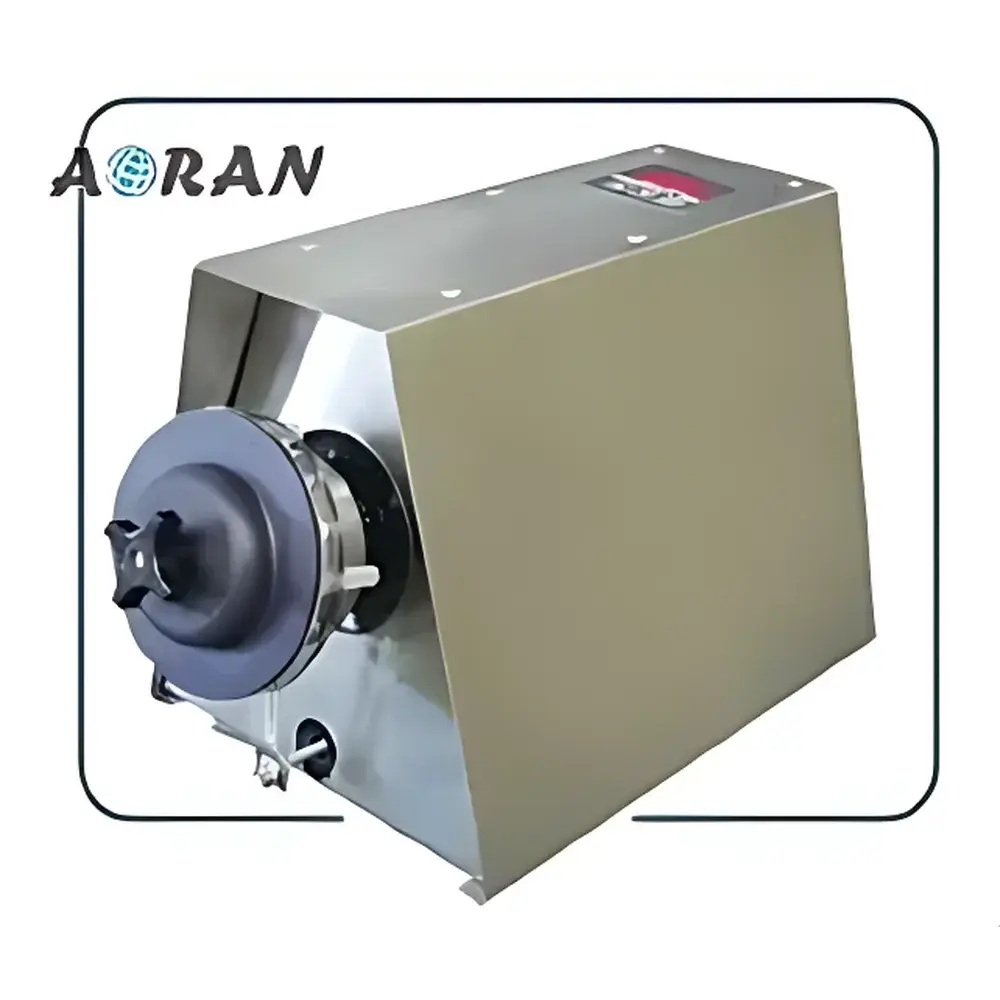
Biospec MiniBeadBeater-24 Bead Mill Homogenizer
| Brand | Biospec |
|---|---|
| Origin | USA |
| Instrument Type | Bead Mill Homogenizer |
| Model | MiniBeadBeater-24 |
| Dimensions (W×D×H) | 200 × 400 × 300 mm |
| Sample Capacity | 24 × 1–1.5 mL tubes or 8 × 7 mL tubes (with optional adapter) |
| Speed Range | 2000–3450 rpm |
| Time Setting | 0–300 s (digital timer) |
| Noise Level | Lower than MiniBeadBeater-8 |
| Compatible Bead Diameters | 0.1 mm, 0.5 mm, 1.0 mm |
| Bead Materials | Glass, Stainless Steel, Ceramic |
| Tube Compatibility | 2 mL microcentrifuge tubes (high-strength), 7 mL round-bottom tubes |
Overview
The Biospec MiniBeadBeater-24 is a high-efficiency, benchtop bead mill homogenizer engineered for rapid, reproducible mechanical lysis of biological samples under controlled, non-thermal conditions. Utilizing horizontal reciprocating motion combined with high-frequency oscillation of grinding beads inside sealed sample tubes, the system delivers consistent shear and impact forces essential for disrupting tough cellular matrices—including bacterial spores, yeast cell walls, plant tissues, fungal hyphae, and mammalian cells—while preserving labile biomolecules such as DNA, RNA, proteins, and subcellular organelles. Unlike rotor-stator or ultrasonic homogenizers, the MiniBeadBeater-24 avoids localized heating, foaming, and aerosol generation, making it especially suitable for downstream molecular applications requiring high integrity nucleic acids or native protein conformation.
Key Features
- Simultaneous processing of up to 24 × 1–1.5 mL microcentrifuge tubes per run—enabling high-throughput sample preparation without cross-contamination.
- Optional 8-position adapter supports larger 7 mL tubes for increased biomass input or viscous samples, expanding flexibility across diverse tissue types and microbial cultures.
- Digital control interface with precise time resolution (1-second increments) and speed regulation (2000–3450 rpm), ensuring method reproducibility between operators and laboratories.
- Optimized mechanical architecture reduces operational noise relative to earlier-generation MiniBeadBeater models, improving ergonomic performance in shared laboratory environments.
- Robust aluminum housing and reinforced drive mechanism ensure long-term reliability under repeated daily use in QC, research, and clinical diagnostics settings.
- No external cooling required during standard operation; compatible with chilled adapters or pre-cooled tubes for temperature-sensitive extractions.
Sample Compatibility & Compliance
The MiniBeadBeater-24 accommodates a broad spectrum of biological matrices—including Gram-positive and Gram-negative bacteria, archaea, yeasts (e.g., Saccharomyces cerevisiae, Candida albicans), filamentous fungi, algae, plant leaves and roots, animal tissues (liver, muscle, brain), and cultured mammalian cells. Its closed-tube design meets biosafety Level 2 (BSL-2) containment requirements when used with certified high-strength centrifuge tubes. The instrument supports workflows compliant with ISO 17025-accredited laboratories and aligns with Good Laboratory Practice (GLP) documentation standards when paired with validated SOPs and audit-trail-capable software (see Software & Data Management). While not FDA-cleared as a medical device, its use in sample prep for IVD assays and biopharmaceutical development adheres to relevant sections of USP & CLSI guidelines for nucleic acid extraction consistency.
Software & Data Management
The MiniBeadBeater-24 operates via an embedded digital controller with non-volatile memory storing up to 10 user-defined protocols. Though standalone, the device integrates seamlessly into traceable laboratory workflows: protocol parameters (speed, duration, pause intervals) can be logged manually or linked to LIMS via barcode-scanned tube identifiers. For regulated environments, optional external data loggers compliant with FDA 21 CFR Part 11 may record timestamps, setpoints, and runtime events—supporting audit readiness in GMP/GLP-compliant facilities. Biospec provides comprehensive validation documentation packages upon request, including installation qualification (IQ), operational qualification (OQ), and performance qualification (PQ) templates.
Applications
- High-yield genomic DNA and total RNA isolation from recalcitrant microbes and plant tissues for NGS library prep.
- Preparation of soluble protein extracts for enzymatic assays, Western blotting, and mass spectrometry without denaturation artifacts.
- Organelle enrichment (e.g., mitochondria, nuclei) via differential lysis followed by centrifugation.
- Routine QC testing of probiotic formulations, environmental isolates, and fermentation broths.
- Metabolite extraction from soil, sediment, and biofilm samples prior to LC-MS or GC-MS analysis.
- Cell disruption in CRISPR-Cas9 editing workflows where intact gRNA and Cas9 complexes must be preserved.
FAQ
What bead sizes are recommended for different sample types?
For bacteria and cultured mammalian cells: 0.1 mm glass or zirconia beads. For yeast and fungi: 0.5 mm glass or stainless steel beads. For plant tissue and fibrous samples: 1.0 mm ceramic or stainless steel beads.
Can the MiniBeadBeater-24 be used with cryogenic tubes?
Yes—when operated with pre-chilled tubes and beads, it supports cryo-mechanical lysis at sub-zero temperatures; however, avoid condensation ingress into the instrument chamber.
Is routine calibration required?
No formal recalibration is needed; however, periodic verification of speed accuracy using a handheld tachometer and timer validation is recommended per ISO/IEC 17025 internal quality procedures.
How does it compare to ultrasonic homogenizers for nucleic acid yield?
Bead beating typically achieves higher DNA/RNA yields from Gram-positive bacteria and plant cells due to superior mechanical penetration, while generating less shearing-induced fragmentation than probe sonication.
Are replacement parts and service support available globally?
Yes—Biospec maintains an international distributor network with certified field service engineers and a 24-month limited warranty covering parts and labor on the drive assembly and control electronics.



