
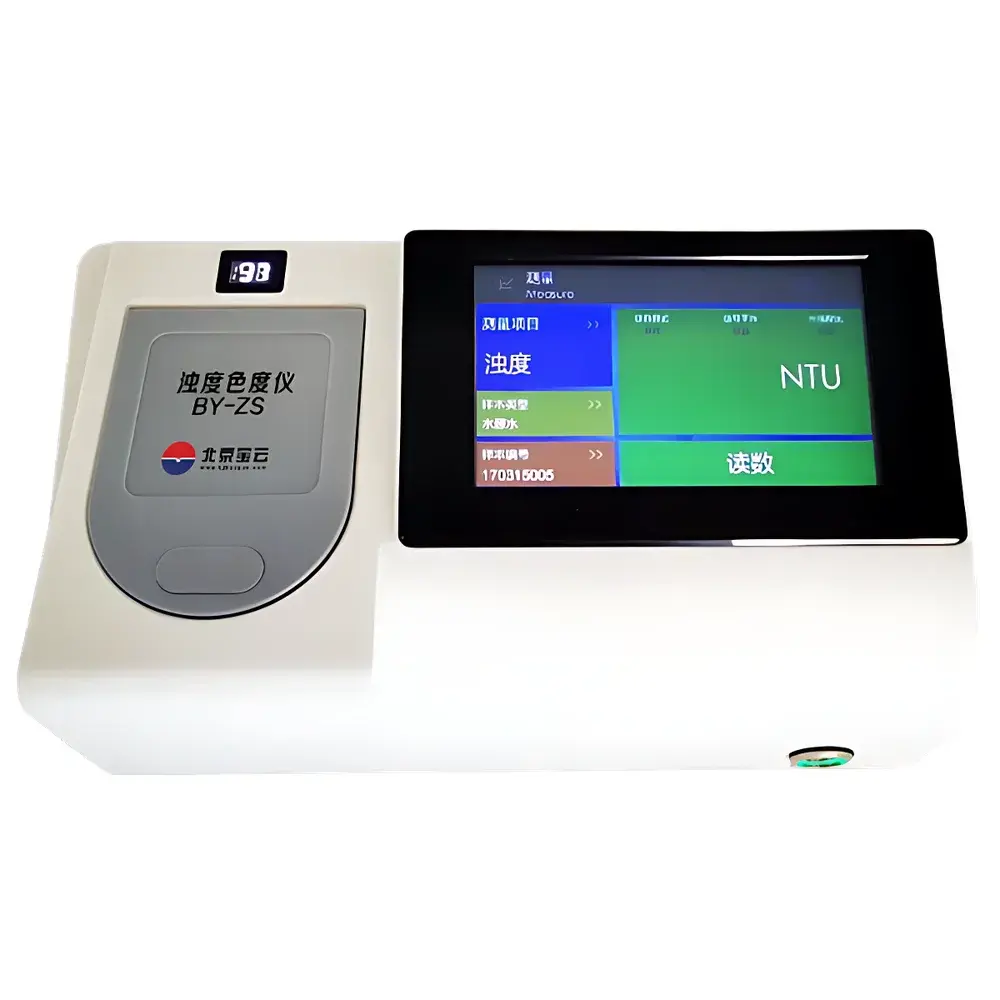
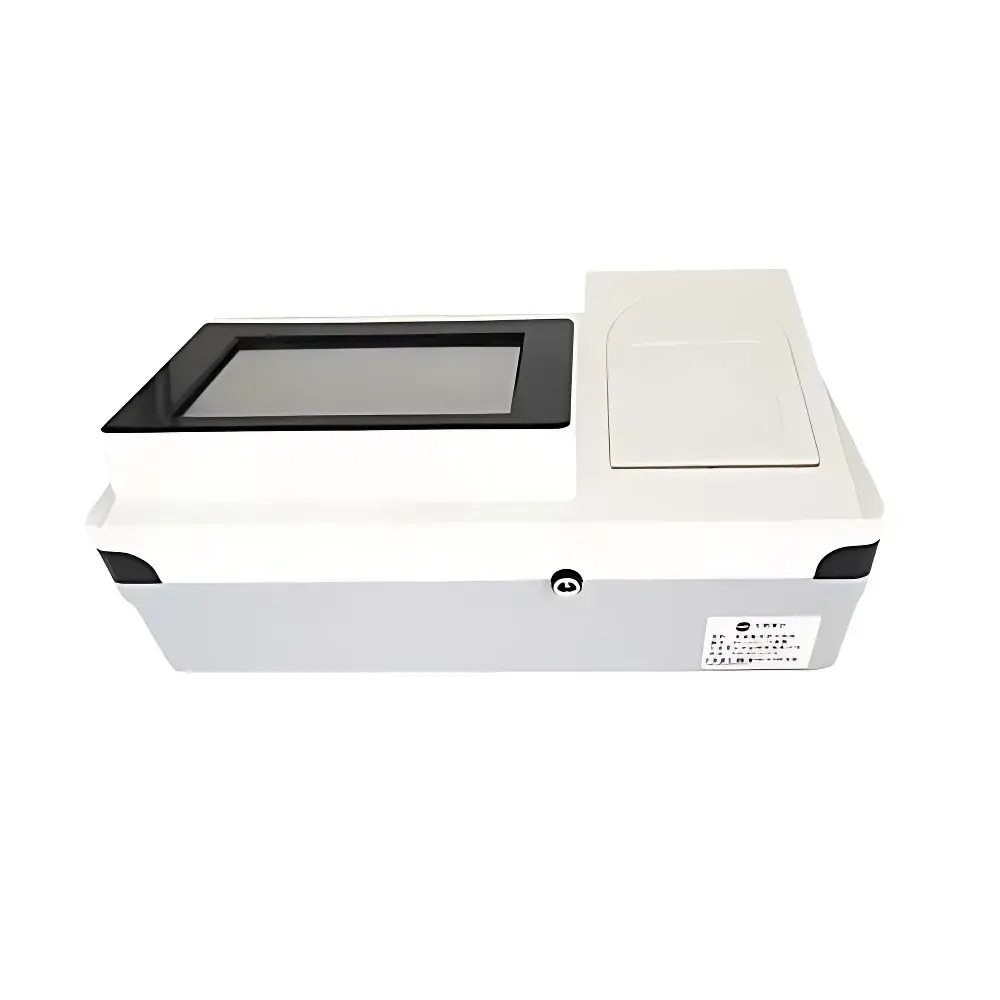
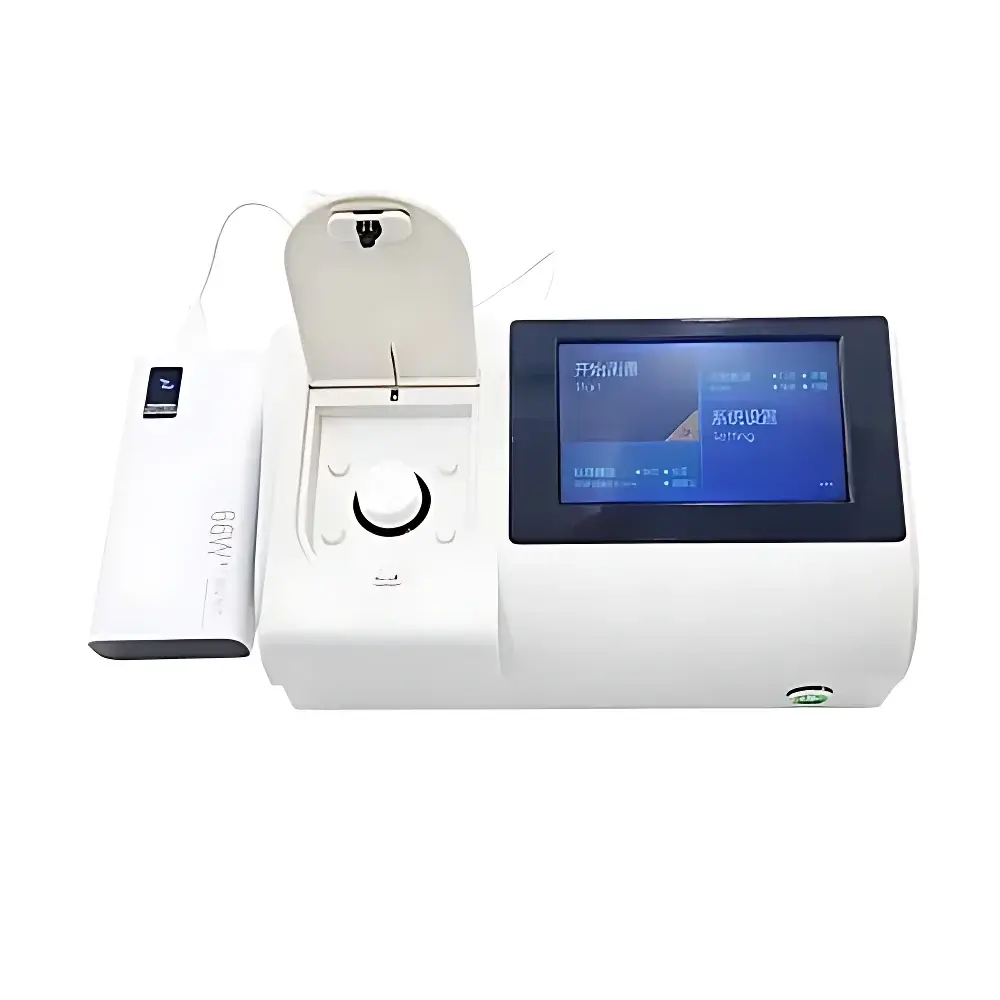
BJBY BY-ZS Portable Turbidity and Color Analyzer
| Brand | BJBY |
|---|---|
| Origin | USA |
| Manufacturer Type | Authorized Distributor |
| Origin Category | Imported |
| Model | BY-ZS |
| Instrument Type | Portable/HANDHELD Water Quality Analyzer |
| Measured Parameters | Turbidity (0.00–400 NTU, extendable to 2000 NTU), Color (0.0–500.0 Platinum-Cobalt Units) |
| Compliance | GB/T 5750.4–2023 (Turbidity: Ratio Nephelometry at 90° + Transmission |
| Color | Platinum-Cobalt Standard Method) |
| Repeatability | ±0.003 Absorbance Units |
| Detection Wavelengths | 380 nm, 420 nm, 520 nm, 610 nm, and Broadband White Light (automatically selected per test) |
| Optical Configuration | Dual-mode optical path—90° scattered light + transmitted light for turbidity |
| Resolution | 0.001 NTU (turbidity), 0.1 PCU (color) |
| Data Storage | 20,000 measurement records with timestamp, operator ID, sample ID, sample type, and source metadata |
| Display | 5.0-inch high-resolution capacitive touchscreen |
| Calibration | Factory-calibrated with 7-year LED light source stability |
| Power | Integrated rechargeable Li-ion battery |
| Reagents | Pre-formulated, sealed, ready-to-use reagent vials (no on-site preparation required) |
| Dimensions | 194 × 194 × 115 mm (L × W × H) |
Overview
The BJBY BY-ZS Portable Turbidity and Color Analyzer is a field-deployable, dual-parameter photometric instrument engineered for rapid, traceable, and standards-compliant assessment of drinking water quality. It operates on two distinct, metrologically validated optical principles: ratio nephelometry at 90° scattering geometry combined with transmission measurement for turbidity quantification, and spectrophotometric comparison against the platinum-cobalt (Pt-Co) standard scale for true color determination. Designed in strict accordance with GB/T 5750.4–2023—the Chinese national standard for drinking water quality testing—the BY-ZS delivers laboratory-grade accuracy in a handheld form factor. Its optical architecture integrates a stabilized broadband white light source and five discrete wavelength channels (380 nm, 420 nm, 520 nm, 610 nm, and white light), enabling automatic spectral selection based on the selected test parameter. This eliminates manual filter changes and reduces operator-induced variability. The instrument’s core measurement range spans 0.00–400 NTU for turbidity (extendable to 2000 NTU via dynamic range optimization) and 0.0–500.0 Pt-Co units for color, covering all regulatory thresholds defined in WHO Guidelines for Drinking-water Quality and China’s GB 5749–2022.
Key Features
- Dual-optical-path design: Simultaneous 90° scattered light detection and transmittance measurement ensures compliance with ratio-based turbidity methodology per GB/T 5750.4–2023 and ISO 7027-1:2016.
- Automated wavelength selection: Five calibrated LED sources enable precise spectral matching—e.g., 520 nm for Pt-Co color evaluation and broadband white light for turbidity ratio calculations—minimizing interferences from chromophores or suspended particles.
- High-resolution metrology: Achieves turbidity resolution of 0.001 NTU and color resolution of 0.1 Pt-Co unit, supporting detection of subtle deviations during source water monitoring or distribution system integrity verification.
- Traceable calibration architecture: Factory-calibrated using NIST-traceable reference standards; built-in calibration validation routines support GLP-compliant audit trails and routine performance verification without external hardware.
- Robust data governance: Stores up to 20,000 full measurement records—including date/time stamp, operator ID, sample ID, sample classification (e.g., raw, finished, distribution), and geographic origin—structured for seamless export to LIMS or regulatory reporting platforms.
- Field-optimized ergonomics: Compact 194 × 194 × 115 mm chassis with IP67-rated enclosure; powered by a maintenance-free lithium-ion battery rated for ≥12 hours of continuous operation under typical sampling conditions.
Sample Compatibility & Compliance
The BY-ZS accepts standard 25-mm round glass or quartz cuvettes (10-mm pathlength) and is compatible with both filtered and unfiltered aqueous samples, including surface water, groundwater, treated drinking water, and wastewater effluents within specified turbidity limits. All reagents are supplied as pre-dosed, vacuum-sealed vials conforming to GB/T 5750.4–2023 specifications—eliminating on-site dilution or weighing errors. The instrument meets the essential performance criteria outlined in ISO 7027-1:2016 (turbidity) and ASTM D1209 (color), and its firmware supports configurable reporting templates aligned with China’s Ministry of Ecology and Environment (MEE) and National Health Commission (NHC) data submission requirements. Built-in audit logging satisfies basic GLP documentation needs, including calibration history, user logins, and modification timestamps.
Software & Data Management
Data acquisition and management are handled through an embedded Linux-based operating system with a responsive 5.0-inch capacitive touchscreen interface. Measurement workflows follow hierarchical menu navigation with context-sensitive prompts, reducing training time for field technicians. All stored records are timestamped with UTC-synchronized clocks and encrypted at rest. USB-C and Bluetooth 5.0 interfaces support secure, encrypted data export to Windows/macOS workstations or cloud-based environmental data platforms. Firmware updates are delivered via signed OTA packages, ensuring cryptographic integrity and version control. While not FDA 21 CFR Part 11-certified out-of-the-box, the system provides foundational elements for Part 11 readiness—including electronic signatures (via PIN/ID), audit trail generation, and role-based access control—enabling customers to implement supplementary procedural controls for regulated environments.
Applications
- Drinking water safety verification at intake points, treatment plants, and distribution endpoints per GB 5749–2022.
- Emergency response monitoring following natural disasters or infrastructure failures where rapid turbidity spikes indicate contamination events.
- Regulatory compliance auditing for municipal utilities, third-party laboratories, and environmental consultancies serving MEE-mandated reporting cycles.
- Source water characterization during watershed assessments, particularly where humic substances or algal blooms contribute to elevated color values.
- Validation of filtration efficiency in membrane or granular media systems via pre- and post-filtration turbidity/color differential analysis.
- Educational use in university environmental engineering labs for teaching standardized water quality methodology per GB/T 5750 series.
FAQ
Does the BY-ZS require annual recalibration by an accredited lab?
No. The instrument features a 7-year certified LED source lifetime and includes user-accessible calibration routines traceable to factory-set NIST-matched standards. External recalibration is recommended only after physical impact, exposure to extreme temperatures (>50°C), or if internal diagnostic checks indicate optical drift beyond ±0.005A.
Can the device measure turbidity in highly colored samples without interference?
Yes. The ratio nephelometric method (90° scatter/transmission) inherently corrects for absorbance-related attenuation, making it robust against yellow-brown humic coloration common in surface waters. Validation studies per GB/T 5750.4–2023 confirm <±2% deviation at 400 NTU/300 Pt-Co combinations.
Is the data export format compatible with common LIMS platforms?
Yes. Exported CSV files include UTF-8 encoding, ISO 8601 timestamps, and column headers aligned with ASTM E1447 and ISO/IEC 17025 reporting conventions—ensuring direct ingestion into LabVantage, Thermo Fisher SampleManager, and Waters Empower.
What is the warranty coverage and service support structure?
BJBY provides a 24-month limited warranty covering parts and labor. Technical support is available via secure remote diagnostics and regional service centers in Shanghai, Guangzhou, and Beijing, with spare parts inventory maintained for ≤72-hour dispatch on critical components.







