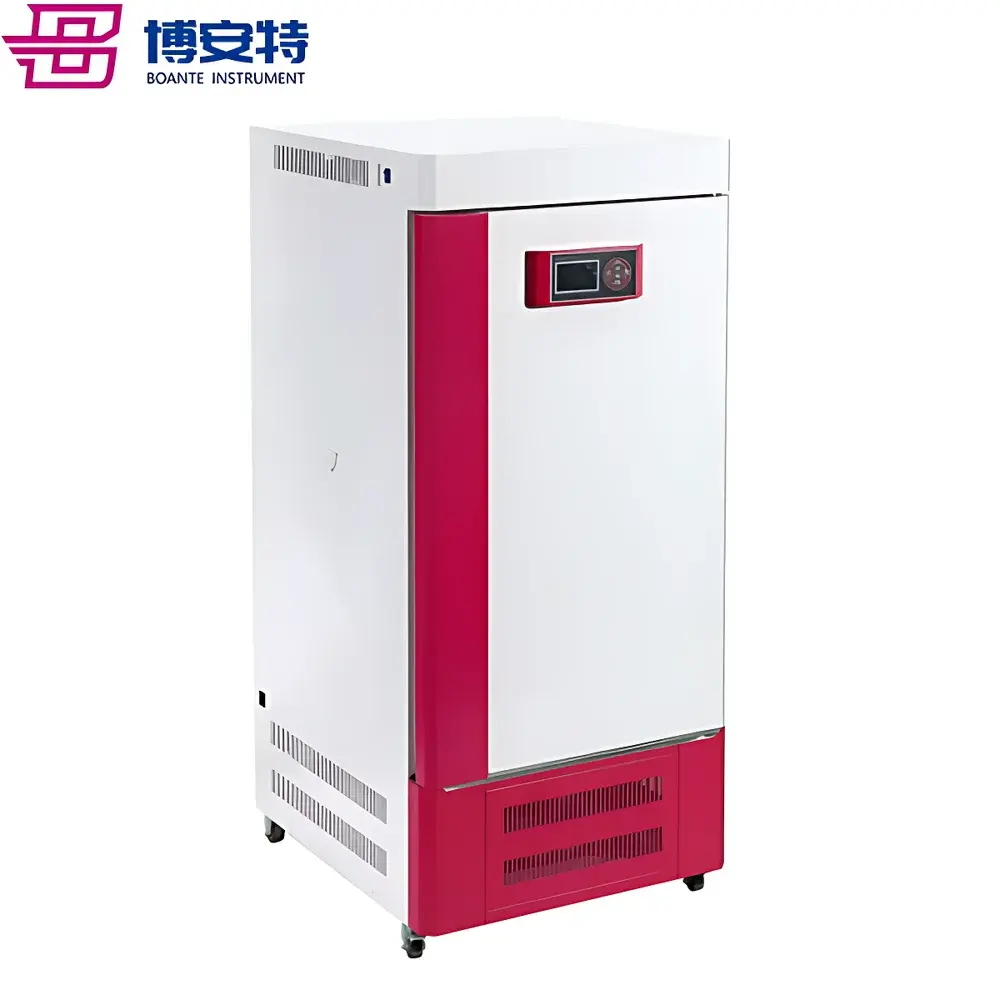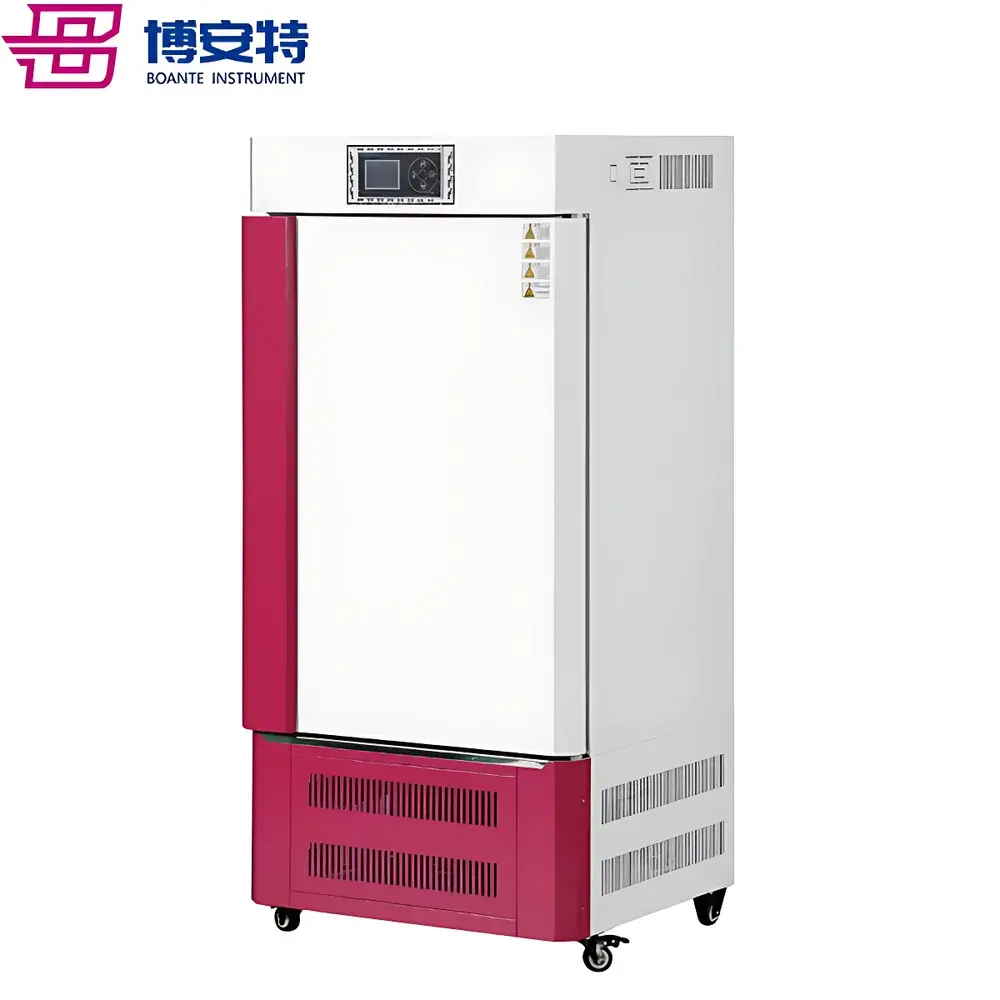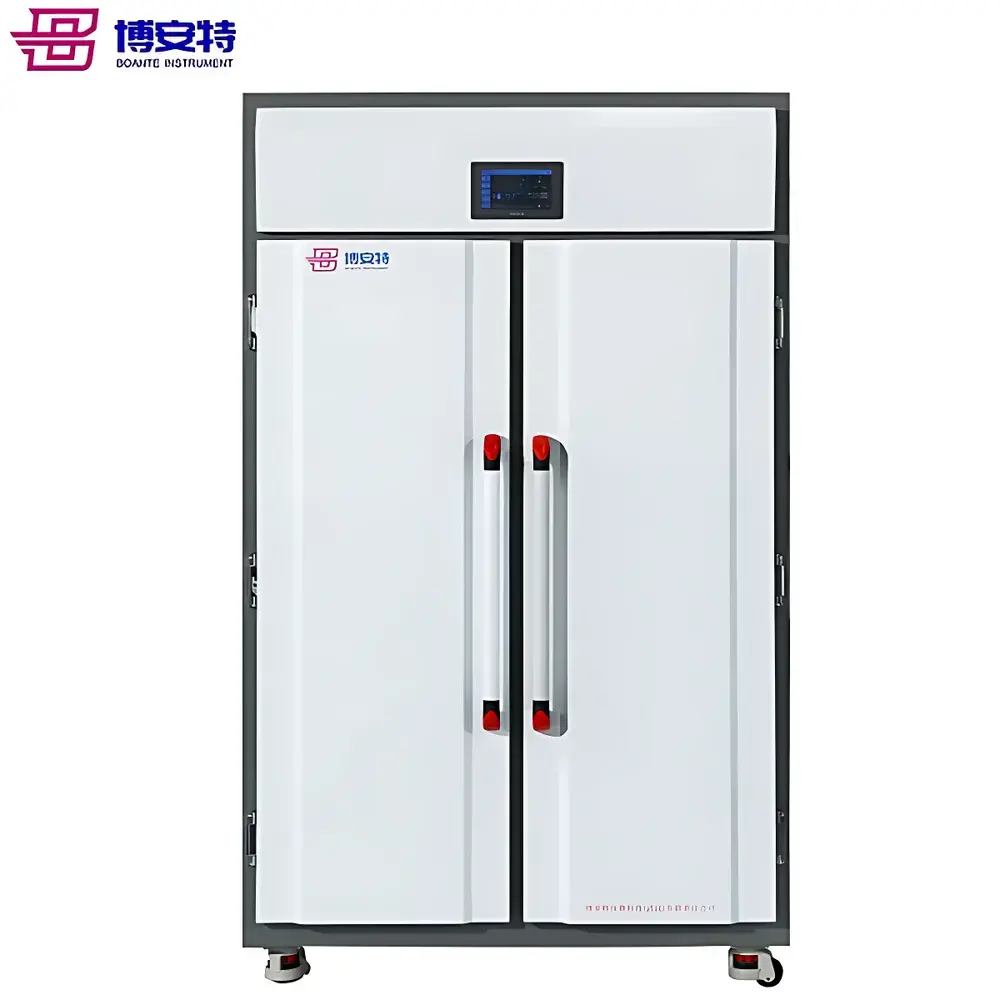
Boante BAT-SHM Series Saturated Humidity Plant Growth Chambers
| Brand | Boante |
|---|---|
| Model | BAT600/800/1000/1250/1500/2000-SHM |
| Origin | Hubei, China |
| Temperature Range | 5–45 °C (10–45 °C under illumination) |
| Temperature Uniformity | ±0.5 °C (within same shelf plane) |
| Temperature Stability | ±0.2 °C |
| Humidity Range | 50–95 %RH (operable within 15–45 °C ambient) |
| Humidity Control Accuracy | ±1 %RH |
| Humidity Fluctuation | ±3 %RH (within same shelf plane) |
| Light Intensity Range | 0–600 µmol·m⁻²·s⁻¹ (0–100 % stepless dimming) |
| Light Source | LED, visible spectrum only |
| Illumination Configuration | Top-mounted horizontal lighting with per-shelf independent control |
| Chamber Volumes | 600 / 800 / 1000 / 1250 / 1500 / 2000 L |
| External Dimensions (W×D×H) | 850×805×1900 mm (BAT600-SHM) to 1980×920×2080 mm (BAT2000-SHM) |
| Internal Dimensions (W×D×H) | 740×585×1350 mm (BAT600-SHM) to 1874×728×1500 mm (BAT2000-SHM) |
| Shelving | 2-tier standard configuration |
| Cooling Method | Hot-gas bypass refrigeration with electromagnetic defrost |
| Control System | BAT200PG OS, 7-inch color touchscreen, 24-segment programmable timeline with real-time Beijing time synchronization |
| Security | Four-level password management (Factory Admin / User Admin / Operator / Engineer) |
| Data Logging | ≥5 years internal storage with timestamped audit trail |
| Safety Protections | Compressor overheat, fan overheat, over-temperature, high-pressure cut-off, overload protection |
Overview
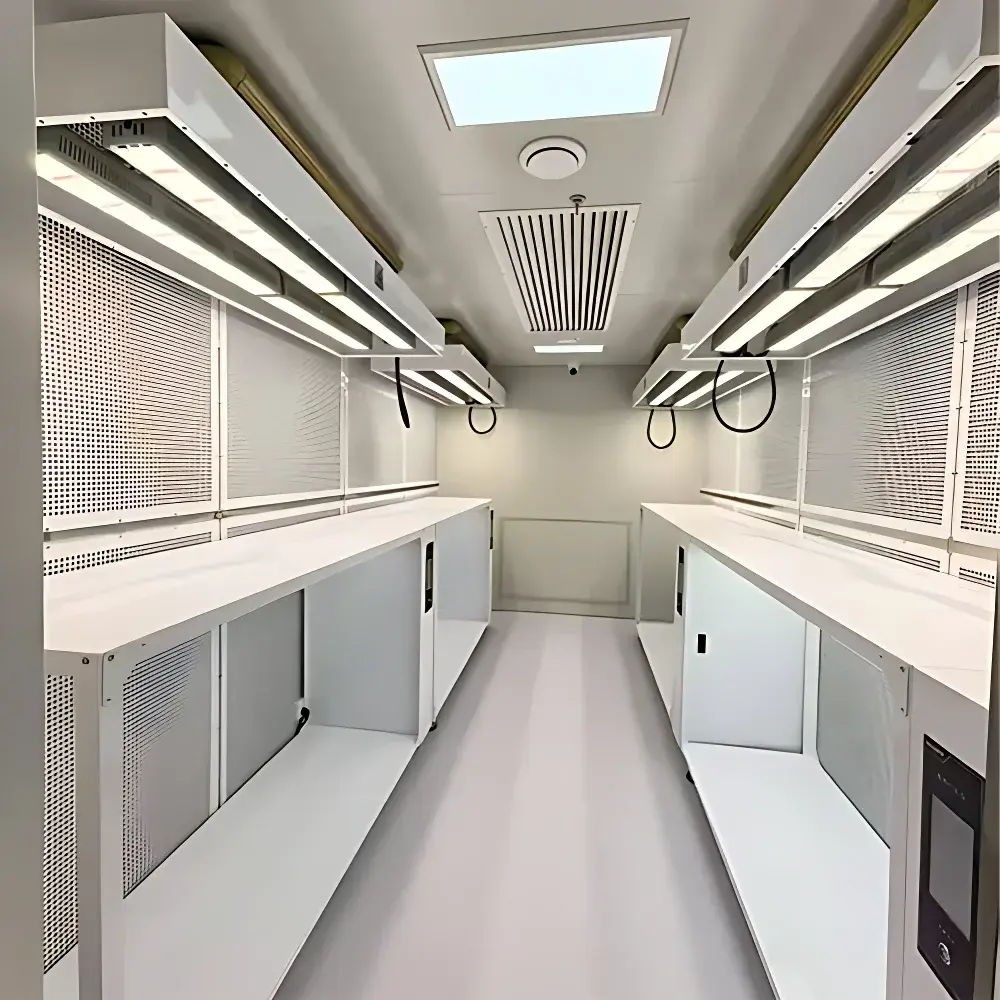
The Boante BAT-SHM Series Saturated Humidity Plant Growth Chambers are engineered for reproducible, long-term plant phenotyping, seed germination studies, and controlled-environment physiology research. These chambers integrate precision thermohygrometric regulation with spectrally optimized visible-light LED arrays to maintain stable saturation-level relative humidity (50–95 %RH) across the full operational temperature range (5–45 °C). Unlike conventional growth chambers that rely on passive humidification or intermittent ultrasonic misting—introducing RH overshoot and spatial gradients—the BAT-SHM employs a closed-loop vapor saturation system coupled with hot-gas bypass refrigeration and electromagnetic valve-based defrosting. This architecture eliminates cold-wall condensation, prevents moisture stratification between shelves, and ensures ±1 %RH control accuracy and ±3 %RH intra-chamber fluctuation—critical for hygrosensitive experiments involving stomatal conductance, transpiration rate quantification, or fungal pathogen development assays.
Key Features
- APID Intelligent Climate Control: Adaptive Proportional-Integral-Derivative logic with third-order fuzzy compensation minimizes thermal overshoot during setpoint transitions and maintains ±0.2 °C temperature stability and ±0.5 °C uniformity across each shelf plane—even under dynamic light-on/light-off cycling.
- Per-Shelf Independent Lighting: Top-mounted, horizontally oriented LED modules deliver uniform irradiance (0–600 µmol·m⁻²·s⁻¹ at 100 mm distance) with fully independent dimming per tier. No optical crosstalk occurs between layers, enabling multi-treatment photobiological experiments within a single chamber.
- BAT200PG Operating System: 7-inch capacitive touchscreen interface supports 24-segment programmable timelines synchronized to Beijing Standard Time (CST), allowing precise diurnal simulation of temperature, RH, and PPFD profiles—including ramping, hold, and cycling functions.
- Robust Refrigeration Architecture: Hot-gas bypass cooling enables continuous compressor operation without start-stop cycling, extending service life and reducing mechanical wear. Electromagnetic defrost ensures complete ice removal from evaporator coils without interrupting chamber climate stability.
- Comprehensive Data Integrity: Onboard controller logs timestamped temperature, humidity, light intensity, and alarm events with ≥5 years of non-volatile storage. Audit-trail functionality complies with GLP documentation requirements for academic and regulatory submissions.
- Multi-Tier Access Security: Four-level hierarchical password protection (Factory Admin, User Admin, Operator, Engineer) restricts parameter modification, program editing, and firmware updates—ensuring experimental protocol integrity in shared core facilities.
Sample Compatibility & Compliance
The BAT-SHM series accommodates a broad range of botanical specimens—from Arabidopsis thaliana seedlings and rice tillers to mature tomato or tobacco plants—within standardized growth trays (up to 1250 mm maximum height clearance). All models meet ISO 17025-relevant environmental monitoring prerequisites for accredited plant science laboratories. The chamber’s humidity control performance is validated per ASTM E2051-22 (Standard Practice for Calibration of Relative Humidity Instruments) and aligns with USP Chapter <1151> environmental stability testing guidance. Optional CO₂ integration (0–2000 ppm) and multi-spectral LED upgrades support advanced photomorphogenesis studies compliant with ISO 8573-1:2010 compressed air purity standards for ancillary gas delivery systems.
Software & Data Management
Data export is supported via USB 2.0 port (CSV format) or optional Ethernet/Wi-Fi module (Modbus TCP or HTTP REST API). The BAT200PG OS enforces FDA 21 CFR Part 11–compatible electronic record safeguards: user-authenticated session initiation, immutable timestamped logs, and configurable retention policies. Remote monitoring dashboards display real-time chamber status, historical trend charts (7-day rolling window), and predictive maintenance alerts (e.g., filter saturation, refrigerant pressure drift). All firmware updates undergo SHA-256 signature verification prior to installation to prevent unauthorized code injection.
Applications
- Controlled-environment phenotyping under saturated humidity conditions for drought-resistance trait screening
- Stomatal aperture kinetics analysis using synchronized RH/temperature ramps
- Pathogen-host interaction studies requiring precise vapor pressure deficit (VPD) control
- Seed dormancy release assays under defined hygrothermal cycles
- Pre-acclimation protocols for tissue culture-derived plantlets prior to greenhouse transfer
- Validation of transgenic lines expressing aquaporin or cuticular wax biosynthesis genes
FAQ
What is the minimum operating temperature when the lighting system is active?
The chamber maintains a functional lower limit of 10 °C during illumination due to LED heat load; the base temperature range without lighting is 5–45 °C.
Does the system support validation documentation (IQ/OQ/PQ)?
Yes—factory-provided calibration certificates (NIST-traceable sensors), sensor mapping reports, and protocol templates for Installation Qualification (IQ), Operational Qualification (OQ), and Performance Qualification (PQ) are available upon request.
Can the humidity be held constant while temperature cycles diurnally?
Yes—the APID controller decouples humidity and temperature actuation algorithms, enabling independent setpoint scheduling for each parameter across all 24 program segments.
Is remote access compatible with institutional IT security policies?
All network-enabled units implement TLS 1.2 encryption, role-based API token authentication, and configurable firewall port restrictions to comply with university and pharmaceutical IT governance frameworks.
What maintenance intervals are recommended for optimal long-term performance?
Compressor oil inspection every 24 months, HEPA filter replacement every 12 months, and annual verification of RH sensor drift against saturated salt standards (e.g., MgCl₂, NaCl, KCl) per ISO 8573-1 Annex B.