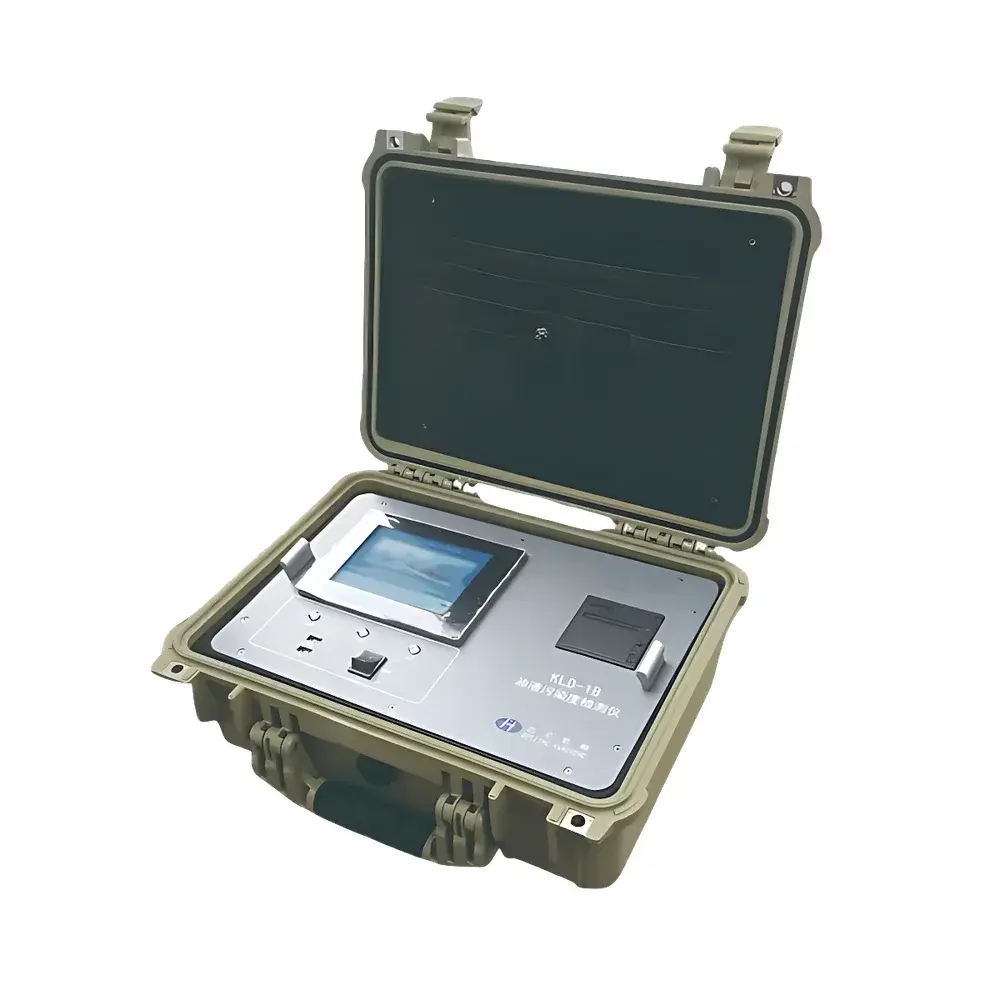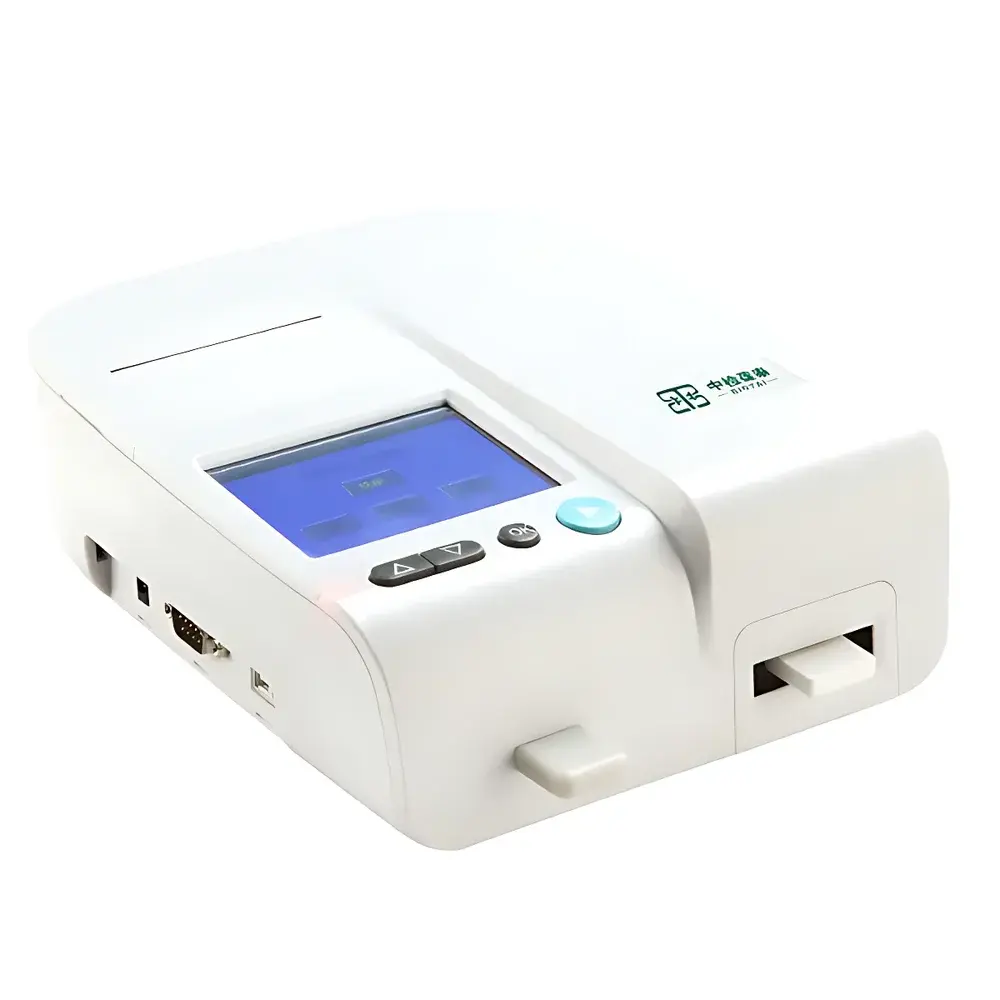
BOT-HMD Heavy Metal Quantitative Detection System by Biotai
| Brand | Biotai |
|---|---|
| Origin | Beijing, China |
| Manufacturer Type | Authorized Distributor |
| Country of Origin | China |
| Model | BOT-HMD |
| Price Range | USD 21,000 – 28,000 (FOB) |
| Power Supply | 220 V AC, 50/60 Hz |
Overview
The BOT-HMD Heavy Metal Quantitative Detection System is a CE-compliant, benchtop immunoassay platform engineered for rapid, on-site quantification of lead (Pb), cadmium (Cd), and mercury (Hg) in grain and oilseed matrices. Leveraging lateral-flow colloidal gold immunochromatography—a well-established, AOAC-recognized screening methodology—the system delivers quantitative results without reliance on centralized laboratory infrastructure. Unlike atomic absorption or ICP-MS techniques requiring acid digestion, high-temperature ashing, and certified operator training, the BOT-HMD operates on a simplified sample preparation workflow compatible with routine QC environments in grain elevators, feed mills, and food processing facilities. Its design adheres to the analytical performance criteria outlined in ISO 17025 for screening methods and supports verification pathways aligned with EU Commission Regulation (EU) No 401/2013 and China’s GB 2762–2022 limits for heavy metals in cereals.
Key Features
- Quantitative multi-analyte detection: Simultaneous measurement of Pb (0–2000 ppb), Cd (0–1000 ppb), and Hg (0–500 ppb) with calibrated dose-response curves generated per test strip batch.
- Integrated sample preparation module: Pre-packed solid-phase extraction (SPE) columns included in each reagent kit eliminate manual solvent handling and improve recovery consistency across cereal matrices including maize, soybean, rice, paddy, and wheat.
- Touchscreen-driven operation: 7-inch capacitive display with intuitive GUI; no programming or assay development expertise required—training completed in under 30 minutes.
- Dual connectivity architecture: Local data export via USB 2.0 mass storage mode; wireless synchronization with LIMS or internal QA databases using IEEE 802.11 b/g/n Wi-Fi (WPA2-PSK secured).
- Automated traceability: Built-in 2D barcode scanner reads lot-specific calibration codes from test strips, automatically loading corresponding standard curves and expiration metadata into result records.
- High-capacity onboard storage: Non-volatile flash memory retains ≥50,000 test records with timestamp, operator ID, sample ID, analyte concentration, CV%, and pass/fail status against configurable regulatory thresholds.
Sample Compatibility & Compliance
The BOT-HMD is validated for homogenized, ground grain samples with moisture content ≤14% (as per ISO 712). Extraction uses aqueous buffer-based protocols compliant with AOAC Official Method 2019.01 for immunoassay screening of heavy metals in cereals. No hydrochloric or nitric acid digestion is required—reducing hazardous waste generation and operator exposure risk. All reagent kits are manufactured under ISO 13485-certified conditions and include Certificate of Analysis (CoA) with inter-lot precision data (intra-assay CV ≤12%, inter-assay CV ≤15%). The system meets electromagnetic compatibility (EMC) requirements per IEC 61326-1 and carries CE marking for In Vitro Diagnostic Medical Devices (IVDD) Annex II classification.
Software & Data Management
Firmware v3.2 includes audit-trail functionality compliant with FDA 21 CFR Part 11 (electronic signatures, user role-based access control, immutable record logging). Data export supports CSV and PDF formats with embedded digital signatures. Optional cloud gateway (Biotai CloudLink™) enables secure TLS 1.2 transmission to enterprise systems, supporting GLP/GMP-aligned workflows with automated report generation and deviation flagging. Raw optical density values, calibration curve parameters, and raw image captures of test lines are retained for technical review and method validation documentation.
Applications
- Pre-harvest and post-harvest screening at grain collection points and silos
- In-process monitoring in rice milling, soybean crushing, and flour blending operations
- Supplier qualification testing for contract manufacturing organizations (CMOs)
- Regulatory compliance checks aligned with Codex Alimentarius Standard CXS 193–1995 and national MRLs
- Internal reference material verification and method correlation studies against reference methods (e.g., ICP-OES per ISO 11885)
FAQ
What regulatory standards does the BOT-HMD support for heavy metal screening?
It supports alignment with GB 2762–2022 (China), EU Regulation (EU) No 401/2013, and Codex Alimentarius GSFA provisions for Pb, Cd, and Hg in cereals.
Is method validation documentation provided with the system?
Yes—each instrument shipment includes a Performance Qualification (PQ) protocol, validation summary report, and matrix-specific recovery data for maize, rice, and wheat.
Can the system be integrated into an existing LIMS environment?
Yes—via RESTful API (optional license) or scheduled CSV push over Wi-Fi/USB, with configurable field mapping and error-handling logs.
What is the shelf life of the included test strips and SPE columns?
18 months from manufacture date when stored at 2–8 °C; ambient stability verified for 7 days post-thaw under controlled humidity.
Does the system require annual recalibration or service contracts?
No scheduled recalibration is required; however, biannual performance verification using NIST-traceable reference standards is recommended per ISO/IEC 17025 Clause 7.7.