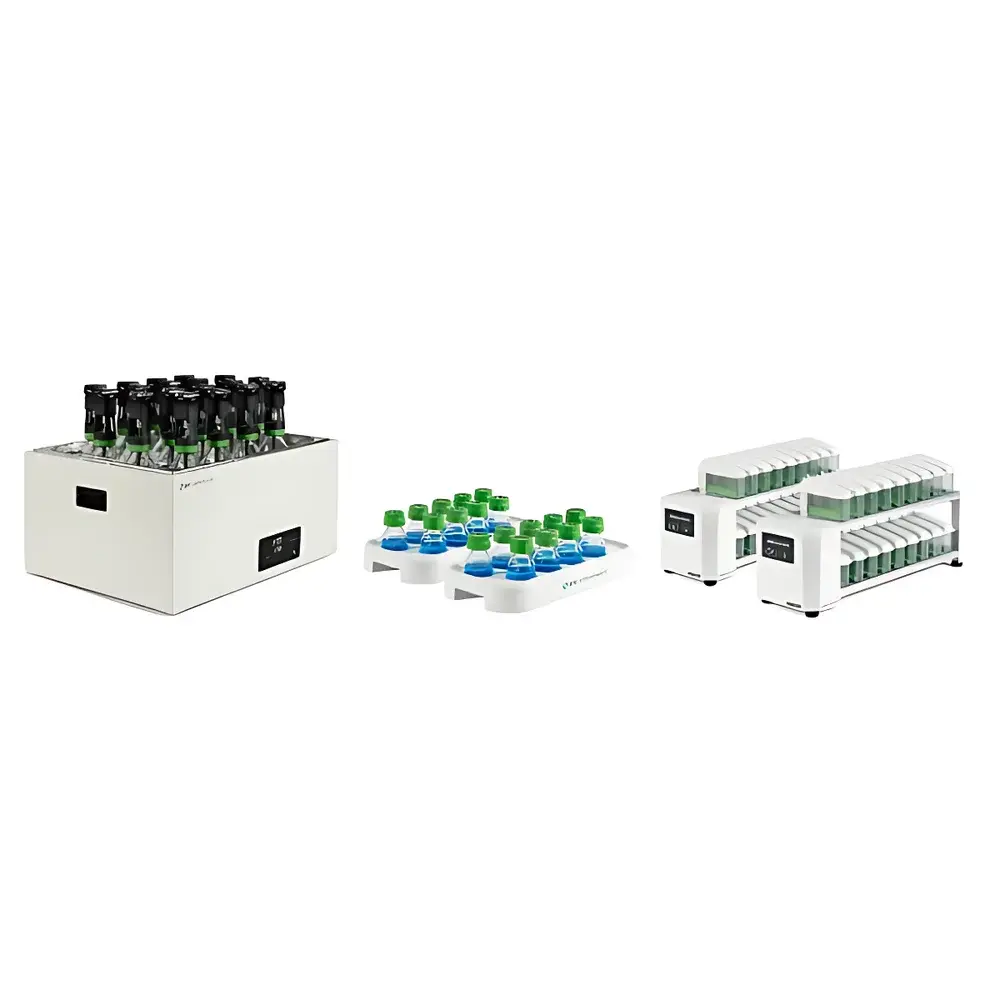
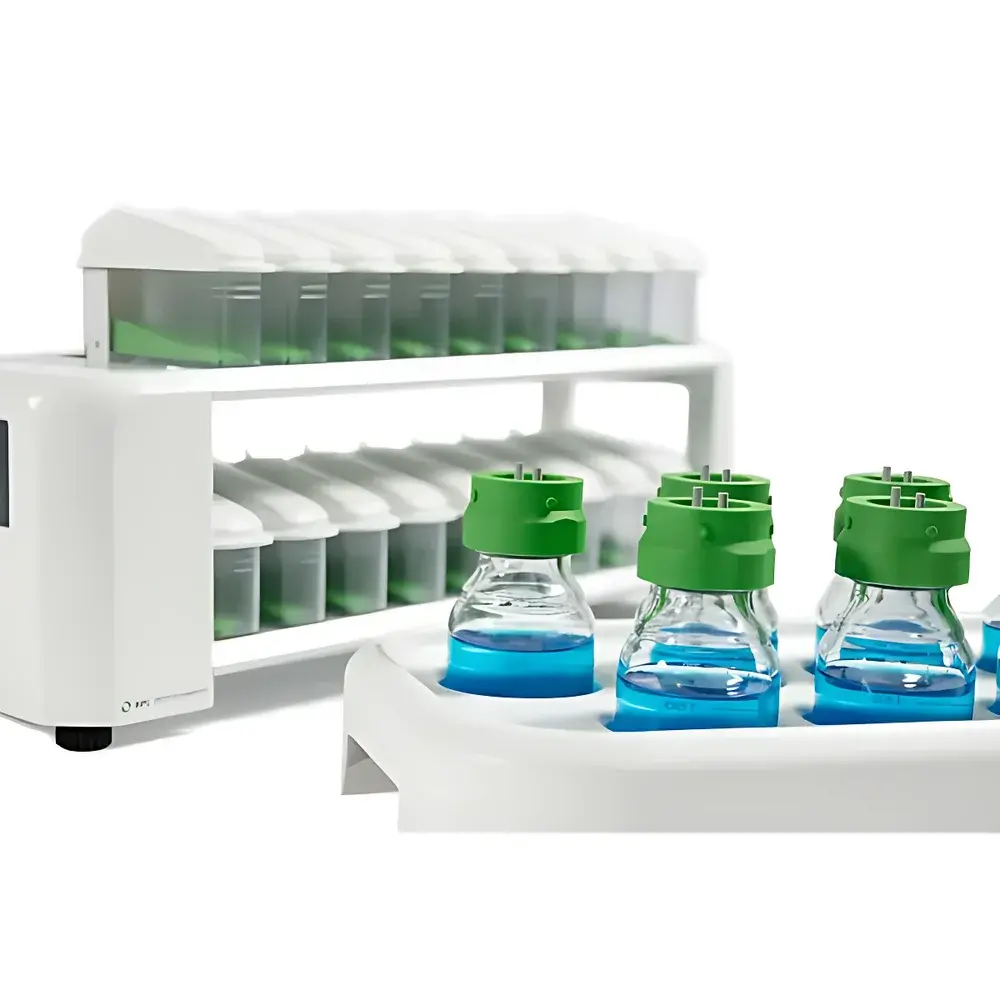
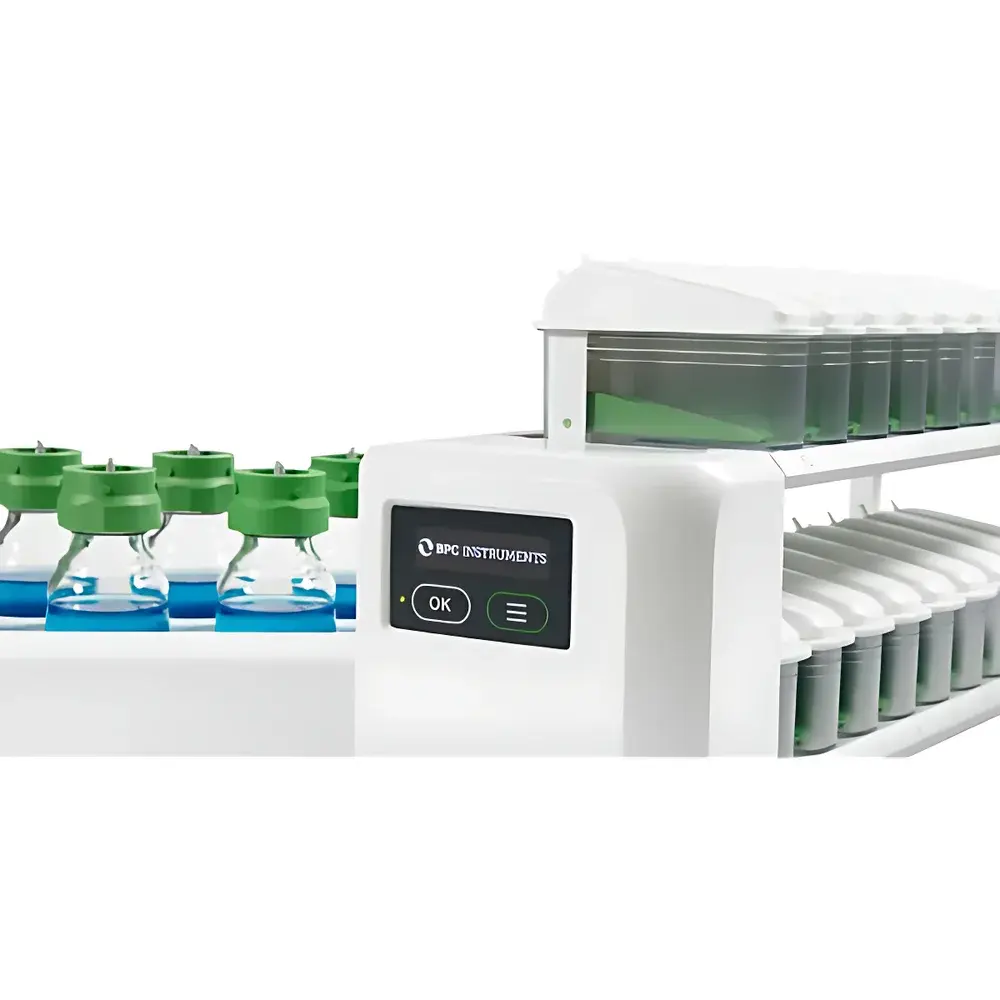
BPC Instruments AMPTS III Automated Methane Potential Test System
| Brand | BPC Instruments |
|---|---|
| Origin | Zhejiang, China |
| Manufacturer Type | Manufacturer |
| Origin Category | Domestic |
| Model | AMPTS III |
| Price Range | USD 28,000 – 56,000 |
| Application Fields | Environmental Engineering (Wastewater Treatment, Activated Sludge Assessment) |
| Gas Measurement Resolution | 2 mL / 9 mL |
| Gas Flow Rate Range | 0–6000 mL/h |
| Reactor Volume | 500–2000 mL |
| Maximum Number of Reactors per System | 18 |
Overview
The BPC Instruments AMPTS III Automated Methane Potential Test System is a purpose-built, network-enabled platform engineered for standardized batch anaerobic digestion (AD) testing under controlled laboratory conditions. It operates on the principle of volumetric gas displacement with real-time pressure, temperature, and humidity compensation—enabling accurate quantification of cumulative biogas and methane production from organic substrates. Designed in accordance with internationally recognized protocols—including ISO 11734, ISO 15686-4, ASTM D5210, and VDI 4630—the AMPTS III supports rigorous biochemical methane potential (BMP), specific methanogenic activity (SMA), and residual gas potential (RGP) assays. Its embedded microcontroller architecture eliminates dependency on external PCs, ensuring data integrity during extended experiments (up to 120 days), power interruptions, or OS-level failures. The system’s modular mechanical design reflects Scandinavian engineering principles, prioritizing long-term operational stability, serviceability, and compliance with GLP-aligned workflows.
Key Features
- Embedded web server: Accessible via any modern browser—no client software installation required.
- Real-time environmental compensation: Integrated pressure, temperature, and relative humidity sensors correct raw gas volume to standard conditions (0 °C, 101.325 kPa, dry).
- Modular reactor configuration: Supports up to 18 independent 500–2000 mL glass reactors; optional AMPTS III Light variant accommodates 9 reactors.
- Self-contained data storage: Onboard flash memory retains up to 15 million data points and ≥130,000 L total gas volume per channel.
- No routine calibration: Factory-calibrated transducers and sealed sensor modules ensure measurement consistency over time without user intervention.
- Intelligent mechanical stirring: Brushless stepper motor-driven agitation provides consistent, low-shear mixing across heterogeneous slurry matrices (TS 2–15%).
- Multi-start experiment synchronization: Time-aligned data aggregation enables comparative analysis of batches initiated at different times.
- Gas composition estimation: Compatible with external gas analyzers (e.g., NDIR CH₄/CO₂, GC-TCD) via serial or analog interfaces for real-time biogas speciation.
Sample Compatibility & Compliance
The AMPTS III accepts diverse feedstocks including municipal sewage sludge, agricultural residues, food waste, industrial effluents, and pretreated lignocellulosic biomass. Each reactor operates under strict anaerobic conditions with continuous headspace monitoring. All hardware components meet CE marking requirements and comply with IEC 61000-6-2 (EMC immunity) and IEC 61000-6-4 (EMC emission) standards. Data handling adheres to ALCOA+ principles (Attributable, Legible, Contemporaneous, Original, Accurate, Complete, Consistent, Enduring, Available), supporting audit readiness for ISO/IEC 17025-accredited laboratories and regulatory submissions under EPA Method 9020B or EU Regulation (EC) No 1069/2009.
Software & Data Management
Pre-installed Aurora software provides an intuitive, role-based interface for method setup, real-time visualization, alarm management, and report generation (PDF/CSV/XLSX). Aurora implements electronic signatures, audit trails, and user access controls aligned with FDA 21 CFR Part 11 requirements. Data export includes timestamped raw measurements, compensated volumes, daily averages, and kinetic curve fitting (e.g., modified Gompertz, first-order hydrolysis models). Remote deployment allows centralized fleet monitoring across multiple AMPTS III units via Ethernet switches—ideal for multi-lab BMP intercomparisons or process optimization studies.
Applications
- Biochemical Methane Potential (BMP) testing for substrate screening and co-digestion ratio optimization.
- Specific Methanogenic Activity (SMA) assessment to quantify inoculum viability and inhibition thresholds.
- Residual Gas Potential (RGP) evaluation of digested sludge stability prior to land application.
- Inhibition studies targeting volatile fatty acids, ammonia, heavy metals, or antibiotics.
- Biodegradability profiling of novel bioplastics, packaging materials, and emerging organic contaminants.
- Process validation and troubleshooting of full-scale anaerobic digesters.
FAQ
Does AMPTS III require periodic recalibration?
No. All pressure, temperature, and humidity sensors are factory-trimmed and sealed. Routine recalibration is not necessary under normal operating conditions.
Can AMPTS III operate unattended for extended periods?
Yes. With onboard storage and battery-backed real-time clock, it supports uninterrupted operation for >120 days without external computing resources.
Is Aurora software compatible with LIMS integration?
Yes. Aurora supports configurable CSV/XML exports and RESTful API endpoints for seamless LIMS or ELN ingestion.
What safety features prevent data loss during power failure?
Non-volatile flash memory, automatic write-caching, and last-known-state recovery ensure zero data loss—even during abrupt power interruption.
How is gas composition determined when using AMPTS III?
AMPTS III measures total biogas volume and flow rate; methane and CO₂ concentrations require coupling with certified gas analyzers (e.g., infrared or GC systems) via standardized analog or Modbus RTU interfaces.