
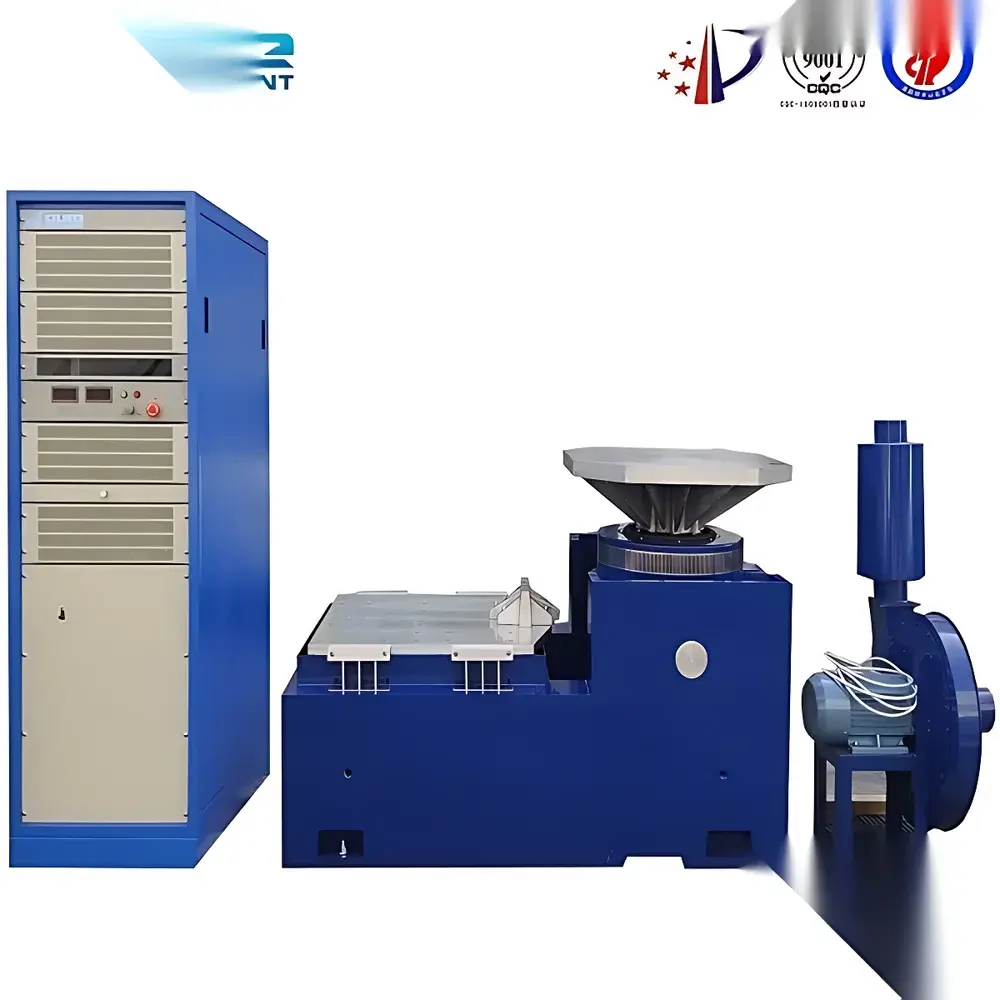
Other Brands CZ/SP Series Packaging Vibration Test System
| Key | Brand: Other Brands |
|---|---|
| Origin | Imported |
| Manufacturer Type | Authorized Distributor |
| Frequency Range | 1–5000 Hz (optional with PC control) |
| Standard Table Dimensions | 50×50×25 cm (horizontal), 50×50×20 cm (vertical) |
| Vibration Modes | Vertical (CZ), Horizontal (SP), Combined (CZ+SP) |
| Compliance | ASTM D999, ISO 8767, ISTA 3A/3E/3H, GB/T 4857.7, MIL-STD-810H Method 514.8 |
| Control Options | Fixed-frequency (50 Hz), Sweep & Random (1–600 Hz or 1–5000 Hz), PC-integrated digital controller |
Overview
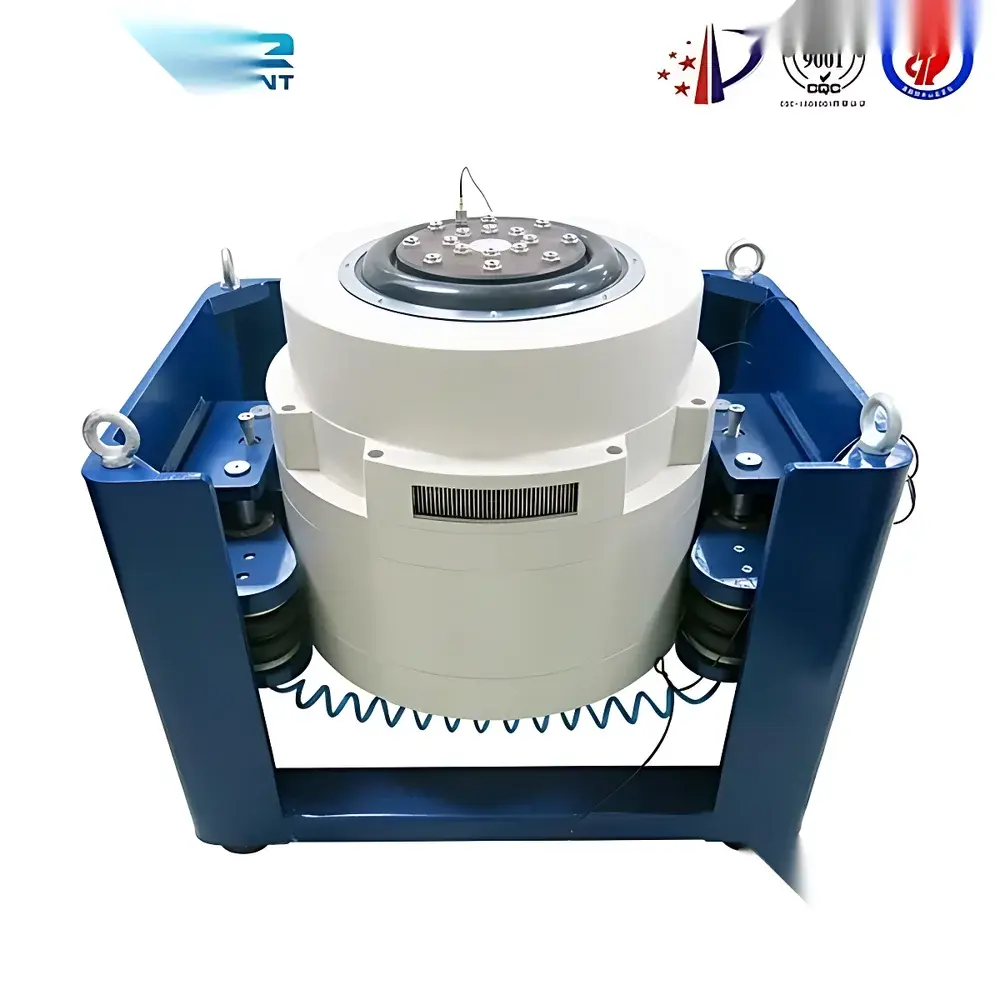
The CZ/SP Series Packaging Vibration Test System is an electromechanical shaker platform engineered for standardized simulation of transportation and handling-induced vibration environments. It operates on the principle of electromagnetic force generation via dual-magnetic-circuit actuators—featuring 10# cast steel magnetic shells and high-efficiency flux coupling—to deliver controlled sinusoidal, random, and shock excitations across a broad frequency spectrum (1–5000 Hz). Designed specifically for packaging integrity validation, this system replicates real-world dynamic stresses encountered during manufacturing, warehousing, multimodal transport (truck, rail, air), and end-user handling. Its rigid magnesium alloy frame ensures high first-mode resonance (>1200 Hz), minimal structural amplification, and excellent amplitude fidelity across the operational bandwidth—critical for repeatable, standards-compliant testing in regulated industrial quality assurance workflows.
Key Features
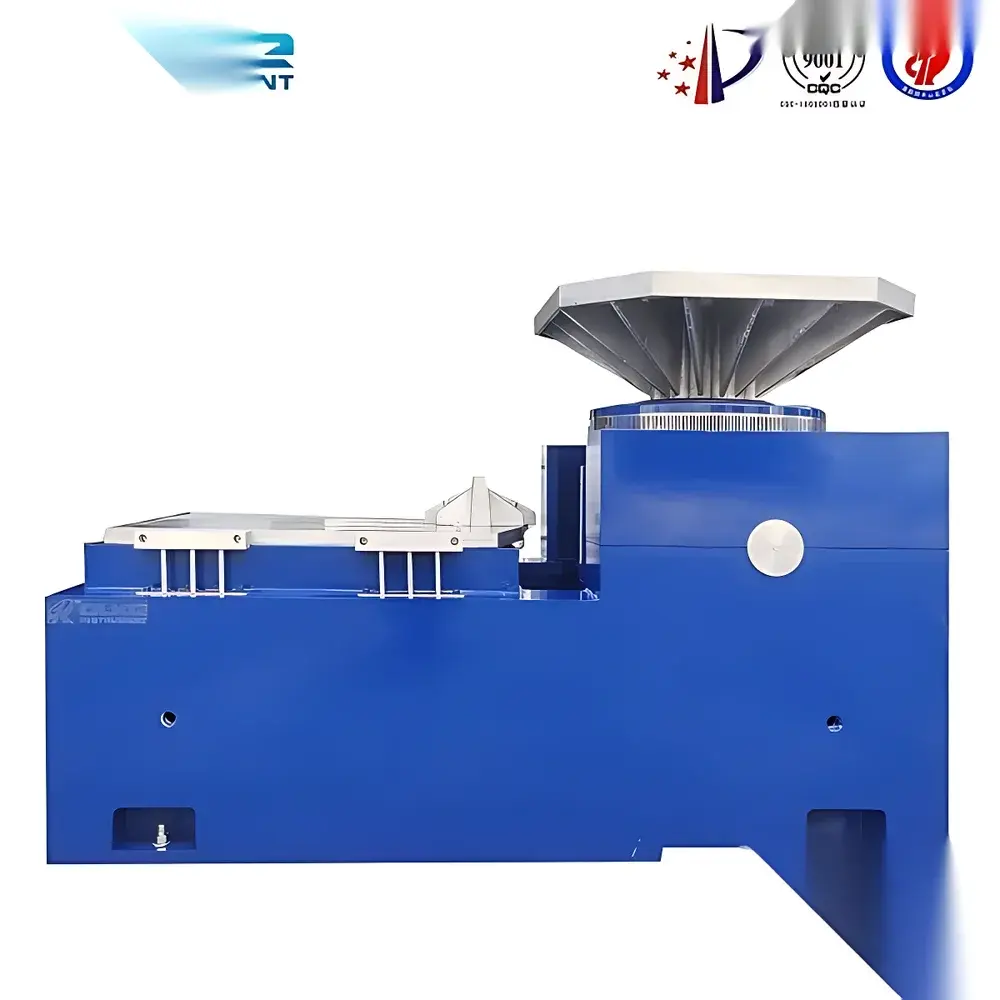
- Modular vibration configuration: Independent vertical (CZ), horizontal (SP), or simultaneous biaxial (CZ+SP) excitation modes, each with dedicated actuator alignment and load-path optimization
- Dual-magnetic-circuit electromagnetic shaker: High magnetic flux density, low leakage field, and thermal stability for sustained operation at rated acceleration levels
- High-stiffness magnesium alloy skeleton: Lightweight yet rigid construction minimizes parasitic resonances and supports large-format test tables (50 × 50 cm base footprint)
- Bearings-based horizontal slide table: Precision linear bearings provide low-friction, oil-free horizontal motion with high overturning moment resistance—ideal for asymmetric or top-heavy package loads
- Ear-mount isolation system: Eliminates need for reinforced concrete foundations; enables installation on standard industrial flooring while maintaining >30 dB vibration attenuation to surrounding infrastructure
- Digital vibration controller: Full-featured embedded unit supporting sine sweep, broadband random (PSD up to 10 g²/Hz), sine-on-random, transient shock (half-sine, trapezoidal, terminal sawtooth), and shock response spectrum (SRS) synthesis per MIL-STD-810H Method 514.8
- Optional PC integration: IEEE-488 or Ethernet interface for remote waveform definition, real-time monitoring, automated test sequencing, and audit-ready data logging compliant with FDA 21 CFR Part 11 requirements
Sample Compatibility & Compliance
This system accommodates packaged goods ranging from small consumer electronics (≤5 kg) to full palletized shipments (up to 150 kg, depending on selected model and fixture configuration). Standard table dimensions (50 × 50 × 25 cm horizontal / 50 × 50 × 20 cm vertical) support common shipping containers, corrugated boxes, blister packs, and molded plastic enclosures. All configurations meet or exceed internationally recognized packaging test standards including ASTM D999 (vibration testing of shipping containers), ISO 8767 (packaging—vibration testing), ISTA 3-series protocols (e.g., ISTA 3A for parcel delivery, ISTA 3E for mixed-SKU pallets, ISTA 3H for motor vehicle transport), GB/T 4857.7 (Chinese national standard for vibration testing), and MIL-STD-810H Method 514.8 (environmental engineering considerations and laboratory tests). Optional calibration certificates traceable to NIST or PTB are available upon request for GLP/GMP-regulated laboratories.
Software & Data Management
The integrated digital controller includes firmware-level compliance with ISO/IEC 17025 documentation requirements, supporting full test parameter archiving, operator ID tagging, timestamped waveform capture, and encrypted raw data export (CSV, UFF58). When equipped with PC control, the system supports third-party software interoperability—including MATLAB® scripting interfaces, LabVIEW™ drivers, and Python-based automation via TCP/IP API. Audit trails record all parameter changes, start/stop events, and calibration interventions—enabling full traceability for FDA, ISO 9001, or IATF 16949 audits. Data files include metadata headers specifying test standard, sample ID, environmental conditions (ambient temperature/humidity), and instrument serial number—ensuring unambiguous linkage between physical test execution and digital records.
Applications
- Validation of primary and secondary packaging performance under simulated road, rail, and air freight conditions
- Design verification of cushioning materials (foam, honeycomb, molded pulp) and structural integrity of corrugated board
- Failure mode analysis of sealed enclosures, latch mechanisms, and internal component mounting under resonant excitation
- Reliability screening of finished goods prior to distribution—especially for automotive ECUs, medical devices, and industrial sensors
- Development of vibration fatigue life models using accelerated testing profiles derived from field-acquired PSD data
- Support of ISTA-certified packaging design programs and sustainability initiatives targeting material reduction without compromising protection
FAQ
What is the maximum payload capacity for horizontal vs. vertical excitation modes?
Payload limits depend on selected model and frequency range; typical configurations support up to 120 kg at 1–100 Hz (vertical) and 80 kg at 1–200 Hz (horizontal), with derating above 500 Hz per manufacturer’s dynamic load curves.
Can the system perform dwell-and-sweep testing per ASTM D999 Section 7.3?
Yes—the digital controller supports programmable dwell periods at discrete frequencies, variable sweep rates, and amplitude profiling across defined frequency bands.
Is third-party calibration and certification available?
Yes—NIST-traceable calibration services are offered annually, including accelerometer sensitivity verification, table surface flatness measurement, and closed-loop control linearity assessment.
Does the system comply with EU Machinery Directive 2006/42/EC and CE marking requirements?
All units shipped to EEA markets include CE marking documentation, risk assessment reports, and conformity declarations aligned with harmonized standards EN 61000-6-2 (immunity) and EN 61000-6-4 (emission).
What maintenance intervals are recommended for long-term reliability?
Routine inspection every 500 operating hours includes bearing lubrication check, coil impedance verification, cooling fan functionality, and fastener torque validation; major service (magnet gap adjustment, amplifier recalibration) is recommended every 2,000 hours or biannually.



