
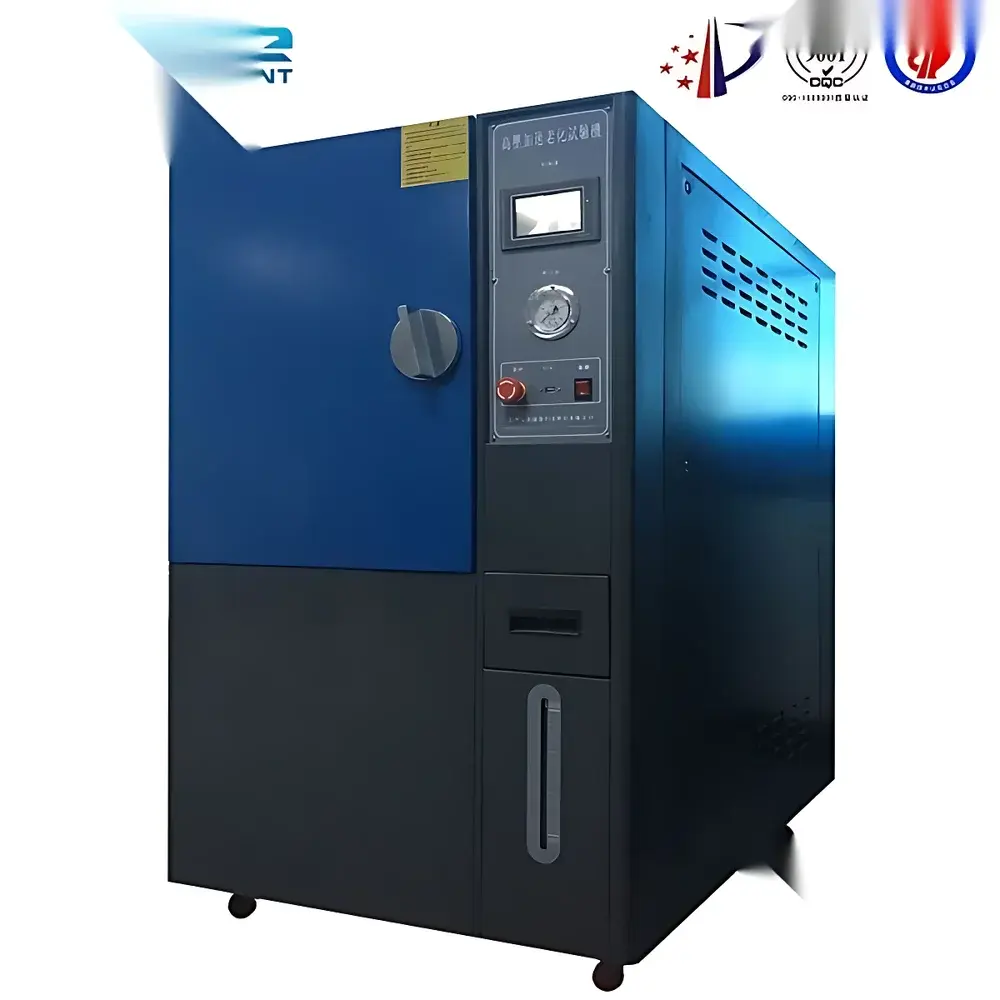
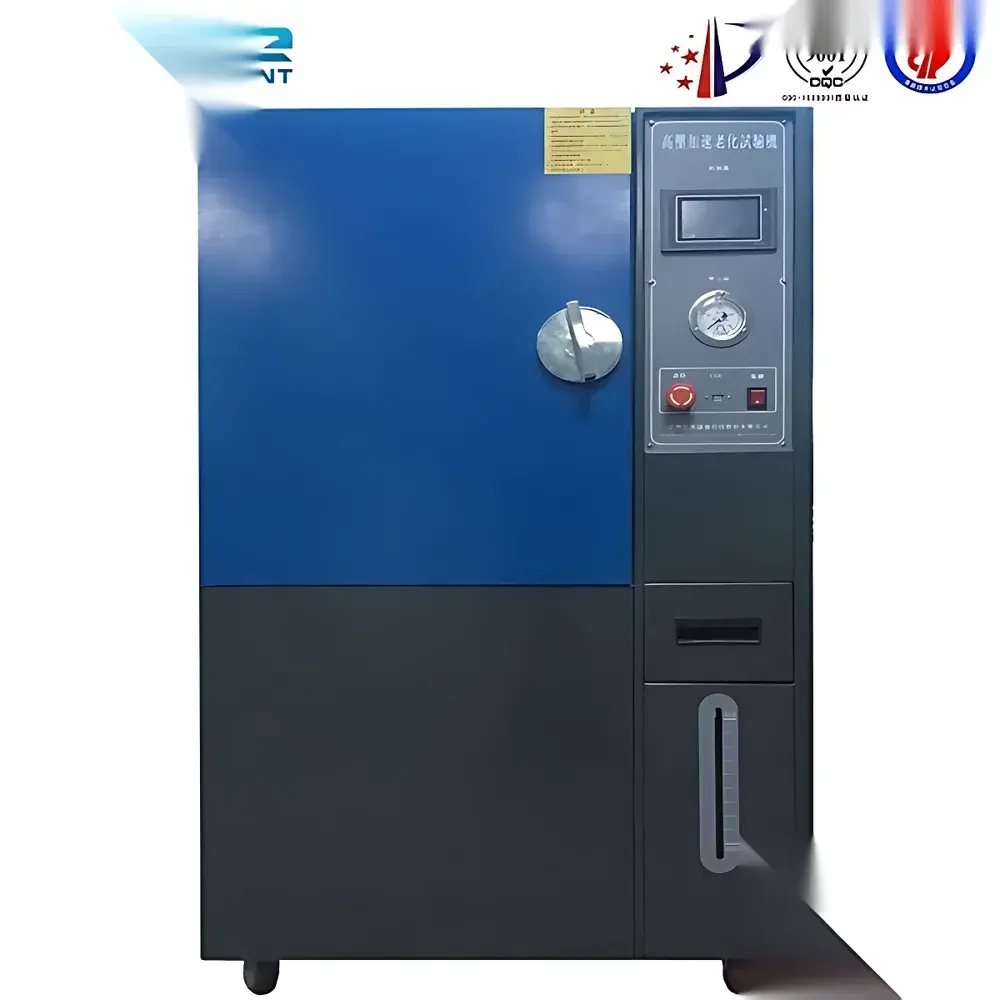
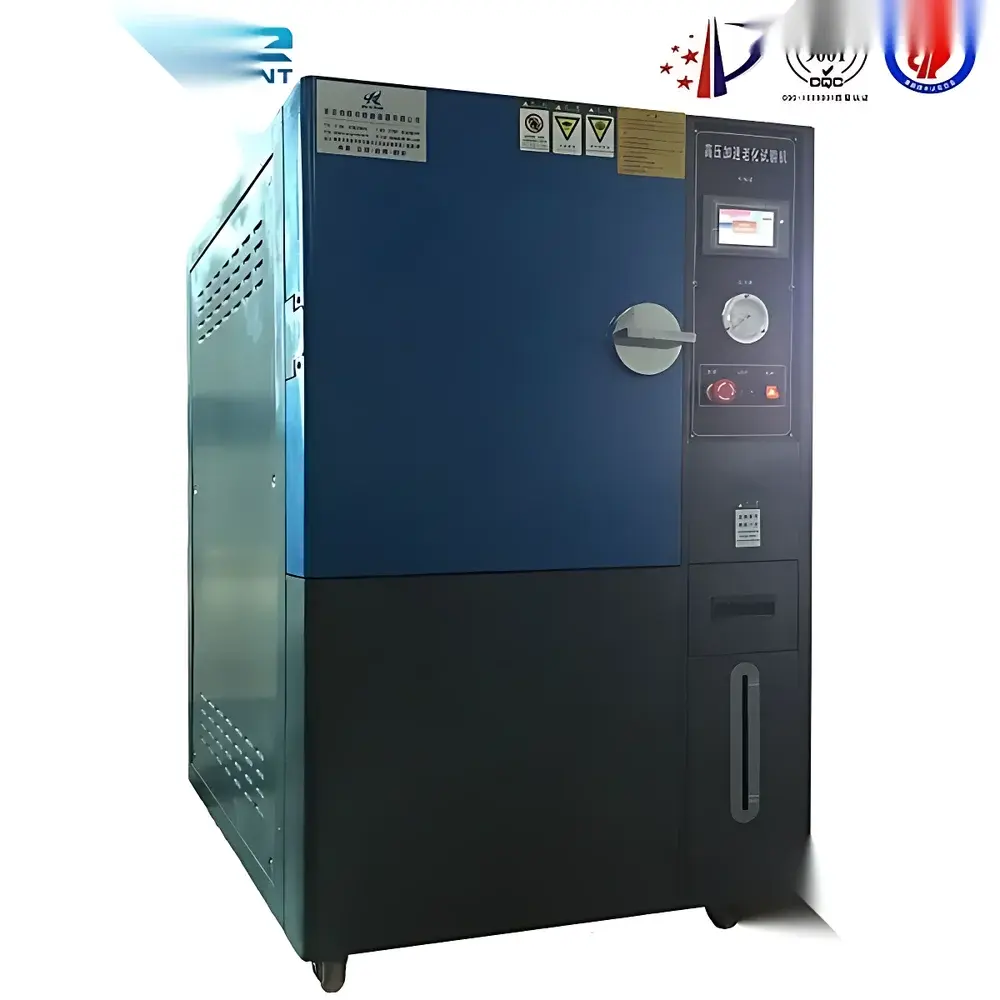
Other Brands DQY Series High-Low Temperature & Low-Pressure Environmental Test Chamber
| Brand | Other Brands |
|---|---|
| Origin | Imported |
| Manufacturer Type | Authorized Distributor |
| Price | USD 4,200 (FOB) |
| Temperature Range | −70 °C to +150 °C |
| Temperature Uniformity | ±2 °C (at ambient pressure, empty chamber) |
| Pressure Range | 101.3 kPa (standard atmosphere) down to 0.5 kPa |
| Pressure Control Accuracy | ±1.8 kPa (101.3–40 kPa), ±4.5% (40–4 kPa), ±0.1 kPa (4–0.5 kPa) |
| Pressure Ramp Time | ≤45 min (101.3 kPa → 0.5 kPa) |
| Heating Rate | 1.0–3.0 °C/min |
| Cooling Rate | 0.7–1.0 °C/min |
| Control System | Touchscreen PID Controller with PT100 and Electronic Pressure Transducer |
| Internal Construction | Seamless SUS304 Stainless Steel Cylindrical Chamber |
| Safety Features | Dual-pressure interlock door, automatic overpressure relief valve, compressor overload/phase-loss protection, real-time oil pressure monitoring, anti-condensation inner liner, auto-refill water level control |
Overview
The DQY Series High-Low Temperature & Low-Pressure Environmental Test Chamber is an engineered solution for simulating combined thermal and hypobaric stress conditions encountered during aerospace component validation, high-altitude electronics qualification, and packaging integrity testing. It operates on a dual-parameter control principle: precise thermoregulation via microprocessor-based PID algorithms applied to independent heating (NiCr alloy) and refrigeration (imported hermetic compressors) systems, coupled with vacuum generation and regulation using a dedicated low-pressure manifold and electronically compensated pressure transducers. Unlike single-stress environmental chambers, the DQY integrates saturated steam temperature control logic with dynamic pressure modulation—enabling reproducible simulation of altitude-dependent vapor-phase behavior while maintaining traceable thermal profiles per ASTM E145, ISO 16750-4, and MIL-STD-810H Method 500.5.
Key Features
- Cylindrical internal chamber fabricated from seamless SUS304 stainless steel, conforming to ASME BPVC Section VIII Division 1 design criteria for pressure-containing vessels; eliminates corner condensation and ensures uniform thermal mass distribution.
- Dual-safety door mechanism: electromechanical pressure interlock prevents opening when internal pressure exceeds atmospheric by >5 kPa; self-sealing silicone gasket (one-piece molded) increases contact force proportionally with differential pressure—extending seal service life beyond 5,000 cycles.
- Integrated water management system featuring auto-refill capability, LED water-level indicator, and low-water alarm; designed for continuous operation up to 200 hours without manual intervention under standard test protocols.
- High-fidelity control architecture: touchscreen HMI with 0.1 °C temperature setpoint resolution and 0.1 kPa pressure setpoint resolution; real-time logging of PT100 resistance values and analog output from calibrated electronic pressure transducers.
- Redundant safety layering including compressor oil pressure monitoring, phase-loss detection, thermal cutouts at evaporator and heater surfaces, and mechanical overpressure relief valve rated to 110% of maximum working pressure (112 kPa).
- Optimized airflow path with tangential fan placement and baffle-guided circulation ensures ±2 °C uniformity across full working volume—even during rapid ramp transitions—validated per IEC 60068-3-5.
Sample Compatibility & Compliance
The DQY chamber accommodates samples ranging from PCB assemblies and avionics enclosures to sealed medical device packaging and polymer-based structural composites. Its cylindrical geometry and absence of sharp internal corners minimize localized thermal gradients and eliminate shadow zones during low-pressure exposure—critical for validating moisture barrier performance per ASTM F1249 and oxygen transmission rate (OTR) stability under simulated stratospheric conditions. The unit complies with electromagnetic compatibility requirements per EN 61326-1, carries CE marking for EMC and LVD directives, and supports audit-ready data integrity through optional 21 CFR Part 11–compliant software packages that enforce user role-based access, electronic signatures, and immutable audit trails for all parameter changes and alarm events.
Software & Data Management
Standard configuration includes embedded firmware with configurable alarm thresholds, event-triggered data snapshots, and USB export of CSV-formatted logs containing timestamped temperature, pressure, and system status variables. Optional PC-based software enables remote supervision via Ethernet or RS-485 Modbus RTU, supporting scheduled test sequences, multi-chamber synchronization, and automated report generation compliant with GLP documentation standards. All data files include cryptographic hash verification to prevent post-acquisition tampering—a prerequisite for GMP-regulated validation studies in pharmaceutical secondary packaging development.
Applications
- Aerospace: Altitude soak testing of flight-critical sensors, pressure-sensitive actuators, and vacuum-rated connectors per DO-160G Section 4.2.
- Electronics: Thermal cycling under reduced pressure to accelerate outgassing of conformal coatings and identify latent delamination in multilayer ceramic capacitors.
- Automotive: Validation of battery module thermal runaway containment systems under low-oxygen, low-pressure environments replicating high-elevation crash scenarios.
- Medical Devices: Accelerated aging of sterile barrier systems (e.g., Tyvek pouches) per ISO 11607-1 Annex B, where controlled depressurization induces mechanical stress without compromising microbial barrier integrity.
- Materials Science: Investigation of glass transition shifts in amorphous polymers under sub-atmospheric partial pressures—supporting predictive modeling of long-term dimensional stability in space-deployed optical substrates.
FAQ
What standards does the DQY chamber support for qualification testing?
The chamber meets core requirements of MIL-STD-810H Method 500.5 (low pressure), ASTM E145 (laboratory oven performance), and ISO 16750-4 (road vehicles—environmental conditions). Optional calibration certificates are traceable to NIST standards.
Can the chamber maintain stable conditions during extended low-pressure holds?
Yes—leak rate is ≤0.1 kPa/h at 1 kPa, verified via helium mass spectrometry; combined with adaptive PID tuning and dual-stage refrigeration, it sustains ±0.1 kPa stability for durations exceeding 120 hours.
Is the water system compatible with deionized water only?
The chamber requires conductivity <5 µS/cm; use of DI water prevents scaling in the steam generator and extends maintenance intervals for the automatic refill solenoid and level sensor.
How is temperature uniformity validated across the working volume?
Uniformity mapping is performed per IEC 60068-3-5 using nine calibrated PT100 probes positioned at standardized locations; reports include spatial deviation matrices and uncertainty budgets per ISO/IEC 17025.
Does the controller support custom ramp-soak profiles with pressure-temperature coupling?
Yes—the touch interface allows defining up to 99 segments with independent slope constraints for both temperature and pressure; cross-parameter dependencies (e.g., “hold pressure constant until temperature reaches target”) are programmable via ladder logic scripting in advanced mode.



