
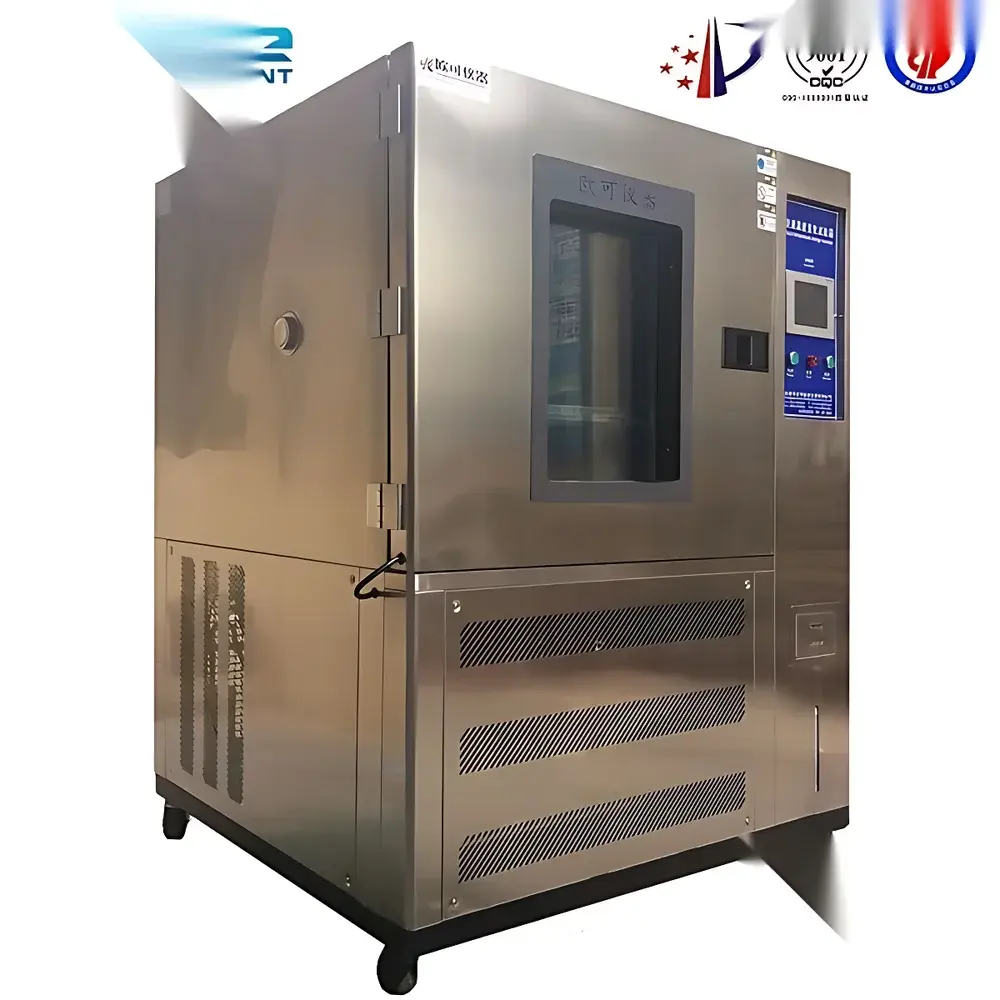
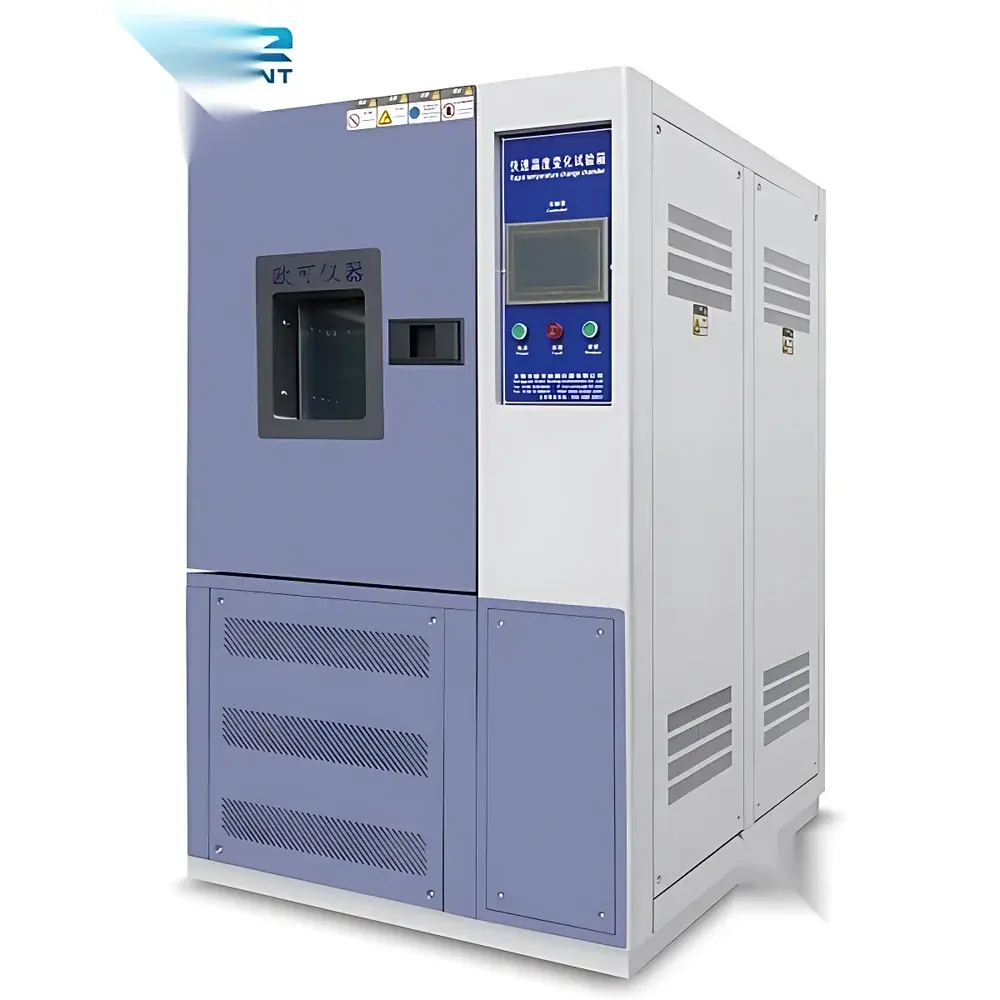
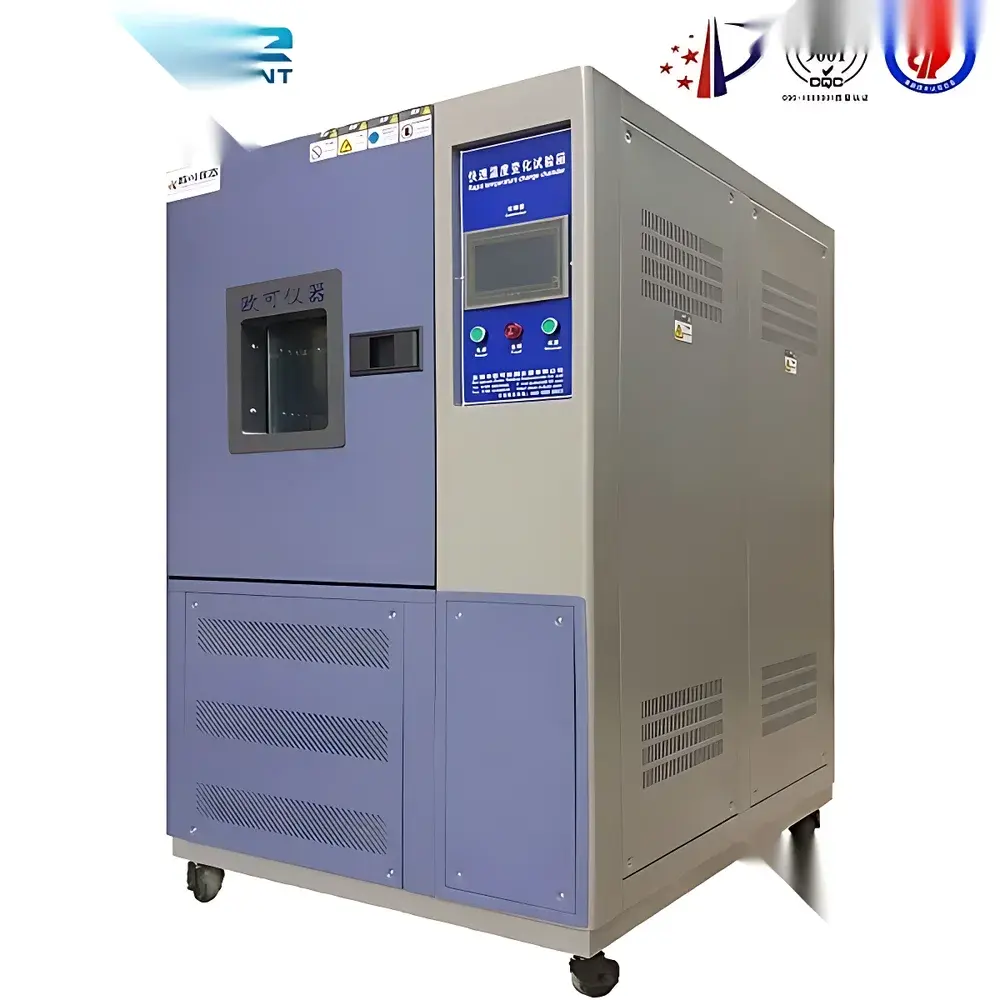
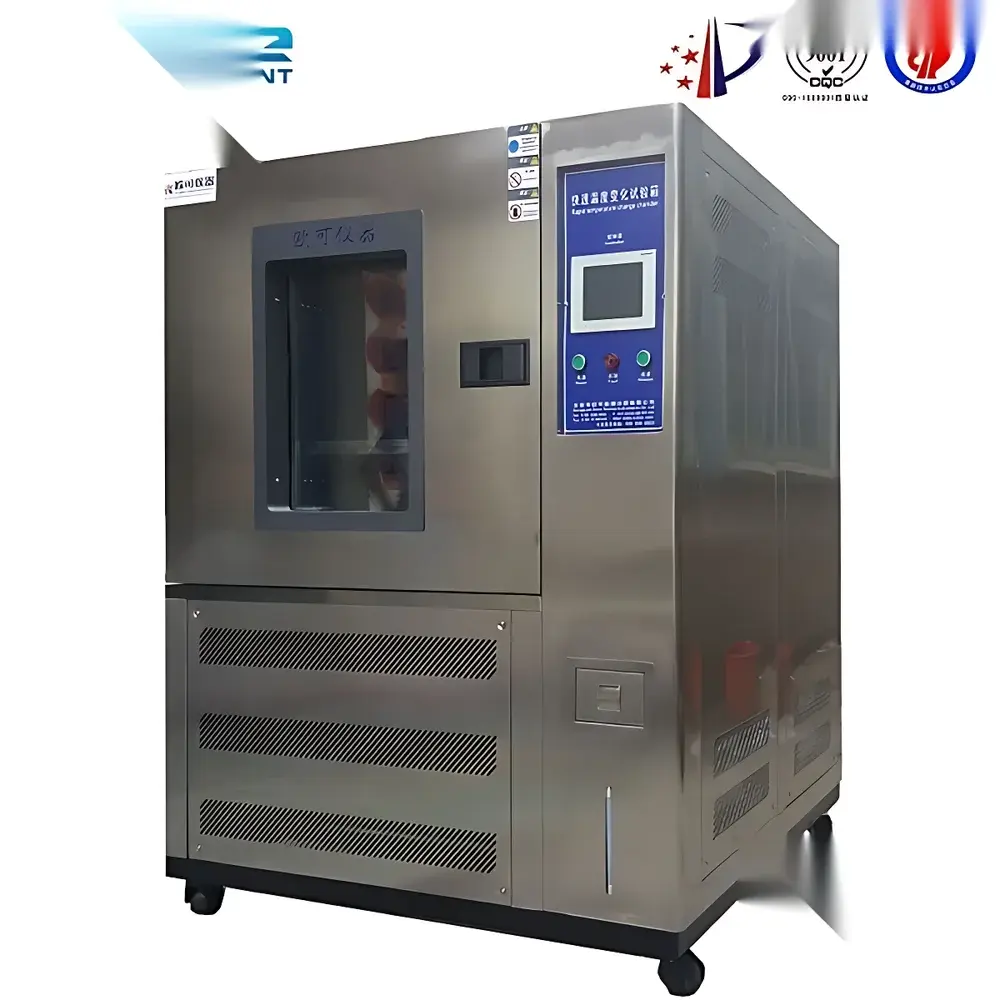
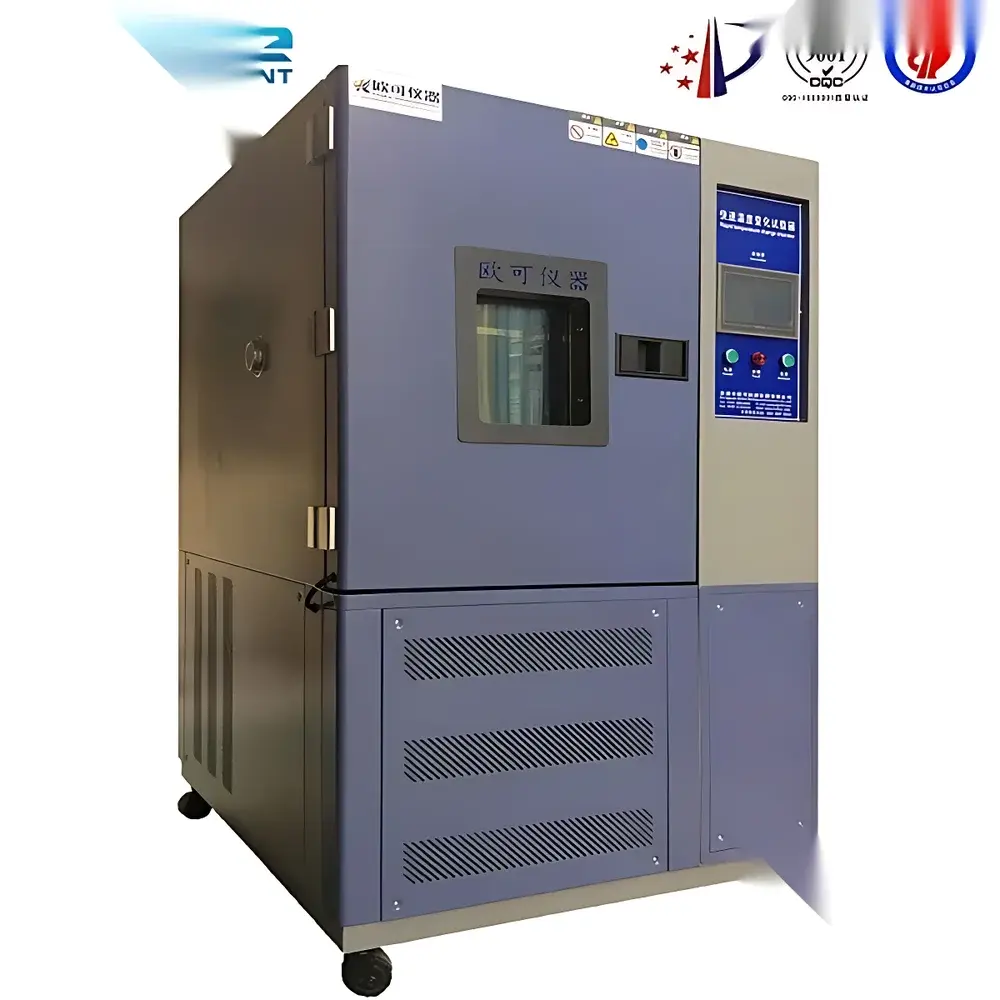
Other Brands KU-TH-150 Rapid Temperature Change Test Chamber
| Brand | Other Brands |
|---|---|
| Origin | Imported |
| Manufacturer Type | Authorized Distributor |
| Price | USD 13,800 (FOB) |
| Temperature Range (High Zone) | +80°C to +200°C |
| Temperature Range (Low Zone) | −10°C to −55°C |
| Operational Test Range | −40°C to +150°C |
| Temperature Control Accuracy | ±2.0°C |
| Temperature Resolution | 0.01°C |
| Heating Rate (RT → +150°C) | ≤60 min |
| Cooling Rate (RT → −40°C) | ≤80 min |
| Test Zone Temperature Recovery Time | 3–5 min |
| Internal Chamber Dimensions | 500 mm (W) × 400 mm (H) × 400 mm (D) |
| Construction | Dual-zone (hot/cold) + independent test zone |
| Inner/Outer Material | SUS304 stainless steel, mirror-finished |
| Insulation | High-density glass wool + rigid polyurethane foam (PU) |
| Refrigerant | Environmentally compliant HFC blend (e.g., R404A/R507 compatible) |
| Compressor | Original European/American high-efficiency semi-hermetic unit |
| Condenser Type | Air-cooled or optional water-cooled |
| Defrost System | Automatic & manual dual-mode |
| Evaporator | Sloped fin-tube design |
| Heating Element | High-speed tubular electric heaters |
| Sealing | High-tensile, wide-range packing rated for −200°C to +400°C |
| Actuation | Pneumatic/hydraulic dual-zone transfer mechanism |
| Compliance | Designed per IEC 60068-2-14, ISO 16750-4, and ASTM D3418 |
Overview
The KU-TH-150 Rapid Temperature Change Test Chamber is an engineered environmental stress screening (ESS) system designed for accelerated thermal cycling evaluation of electronic components, semiconductor packages, aerospace materials, and precision mechanical assemblies. Its operational principle relies on a three-chamber architecture—comprising separate high-temperature and low-temperature reservoirs plus an isolated test chamber—enabling rapid, controlled thermal transitions without direct refrigerant or heater exposure to the specimen. During testing, the specimen remains stationary in the test zone while thermally isolated transfer mechanisms rapidly shuttle ambient air between the hot and cold reservoirs, inducing precise, repeatable temperature shocks. This蓄冷 (cold/heat storage) methodology eliminates thermal lag associated with single-chamber forced-air systems and ensures superior thermal uniformity (±2.0°C) and stability across the full operational range of −40°C to +150°C.
Key Features
- Three-zone segregated architecture (hot reservoir / cold reservoir / test chamber) minimizes cross-contamination and enables deterministic thermal ramping profiles
- SUS304 stainless steel interior and exterior surfaces with electropolished finish ensure corrosion resistance, cleanroom compatibility, and long-term dimensional stability under repeated thermal cycling
- Dual-mode defrost circuitry (automatic timed + manual override) maintains consistent evaporator performance across extended low-temperature operation
- High-efficiency semi-hermetic compressor paired with sloped fin-tube evaporator and optimized refrigerant circuitry achieves ≤80-minute cooling from 25°C to −40°C
- Integrated pneumatic actuation system controls high-integrity transfer gates with <100 ms response time, enabling sub-5-minute temperature recovery in the test zone
- 0.01°C digital resolution temperature controller with PID tuning support, real-time deviation logging, and programmable soak dwell times
- Environmental refrigerant formulation compliant with current EU F-Gas Regulation (EU No. 517/2014) and EPA SNAP program requirements
Sample Compatibility & Compliance
The KU-TH-150 accommodates specimens up to 500 mm × 400 mm × 400 mm (W×H×D), including PCB assemblies, molded IC packages, automotive ECUs, and small-scale metal weldments. Its structural integrity and thermal management architecture meet the mechanical and thermal loading specifications outlined in IEC 60068-2-14 (Test N: Change of temperature) and ISO 16750-4 (Road vehicles — Environmental conditions and testing for electrical and electronic equipment — Part 4: Climatic loads). The system supports qualification-level testing per MIL-STD-810H Method 503.5 (Temperature Shock) when configured with validated profile scripts and calibrated traceable sensors. All control firmware and data logs are structured to support GLP/GMP audit readiness, including user-access logging, parameter change history, and timestamped event records aligned with FDA 21 CFR Part 11 principles.
Software & Data Management
Control is executed via a dedicated embedded industrial PC running real-time RTOS firmware, interfaced through a 10.1-inch capacitive touchscreen HMI. The system supports standard Ethernet (TCP/IP) and RS-485 Modbus RTU connectivity for integration into centralized lab management platforms. Test profiles—including ramp rates, dwell durations, cycle counts, and alarm thresholds—are stored in non-volatile memory with SHA-256 hash verification. Raw temperature data (sampled at 1 Hz per sensor channel) is exported in CSV format with ISO 8601 timestamps and embedded calibration metadata. Optional software modules provide statistical process control (SPC) charting, Weibull reliability analysis inputs, and automated report generation compliant with ASTM E2913-22 (Standard Guide for Statistical Analysis of Electrical Stress Screening Data).
Applications
- Qualification testing of BGA, QFN, and wafer-level chip-scale packages per JEDEC JESD22-A104E
- Thermal fatigue assessment of solder joints in avionics control units under cyclic ΔT conditions
- Material coefficient-of-thermal-expansion (CTE) mismatch validation for multi-layer ceramic capacitors (MLCCs)
- Pre-conditioning of optical sensors and laser diodes prior to photometric characterization
- Accelerated life testing of polymer-based gaskets and sealing compounds used in automotive power electronics
- Process validation for conformal coating adhesion strength under extreme thermal gradients
FAQ
What is the maximum thermal transition rate achievable in the test zone?
The system achieves full transition from −40°C to +150°C (or vice versa) within the test zone in ≤3 minutes, contingent upon load mass ≤5 kg and proper door sealing integrity.
Does the chamber support custom thermal shock profiles with variable ramp rates?
Yes—up to 99 programmable segments per profile, each defining target temperature, dwell time, and linear ramp rate (0.5°C/min to 15°C/min), all editable via HMI or remote SCADA interface.
Is third-party calibration certification included with shipment?
A factory-as-built NIST-traceable calibration certificate (covering chamber uniformity, sensor accuracy, and timing fidelity) is provided; ISO/IEC 17025 accredited field calibration services are available upon request.
Can the system operate continuously for 72+ hours under thermal cycling duty?
Yes—the refrigeration circuit, compressor thermal protection logic, and redundant fan monitoring enable unattended operation for ≥168 hours, verified per IEC 60068-2-14 Clause 6.2 endurance requirements.
What safety interlocks are implemented to prevent operator exposure during rapid cycling?
Dual-channel door lock solenoids, real-time chamber pressure differential monitoring, emergency thermal shutdown (<200 ms response), and hardware-enforced temperature limits prevent unsafe conditions during automated operation.



