
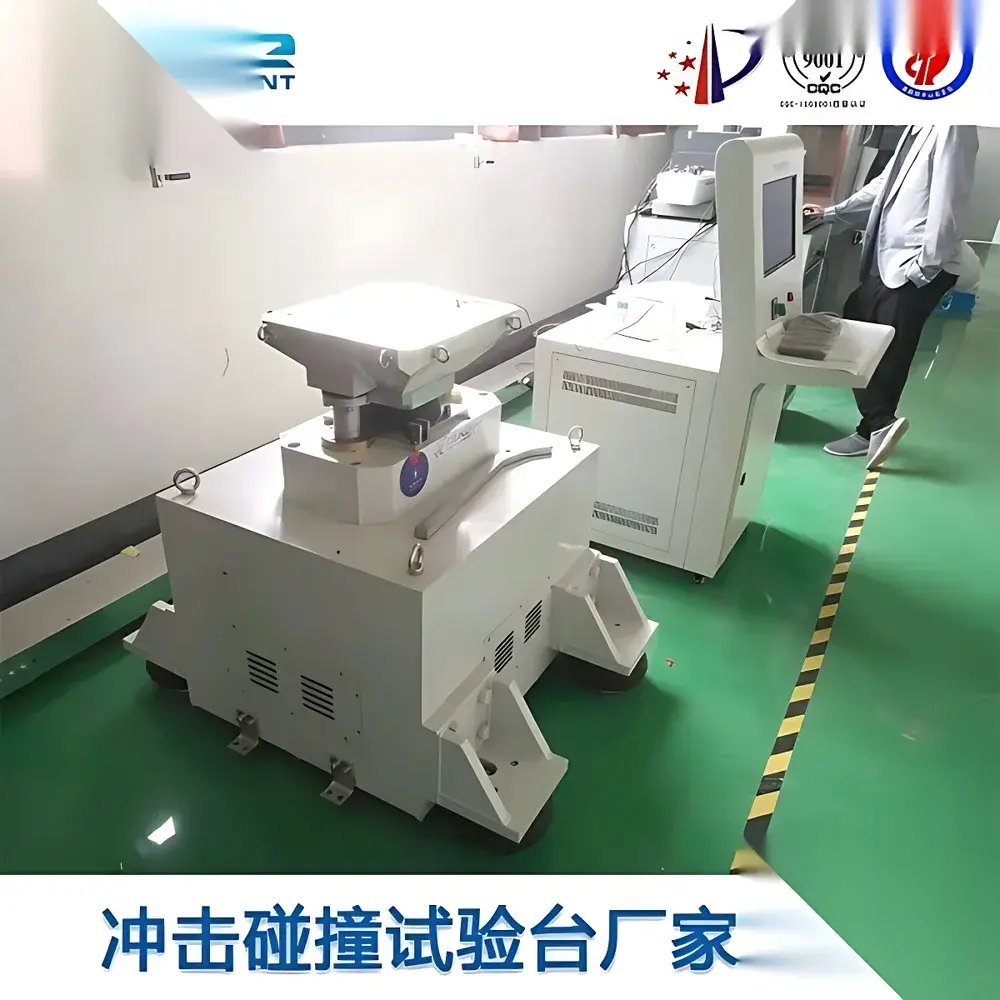
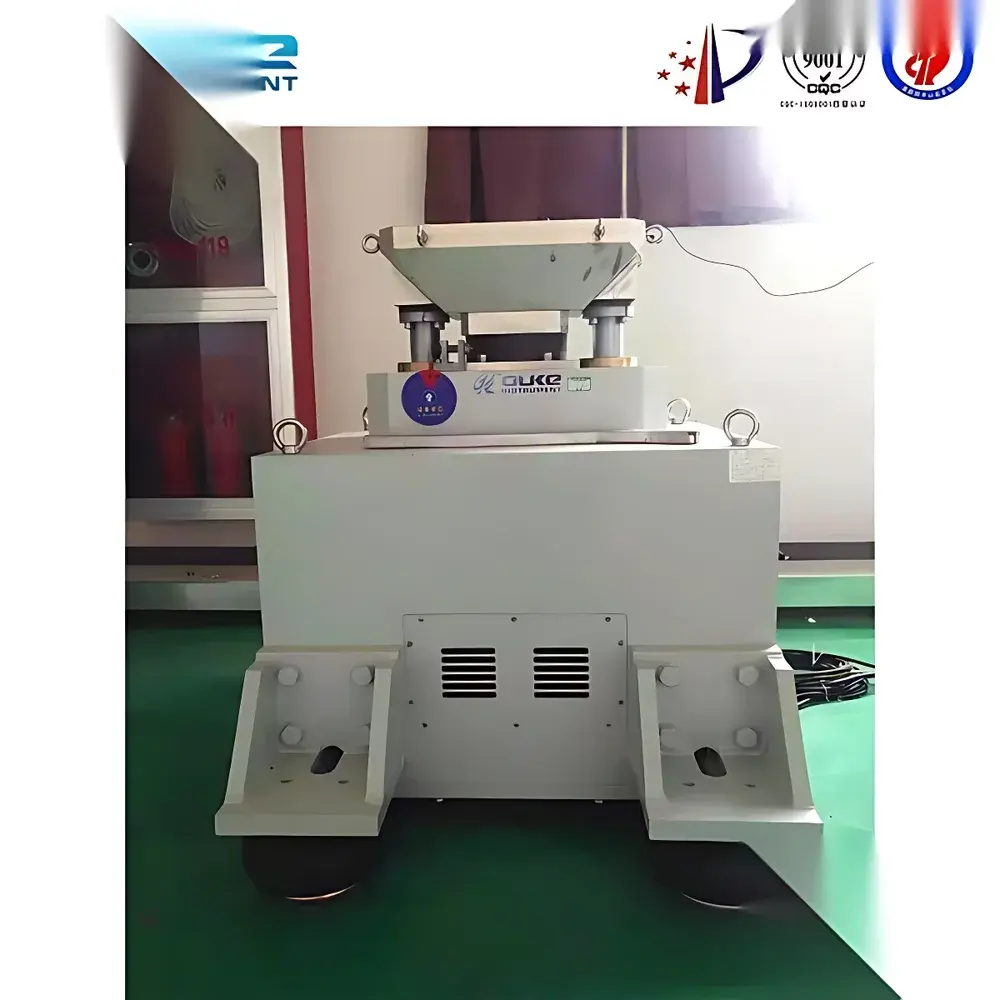
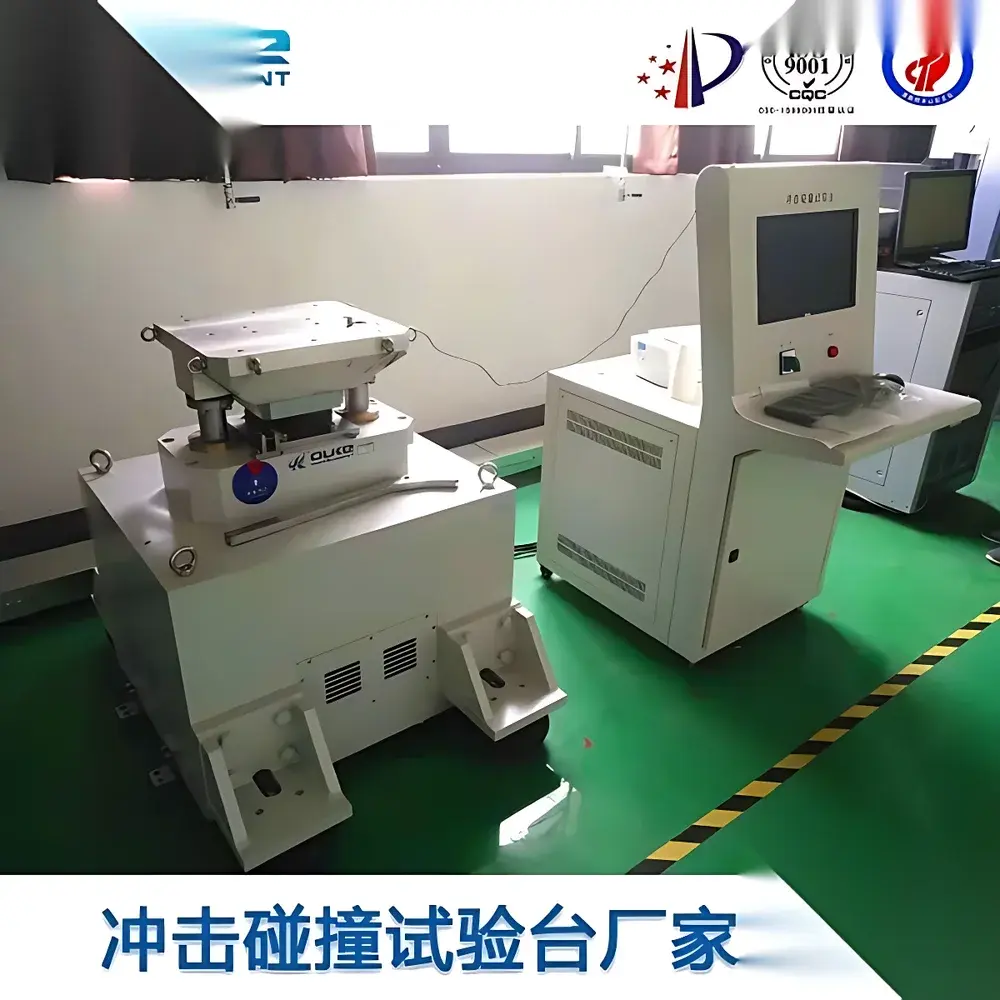
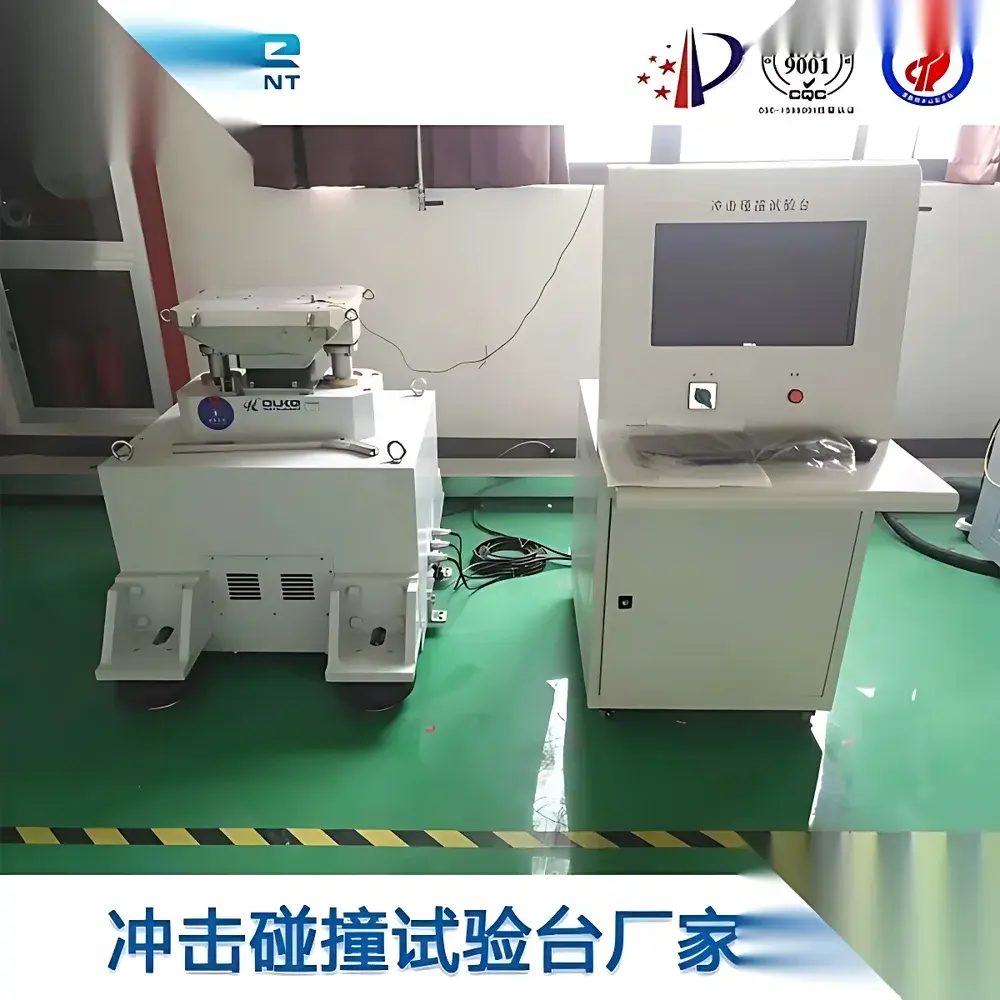
Other Brands OKPZ Series Battery Impact & Collision Test Machine
| Brand | Other Brands |
|---|---|
| Model | OKPZ-50 / OKPZ-100 / OKPZ-200 / OKPZ-300 / OKPZ-500 |
| Application | Lithium-ion battery mechanical safety testing per UN 38.3, IEC 62133, GB/T 31241 |
| Impact waveform | Half-sine, trapezoidal, rear-peak sawtooth (user-selectable) |
| Peak acceleration range | 25–1200 m/s² (model-dependent) |
| Pulse duration | 1.5–25 ms |
| Drop height range | 0–200 mm |
| Collision frequency | 1–120 impacts/min |
| Table dimensions | 500×700 mm to 1000×1000 mm |
| Rated load capacity | 50–500 kg |
| Power supply | AC 220 V ±5%, 50 Hz ±0.5 Hz, single-phase three-wire |
| Operating air pressure | 7–8 kg/cm² |
| Compliance | MIL-STD-810G Method 516.6, IEC 60068-2-29, GB/T 2423.5–2022, GB/T 2423.6–2022, GJB 150.18A–2012, GJB 360B–2009 |
Overview
The Other Brands OKPZ Series Battery Impact & Collision Test Machine is a precision-engineered electro-mechanical impact system designed specifically for evaluating the mechanical robustness and safety response of lithium-ion batteries under controlled shock loading conditions. It operates on the principle of controlled free-fall impact generation: a motor-driven lifting mechanism raises the test table to a programmable height, after which it is released to strike a calibrated elastomeric buffer, producing a reproducible half-sine acceleration pulse. This physical model aligns with standardized shock pulse definitions in IEC 60068-2-29 and MIL-STD-810G Method 516.6. The system enables both collision testing (height-controlled drop) and mechanical shock testing (spring-compression or pneumatic energy storage), supporting mandatory evaluation protocols required by UN Manual of Tests and Criteria Part III, Section 38.3 (T3: Impact Test), IEC 62133-2:2017 Clause 8.3.2, and GB/T 31241–2022 Section 7.4. Its architecture integrates closed-loop acceleration feedback for high-fidelity pulse reproduction—critical for detecting latent internal damage such as separator displacement, electrode delamination, or casing deformation that may precipitate thermal runaway.
Key Features
- High-rigidity welded steel frame and reinforced aluminum alloy test table ensure uniform peak acceleration distribution across full load range (±5% spatial deviation at rated capacity)
- DC motor + planetary gear reducer drive system delivers precise control over lift speed, enabling accurate regulation of impact repetition rate (1–120 cycles/min)
- Adjustable buffer assembly—comprising interchangeable elastomer pads of varying durometer and thickness—allows deterministic tuning of pulse duration (1.5–25 ms) and spectral content
- Dual-mode operation: collision mode (height-adjustable drop) and shock mode (spring compression or pneumatic actuation), both supporting real-time acceleration monitoring via integrated piezoelectric accelerometer
- Optional waveform expansion module supports generation of trapezoidal and rear-peak sawtooth pulses per IEC 60068-2-27 Annex B, facilitating comparative failure mode analysis
- Integrated safety interlocks include emergency stop circuit, door position sensing, overload cutoff, and over-acceleration limiter compliant with ISO 13857 and EN 60204-1
Sample Compatibility & Compliance
The OKPZ series accommodates cylindrical (18650, 21700, 32650), prismatic, and pouch-format Li-ion cells and modules—up to 500 kg gross mass—with configurable fixture mounting interfaces (T-slot and M8 threaded patterns). All models are configured to meet the mechanical stress profiles defined in key regulatory frameworks: UN 38.3 T3 (impact onto stationary steel bar), IEC 62133-2:2017 Clause 8.3.2 (mechanical shock), GB/T 31241–2022 Section 7.4 (collision resistance), and UL 1642 Annex C. System-level compliance documentation includes traceable calibration certificates (NIST-traceable accelerometer and height gauge), test report templates aligned with GLP audit requirements, and optional 21 CFR Part 11–compliant electronic signature and audit trail functionality when paired with certified test management software.
Software & Data Management
Standard configuration includes PC-based control software with real-time oscilloscope-style waveform visualization, pre-programmed test sequences (e.g., UN 38.3 T3 default profile), and automated pass/fail evaluation against user-defined acceleration–time thresholds. Raw acceleration data is logged at ≥100 kS/s with 16-bit resolution and exported in CSV, MATLAB (.mat), or universal TDMS format. Optional software modules support statistical process control (SPC) charting, Weibull reliability analysis, and integration with LIMS platforms via OPC UA or REST API. All data archives include embedded metadata: timestamp, operator ID, environmental conditions (optional external sensor input), and instrument calibration status—ensuring full traceability for FDA, CNAS, or TÜV audits.
Applications
- UN 38.3 Section 38.3.4.1 T3 impact certification testing for lithium battery transport classification
- IEC 62133-2:2017 mechanical shock validation of cell and pack designs prior to cycle life and thermal abuse testing
- Failure mode and effects analysis (FMEA) of battery housing integrity under simulated drop events
- Qualification of battery management system (BMS) crash-sensing algorithms using repeatable, spectrally defined shock inputs
- Material-level evaluation of structural adhesives, gasket compounds, and encapsulation resins under transient mechanical loading
- Automotive OEM AEC-Q200–aligned component qualification for hybrid/electric vehicle traction battery subsystems
FAQ
What standards does this machine explicitly support?
It is engineered to execute test procedures defined in UN Manual of Tests and Criteria Part III Subsection 38.3 (T3), IEC 60068-2-29, IEC 62133-2:2017 Clause 8.3.2, GB/T 2423.5–2022, GB/T 2423.6–2022, MIL-STD-810G Method 516.6, and GJB 150.18A–2012.
Can the system generate non-half-sine waveforms out-of-the-box?
The base configuration produces half-sine pulses. Trapezoidal and rear-peak sawtooth waveforms require the optional Waveform Expansion Module (P/N: OKPZ-WEM-01), which replaces the standard buffer stack with a multi-stage pneumatic-hydraulic damping assembly.
Is third-party calibration included with delivery?
Yes—each unit ships with a factory calibration certificate for the integrated triaxial accelerometer and digital height encoder, both traceable to NIST standards. Annual recalibration services are available under service contract SLA-OKPZ-CAL.
What safety certifications apply to the electrical and mechanical subsystems?
The main control cabinet conforms to EN 61000-6-2/6-4 (EMC), EN 60204-1 (machine safety), and ISO 13857 (safe distances). CE marking is provided for EU market deployment; additional country-specific certifications (e.g., KC, PSE) are available upon request.
How is test repeatability verified across multiple operators or laboratories?
The system supports automated reference pulse verification before each test sequence using a calibrated reference accelerometer mounted on a fixed bracket. Deviation alerts trigger automatic suspension of test execution until manual intervention and revalidation occur—enabling ISO/IEC 17025–compliant measurement uncertainty reporting.



