
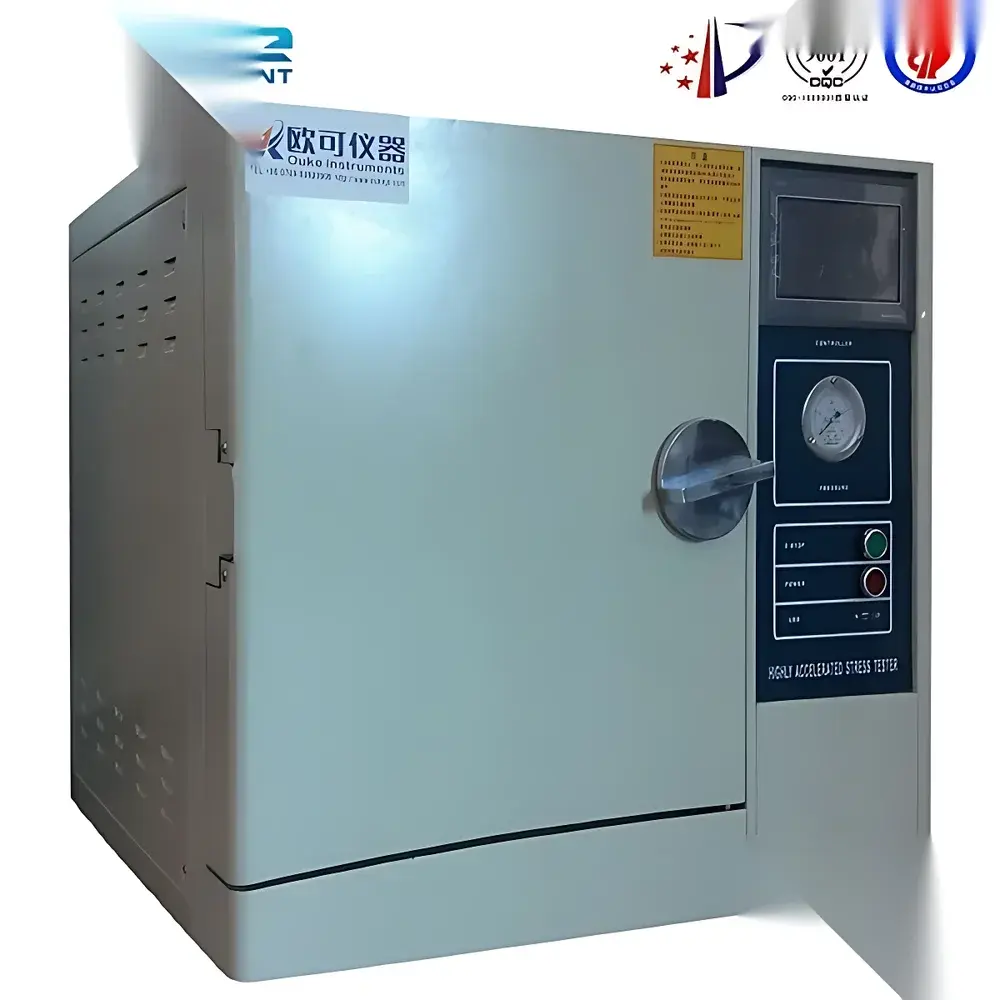
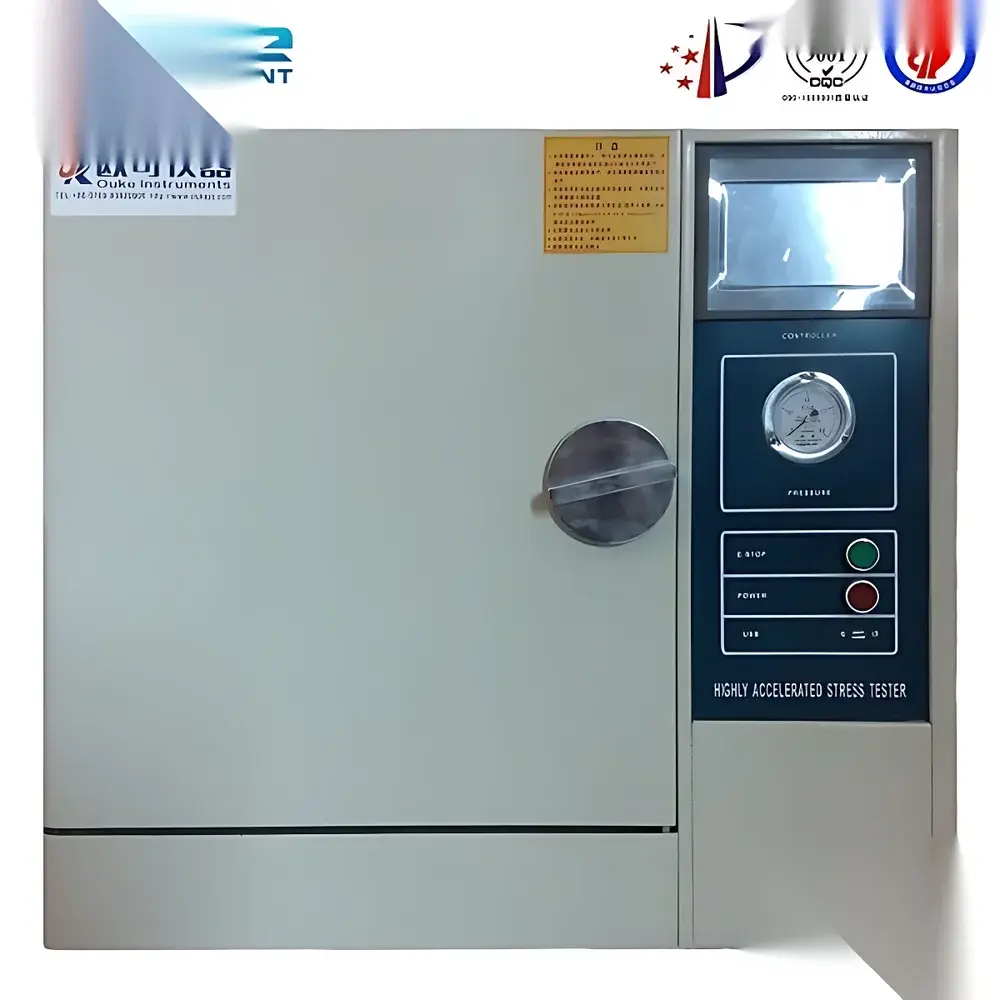
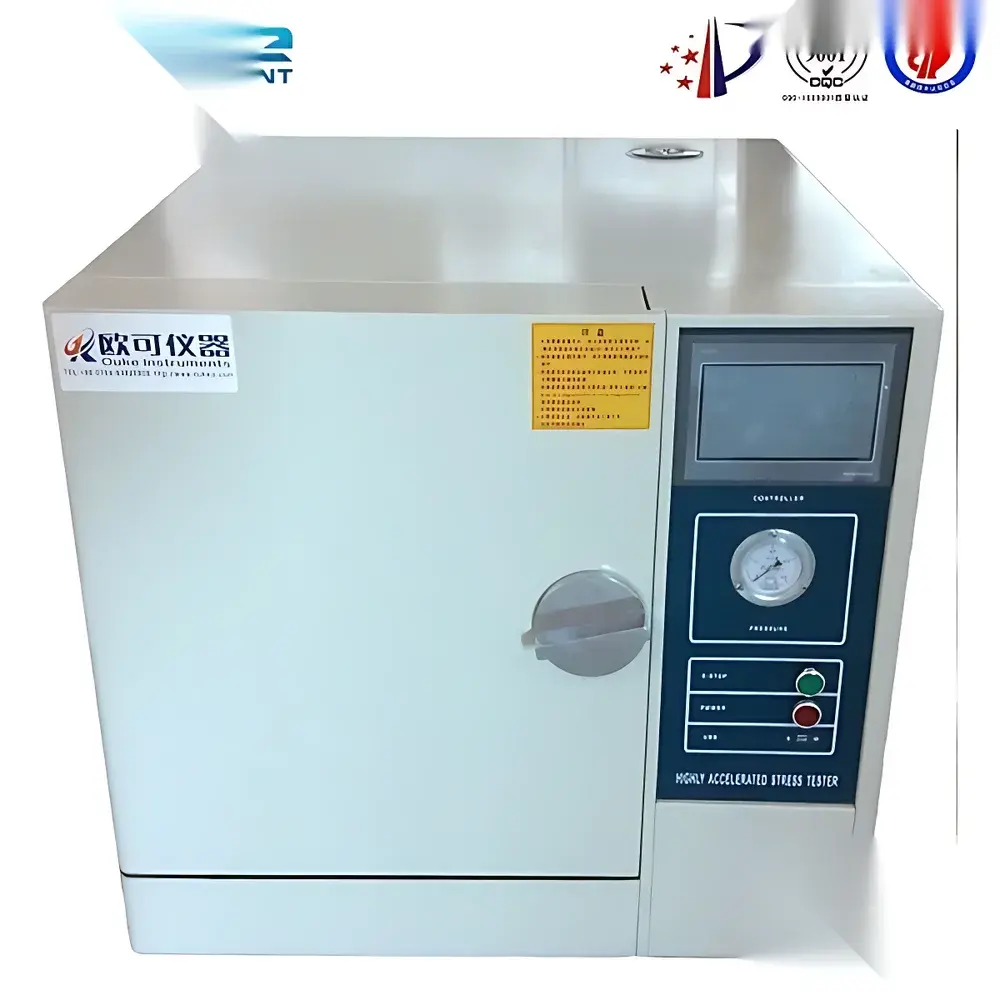
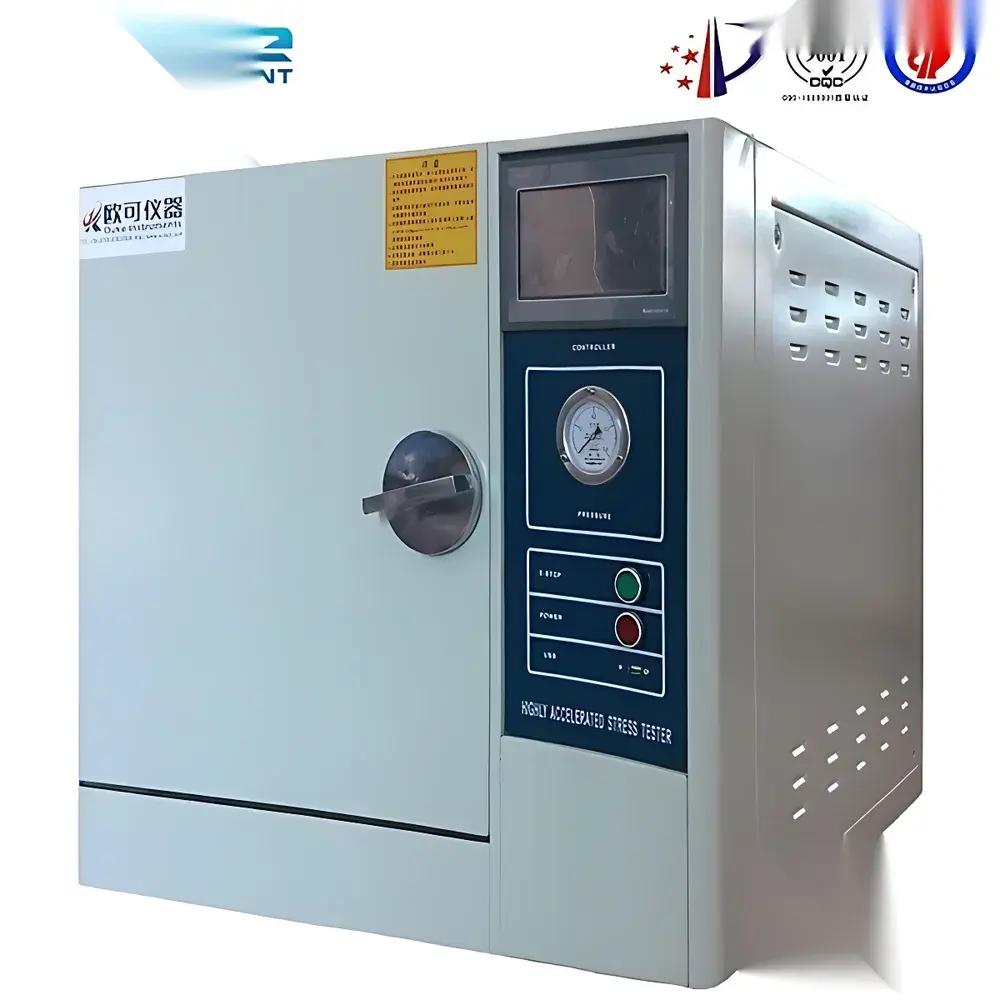
Other Brands PCT Environmental Test Chamber for Battery Packs and Consumer Electronics
| Brand | Other Brands |
|---|---|
| Origin | Imported |
| Manufacturer Type | Authorized Distributor |
| Temperature Range | +110°C to +132°C |
| Temperature Uniformity | ±1.5°C |
| Temperature Stability | ±0.5°C |
| Humidity Range | 100% RH (Saturated Steam) |
| Humidity Uniformity | ±3.0% RH |
| Humidity Stability | ±1.5% RH |
| Pressure Range (Gauge) | 0–2 kg/cm² (Optional: 0–4 kg/cm²) |
| Absolute Pressure Range | 1.0–3.0 kg/cm² |
| Maximum Safety Pressure Capacity | 4 kg/cm² (1 atm + 3 kg/cm²) |
| Ramp Time (Ambient to 132°C, unloaded) | ~30 min |
| Pressurization Time (0 → 2 kg/cm²) | ~30 min |
| Test Duration Setting | 0–999 hours |
| Circulation Method | Natural Convection of Saturated Steam |
| Compliance | GB/T 10586–1989, GB/T 2423.3–2016 (IEC 60068-2-3), MIL-STD-810D Method 502.2, GJB 150.9A–2009, GB/T 2423.34–2012 (IEC 60068-2-52), MIL-STD-883C Method 1004.2 |
Overview
The Other Brands PCT Environmental Test Chamber is a precision-engineered accelerated reliability testing system designed specifically for evaluating the long-term integrity of lithium-ion battery packs, portable electronics enclosures, PCB assemblies, and hermetically sealed consumer devices under combined high-temperature, high-humidity, and elevated-pressure conditions. Operating on the principle of saturated steam pressurization, the chamber subjects test specimens to controlled partial pressures of water vapor at temperatures above ambient boiling point—enabling rapid diffusion of moisture through micro-defects in seals, conformal coatings, and laminate interfaces. This accelerates failure mechanisms such as corrosion of metallic contacts, electrolyte decomposition, delamination, and internal short-circuit formation—critical for validating design robustness prior to mass production and regulatory submission.
Key Features
- Self-Sealing Dynamic Packing System: Utilizes a proprietary radial compression gasket architecture where internal pressure actively enhances sealing force—unlike conventional static compression seals. As chamber pressure increases, the elastomeric packing deforms radially inward, increasing contact pressure against the chamber flange surface. This design extends gasket service life by up to 3× compared to traditional squeeze-type seals and eliminates torque drift during repeated thermal cycling.
- Fail-Safe Dual-Lock Door Mechanism: Incorporates redundant safety interlocks: (1) temperature-sensing thermocouples embedded in the door frame prevent unlocking below safe cooldown thresholds; (2) pressure-differential transducers verify sub-atmospheric or near-ambient conditions before mechanical release. A dedicated safety handle with tactile feedback ensures manual override only under verified safe states.
- Critical Point (LIMIT) Protection Logic: Monitors real-time deviation across all primary parameters (temperature, pressure, humidity, time). Upon detection of out-of-specification drift—e.g., temperature overshoot >±1.0°C sustained for >60 s—the system initiates staged mitigation: alarm activation → automatic power reduction → controlled depressurization → full shutdown with non-volatile fault logging.
- Natural-Convection Steam Environment: Eliminates forced-air circulation that may induce localized condensation or thermal stratification. Saturated steam is generated via immersion heaters within a dedicated reservoir and introduced into the test chamber through calibrated orifices, ensuring uniform vapor-phase distribution and stable dew-point control across the full working volume.
Sample Compatibility & Compliance
This PCT chamber accommodates standard battery pack configurations (up to 400 mm × 300 mm × 200 mm), handheld electronics (smartphones, wearables, IoT sensors), and multi-layer ceramic substrates. Its operational envelope meets stringent requirements for qualification testing per multiple international standards—including IEC 62133-2 (secondary cells and batteries containing alkaline or other non-acid electrolytes), UL 1642 Annex B (cell-level pressure exposure), and UN Manual of Tests and Criteria Part III, subsection 38.3 (transport safety validation). All pressure vessels comply with ASME BPVC Section VIII Division 1 design certification protocols. Data acquisition and event logging support audit-ready traceability for GLP/GMP environments, with optional 21 CFR Part 11-compliant electronic signatures and audit trails available via firmware upgrade.
Software & Data Management
The integrated controller features a 7-inch capacitive touchscreen HMI with dual-mode operation: local panel interface and Ethernet-enabled remote supervision. Real-time parameter visualization includes synchronized trend plots for temperature, absolute pressure, and relative humidity—with configurable alarm thresholds and user-defined pass/fail criteria. All test profiles, run logs, and LIMIT-triggered events are stored in CSV and XML formats on internal flash memory (32 GB) and exportable via USB 2.0 or FTP. Optional PC-based software provides advanced statistical analysis (Weibull, Arrhenius acceleration modeling), automated report generation (PDF/HTML), and integration with LIMS platforms via OPC UA or Modbus TCP protocols.
Applications
- Accelerated moisture ingress validation for EV traction battery modules subjected to thermal cycling and vibration stress
- Seal integrity verification of IP67/IP68-rated consumer electronics housings under combined T/H/P stress
- Qualification of conformal coating adhesion and dielectric stability on flex-rigid PCBs used in medical wearables
- Reliability screening of MEMS microphone capsules and pressure sensors exposed to humid tropical climates
- Process validation for vacuum impregnation and potting procedures in automotive ECU manufacturing
FAQ
What is the maximum allowable test specimen weight inside the chamber?
The chamber supports static loads up to 25 kg distributed evenly on the standard stainless-steel shelf. Custom load-bearing fixtures are available upon request.
Can the chamber operate continuously at 132°C and 2.0 kg/cm² gauge pressure?
Yes—continuous operation at rated maximum conditions is validated for 999-hour uninterrupted cycles, with thermal stability maintained within ±0.5°C and pressure stability within ±0.02 kg/cm².
Is third-party calibration documentation provided with shipment?
Each unit ships with NIST-traceable calibration certificates for all primary sensors (PT100 RTDs, piezoresistive pressure transducers, and capacitive RH sensors), valid for 12 months from date of manufacture.
Does the system support custom ramp-soak profiles beyond standard PCT cycles?
Yes—the controller accepts user-defined multi-segment profiles with independent rate limits for temperature, pressure, and dwell time, enabling simulation of field-relevant transient environmental sequences.



