
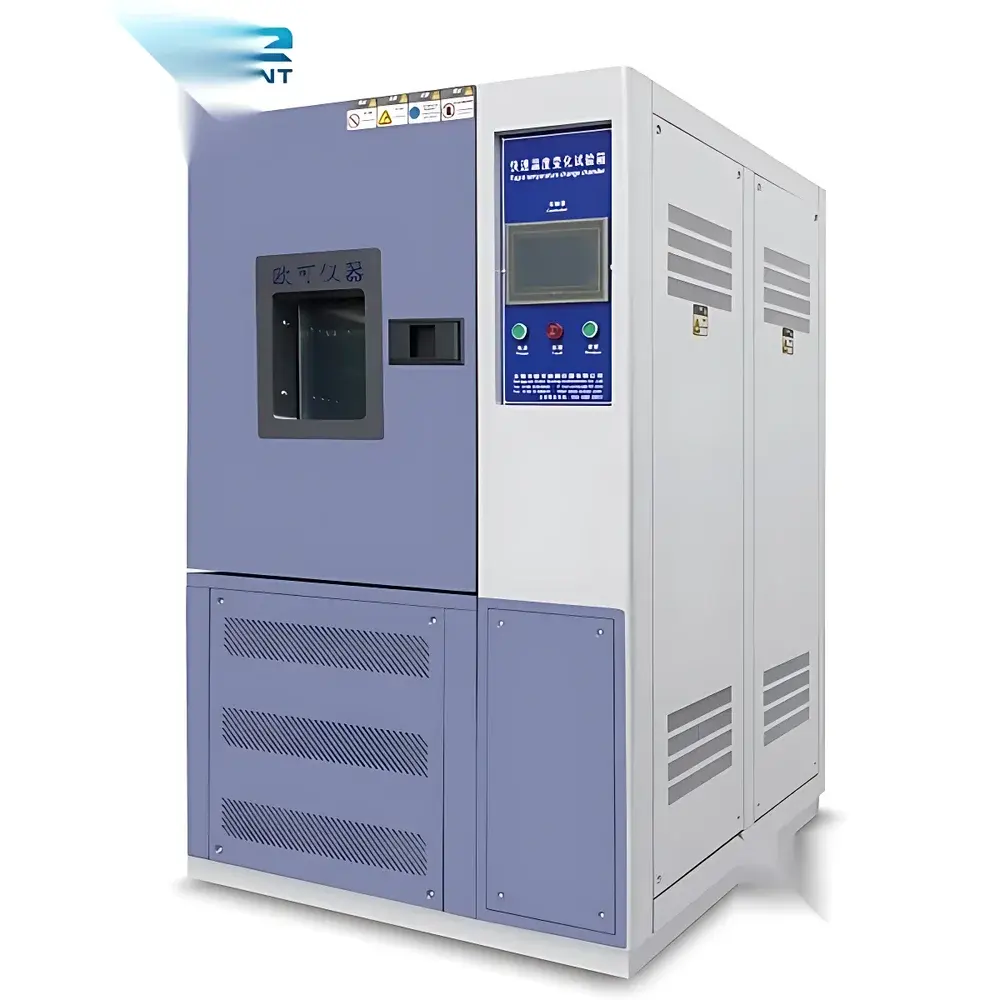
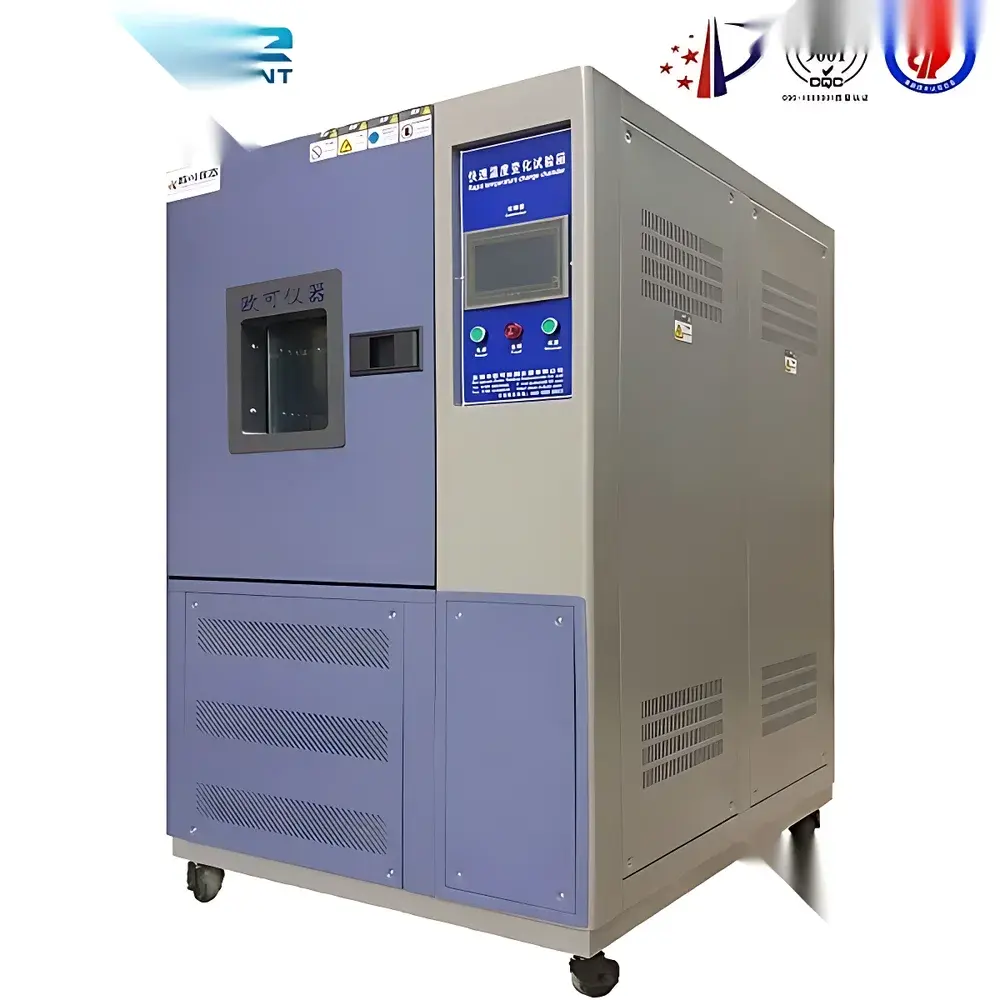
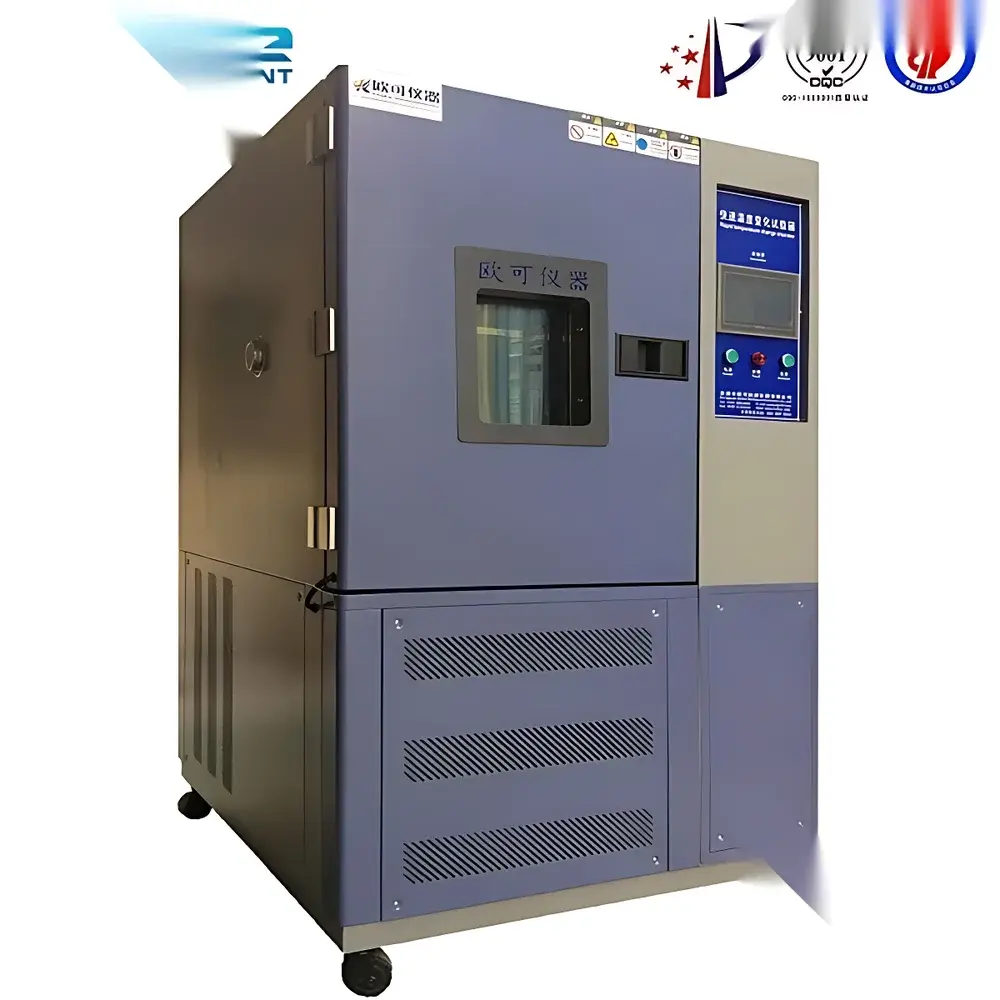
Other Brands Rapid Temperature and Humidity Cycling Chamber
| Brand | Other Brands |
|---|---|
| Origin | Imported |
| Manufacturer Type | Authorized Distributor |
| Price | USD 14,000 (FOB) |
Overview
The Other Brands Rapid Temperature and Humidity Cycling Chamber is an environmental stress screening (ESS) system engineered for accelerated aging, reliability validation, and qualification testing of electronic components, automotive modules, aerospace materials, and polymer-based products. It operates on the principle of controlled thermodynamic cycling—precisely coordinating rapid temperature transitions (typically −70 °C to +180 °C at rates up to 15 °C/min) with high-fidelity humidity control (10–98% RH, ±2% RH accuracy) within a single test chamber. Unlike static climate chambers, this system integrates dynamic thermal inertia compensation and dew-point referenced humidity regulation to maintain traceable, repeatable environmental profiles per IEC 60068-2-14, MIL-STD-810H Method 503.5, and JEDEC JESD22-A104E. Its architecture supports both ramp-soak and step-cycle protocols with programmable dwell times, enabling simulation of real-world operational stresses such as diurnal cycling, condensation onset, and thermal shock under humid conditions.
Key Features
- High-speed dual-stage refrigeration system with cascade compressors for rapid cooling down to −70 °C and precise sub-zero dew point control (−40 °C typical, optional −70 °C with desiccant-assisted drying)
- Steam injection humidification using low-pressure saturated steam (0.1–0.3 MPa), enabling fast RH ramping (<3 min from 10% to 95% RH at 25 °C) and stable moisture delivery during cooling phases
- Dual-mode dehumidification: standard mechanical cooling coil condensation (down to 0 °C dew point) and optional regenerative desiccant loop (achieving ≤−70 °C dew point), compliant with ASTM E1820 for low-humidity material conditioning
- High-stability sensor suite: Pt100 Class A temperature sensors (±0.15 °C accuracy) and capacitive polymer humidity sensors (traceably calibrated per ISO/IEC 17025, ±1.5% RH from 20–80% RH)
- BTHC (Balanced Temperature & Humidity Control) algorithm with AI-based PID tuning—enabling simultaneous, non-interfering regulation of temperature and humidity without overshoot or coupling lag
- Robust chamber construction: outer shell of electrostatically coated cold-rolled steel; inner chamber of SUS304 stainless steel; insulation comprising rigid polyurethane foam (≥100 mm thickness) with supplementary ultra-fine glass wool for thermal leakage reduction (<0.8 W/m²·K)
Sample Compatibility & Compliance
The chamber accommodates standard test specimens up to 500 L internal volume (customizable to 1000 L), with uniformity specifications meeting ±1.0 °C temperature and ±3% RH spatial tolerance across the working zone (per IEC 60068-3-5). It supports mounting fixtures for PCBs, connectors, battery packs, and encapsulated optoelectronic devices. All control firmware and data logging comply with FDA 21 CFR Part 11 requirements—including electronic signatures, audit trails, and user-access-level permissions. Calibration certificates are provided with NIST-traceable references, and the system is pre-validated for GLP/GMP environments per Annex 11 and ISO 17025.
Software & Data Management
Equipped with Windows-based WinTest Pro v5.2 software, the chamber enables full cycle programming, real-time parameter visualization, and automated report generation in PDF/CSV formats. The software implements secure database logging with timestamped event records (start/stop, alarm triggers, setpoint changes), configurable email/SNMP alerts, and export-ready compliance templates for ISO 9001, IATF 16949, and AS9100 audits. Optional Ethernet/IP and Modbus TCP interfaces allow integration into centralized MES or SCADA platforms. Data integrity safeguards include cyclic redundancy checks (CRC32), encrypted storage, and automatic backup to network drives.
Applications
- Accelerated life testing of conformal coatings, adhesives, and elastomeric seals under combined thermal-hygric stress
- Qualification of automotive ECUs per ISO 16750-4 and LV-124 humidity cycling requirements
- Moisture sensitivity level (MSL) testing of surface-mount devices (JEDEC J-STD-020)
- Corrosion acceleration studies on metal alloys and plated contacts using condensation-rich cycles
- Validation of packaging barrier performance (e.g., blister trays, foil laminates) under tropical storage profiles (IEC 60068-2-30)
FAQ
What is the standard dew point range achievable with mechanical refrigeration alone?
Mechanical dehumidification achieves a typical minimum dew point of 0 °C; optional desiccant-assisted mode extends this to −70 °C.
Does the system support custom profile scripting beyond built-in standards?
Yes—WinTest Pro allows user-defined multi-segment cycles with variable ramp rates, dwell durations, and conditional logic (e.g., “hold until RH stabilizes within ±1%”).
How is sensor calibration maintained over time?
The system includes automated self-diagnostic routines and supports on-site recalibration using external reference hygrometers and dry-well calibrators; calibration intervals align with ISO/IEC 17025 recommendations (typically every 6–12 months).
Is remote monitoring and control supported via industry-standard protocols?
Yes—Modbus TCP, Ethernet/IP, and OPC UA drivers are available as factory-installed options for integration into plant-wide automation infrastructures.
Can the chamber operate continuously for extended qualification runs (e.g., 1000+ hours)?
Designed for unattended operation, it features redundant safety circuits, predictive compressor health monitoring, and automatic fault logging—validated for continuous duty per IEC 60068-2-1.



