
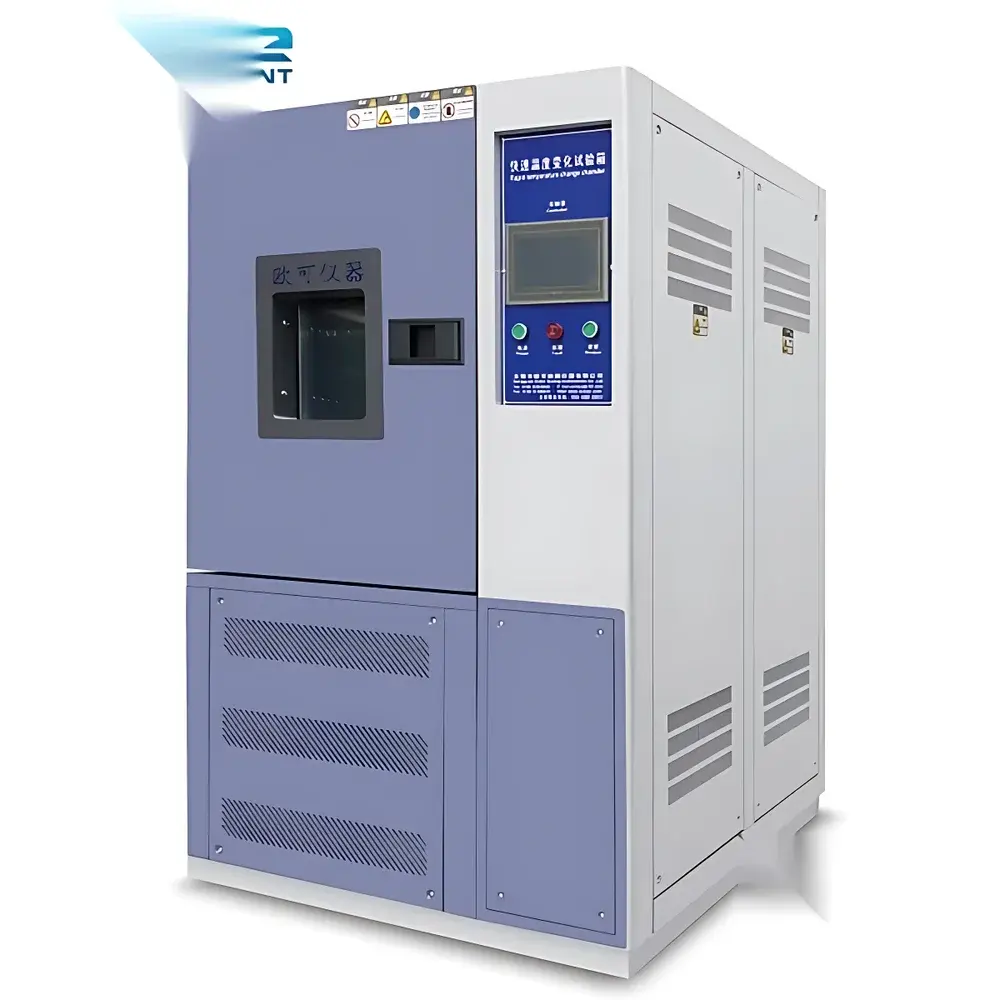
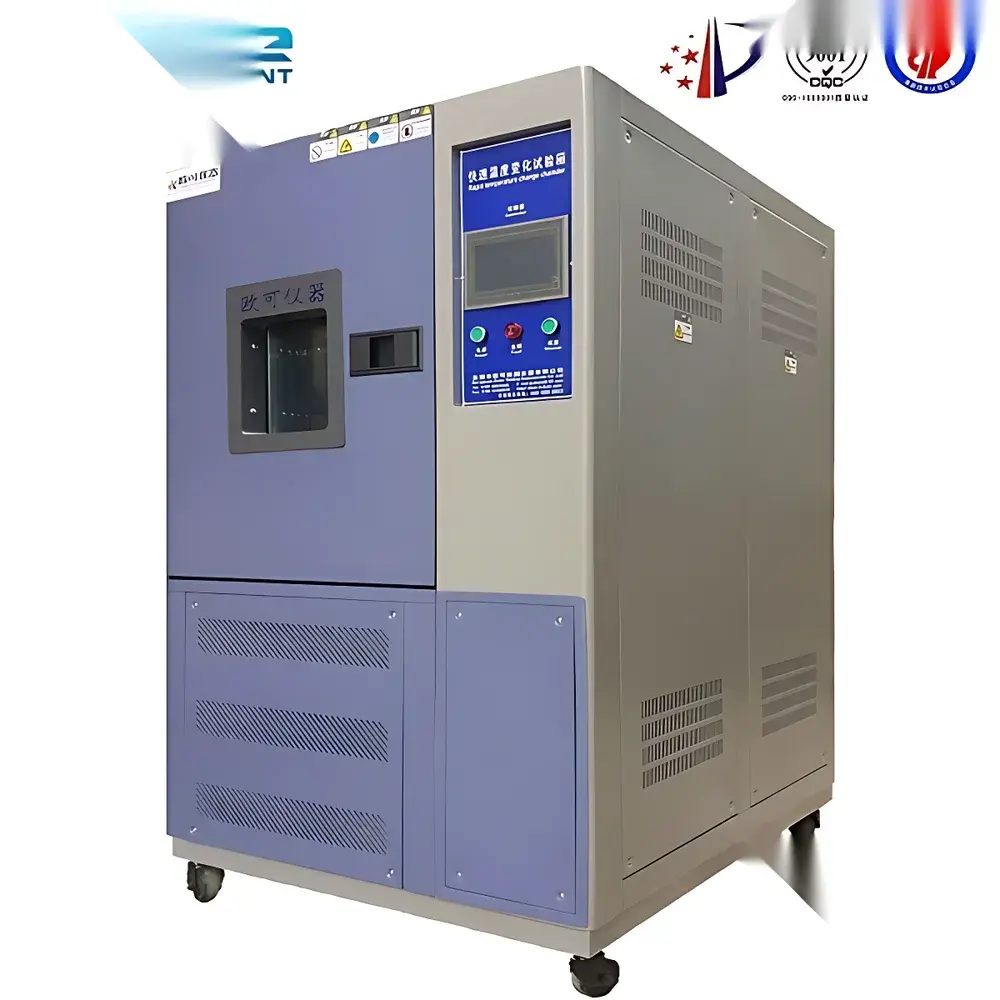
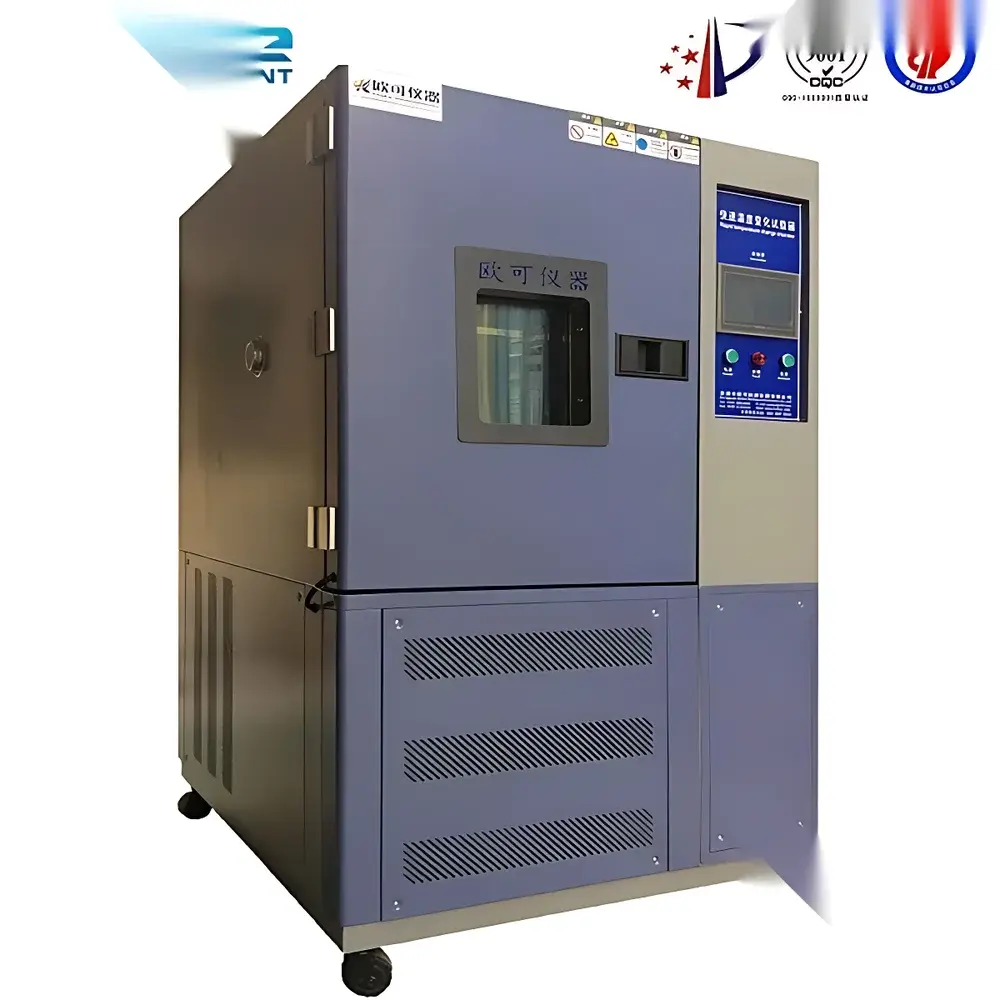
Other Brands Rapid Temperature Transition Aging Chamber for Power Supplies
| Brand | Other Brands |
|---|---|
| Origin | Imported |
| Manufacturer Type | Authorized Distributor |
| Temperature Range (Hot Zone) | +80°C to +200°C |
| Temperature Range (Cold Zone) | −10°C to −70°C |
| Operational Test Range | −40°C to +150°C |
| Temperature Control Accuracy | ±2°C |
| Temperature Resolution | 0.01°C |
| Hot Zone Ramp Rate (RT to +150°C) | ≤40 min |
| Cold Zone Ramp Rate (RT to −70°C) | ≤100 min |
| Test Zone Temperature Recovery Time | 3–5 min |
| Internal Dimensions (W×H×D) | 600 × 500 × 500 mm |
| External Dimensions (W×H×D) | 1500 × 2100 × 2250 mm |
| Construction Material | SUS#304 Stainless Steel (Interior & Exterior) |
| Insulation | High-Density Glass Wool + Rigid Polyurethane (PU) Foam |
| Anti-Sweat System | K-Type Thermocouple-Based Thermal Compensation |
| Actuation Method | Pneumatic Dual-Zone Door Switching |
| Accessories | High-Tensile Packing (−200°C to +400°C), Dual Adjustable Test Shelves |
Overview
The Other Brands Rapid Temperature Transition Aging Chamber for Power Supplies is a specialized two-zone thermal stress testing system engineered for accelerated reliability validation of power conversion modules, AC/DC and DC/DC converters, uninterruptible power supplies (UPS), and embedded power electronics. Unlike conventional single-chamber thermal cycling systems, this chamber employs a true dual-compartment architecture—comprising independent high-temperature and low-temperature zones—enabling rapid, repeatable thermal transitions via pneumatic isolation gate switching. The system operates on the principle of thermal shock acceleration through controlled, high-rate temperature excursions between extreme setpoints, simulating decades of operational thermal cycling in compressed timeframes. Its design complies with fundamental requirements of IEC 60068-2-14 (Test N: Change of Temperature) and supports test protocols aligned with JEDEC JESD22-A104 (Temperature Cycling) and MIL-STD-810H Method 503.4 (Temperature Shock). The chamber is not intended for general-purpose environmental simulation but specifically optimized for power supply qualification where thermal inertia, recovery stability, and mechanical stress minimization are critical.
Key Features
- Dual-zone configuration with physically isolated hot and cold chambers, eliminating cross-contamination and enabling precise thermal boundary control
- Pneumatically actuated transfer mechanism achieving <5-minute test zone temperature recovery (from +150°C to −40°C or vice versa), meeting stringent thermal shock rate demands
- SUS#304 stainless steel construction throughout interior and exterior surfaces—resistant to thermal fatigue, oxidation at +200°C, and embrittlement at −70°C
- Multi-layer insulation combining high-density glass wool and rigid closed-cell PU foam, minimizing heat leakage and ensuring energy-efficient operation over extended aging cycles
- K-type thermocouple-based anti-sweat system preventing condensation on observation windows and internal structural interfaces during low-temperature phases
- High-tensile silicone-composite packing rated for continuous exposure from −200°C to +400°C, maintaining seal integrity across full operational range
- Two adjustable-height stainless steel test shelves with reinforced load-bearing capacity, facilitating flexible fixture mounting and airflow optimization around DUTs
Sample Compatibility & Compliance
This chamber accommodates power supply units up to 600 mm (W) × 500 mm (H) × 500 mm (D) in footprint, with maximum unit weight supported per shelf ≤25 kg. It is compatible with both open-frame and enclosed power modules, including those with integrated heatsinks, fan-cooled assemblies, and conformally coated PCBs. The system meets structural and operational prerequisites for ISO/IEC 17025-accredited laboratories conducting thermal aging per IPC-9701A (Performance Classes for Printed Board Interconnect Reliability) and supports traceable calibration per ISO/IEC 17025 Clause 6.5. While not certified to UL or CSA as a standalone appliance, its construction materials and safety interlocks align with EN 61010-1:2019 (Safety Requirements for Electrical Equipment for Measurement, Control, and Laboratory Use).
Software & Data Management
The chamber integrates with optional Ethernet-enabled programmable logic controller (PLC)-based controllers supporting RS-485 Modbus RTU and TCP/IP communication protocols. Standard logging includes real-time temperature traces from ≥3 calibrated Class A PT100 sensors (hot zone, cold zone, test zone center), cycle count, dwell time, ramp rate verification, and door actuation timestamps. Data export formats include CSV and XML, compatible with LIMS integration and automated report generation. Audit trails comply with FDA 21 CFR Part 11 requirements when paired with validated software packages—supporting electronic signatures, user access levels, and immutable event logs for GLP/GMP-regulated environments.
Applications
- Accelerated life testing (ALT) of switch-mode power supplies (SMPS) under repeated thermal shock conditions
- Qualification of solder joint reliability in high-power density DC-DC modules per IPC-J-STD-001 and IPC-A-610
- Validation of potting compound adhesion and thermal expansion coefficient (CTE) mismatch effects in encapsulated power electronics
- Stress screening of electrolytic capacitors, MOSFETs, and SiC/GaN devices subjected to rapid junction temperature transients
- Supporting failure analysis root cause identification—including delamination, wire bond lift-off, and die attach cracking—via controlled thermal excursion profiling
FAQ
What is the difference between two-box and one-box thermal shock configurations?
In the two-box design, the DUT is physically transferred between hot and cold chambers via pneumatic shuttle—minimizing thermal mass interference and maximizing transition speed. In the one-box variant, airflow routing is dynamically redirected using motorized dampers; the DUT remains stationary, reducing mechanical vibration but limiting maximum ΔT/min due to chamber thermal inertia.
Can this chamber be used for humidity-assisted thermal cycling?
No—this model is strictly dry-thermal. Humidity control requires integration of a separate vapor generator and dew-point monitoring system, which is not included or validated for this platform.
Is third-party calibration certification available?
Yes—NIST-traceable calibration certificates for all temperature sensors and control loops can be provided upon request, adhering to ISO/IEC 17025 procedures by accredited calibration labs.
What maintenance intervals are recommended for pneumatic actuators and seals?
Pneumatic cylinder lubrication and packing inspection are recommended every 500 operational cycles or biannually—whichever occurs first—to ensure consistent door switching timing and vacuum integrity.
Does the system support custom test profiles with variable dwell times and non-linear ramps?
Yes—the controller firmware supports up to 99-step programmable sequences, including segmented ramp rates, conditional branching based on sensor feedback, and pause/resume functionality for in-process diagnostics.



