
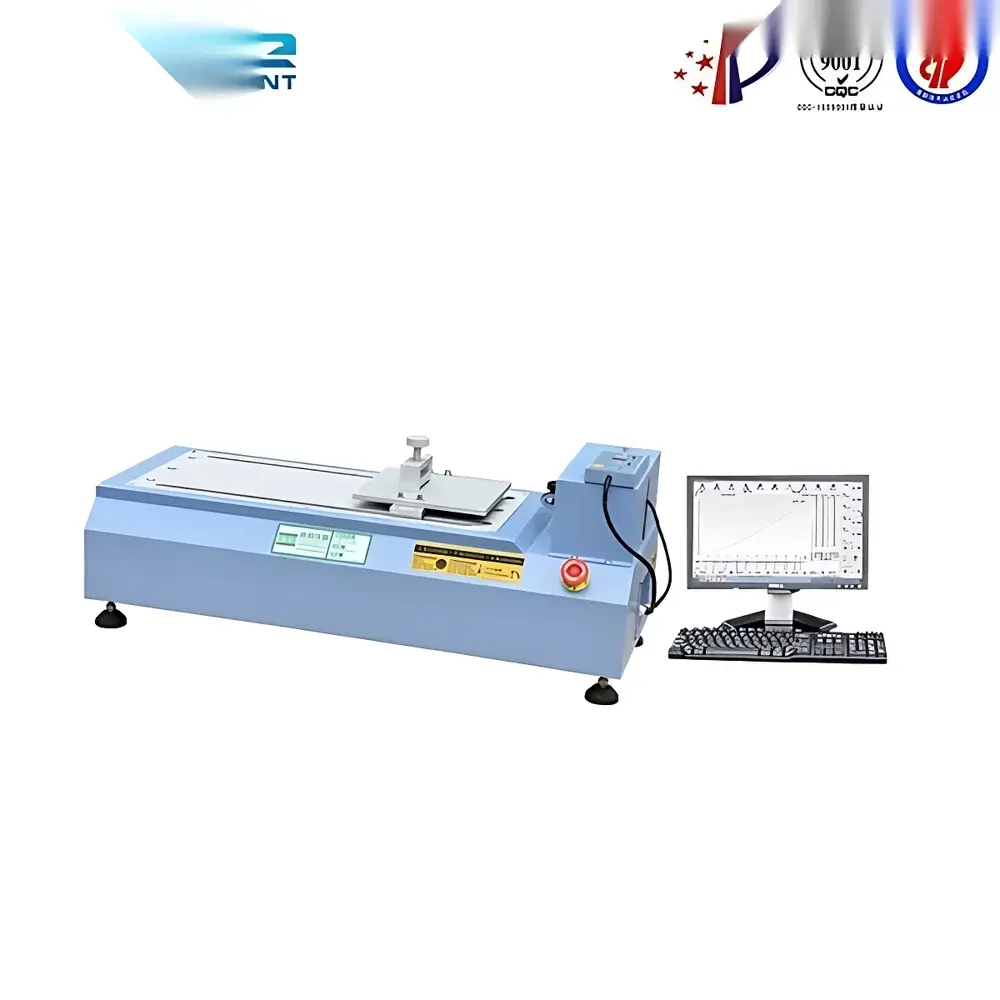
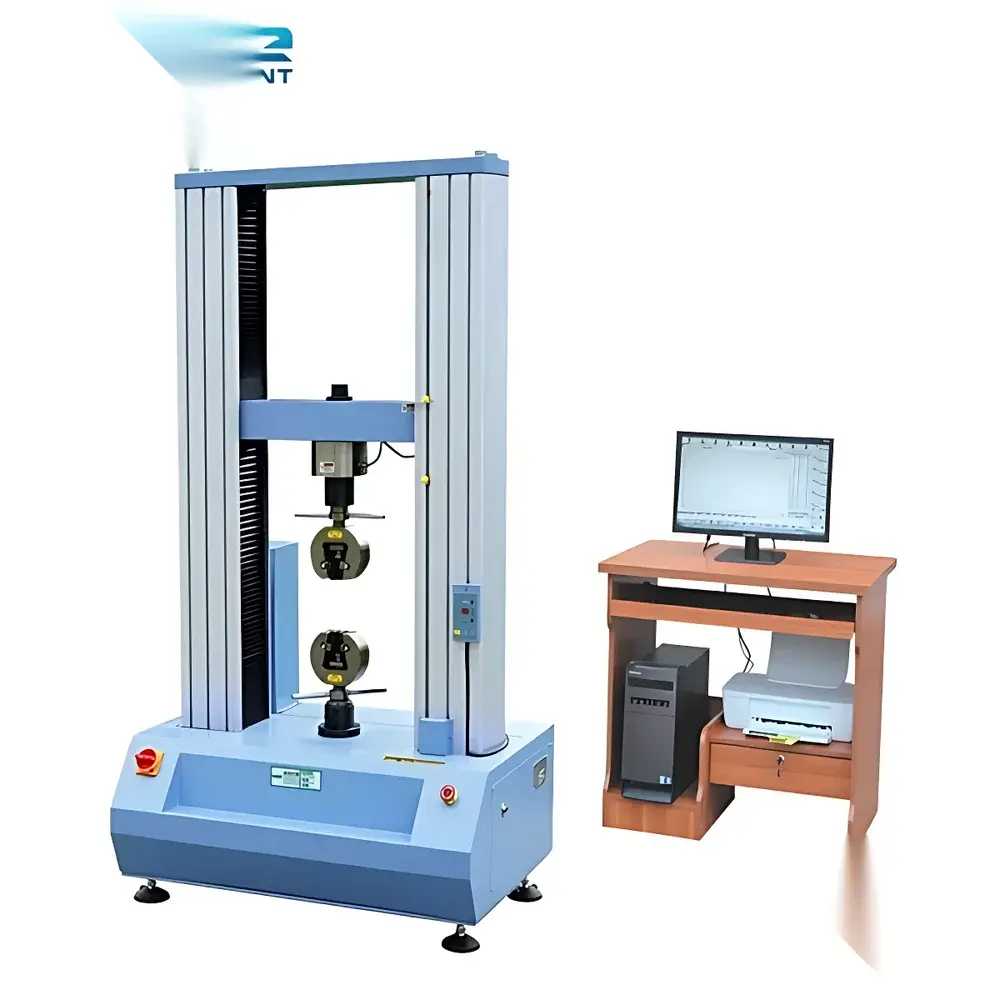
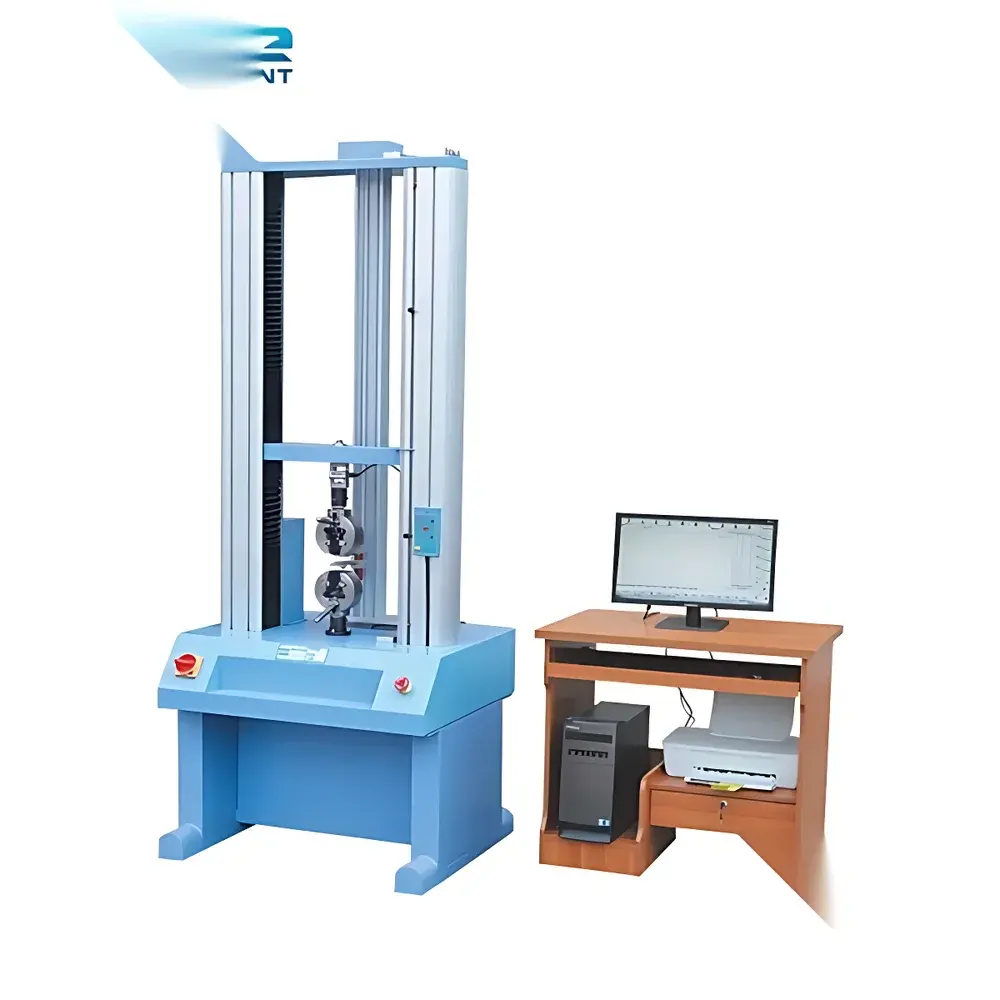
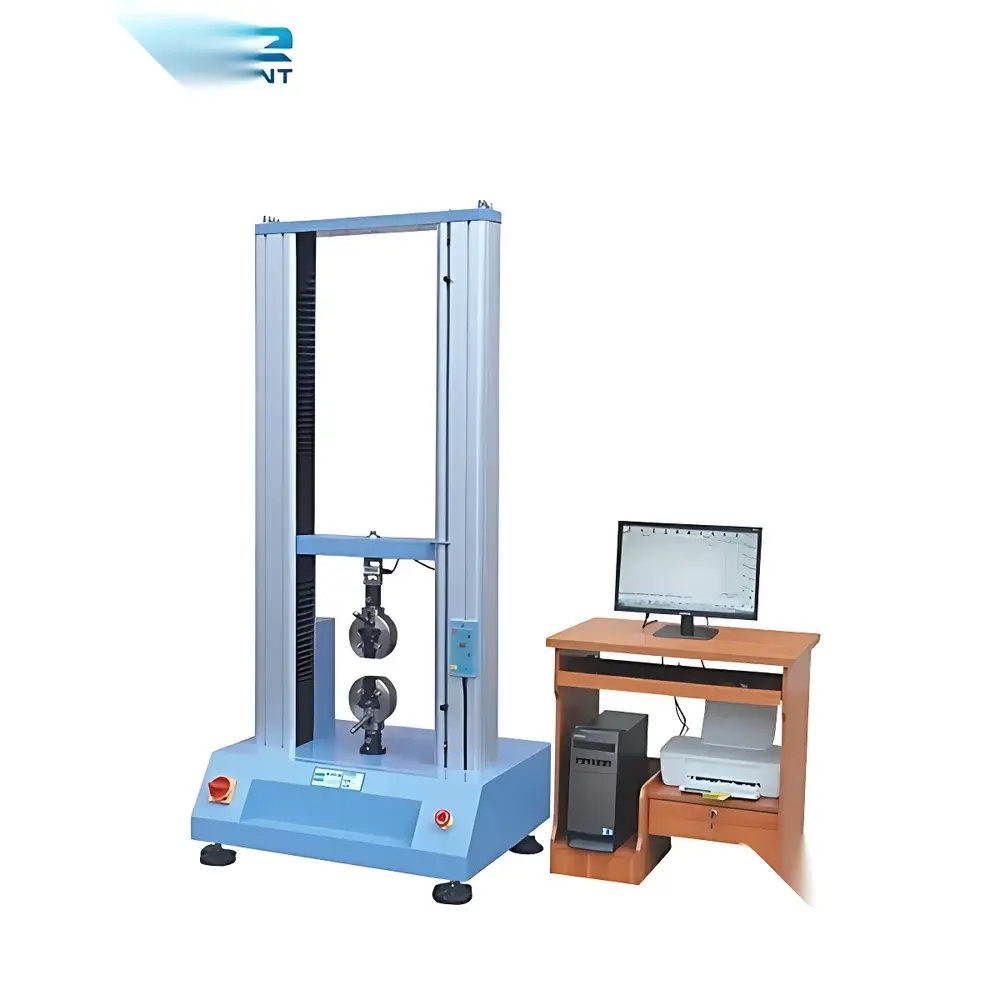
Other Brands TS-5000 Series Universal Tensile Testing Machine for Sheet Materials
| Brand | Other Brands |
|---|---|
| Origin | Imported |
| Manufacturer Type | Authorized Distributor |
| Price | USD 3,200 (FOB) |
| Load Capacity | Up to 5 kN (configurable options: 1 kN / 2.5 kN / 5 kN) |
| Force Resolution | 1/100,000 of full scale |
| Force Accuracy | ±0.5% of reading (ISO 7500-1 Class 1) |
| Crosshead Speed Range | 0.001–500 mm/min (programmable, ±0.2% speed accuracy) |
| Displacement Resolution | 0.001 mm |
| Data Acquisition Rate | 1 kHz |
| Compliance | ASTM E4, ASTM D638, ASTM D882, ISO 527-1, ISO 1798, GB/T 16491, GB/T 1040.1–1040.5, GB/T 2792, GB/T 3923.1 |
Overview
The Other Brands TS-5000 Series Universal Tensile Testing Machine is an electromechanical static testing system engineered for precise uniaxial tensile, peel, tear, and flexural characterization of sheet-form and thin-section materials. It operates on the principle of controlled displacement-driven force measurement using a high-fidelity load cell and closed-loop servo control architecture. Designed in accordance with international metrological standards—including ISO 7500-1 (Class 1), ASTM E4 (verification of force-measuring instruments), and ISO 376 (calibration of force transducers)—the system delivers traceable, repeatable mechanical property data essential for R&D, quality assurance, and regulatory documentation. Its modular frame construction accommodates interchangeable grips, extensometers, and environmental chambers, enabling standardized evaluation of modulus, yield strength, ultimate tensile strength (UTS), elongation at break, and stress–strain linearity across diverse material classes.
Key Features
- High-precision AC servo motor drive (Panasonic) with 2500-pulse/rev encoder feedback, ensuring smooth motion control and minimal velocity ripple (< ±0.2%) across the full speed range (0.001–500 mm/min).
- Preloaded precision ground ball screw transmission paired with linear guideways—engineered to minimize axial backlash, friction hysteresis, and mechanical noise during dynamic loading cycles.
- Explosion-proof, temperature-compensated load cell with ±0.03%FS zero drift stability, 150% transient overload tolerance, and automatic thermal & creep compensation algorithms.
- Dual-limit mechanical travel protection system plus real-time software-based overload cutoff (adjustable upper/lower thresholds) safeguards both sensor integrity and operator safety.
- Integrated digital controller with 1 kHz sampling rate, 24-bit A/D conversion, and 1/100,000 full-scale force resolution—enabling detection of micro-yield events and accurate low-force measurements down to 0.5 N.
- Automatic peak-hold, break-stop, auto-return-to-start, and programmable multi-step test sequences—all executed without manual intervention or external scripting.
Sample Compatibility & Compliance
The TS-5000 supports standardized mechanical testing of flat, flexible, and semi-rigid specimens per widely adopted international protocols. Compatible sample forms include films (≥10 µm thickness), foams, nonwovens, laminates, coated papers, polymer sheets, composite prepregs, elastomeric belts, textile webs, and fiber-reinforced tapes. It meets the mechanical and procedural requirements of ASTM D638 (tensile properties of plastics), ASTM D882 (thin plastic sheeting), ISO 527-1 (determination of tensile properties), ISO 1798 (flexible cellular polymeric materials), GB/T 1040.2 (plastics—tensile testing—part 2: test conditions for moulding and extrusion plastics), and GB/T 2792 (peel resistance of adhesive tapes). All hardware and firmware are designed to support GLP-compliant audit trails, including user authentication logs, parameter change history, and timestamped raw data export—facilitating FDA 21 CFR Part 11 readiness when paired with validated software configurations.
Software & Data Management
The system is operated via PC-based testing software compliant with Windows 10/11 (64-bit). The interface provides real-time plotting of force–displacement, stress–strain, and modulus-vs.-strain curves with adjustable scaling, smoothing filters, and derivative analysis. Test methods can be saved as reusable templates with embedded standard references (e.g., “ASTM D638 Type I”), pass/fail criteria, and automatic report generation in PDF or Excel formats—including header metadata (operator ID, sample ID, environmental conditions, calibration certificate ID). Raw data files (.csv or proprietary binary) retain full-resolution time-series records with millisecond timestamps, enabling post-hoc reanalysis or third-party statistical validation. Software updates are distributed via secure HTTPS portal with version-controlled release notes and ISO/IEC 17025-aligned validation documentation available upon request.
Applications
This instrument serves laboratories engaged in polymer formulation development, packaging performance validation, medical device component qualification, automotive interior material certification, and academic materials science research. Typical use cases include quantifying tensile modulus degradation after UV exposure or thermal aging; evaluating adhesion strength of pressure-sensitive tapes per PSTC-101; measuring elongation recovery of elastomeric membranes; verifying consistency of extruded film batches against internal QC limits; and generating input parameters for finite element modeling (FEM) of layered composites. Its repeatability (RSD < 0.8% for UTS across 10 replicates on HDPE sheet per ASTM D638) ensures suitability for inter-laboratory comparison studies and supplier qualification programs governed by IATF 16949 or ISO 9001.
FAQ
What standards does this machine support out-of-the-box?
It includes pre-configured test methods for ASTM D638, ASTM D882, ISO 527-1, ISO 1798, GB/T 1040, GB/T 2792, and GB/T 3923.1—with editable parameters to align with internal SOPs or emerging industry specifications.
Can it accommodate extensometry for true strain measurement?
Yes—both clip-on mechanical extensometers (with gauge lengths from 10–50 mm) and non-contact video extensometers (via optional add-on module) are mechanically and software-integrated.
Is calibration traceable to national metrology institutes?
Force calibration is performed using certified deadweight standards traceable to NIM (China) or NIST (USA); certificates include uncertainty budgets and compliance statements per ISO/IEC 17025.
What maintenance intervals are recommended?
Ball screw lubrication every 6 months; load cell verification annually; encoder and limit switch functional check quarterly—documented in the included Preventive Maintenance Logbook.
Does the system support networked data archiving?
Yes—via configurable UNC path mapping or SFTP upload to centralized LIMS or ELN platforms, with role-based access controls and encrypted data-at-rest.



