
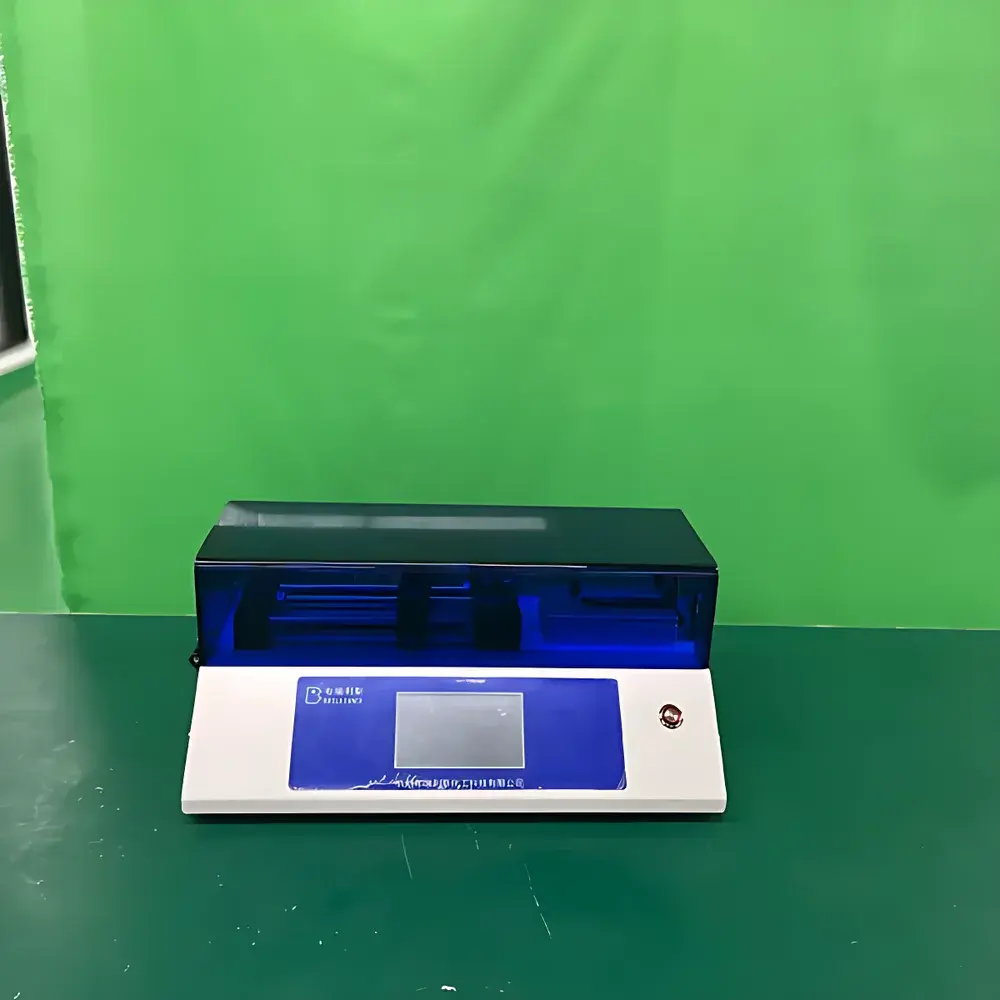
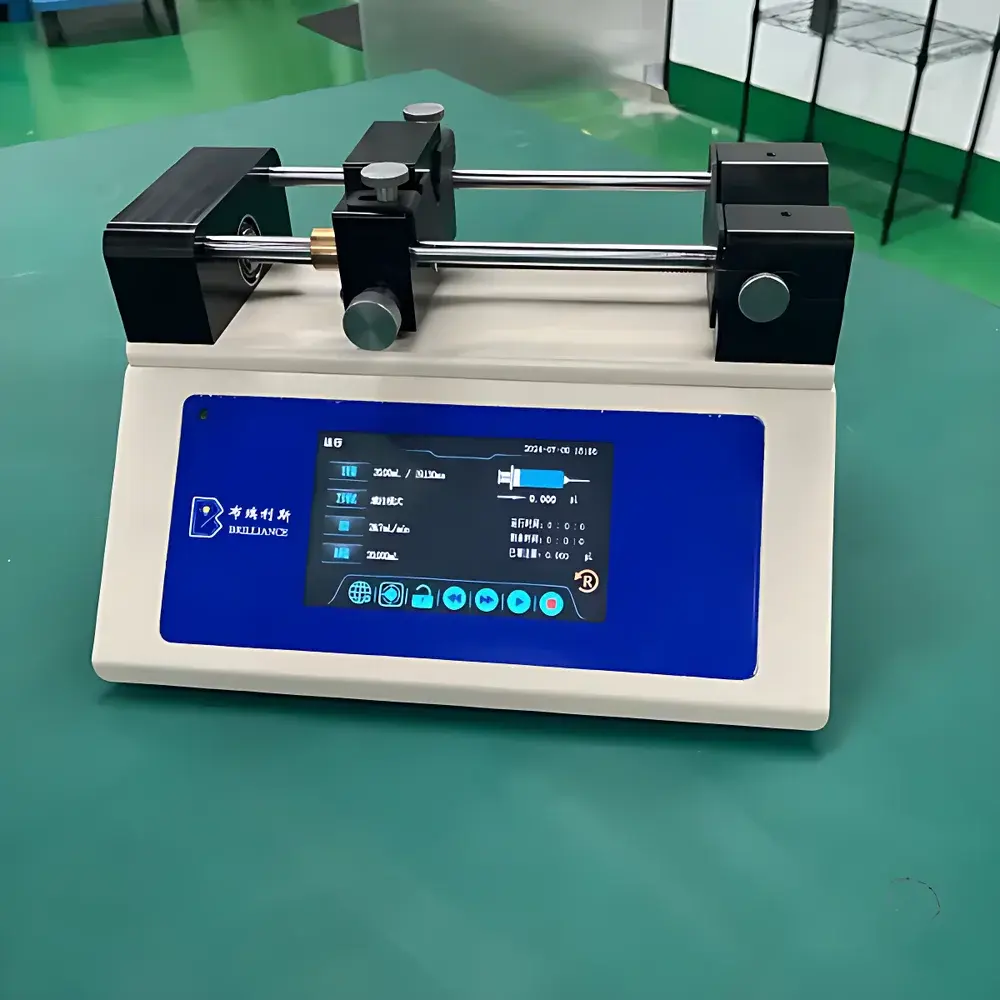
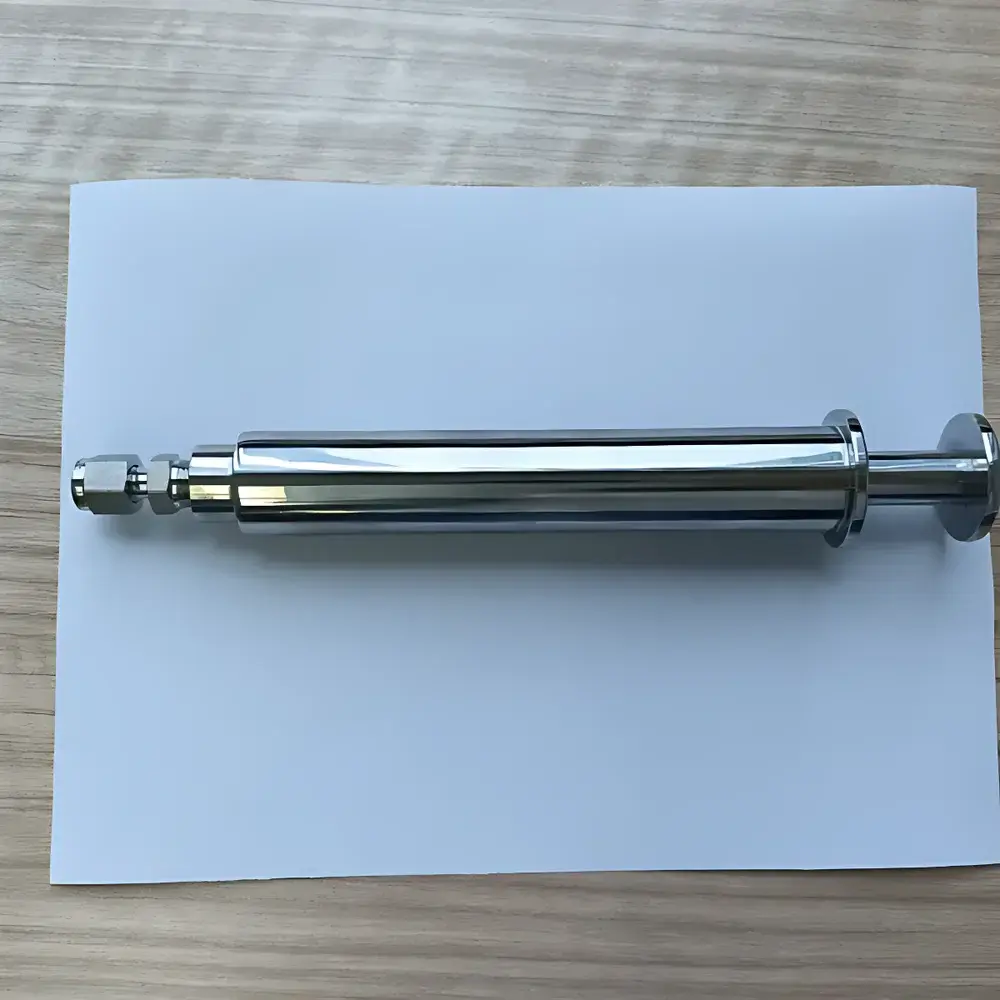
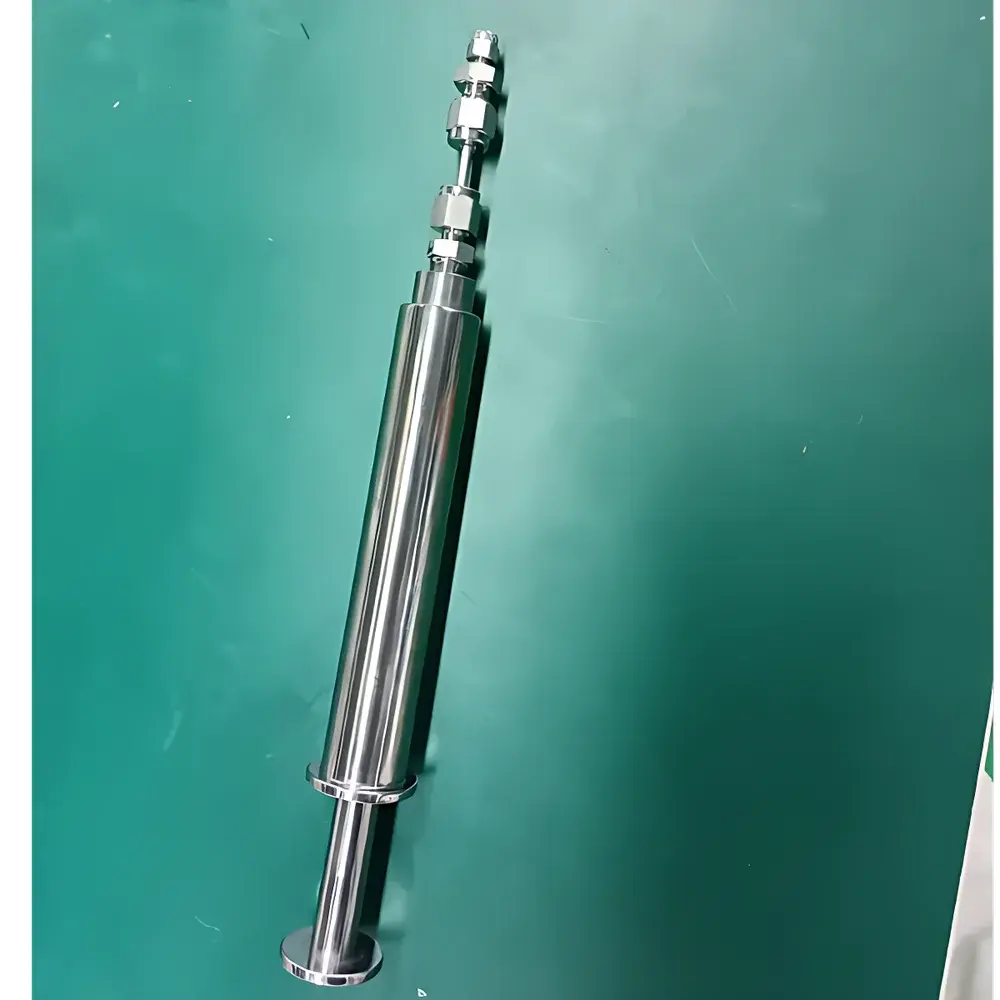
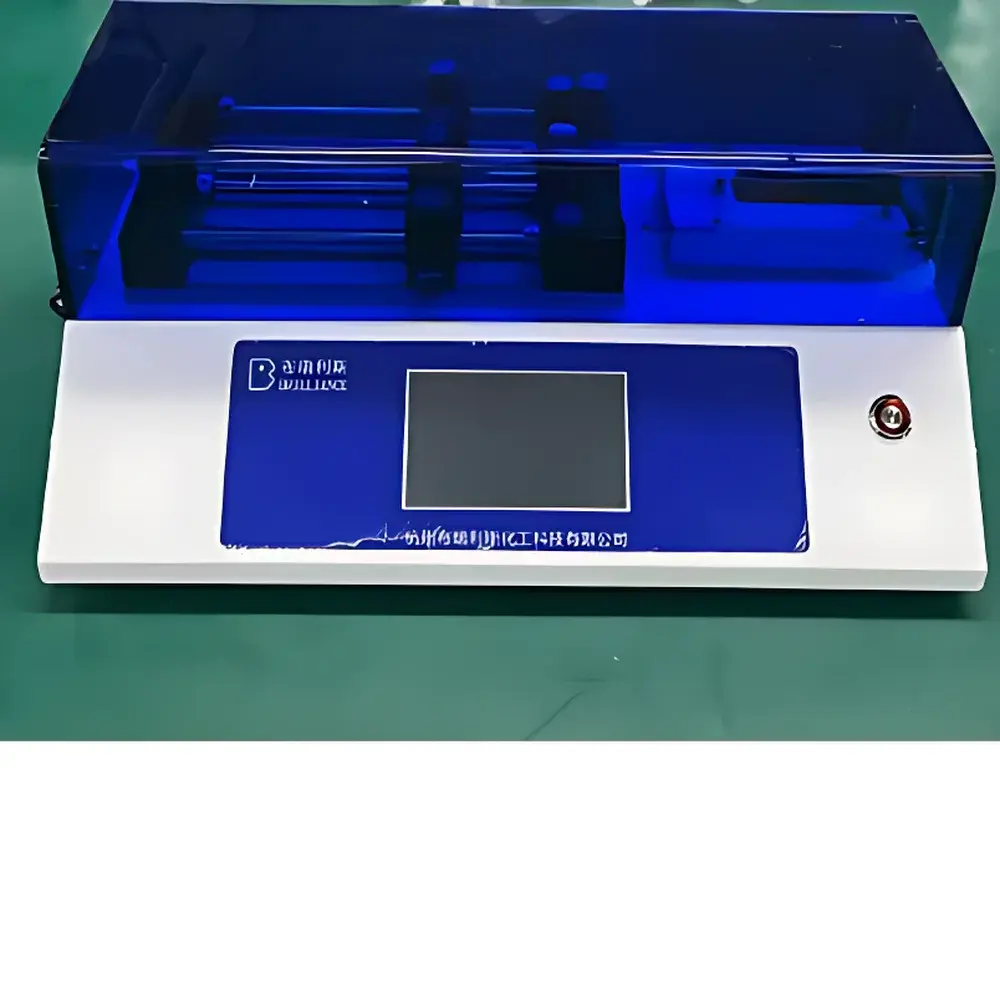
Brilliance Bri-HP High-Pressure Syringe Pump
| Brand | Brilliance |
|---|---|
| Origin | Zhejiang, China |
| Manufacturer Type | Manufacturer |
| Product Category | Domestic |
| Model | Bri-HP |
| Instrument Type | Industrial Syringe Pump |
| Flow Rate Range | 1.426 nL/min – 152.15 mL/min |
| Accuracy | <1% |
| Repeatability | <0.05% |
| Max Stroke | 150 mm |
| Syringe Capacity | 6–200 mL |
| Linear Force | >1600 N (HP-P160S variant) / >640 N (HP-P64S variant) |
| Pressure Range | 0.8–18 MPa (HP-P160S) / 0.3–7 MPa (HP-P64S) |
| Linear Speed | 0.02 µm/min – 100 mm/min |
| Step Resolution | 0.0156 µm/ustep (HP-P160S) / 0.078 µm/ustep (HP-P64S) |
| Power Supply | AC 100–240 V, 50/60 Hz, 65 W |
| IP Rating | IP31 |
| Operating Environment | 0–40 °C, 20–80% RH (non-condensing) |
| Dimensions | 256 × 190 × 146 mm |
Overview
The Brilliance Bri-HP High-Pressure Syringe Pump is an industrial-grade precision fluid delivery system engineered for applications demanding stable, low-pulsation, and highly reproducible flow control under elevated backpressure conditions. Based on a microstepping linear motor actuation architecture coupled with high-rigidity lead-screw mechanics, the Bri-HP operates on the principle of controlled plunger displacement within calibrated syringes—enabling volumetric flow rates determined by syringe cross-sectional area and commanded linear velocity. Its dual-variant design (HP-P160S and HP-P64S) accommodates divergent operational requirements: the HP-P160S prioritizes maximum force and pressure tolerance for viscous or high-resistance fluidic systems (e.g., HPLC column packing, microfluidic chip priming, or nanoparticle suspension infusion), while the HP-P64S offers enhanced speed flexibility and finer positional resolution for moderate-pressure protocols such as electrophysiology perfusion or automated assay reagent dispensing.
Key Features
- High-force linear actuation: >1600 N (HP-P160S) and >640 N (HP-P64S) deliver consistent push/pull performance across syringe sizes from 6 mL to 200 mL.
- Ultra-broad flow range: Spanning 1.426 nL/min to 152.15 mL/min—achievable via selectable syringe geometry and optimized step-resolution modes (0.0156 µm/ustep and 0.078 µm/ustep).
- Sub-micron positional fidelity: Integrated closed-loop feedback ensures long-term drift stability and minimizes mechanical hysteresis during bidirectional operation (infuse/withdraw, continuous cycling).
- Multi-mode programmability: Supports infuse-only, withdraw-only, infuse-withdraw alternating, continuous loop, and multi-step sequential protocols with user-defined dwell times and ramp profiles.
- Ruggedized enclosure with IP31 rating: Provides protection against vertically falling drips and solid objects ≥2.5 mm—suitable for shared laboratory environments and integration into instrument racks or custom fluidic workstations.
- Wide-input universal power supply (100–240 V AC, 50/60 Hz): Enables seamless deployment in global research and manufacturing facilities without voltage conversion hardware.
Sample Compatibility & Compliance
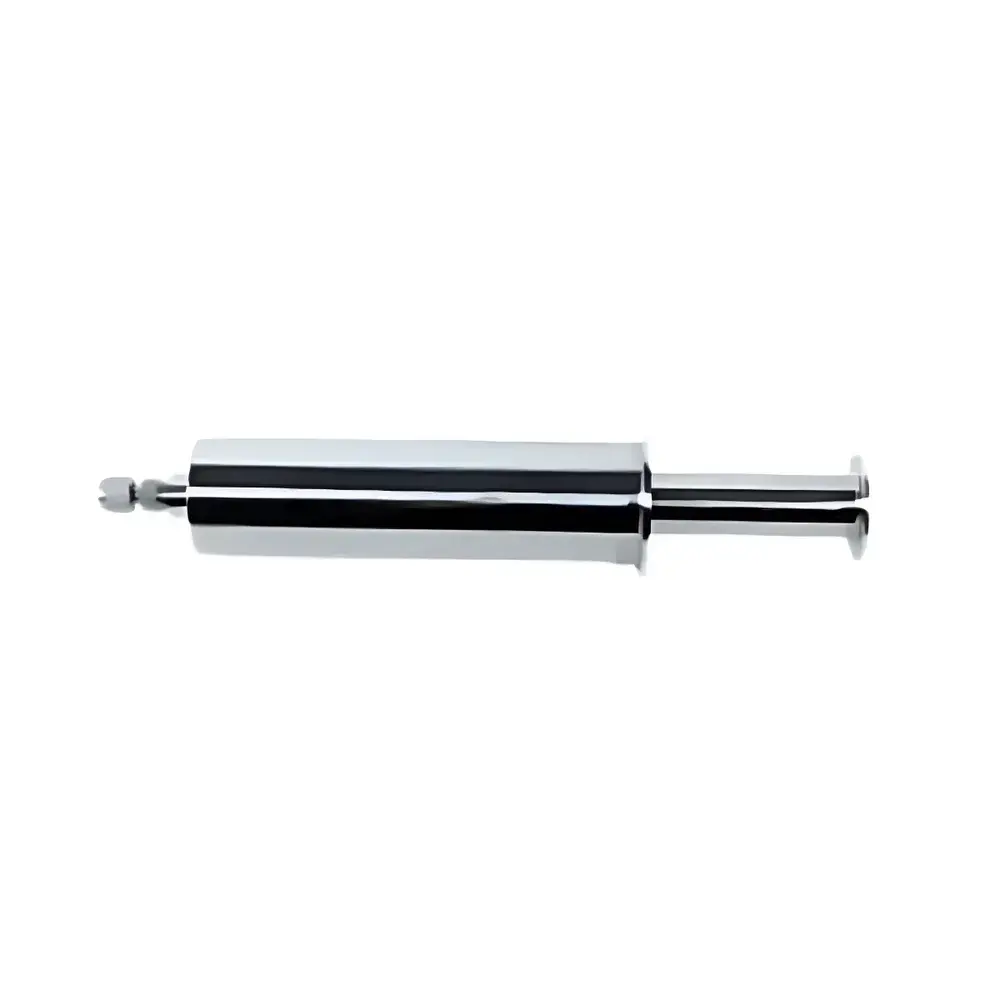
The Bri-HP is compatible with standard Luer-lock and Luer-slip syringes (glass or polypropylene) ranging from 6 mL to 200 mL capacity. Its pressure capability scales inversely with syringe inner diameter—validated per ISO 8536-4 for syringe barrel integrity and ASTM D3923 for plunger seal performance at rated pressures. While not certified to IEC 61010-1 Annex BB for Class II medical devices, the pump meets general electrical safety requirements for laboratory instrumentation and supports GLP-compliant operation when used with audit-trail-enabled controllers or external data loggers. It is routinely deployed in settings aligned with USP <1058> Analytical Instrument Qualification (AIQ) frameworks for critical fluid handling steps in method development and validation.
Software & Data Management
The Bri-HP communicates via RS-232 or optional USB-to-serial interface, supporting ASCII command protocol for integration with LabVIEW, Python (pySerial), MATLAB, or custom SCADA systems. Firmware includes non-volatile memory for up to 100 user-defined protocols, each storing flow rate, volume, direction, acceleration profile, and pause intervals. When paired with compliant host software, full electronic records—including timestamps, operator ID, parameter changes, and error logs—can be generated to satisfy FDA 21 CFR Part 11 requirements for signature-capable audit trails. Real-time flow monitoring and remote start/stop functionality enable unattended overnight runs and synchronized multi-pump coordination in complex fluidic networks.
Applications
- High-pressure liquid chromatography (HPLC) and ultra-high-performance liquid chromatography (UHPLC) system priming and gradient solvent delivery.
- Microparticle and liposome formulation via controlled co-flow or coaxial injection in microfluidic devices.
- Neuroscience preparations requiring precise, pulseless drug or dye infusion into brain tissue slices or in vivo preparations.
- Automated calibration of mass flow meters and pressure transducers using traceable volumetric standards.
- Long-duration material testing—such as rheological characterization of cementitious suspensions or polymer melts—where constant shear-rate conditions must be maintained over hours or days.
- Environmental simulation chambers requiring metered introduction of reactive gases or aerosols via nebulizer-coupled delivery.
FAQ
What syringe types are supported?
Standard Luer-lock and Luer-slip syringes made of borosilicate glass or medical-grade polypropylene (6–200 mL). Custom adapters available for non-standard barrels.
Can the pump operate continuously for 72+ hours?
Yes—thermal management and stepper motor duty-cycle optimization allow uninterrupted operation within specified ambient conditions (0–40 °C, non-condensing humidity).
Is pressure sensing integrated?
No. The Bri-HP is a displacement-controlled pump; inline pressure transducers must be added externally for real-time pressure monitoring.
How is accuracy validated?
Accuracy (<1%) and repeatability (<0.05%) are verified using gravimetric measurement per ISO 8655-3, employing analytical balances traceable to NIST standards and temperature-stabilized test fluids (e.g., deionized water, glycerol/water mixtures).
Does it support GMP documentation workflows?
When connected to validated third-party software with 21 CFR Part 11 compliance modules, full electronic batch records—including parameter history, execution logs, and digital signatures—can be generated and archived.



