
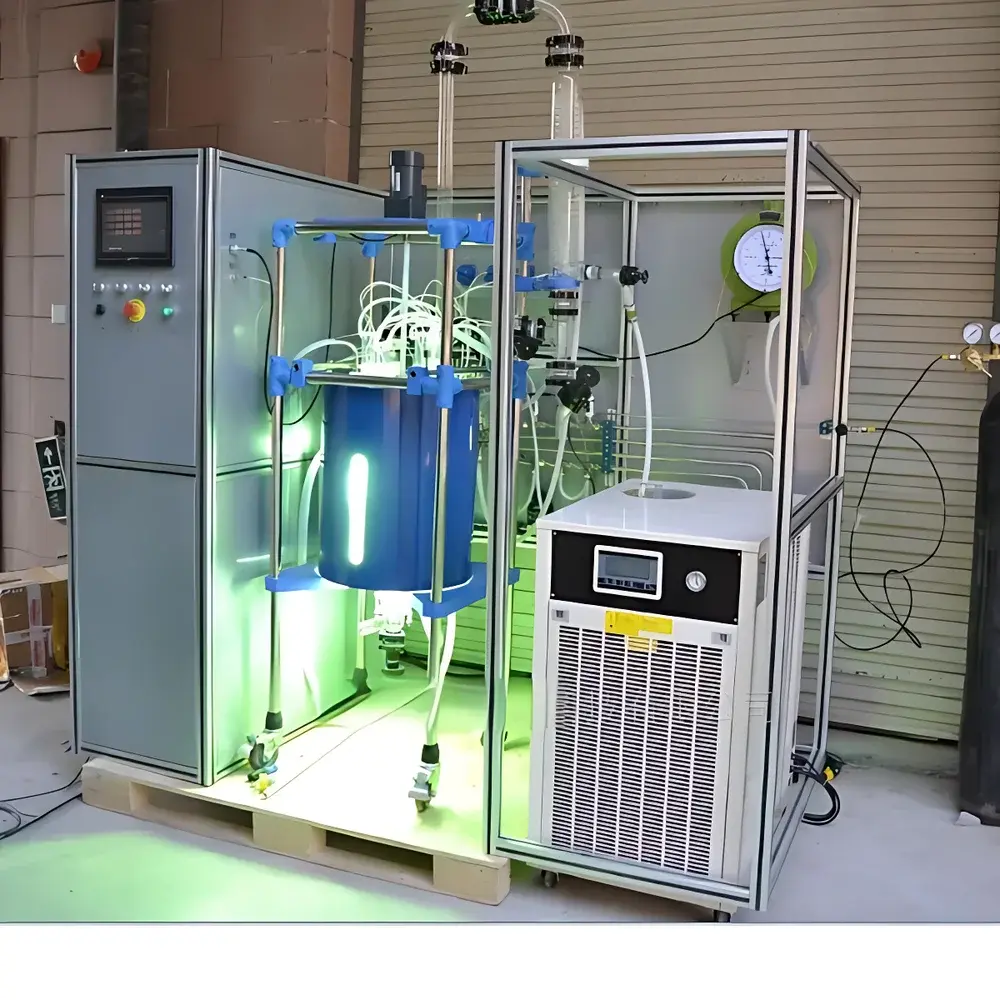
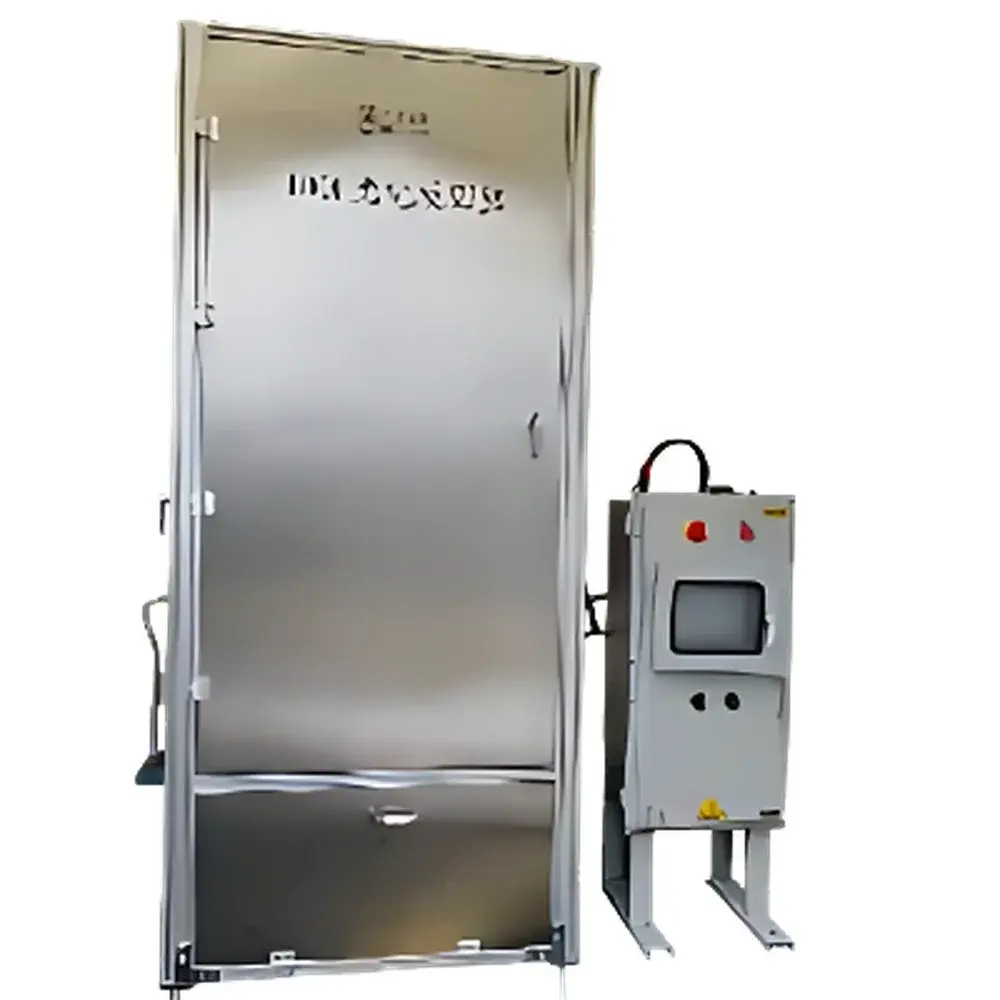
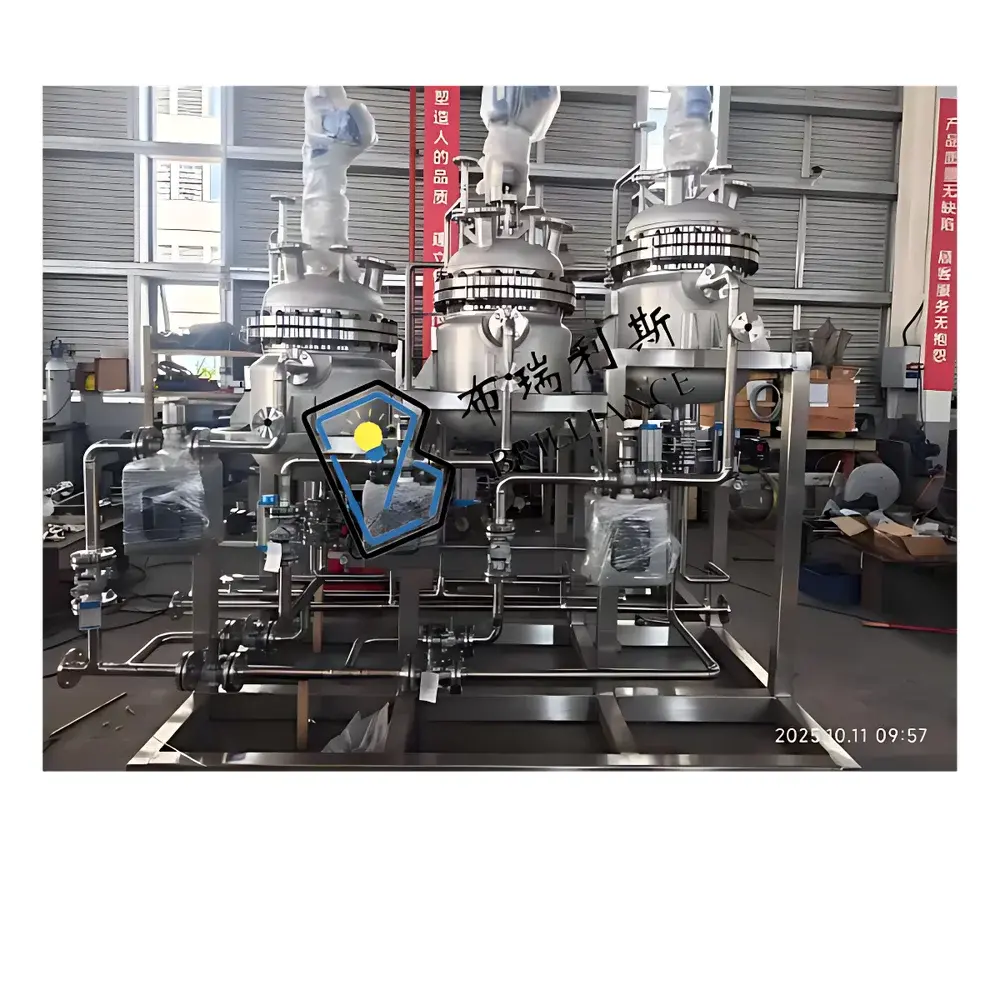
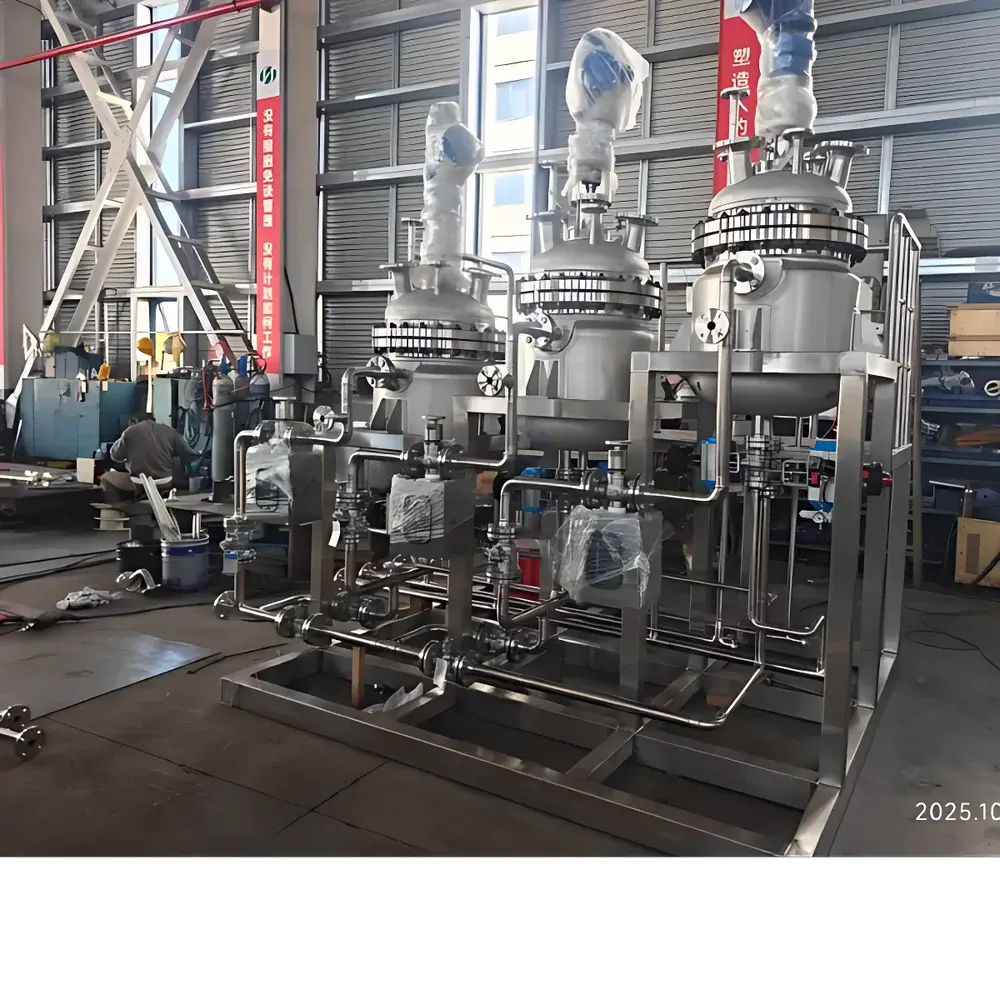
Brilliance Bri-PC-F-D Continuous Photochemical Batch Reactor
| Brand | Brilliance |
|---|---|
| Origin | Zhejiang, China |
| Manufacturer Type | Direct Manufacturer |
| Country of Origin | China |
| Model | Bri-PC-F-D |
| Instrument Category | Photochemical Reactor |
| Vessel Material Options | Stainless Steel / Borosilicate Glass / Enamel-Lined Steel |
| Spectral Range | 250–975 nm |
| Light Source | High-Power Tunable LED Array (1–300 kW equivalent photon flux) |
| Working Volume | 1–3000 L |
| Temperature Control | Integrated Electric Heating Furnace with PID Precision Regulation (±0.5 °C) |
| Pressure Rating | Up to 10 MPa (customizable) |
| Optical Window | Sapphire or Fused Silica (AR-coated, UV–NIR transparent) |
| Compliance | Designed per ISO 14001 and ASME BPVC Section VIII Div. 1 for pressure vessel safety |
Overview
The Brilliance Bri-PC-F-D Continuous Photochemical Batch Reactor is an engineered platform for controlled photochemical synthesis under reproducible irradiation conditions. It operates on the principle of homogeneous photon delivery to reaction media via high-intensity, spectrally tunable LED arrays, enabling precise activation of photocatalysts (e.g., Ru(bpy)₃²⁺, Ir(ppy)₃, TiO₂, g-C₃N₄) and direct substrate excitation across UV–Vis–NIR ranges (250–975 nm). Unlike conventional jacketed reactors with external lamps, this system integrates light sources directly into the reactor headspace or annular zones—minimizing photon loss, eliminating shadowing effects, and ensuring uniform volumetric photon fluence rate (measured in mol·m⁻²·s⁻¹). Its modular architecture supports both batch and semi-continuous operation modes, making it suitable for kinetic screening, catalyst evaluation, and scalable route development in academic labs and pilot-scale process R&D.
Key Features
- Multi-phase compatibility: validated for liquid-phase, gas–liquid (e.g., CO₂ photoreduction), solid–liquid (e.g., heterogeneous photocatalysis with suspended nanoparticles), and gas–solid–liquid (e.g., photocatalytic oxidation with immobilized catalysts on monoliths)
- Optically optimized vessel design: sapphire or fused silica viewport (diameter up to 150 mm) with anti-reflective coating ensures >92% transmittance across 250–975 nm; viewport hardness ≥1800 HV prevents scratching during abrasive slurry handling
- Material flexibility: interchangeable vessel liners—including ASTM A240 316L stainless steel (for high-pressure H₂ or O₂ reactions), DIN ISO 3585 borosilicate glass 3.3 (for real-time visual monitoring), and enamel-lined carbon steel (for aggressive halogenated media)
- Precision thermal management: dual-zone electric furnace with independent PID loops maintains ±0.5 °C stability from ambient to 250 °C; integrated thermocouple wells comply with ASTM E230 standards
- Modular illumination: LED modules are independently addressable by wavelength (UV-A, blue, green, red, NIR) and intensity (0–100% dimming), synchronized with data acquisition via TTL/RS485 interface
Sample Compatibility & Compliance
The Bri-PC-F-D accommodates diverse sample chemistries including aqueous electrolytes, organic solvents (THF, MeCN, DMF), corrosive reagents (HCl, HNO₃, HF up to 10 wt%), and slurries containing <50 µm particulates. All wetted parts meet USP Class VI biocompatibility requirements where applicable. Pressure vessels conform to ASME Boiler and Pressure Vessel Code Section VIII Division 1, with full traceability of material test reports (MTRs) and hydrostatic test certification. For regulated environments, optional audit trail logging, electronic signature support, and 21 CFR Part 11–compliant software packages are available upon request.
Software & Data Management
The reactor interfaces with Brilliance PhotoControl Suite v3.2—a Windows-based application supporting real-time monitoring of irradiance (via calibrated photodiode array), temperature, pressure, stirring speed, and gas flow rates (if equipped with mass flow controllers). All parameters are timestamped and stored in SQLite or SQL Server databases with configurable export (CSV, HDF5, .mat). The software includes preloaded kinetic models (Langmuir–Hinshelwood, pseudo-first-order, quantum yield calculation per IUPAC recommendations) and supports custom Python scripting via COM API for advanced data analysis and closed-loop control integration.
Applications
- Photocatalytic hydrogen evolution and CO₂ reduction under simulated solar irradiation
- Synthesis of pharmaceutical intermediates via C–N, C–O, and C–C bond formation using visible-light redox catalysis
- Environmental remediation studies: degradation kinetics of micropollutants (pharmaceuticals, pesticides) in wastewater matrices
- Materials science: controlled nucleation and growth of metal–organic frameworks (MOFs) and quantum dots under photoinduced conditions
- Process intensification: comparative evaluation of photon efficiency (EQE) between batch, flow, and hybrid photochemical reactors
FAQ
What spectral irradiance calibration standards does the system support?
Calibration is traceable to NIST SRM 2241 (photodiode) and NIST SRM 2036 (spectral irradiance), with optional factory calibration certificates available per ISO/IEC 17025.
Can the reactor be integrated into an automated synthesis platform?
Yes—it features Modbus TCP and OPC UA communication protocols, enabling seamless integration with third-party robotic liquid handlers, autosamplers, and LIMS systems.
Is explosion-proof configuration available for flammable solvent operation?
ATEX Zone 1 and IECEx-certified versions (with intrinsically safe lighting and purge-compatible enclosures) are offered as engineering options.
How is photon flux quantified and reported in experimental records?
Integrated actinometry (ferrioxalate, Aberchrome 540) is supported via built-in protocol templates; absolute photon flux is logged in µmol·m⁻²·s⁻¹ at the reactor wall and centerline positions.
What maintenance intervals are recommended for optical components?
Sapphire viewports require inspection every 500 operational hours; LED module lumen depreciation is monitored automatically, with replacement advised at >15% output decay (typically after 10,000 h at 70% drive current).



