
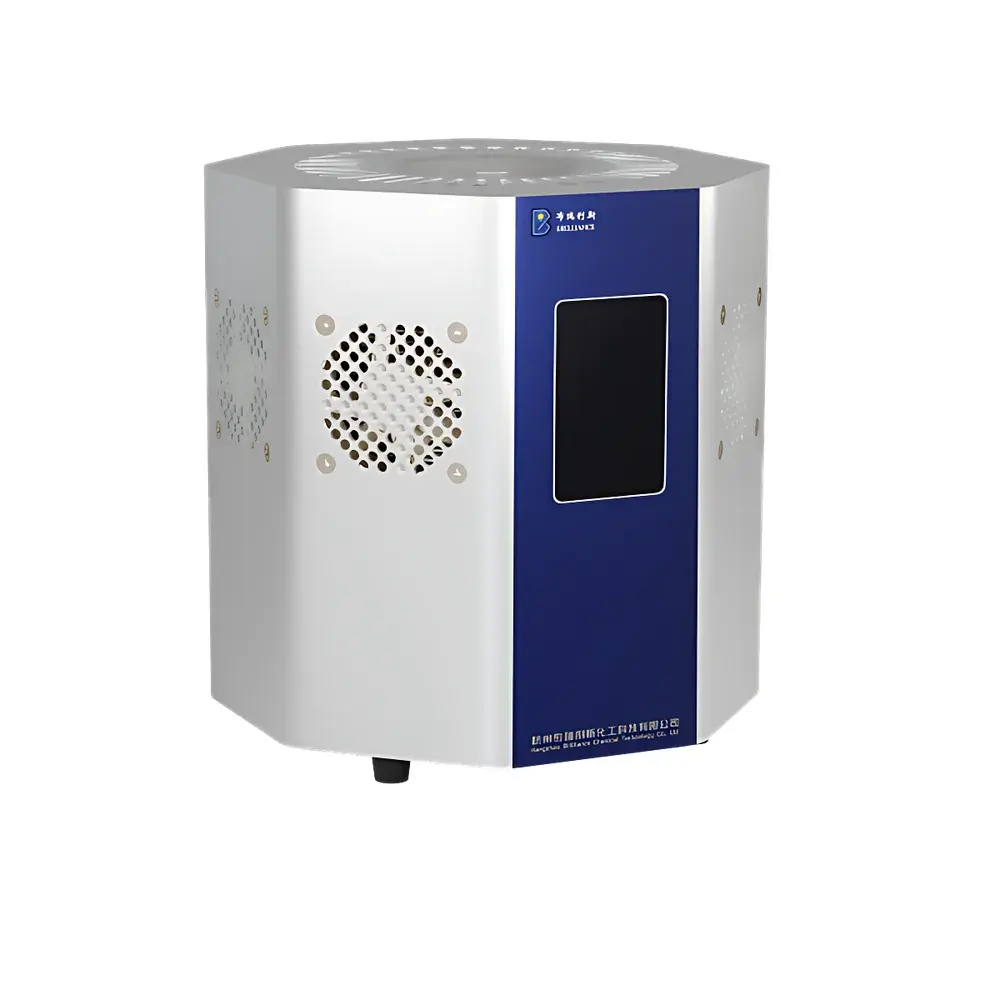
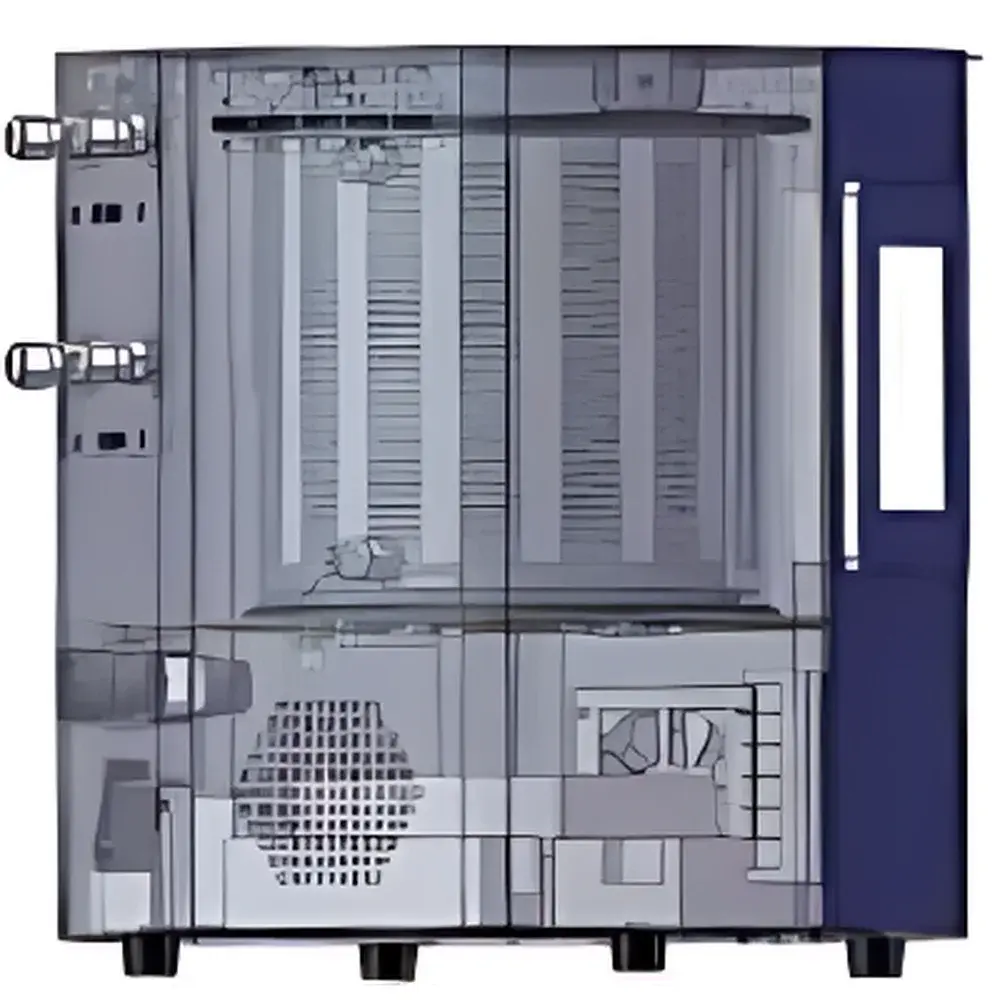
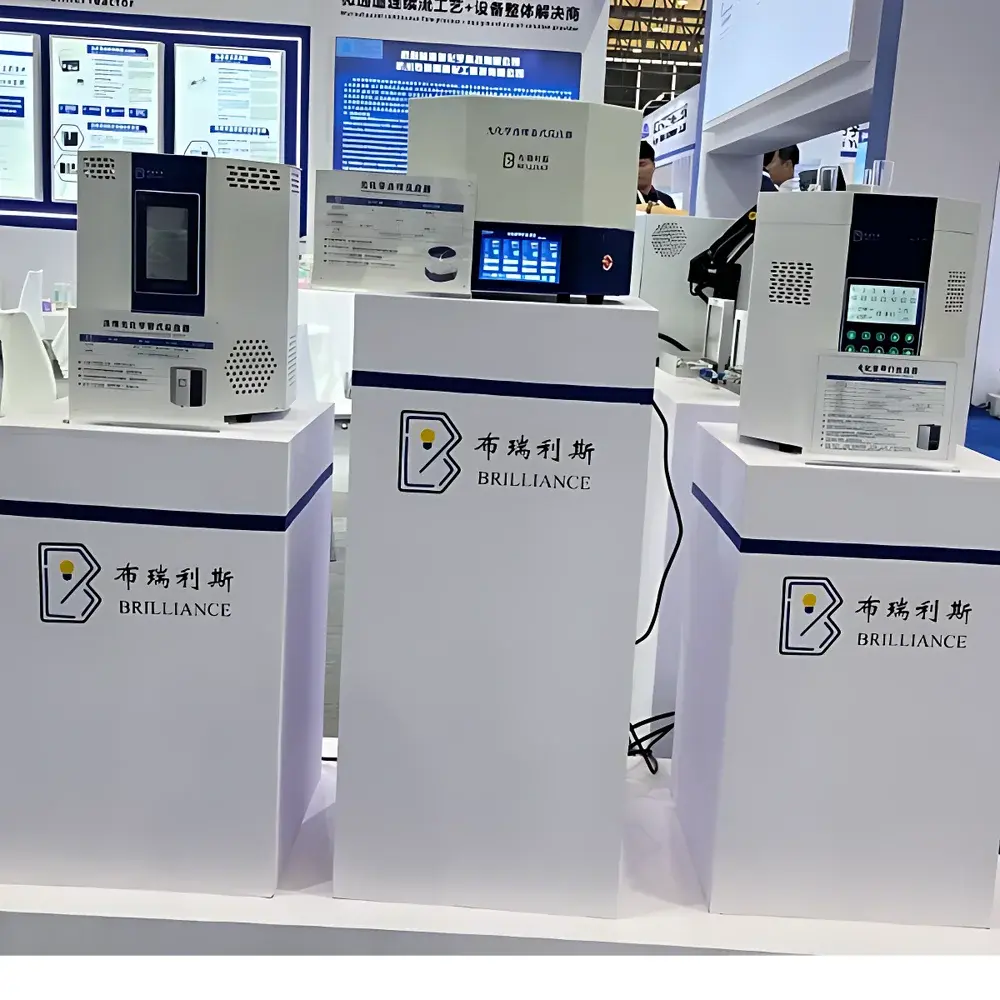
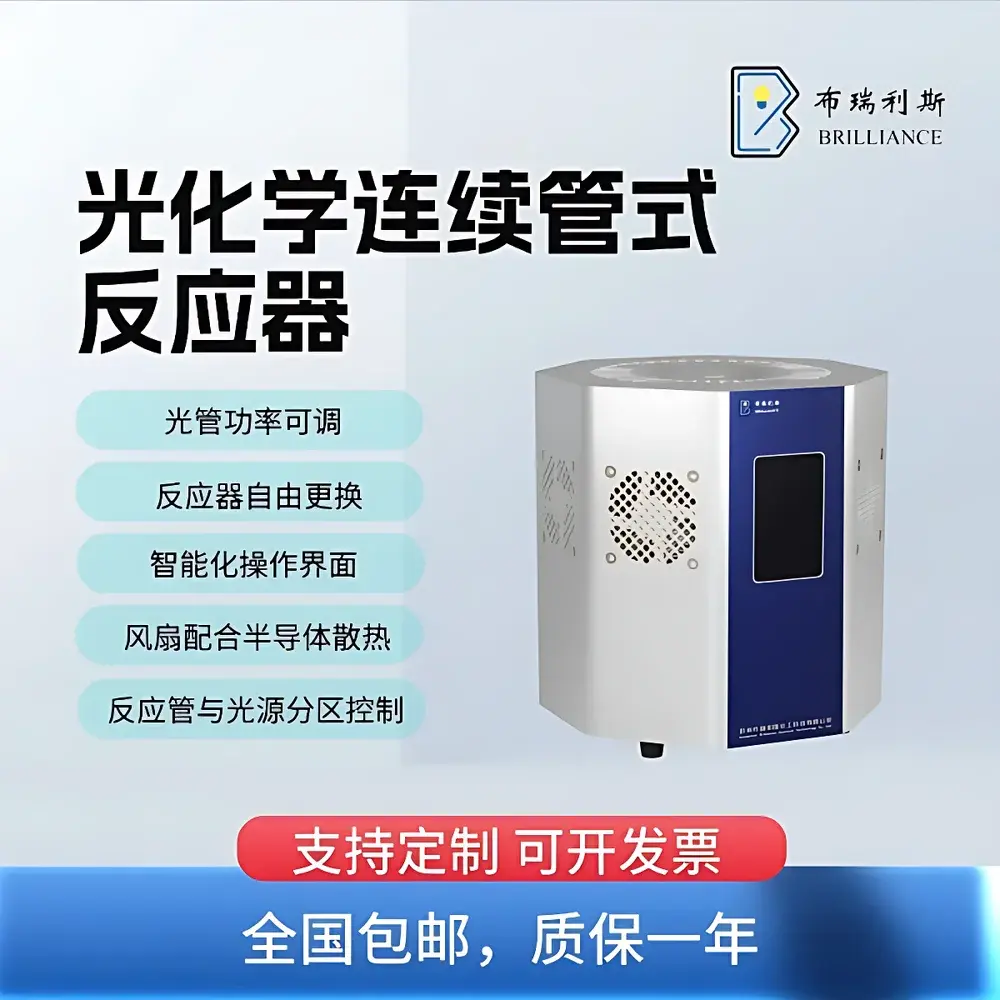
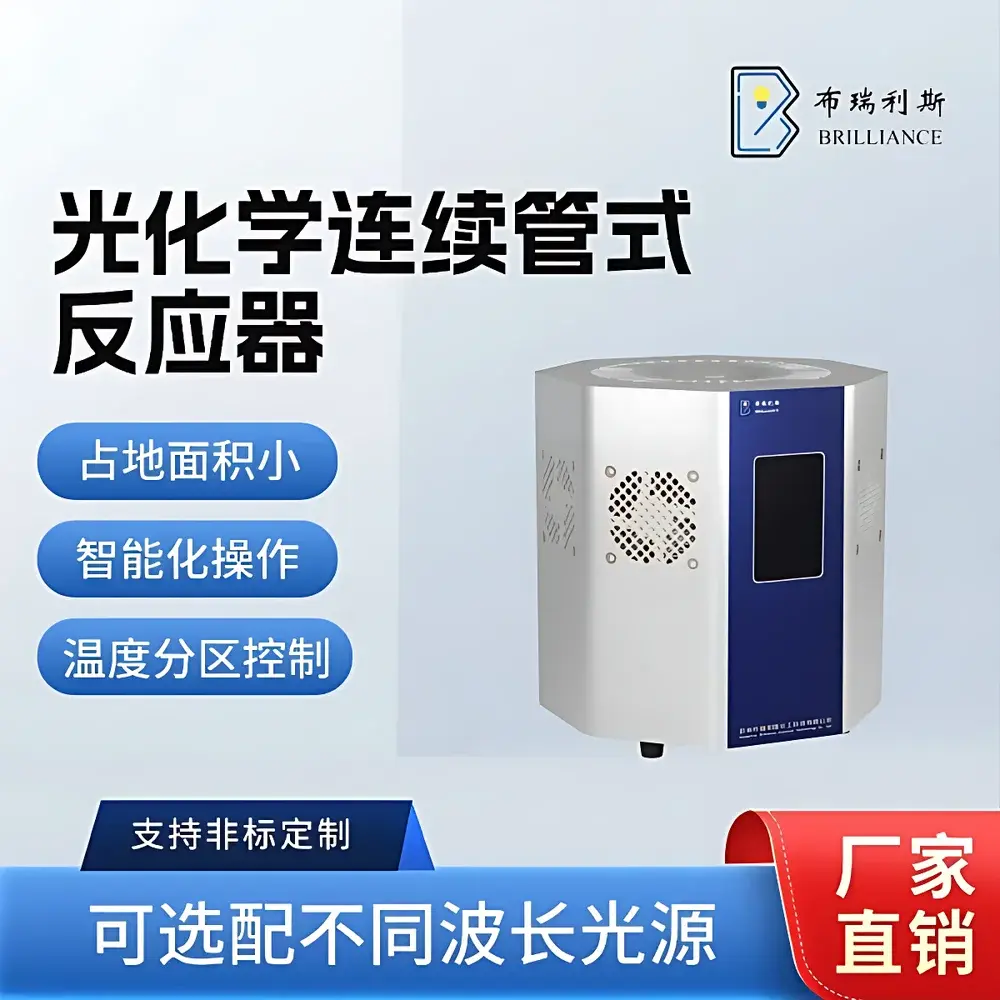
Brilliance Bri-PC-T Series Continuous Photochemical Tubular Reactor
| Brand | Brilliance |
|---|---|
| Model | Bri-PC-T |
| Type | Continuous-flow Photochemical Tubular Reactor |
| Construction Material | FEP (Fluorinated Ethylene Propylene) Coiled Tube |
| Light Source Range | 254–950 nm (standard 365–950 nm |
| Maximum Irradiance | ≤700 mW/cm² |
| Optical Stability | <5% intensity decay per year |
| Active Reaction Volume | 60 mL (equivalent to 20 m of 1/8″ OD FEP tubing |
| Flow Control | Optional dual syringe pumps (100 mL/min each, not included by default) |
| Temperature Control | Ambient only |
| Cooling | Integrated fan + optional jacketed cooling |
| Heating | Not integrated |
| Power Input | 100–240 VAC, 50/60 Hz |
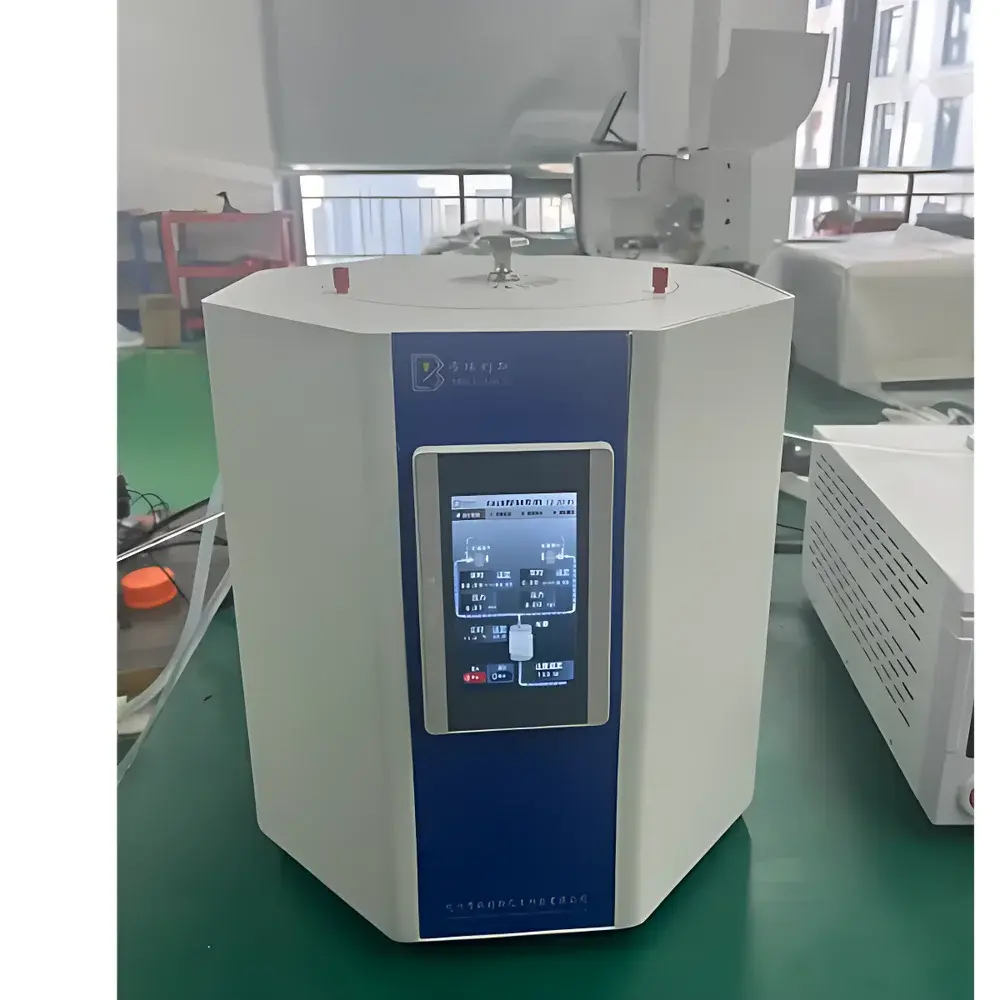
| Control Interface | PLC-based touchscreen HMI with real-time component status visualization and actuation |
| Data Handling | Automated logging, timestamped storage, exportable CSV reports |
| Compliance Support | Designed for GLP-aligned operation |
Overview
The Brilliance Bri-PC-T Series is an engineered continuous-flow photochemical tubular reactor designed for reproducible, scalable, and traceable photoreaction studies under controlled irradiation conditions. Based on the principle of laminar flow photochemistry in transparent fluoropolymer tubing, it enables precise residence time control, uniform photon flux delivery, and minimized photon attenuation—critical for quantum yield determination, kinetic profiling, and wavelength-dependent reaction screening. Unlike batch photochemical systems, the Bri-PC-T eliminates photon shadowing, hot-spot formation, and inter-batch variability by maintaining consistent fluid dynamics and irradiance distribution across the entire active path length. Its modular architecture supports seamless transition from milligram-scale discovery to multi-gram process development without re-optimization.
Key Features
- FEP coiled-tube reactor core (60 mL hold-up volume, configurable tube geometry) ensures exceptional UV–Vis transmission (200–950 nm), chemical inertness, and low autofluorescence.
- Multi-wavelength LED or mercury/xenon lamp source options (standard 365–950 nm; 254–365 nm available upon request), all equipped with precision current-controlled drivers for stable output.
- Real-time irradiance monitoring and feedback-regulated power adjustment maintain ≤±2% deviation over extended runs, supporting ISO 17025–aligned calibration traceability.
- PLC-integrated HMI touchscreen provides intuitive graphical representation of pump status, light source duty cycle, temperature input (from external sensor), and system alarms—with one-touch activation/deactivation of individual modules.
- Optional dual independent syringe pump integration (100 mL/min max per channel) enables precise stoichiometric control in two-stream mixing configurations (e.g., substrate + reagent co-injection).
- Modular light-source cartridges allow tool-free replacement within <90 seconds, minimizing downtime during wavelength-switching experiments.
- Automated data acquisition logs irradiance setpoint, actual measured intensity (if sensor-equipped), flow rate, elapsed time, and user-defined metadata—each entry cryptographically timestamped.
Sample Compatibility & Compliance
The Bri-PC-T accommodates organic solvents (THF, MeCN, DCM, DMF), aqueous buffers, and heterogeneous slurries (with appropriate pump selection). FEP tubing resists corrosion from strong acids (e.g., TFA), halogens, and oxidants (e.g., peroxides), making it suitable for photocatalytic C–H functionalization, [2+2] cycloadditions, and singlet oxygen-mediated oxidations. The system conforms to IEC 61000-6-3 (EMC emissions) and IEC 61010-1 (safety requirements for lab equipment). When operated with validated software configuration and electronic signature workflows, it meets foundational requirements for GLP and GMP environments—including ALCOA+ data integrity principles and audit trail generation per FDA 21 CFR Part 11 Annex 11 guidance.
Software & Data Management
The embedded control firmware records all operational parameters at 1 Hz resolution. Exported datasets include CSV-formatted time-series logs with column headers compliant with ASTM E2500-18 (Standard Guide for Specification, Design, and Verification of Pharmaceutical and Biopharmaceutical Manufacturing Systems). Raw data files are stored in non-proprietary formats with SHA-256 checksums. Optional cloud-sync module (Brilliance CloudLink™) enables remote monitoring, role-based access control, and versioned experiment archive—fully auditable for regulatory inspections.
Applications
- Photoinduced C–N, C–O, and C–S cross-coupling reactions under visible-light catalysis
- Flow-based synthesis of pharmaceutical intermediates (e.g., aryl halides, heterocycles) with improved selectivity vs. batch
- Quantitative actinometry and action spectrum mapping using calibrated photodiode arrays
- Photostability assessment of APIs per ICH Q1B guidelines
- Scale-down modeling for industrial photoreactor design (e.g., microstructured reactors, falling-film units)
- Teaching laboratory implementation of green chemistry principles (reduced solvent use, enhanced energy efficiency)
FAQ
Can the Bri-PC-T operate at elevated or sub-ambient temperatures?
No built-in heating or cooling is provided; however, the FEP coil is jacket-compatible with standard recirculating chillers or heating baths (−20 °C to +80 °C typical range). Temperature sensors (PT100) may be embedded in the jacket line for closed-loop feedback.
Is the light source intensity calibrated traceably to NIST standards?
Yes—optional factory calibration certificate (NIST-traceable photodiode sensor, ±3% uncertainty at 365 nm) is available. Users may perform in-situ recalibration using supplied reference filters.
What flow rates are supported, and how is backpressure managed?
With dual 100 mL/min syringe pumps, total volumetric throughput ranges from 0.01 to 200 mL/min. Backpressure is inherently limited by FEP’s burst strength (>10 bar at 25 °C); optional pressure transducer kit enables real-time monitoring up to 5 bar.
Does the system support automated reaction optimization (e.g., DoE)?
The HMI supports sequential parameter sweeps (wavelength, flow rate, irradiance) with pre-programmed step logic. Full Design of Experiments integration requires connection to external scripting platforms (Python/MATLAB) via Modbus TCP or RS-485.
How is maintenance performed on optical components?
LED modules feature standardized M30 × 1.5 mounts; replacement takes <2 minutes. Quartz or sapphire window cleaning follows ISO 10110-7 protocols using lint-free wipes and spectroscopic-grade isopropanol.



