
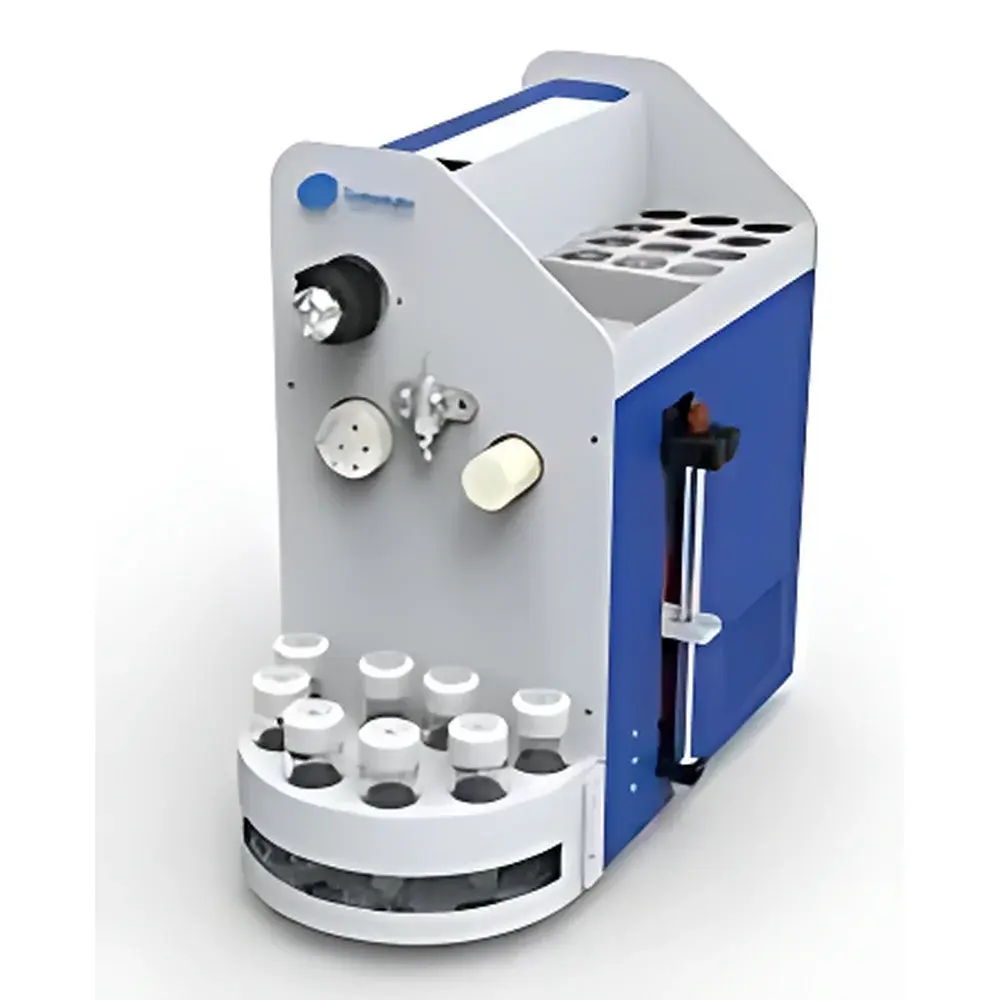
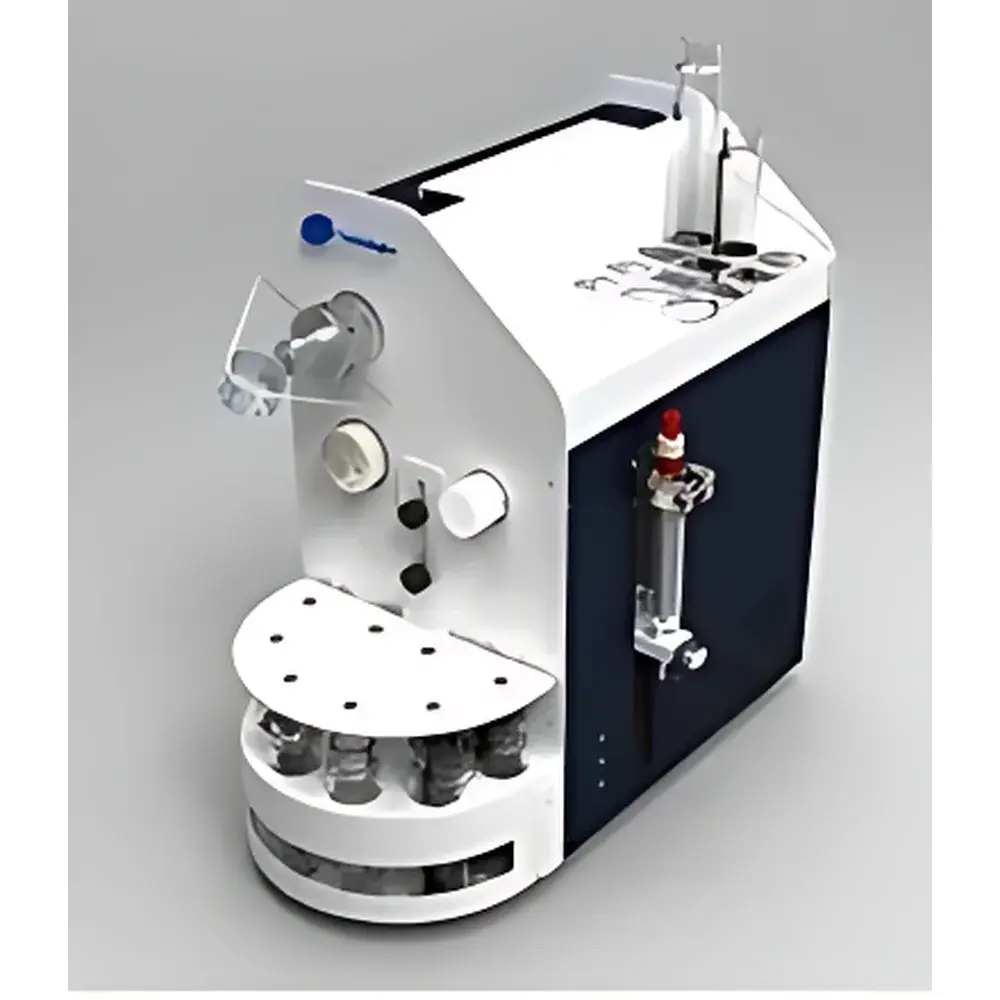
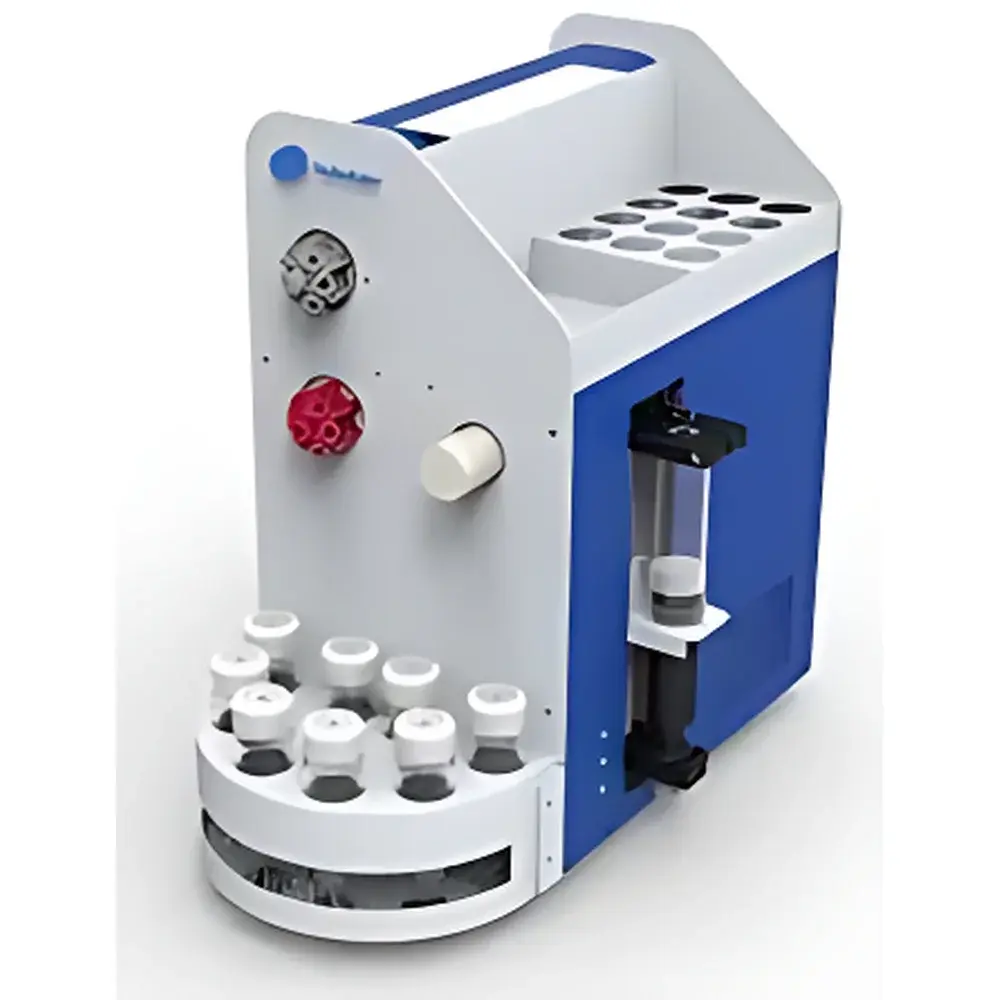
Brookfield ATS-051 Multifunctional Autosampler for HPLC and Prep-LC Systems
| Origin | Tianjin, China |
|---|---|
| Manufacturer Type | Authorized Distributor |
| Regional Origin | Domestic (PRC) |
| Model | ATS-051 |
| Instrument Type | Liquid Chromatography Autosampler |
| Sample Channels | 5 |
| Wash Channel | 1 |
| Loop Volumes | 1 mL, 10 mL, 25 mL |
| Injection Volume Range | 1–25 mL |
| Wash Volume | 5 mL (programmable wash modes + manual override) |
| Language Interface | English |
| Operating Temperature | 20–35 °C |
| Dimensions (L×W×H) | 361 × 208.5 × 344.4 mm |
| Weight | 11.4 kg |
| Power Supply | 100–120 VAC / 200–240 VAC, 50/60 Hz |
Overview
The Brookfield ATS-051 Multifunctional Autosampler is an engineered solution for high-reproducibility sample introduction in both analytical and preparative liquid chromatography workflows. Designed around a precision syringe-driven fluidic architecture with independent valve sequencing, it operates on the principle of loop-based fixed-volume injection—ensuring consistent volumetric delivery across repeated cycles without reliance on pump pulsation or column backpressure compensation. Unlike basic sequential injectors, the ATS-051 integrates deterministic scheduling logic that decouples sample loading, loop filling, needle washing, and injection timing—enabling robust synchronization with external LC systems via TTL, RS-232, or Ethernet-based trigger protocols. Its mechanical design prioritizes inert wetted-path materials (e.g., PEEK, stainless steel 316, and sapphire-plated needle guides), minimizing adsorption and carryover during extended unattended operation. The system is explicitly validated for integration with preparative-scale systems such as the Bonatech Cheetah platform, where it transforms manually operated flash or medium-pressure LC into a fully automated purification workflow compliant with GLP-aligned documentation requirements.
Key Features
- Five independent sample channels enable sequential processing of up to five distinct compounds or concentration gradients without manual intervention.
- Dual-mode loop configuration supports interchangeable 1 mL, 10 mL, and 25 mL quantitative loops—each calibrated per ISO 8655-5 for gravimetric accuracy and verified against NIST-traceable standards.
- Dedicated wash channel with programmable solvent selection (up to three solvents via optional manifold) and adjustable dwell time ensures <0.01% carryover between injections, validated per USP <621> guidelines.
- Onboard method editor allows storage of up to 99 user-defined methods—including injection volume, loop fill rate, wash cycle parameters, and inter-sample delay—accessible via Ethernet or USB interface.
- Integrated temperature-stabilized sample compartment maintains ambient conditions (20–35 °C) to prevent volatility-related loss or precipitation in sensitive analytes such as peptides or natural product extracts.
- Compliance-ready firmware architecture logs all operational events—including power cycles, method changes, and error states—with timestamped audit trails exportable in CSV or XML format.
Sample Compatibility & Compliance
The ATS-051 accommodates standard 12–20 mm OD vials (including 10 mL and 30 mL screw-top formats), microcentrifuge tubes (0.5–2.0 mL), and custom rack configurations via configurable tray adapters. It supports aqueous, organic, and mixed-solvent matrices with viscosity tolerance up to 25 cP at 25 °C. All fluidic pathways meet ASTM E2500-13 criteria for component qualification, and the system’s electronic control module complies with IEC 61000-4 electromagnetic immunity standards. When deployed in regulated environments, the device supports 21 CFR Part 11-compliant user authentication, electronic signatures, and immutable data archiving when paired with validated LIMS or CDS platforms.
Software & Data Management
Control is executed via the ATS Control Suite—a Windows-based application supporting method creation, real-time status monitoring, and remote diagnostics. The software implements role-based access control (RBAC) with three-tier permissions (Operator, Supervisor, Administrator) and enforces password complexity policies aligned with NIST SP 800-63B. All injection records include metadata tags: operator ID, method version, system serial number, environmental temperature/humidity (via optional sensor input), and QC flag status. Raw log files are stored in encrypted SQLite databases with SHA-256 hashing; exports conform to ASTM E1714-09 for interoperability with third-party analytics engines.
Applications
- Automated fraction collection and re-injection in iterative purification of natural products and synthetic intermediates.
- High-throughput stability-indicating assays for pharmaceutical development under ICH Q5C conditions.
- Multi-level calibration curve generation for elemental analysis by ICP-MS coupled with HPLC separation.
- Unattended overnight screening of catalyst libraries in asymmetric synthesis optimization studies.
- QC release testing of biologics where batch-to-batch consistency requires ≥1,000 repeat injections per sample set.
FAQ
Can the ATS-051 be integrated with non-Bonatech chromatography systems?
Yes—it supports open communication protocols (TTL pulse, RS-232 ASCII commands, and Modbus TCP) compatible with major vendors including Waters, Agilent, Shimadzu, and Thermo Fisher.
Is validation documentation provided for GMP environments?
A full IQ/OQ protocol package—including test scripts, acceptance criteria, and blank execution records—is available upon request and may be customized for site-specific risk assessments.
What maintenance intervals are recommended for long-term reliability?
Valve rotor seals require replacement every 10,000 injections; syringe plunger lubrication is advised every 6 months or 50,000 cycles, whichever occurs first.
Does the system support gradient elution synchronization?
While the ATS-051 does not generate gradients, its injection timing can be externally synchronized to gradient start events from any compatible LC controller via hardware trigger input.
How is carryover quantified during qualification?
Carryover is measured using a worst-case matrix (e.g., 100 µg/mL caffeine in 90% acetonitrile), with acceptance criterion ≤0.01% peak area relative to the preceding high-concentration injection, per USP <621> Section 5.
Related Products




