Brookfield DVNext Advanced Rotational Rheometer
No specifications available.
Overview
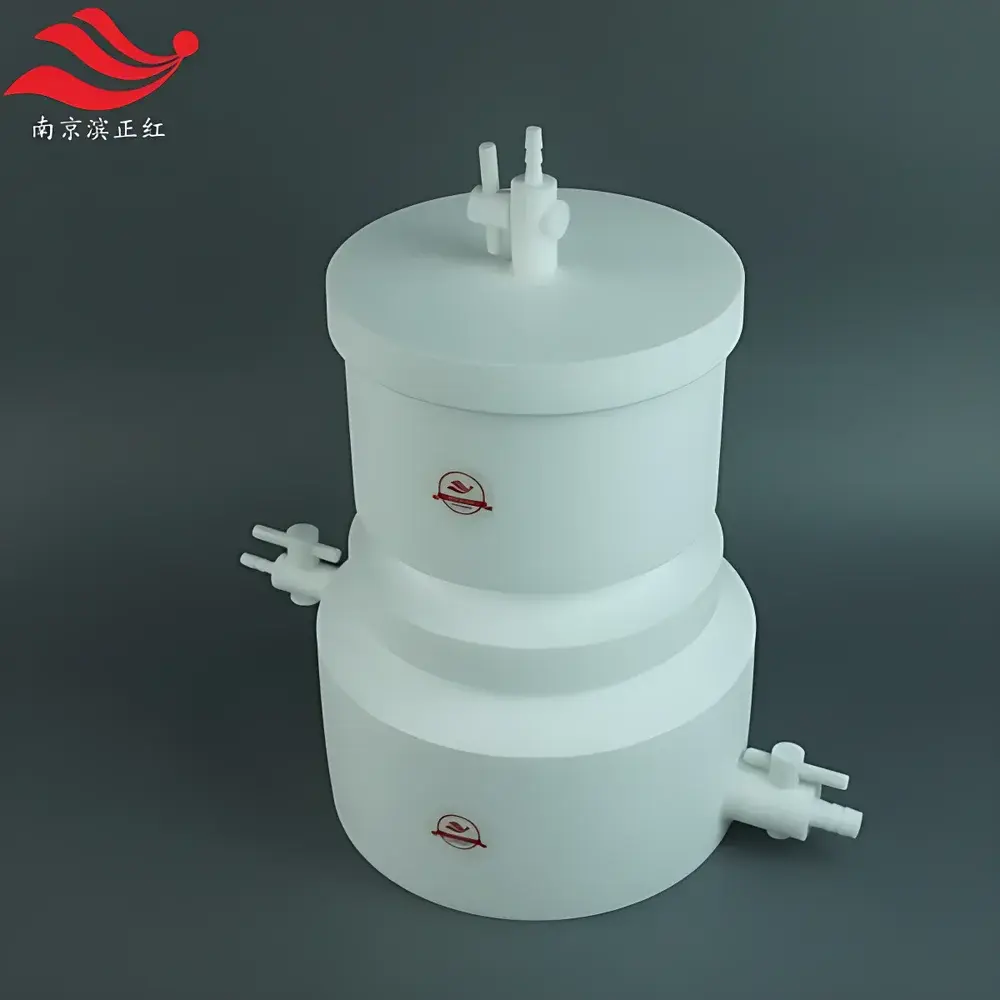
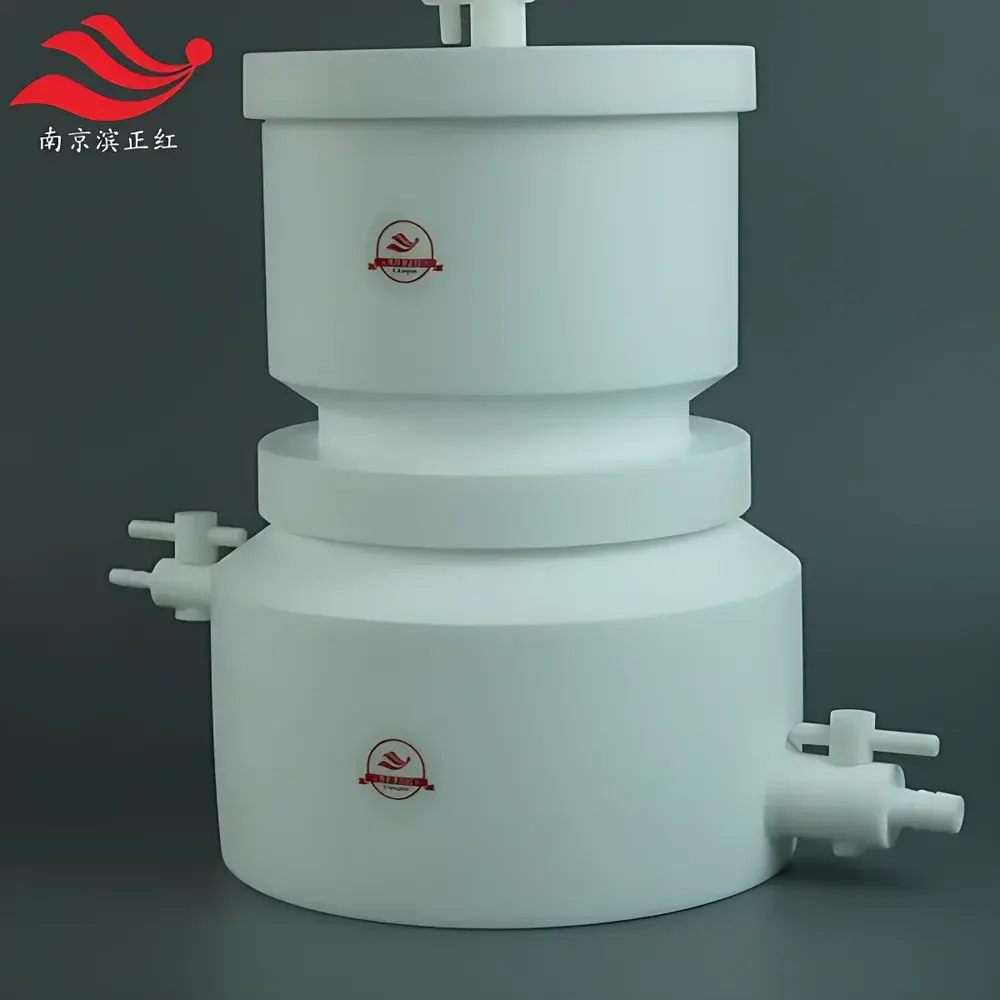
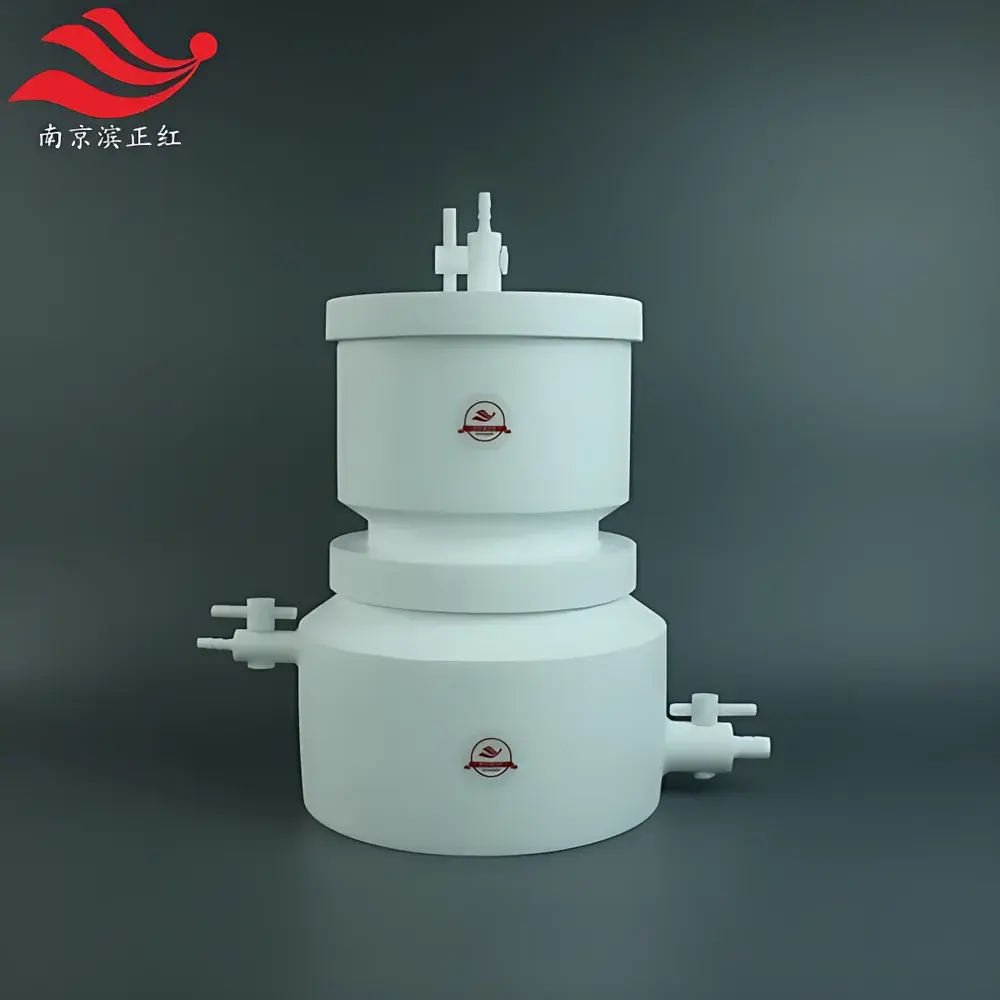
The NJ-PTFE-BSLD is a precision-engineered PTFE-coated Büchner funnel system designed for high-integrity vacuum filtration in analytical, pharmaceutical, and materials research laboratories. Unlike conventional glass or ceramic funnels, this unit integrates a 142 mm diameter PTFE-lined funnel with a 2000 mL borosilicate glass suction flask featuring dual-port fluid management—namely, a dedicated inlet port for sample introduction and an outlet port for controlled filtrate discharge. The system operates on the principle of pressure-driven vacuum filtration: application of negative pressure across a porous membrane (typically 0.22 µm or 0.45 µm pore size) induces rapid, uniform liquid-phase separation while retaining particulate solids on the filter surface. Its geometry conforms to ISO 4793:2016 specifications for filtration apparatus, ensuring reproducible flow dynamics and minimal channeling under variable slurry viscosities.
Key Features
- Chemically inert PTFE coating on the funnel interior and sealing surfaces—resistant to concentrated acids (e.g., HNO₃, H₂SO₄), alkalis (e.g., NaOH up to 50 % w/w), and organic solvents (e.g., acetone, THF, DMF) without swelling or degradation
- Optimized 142 mm funnel diameter with conical geometry (120° included angle) to maximize active filtration area while minimizing cake cracking during drying
- 2000 mL heavy-walled borosilicate glass (Duran®/Pyrex®-grade) suction flask rated to −0.1 MPa (−1 bar) vacuum; reinforced neck and base for mechanical stability during prolonged operation
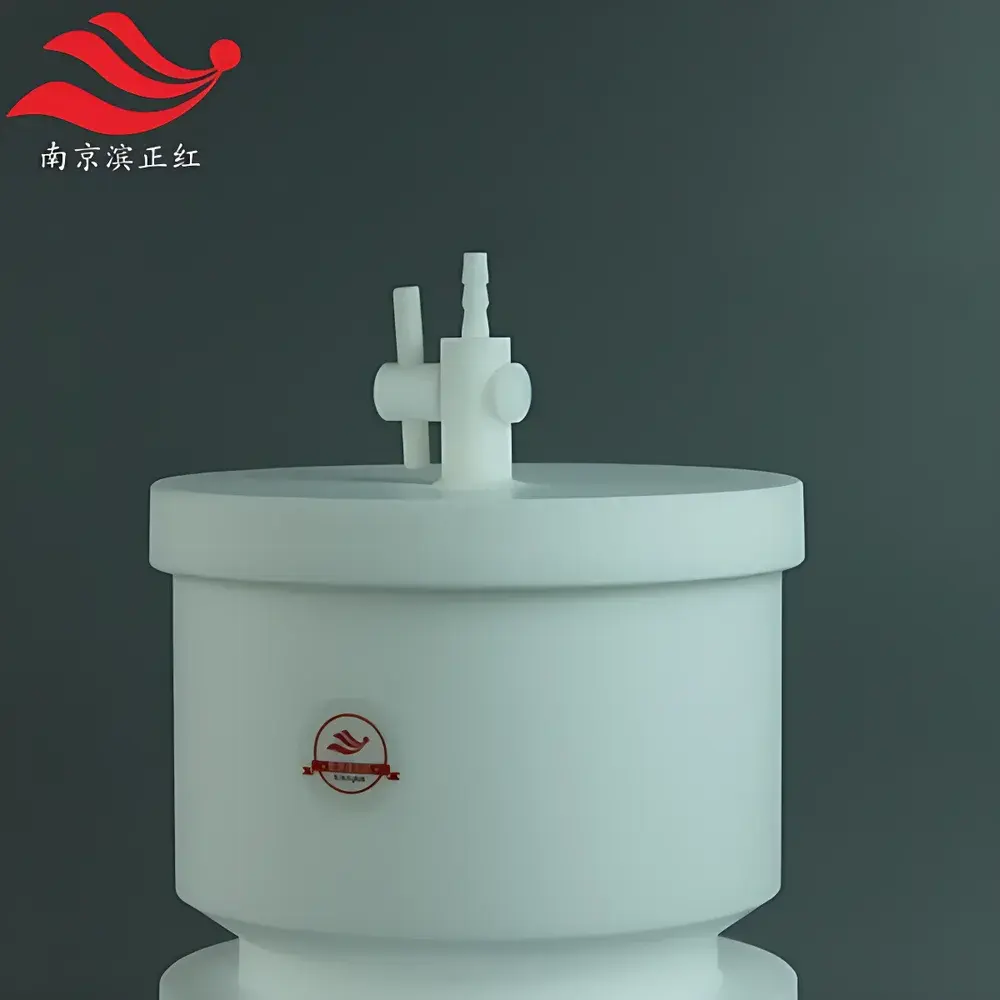
- Dual-port configuration: standardized 24/40 ground-glass inlet port (for funnel mounting and sample loading) and side-mounted 14/23 ground-glass outlet port (for filtrate collection or inline connection to secondary vessels)
- Integrated O-ring groove design at the funnel–flask interface ensures gas-tight seal per ASTM D3960-22 requirements for vacuum integrity testing
- Compatible with standard laboratory vacuum sources (diaphragm or oil-sealed pumps) delivering ≥60 L/min free-air displacement at ≤5 kPa ultimate pressure
Sample Compatibility & Compliance
This system supports filtration of aqueous suspensions, organic slurries, colloidal dispersions, and heat-sensitive biopolymer solutions. It accommodates standard circular membrane filters (diameter 142 mm) including mixed cellulose ester (MCE), polyethersulfone (PES), nylon, and polytetrafluoroethylene (PTFE) membranes. The PTFE surface finish eliminates adsorptive losses common with untreated glass or ceramic—critical for trace-level analyte recovery in EPA Method 1694 or USP particulate matter testing. All components comply with ISO 17025:2017 calibration traceability frameworks when used with certified reference materials and documented SOPs. The flask meets DIN EN 1777:2015 dimensional tolerances for volumetric accuracy (±10 mL at 20 °C).
Software & Data Management
As a passive filtration component, the NJ-PTFE-BSLD does not incorporate embedded electronics or firmware. However, it is fully compatible with GLP/GMP-compliant laboratory documentation workflows. When integrated into automated vacuum filtration platforms (e.g., Buchi Labortechnik V-800 series or Thermo Fisher Scientific Vacuum Pump Controllers), it supports audit-trail-enabled operation logs per FDA 21 CFR Part 11 requirements—including user ID, timestamp, vacuum setpoint, and duration metadata. Standard operating procedures (SOPs) developed for this system may be archived in electronic lab notebooks (ELNs) such as LabArchives or Benchling, with version control and electronic signature functionality.
Applications
- Gravimetric analysis of suspended solids (TSS) in environmental water samples per APHA Standard Methods 2540B
- Crystallization workup and polymorph isolation in API purification processes
- Pre-filtration of cell culture supernatants prior to HPLC or LC-MS analysis
- Removal of catalyst residues from cross-coupling reaction mixtures
- Preparation of monodisperse particle standards for dynamic light scattering (DLS) calibration
- Validation of membrane integrity via bubble point testing (ASTM F316-22)
FAQ
Can this funnel be sterilized using autoclaving?
Yes—the PTFE-coated funnel body and borosilicate flask are rated for repeated steam sterilization at 121 °C, 15 psi for 20 minutes. Avoid thermal shock by allowing gradual cooling post-cycle.
Is the outlet port suitable for vacuum-assisted transfer to a receiving vessel?
Yes—when connected via appropriate tubing and clamps, the side outlet enables continuous filtrate withdrawal under maintained vacuum, preventing backflow or overflow during extended runs.
What is the maximum recommended vacuum level for safe operation?
The system is validated for continuous operation at −90 kPa (−0.9 bar); exceeding −95 kPa may compromise seal integrity or induce microfractures in aged glass flasks.
Does the PTFE coating affect filtration rate compared to uncoated ceramic funnels?
No measurable reduction in flow rate is observed; the coating thickness (≤25 µm) preserves the original porosity and hydraulic conductivity of the underlying substrate while eliminating surface adsorption artifacts.
Are replacement O-rings and ground-glass joint greases supplied with the unit?
A maintenance kit—including Viton® O-rings (AS568A #214), silicone grease (Dow Corning High Vacuum Grease), and torque specification sheet—is provided with each shipment.