
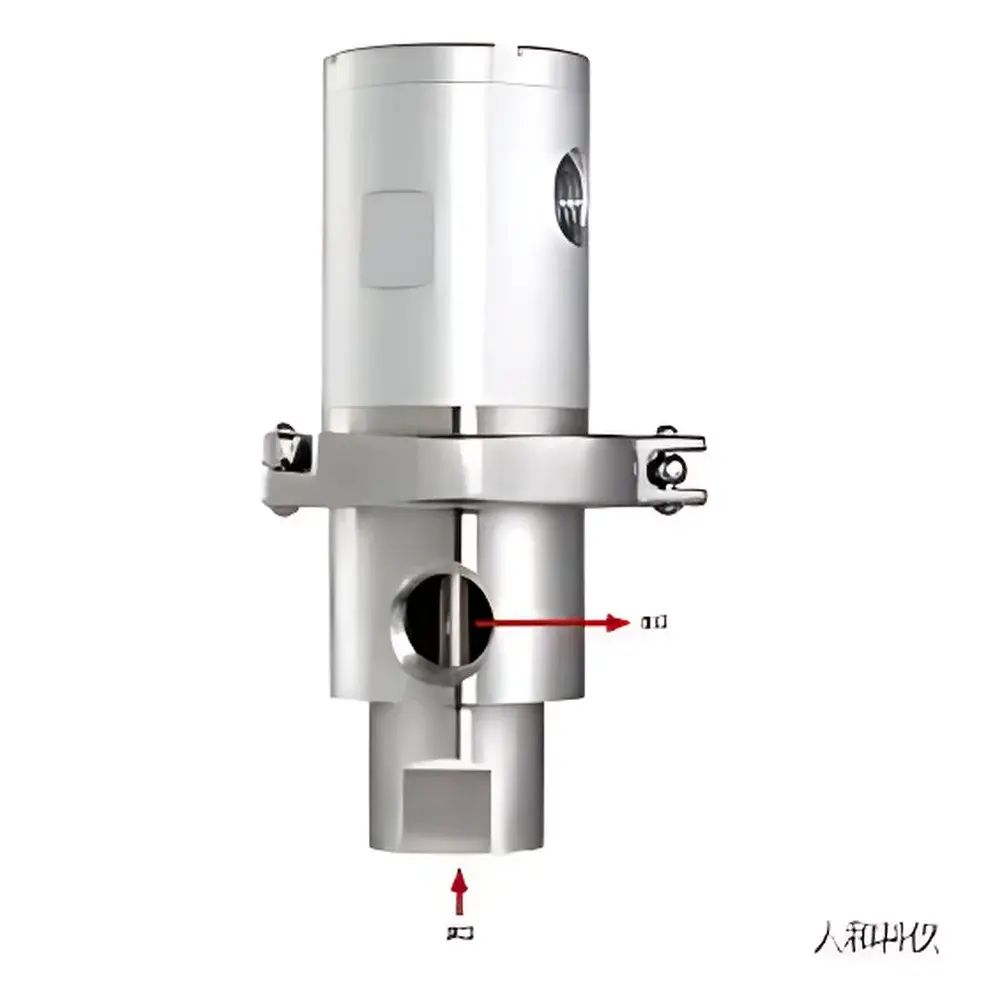
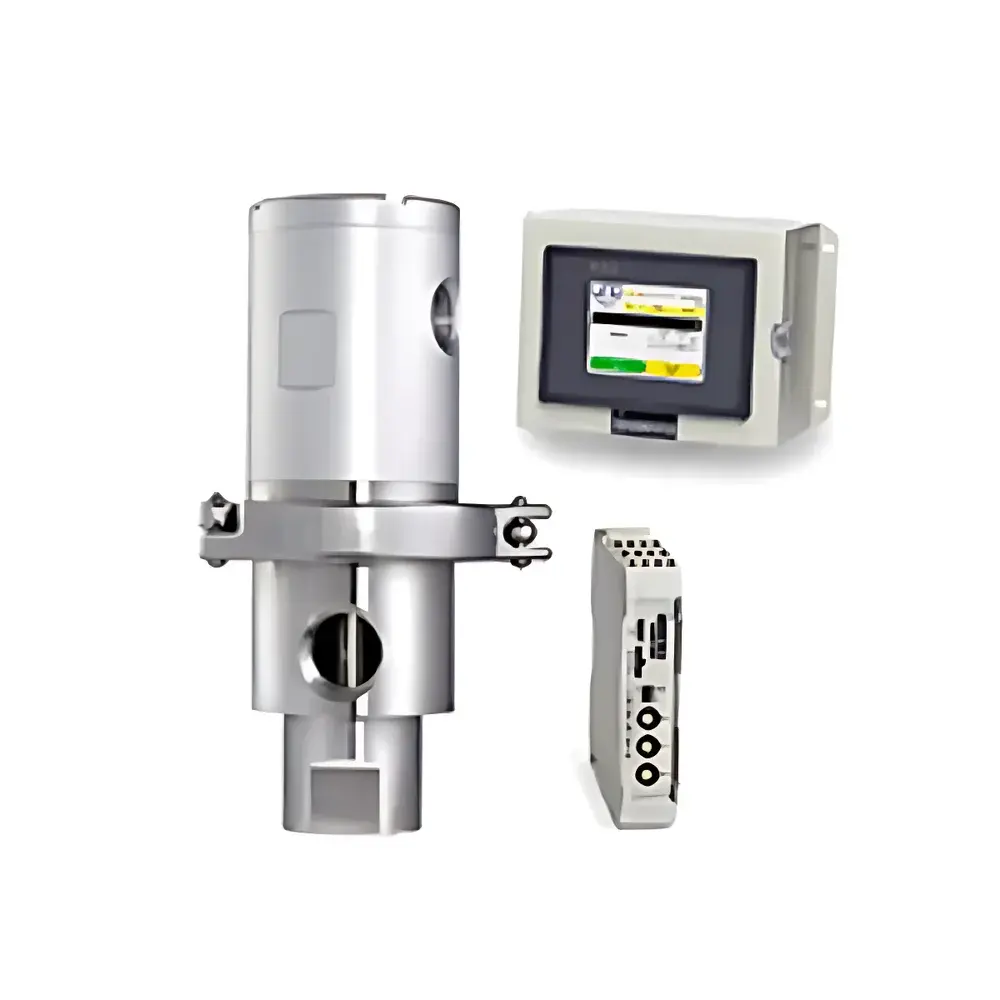
Brookfield FAST Online Viscometer
| Brand | Brookfield |
|---|---|
| Origin | USA |
| Manufacturer Type | Authorized Distributor |
| Origin Category | Imported |
| Model | FAST |
| Instrument Type | In-line Viscometer |
| Application Environment | High-Temperature Process |
| Viscosity Range | 0–10, 0–50, 0–100, 0–250, 0–500, 0–1000, 0–1500 cSt |
| Temperature Range | –20°C to 120°C (–4°F to 248°F) |
| Measurement Principle | Torsional Resonance (Vibrational Shear) |
| Repeatability | ±1.0% of reading |
| Wetted Materials | 316L Stainless Steel |
| Sealing Material | Fluoroelastomer (FKM) O-rings (EDPM or Kalrez® optional) |
| Pressure Rating | Vacuum to 200 psig |
| Enclosure | NEMA-4 (IP65), Wall-Mounted Electronics Housing |
| Output | Dual 4–20 mA (Viscosity + Temperature), RS232 & RS485 (Modbus RTU), Optional Hazardous Area Certifications (NEMA 7 / ATEX), Optional 3A Sanitary Compliance |
Overview
The Brookfield FAST Online Viscometer is an industrial-grade, in-line viscosity monitoring system engineered for continuous, real-time measurement in demanding process environments—including paint, ink, coating, adhesive, and chemical manufacturing lines. Unlike rotational or capillary viscometers, the FAST employs torsional resonance technology: a high-frequency, micro-torsional sensing element vibrates at its natural resonant frequency within the process fluid. Viscosity is derived from the damping effect exerted by the fluid on this oscillation—requiring no moving parts, bearings, or mechanical shafts. This solid-state architecture eliminates wear, lubrication needs, and recalibration drift associated with traditional mechanical sensors. The system operates reliably across wide temperature ranges (–20°C to 120°C) and pressures (vacuum to 200 psig), making it suitable for hot melt extrusion, solvent-based coating lines, and high-shear mixing vessels where vibration, particulate load, or thermal cycling would compromise conventional instrumentation.
Key Features
- True solid-state design: No rotating components, seals, or bearings—enabling zero-maintenance operation over extended service intervals.
- Vibration-immune sensing: Micro-torsional probe rejects external mechanical noise (e.g., pump pulsation, agitator harmonics) without signal filtering or compensation algorithms.
- Flexible installation: Supports both vertical insertion and horizontal flanged mounting; available as immersion probe or inline spool-piece configurations.
- Integrated temperature measurement: Pt100 RTD embedded directly in the sensor tip delivers accurate, localized fluid temperature data synchronized with viscosity output.
- Compact footprint: Sensor body height measures only 216 mm (8.5 in), minimizing spatial impact in congested piping layouts.
- Hazardous area readiness: Optional NEMA 7 (Class I, Div 1) and ATEX II 2G Ex d IIB T4 Gb certifications support deployment in solvent-rich or explosive atmospheres.
- Sanitary compliance: 3A-certified variants feature crevice-free wetted surfaces, electropolished 316L stainless steel, and FDA-compliant elastomers (Kalrez® or EPDM upon request).
Sample Compatibility & Compliance
The FAST system is validated for Newtonian and mildly shear-thinning non-Newtonian fluids typical of industrial coatings, UV-curable inks, hot-melt adhesives, and polymer dispersions. Its torsional resonance method is insensitive to suspended solids ≤150 µm and gas entrainment common in recirculating loops. Wetted materials conform to ASTM A276 Type 316L stainless steel specifications; O-ring compounds meet FDA 21 CFR 177.2600 (FKM) and USP Class VI biocompatibility standards where specified. The electronics housing complies with NEMA-4/IP65 ingress protection, while optional configurations satisfy 21 CFR Part 11 requirements for electronic records and signatures when paired with compliant SCADA or MES platforms. Calibration traceability follows NIST Handbook 150 protocols, with documented uncertainty budgets available per ISO/IEC 17025-accredited calibration reports.
Software & Data Management
The FAST system outputs dual analog signals (4–20 mA) for viscosity and temperature, enabling direct integration into DCS, PLC, or PID control systems without intermediary gateways. Digital communication is supported via two isolated serial interfaces: Port 1 provides RS232 read-only access for local diagnostics and setup verification; Port 2 implements full-duplex RS485 with Modbus RTU protocol, allowing multi-drop network configuration (up to 32 nodes) and remote parameter adjustment. All firmware revisions include audit-trail logging for configuration changes, timestamped with internal RTC synchronization. When deployed in regulated environments (e.g., pharmaceutical coating or food-grade packaging), the system supports GLP/GMP-aligned data integrity practices—including user-access controls, change management workflows, and exportable CSV/CSV-UTF8 logs compatible with LIMS and electronic batch record systems.
Applications
- Real-time viscosity control in gravure and flexographic ink delivery systems to maintain consistent film thickness and color density.
- Continuous monitoring of epoxy resin blends during composite prepreg manufacturing to prevent gelation onset.
- In-line quality assurance for automotive clear-coat formulations undergoing thermal curing in oven entry zones.
- Feedback loop for automated diluent dosing in high-solids architectural paint production lines.
- Process validation support for FDA-regulated medical device coating processes (e.g., drug-eluting stent polymer application).
- Monitoring of hot-melt adhesive viscosity during extrusion-based packaging lamination to ensure bond strength consistency.
FAQ
Does the FAST require periodic recalibration?
Calibration is factory-performed using NIST-traceable standard oils and remains stable under normal operating conditions. Field verification is recommended annually or after mechanical impact; full recalibration is rarely required due to the inherent stability of torsional resonance physics.
Can the FAST measure non-Newtonian fluids accurately?
It reports apparent viscosity at the effective shear rate imposed by the resonant frequency (~100–300 s⁻¹). For strongly shear-thinning or thixotropic materials, correlation with laboratory rheometry (e.g., Brookfield DVNext) at matched shear rates is advised for specification alignment.
What is the maximum allowable process pressure?
The standard sensor housing is rated for 200 psig (13.8 bar) maximum working pressure. Custom high-pressure variants up to 600 psig are available upon engineering review.
Is the FAST compatible with sanitary CIP/SIP cycles?
Yes—the 3A-certified version withstands repeated Clean-in-Place (CIP) with caustic soda (2–4% NaOH, 80°C) and Steam-in-Place (SIP) at 121°C for 30 minutes, provided thermal ramp rates do not exceed 10°C/min to avoid thermal shock.
How is temperature compensation handled?
Temperature is measured at the sensor tip with <±0.3°C accuracy. Viscosity readings are automatically compensated using built-in Arrhenius-based algorithms; user-defined polynomial coefficients may be loaded for material-specific correction.



