
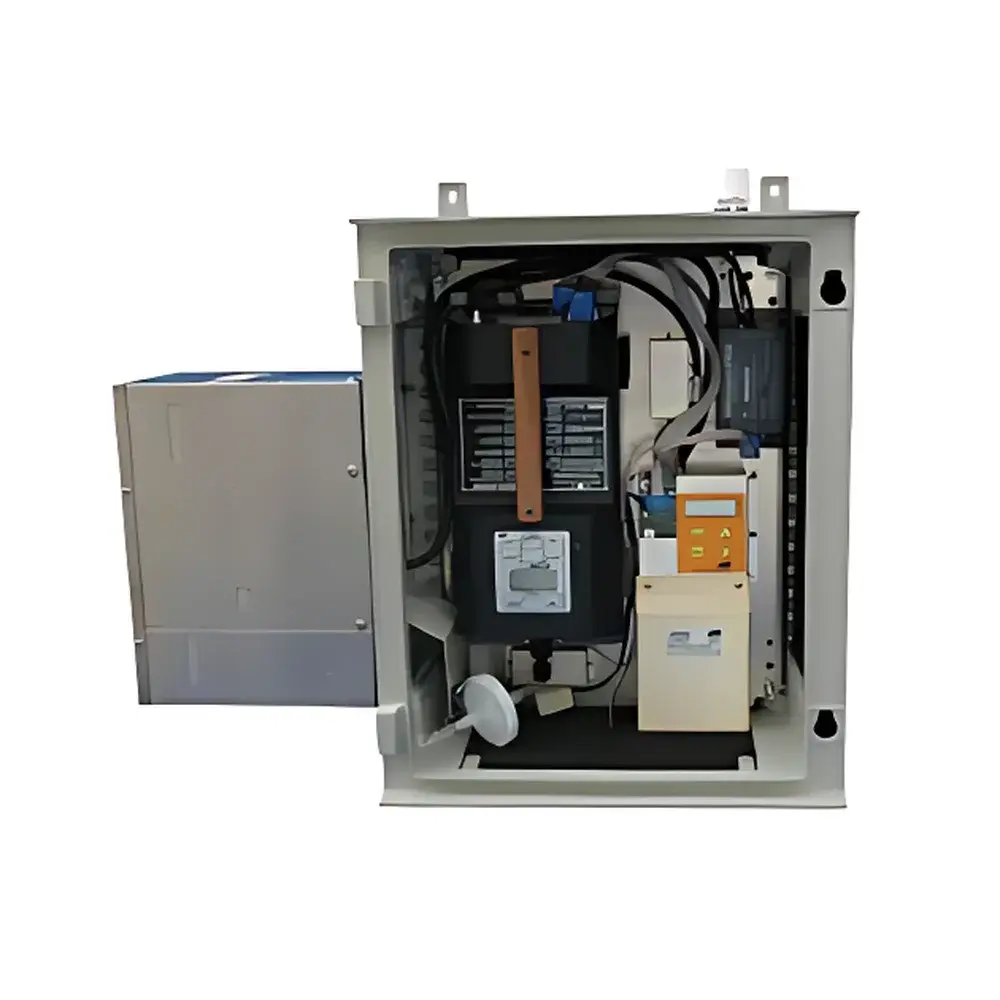
Brookfield Jerome 451 Mercury Vapor Online Monitoring System
| Brand | Brookfield |
|---|---|
| Origin | USA |
| Manufacturer | AMETEK Arizona |
| Type | Online Fixed-Station Monitor |
| Target Gas | Elemental Mercury Vapor (Hg⁰) |
| Response Time | ≤60 s |
| Measurement Accuracy | ±0.001 mg/m³ |
| Measurement Range | 0.003–0.999 mg/m³ |
| Sensor Technology | Gold Film Amalgamation |
| Environmental Rating | IP65 Enclosure |
| Operating Temperature | –20 °C to +50 °C |
| Data Output | Modbus RTU/TCP, Ethernet, Optional 4G LTE |
| Alarm Outputs | Relay + Email/SMS Notification |
| Compliance | OSHA PEL (0.1 mg/m³), NIOSH REL (0.05 mg/m³), ACGIH TLV (0.025 mg/m³), MSHA Standards |
Overview
The Brookfield Jerome® 451 Mercury Vapor Online Monitoring System is a ruggedized, fixed-station ambient air quality monitor engineered for continuous, real-time detection of elemental mercury vapor (Hg⁰) in industrial, mining, remediation, and regulatory compliance environments. Utilizing gold film amalgamation sensor technology—validated across more than three decades of field deployment—the system quantifies mercury concentration via selective adsorption onto a high-purity gold surface, followed by thermal desorption and cold-vapor atomic absorption (CVAA) detection. This principle delivers exceptional specificity for Hg⁰ in complex matrices, with minimal cross-sensitivity to common atmospheric interferents such as sulfur dioxide, hydrogen sulfide, or volatile organic compounds. Designed for unattended operation under extreme ambient conditions—including freezing temperatures, high humidity, dust-laden air, and corrosive industrial atmospheres—the Jerome 451 features an IP65-rated enclosure, integrated thermoelectric heating and cooling, and active flow control to ensure stable sample draw and consistent sensor conditioning. Its architecture supports both standalone deployment and scalable networked configurations, enabling spatial mapping of mercury plumes across large facilities or contaminated sites.
Key Features
- Ruggedized outdoor-rated enclosure (IP65) with internal thermoelectric temperature stabilization (–20 °C to +50 °C operational range)
- Gold film amalgamation sensor with proven long-term stability and reproducibility (±0.001 mg/m³ accuracy at 0.01 mg/m³)
- Real-time response time ≤60 seconds from exposure to validated reading
- Configurable dual-stage alarm system: local relay activation plus remote email/SMS notification upon threshold breach
- Integrated data logging (≥30 days at 1-minute intervals) with Ethernet, Modbus RTU/TCP, and optional 4G LTE connectivity
- Modular design supporting rapid sensor replacement and field calibration verification using NIST-traceable mercury permeation sources
- Optional integration with external meteorological sensors (wind speed/direction, ambient temperature, relative humidity) for source attribution modeling
Sample Compatibility & Compliance
The Jerome 451 is optimized for ambient air sampling and is not intended for stack or process gas analysis without appropriate dilution or conditioning systems. It meets or exceeds occupational exposure limits established by major U.S. and international agencies: OSHA Permissible Exposure Limit (PEL) of 0.1 mg/m³ (8-hour TWA), NIOSH Recommended Exposure Limit (REL) of 0.05 mg/m³, ACGIH Threshold Limit Value (TLV) of 0.025 mg/m³, and MSHA standards for underground mining operations. While not certified for Class I Div 1 hazardous locations, its enclosure and sensor design comply with IEC 60079-0 general requirements for non-incendive equipment in Zone 2 environments. The system supports GLP-aligned data integrity through time-stamped audit logs, user-access controls, and electronic signature-capable software—facilitating alignment with FDA 21 CFR Part 11 expectations where required for regulated environmental monitoring programs.
Software & Data Management
The system is managed via Brookfield’s proprietary JeromeView™ desktop application, compatible with Windows 10/11. JeromeView provides intuitive configuration of measurement parameters, alarm thresholds, averaging intervals (1-min to 8-hr TWA), and data export formats (CSV, PDF report generation). The “Site View” dashboard enables simultaneous visualization of multiple deployed units on a georeferenced map layer, supporting trend analysis, correlation with meteorological inputs, and hotspot identification. All data transfers are encrypted (TLS 1.2+), and the software maintains immutable records of calibration events, firmware updates, and user-initiated actions—critical for regulatory audits. Remote firmware updates and diagnostic telemetry are supported over secure HTTPS connections.
Applications
- Continuous perimeter monitoring around coal-fired power plants, chlor-alkali facilities, and artisanal gold mining sites
- Worker safety surveillance in dental laboratories, fluorescent lamp recycling centers, and mercury-containing device manufacturing
- Post-remediation verification at Superfund sites and legacy industrial brownfields
- Regulatory compliance reporting for EPA Clean Air Act Section 112 and EU Industrial Emissions Directive (IED) Annex II requirements
- Research-grade mercury flux studies in conjunction with micrometeorological towers and passive samplers
FAQ
Is the Jerome 451 suitable for indoor workplace monitoring?
Yes—it is widely deployed in laboratories, dental offices, and manufacturing facilities where elemental mercury vapor poses inhalation risks. Its low detection limit (0.003 mg/m³) and fast response enable early warning prior to reaching occupational exposure thresholds.
Can the system operate without internet connectivity?
Yes. Local data logging and relay-based alarms function autonomously. Wireless transmission (LTE/Wi-Fi) is optional and used only for remote data retrieval and alerting.
What maintenance is required for long-term reliability?
Annual sensor verification using a NIST-traceable mercury standard is recommended. The gold film sensor typically requires replacement every 2–3 years depending on cumulative exposure; no routine consumables beyond this are needed.
Does the system support third-party SCADA integration?
Yes—via Modbus RTU (RS-485) or Modbus TCP/IP protocols, enabling seamless integration into existing plant-wide monitoring infrastructure.
How is calibration performed in the field?
Field calibration uses portable mercury permeation tubes traceable to NIST SRM 2670a. The system supports zero-air and span-check routines directly within JeromeView, with full documentation of each event stored in the audit trail.







