
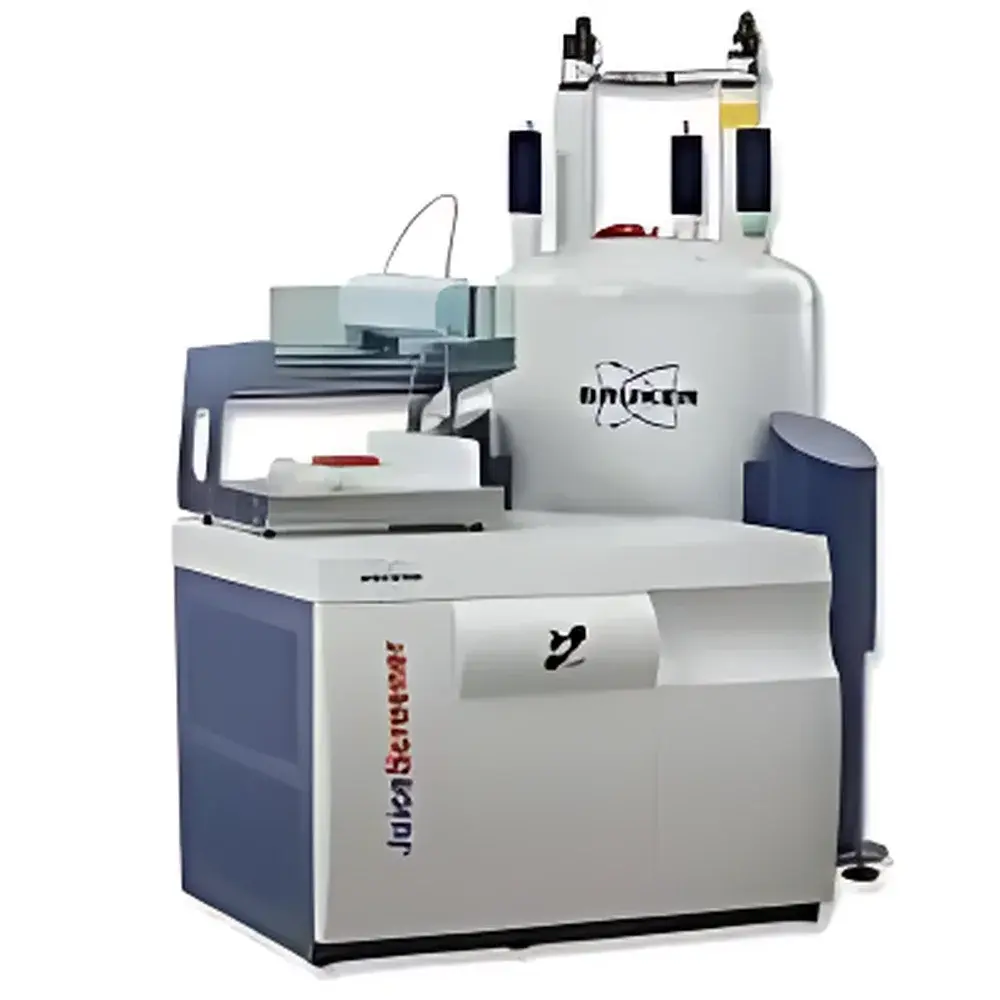
Brookfield JuiceScreener NMR-Based Beverage Authenticity Analyzer
| Brand | Bruker |
|---|---|
| Origin | Germany |
| Manufacturer Type | Authorized Distributor |
| Origin Category | Imported |
| Model | JuiceScreener |
| Instrument Type | NMR-Based Beverage Authenticity Analyzer |
| Application | Laboratory |
| Measurement Time | ≤4 min |
| Compliance | ASTM D8271-21, ISO 21569:2022 (NMR-based food authenticity), GLP-compliant workflow via SampleTrack™ |
| Software Platform | TopSpin 4.2 + JuiceScreener Module v3.1 |
| Database | >16,000 reference NMR spectra from authentic fruit juices across 50+ global production regions |
| Quantified Analytes | ≥30 compounds (glucose, fructose, sucrose, citric acid, malic acid, isocitric acid, quinic acid, ethanol, fumaric acid, lactic acid, HMF, galacturonic acid, chloride, etc.) |
Overview
The Brookfield JuiceScreener is a high-throughput, benchtop nuclear magnetic resonance (NMR) spectrometer engineered specifically for the rapid, non-destructive authentication and compositional profiling of fruit juices and beverage concentrates. Unlike conventional chromatographic or enzymatic assays, the JuiceScreener leverages 400 MHz ¹H-NMR spectroscopy coupled with chemometric pattern recognition to deliver both targeted quantification and untargeted anomaly detection in a single 4-minute acquisition. Its core methodology—SGF Profiling™—was co-developed by Bruker BioSpin GmbH and SGF International e.V., integrating over two decades of juice reference data and statistical modeling expertise. The system operates on the principle that each authentic fruit juice exhibits a unique “spin fingerprint”: a reproducible, concentration-weighted ¹H-NMR spectral signature reflecting its intrinsic metabolite profile. Deviations from this fingerprint—whether due to dilution, adulteration, origin substitution, or thermal degradation—are detected with high sensitivity and specificity, without requiring prior knowledge of the adulterant.
Key Features
- Automated 400 MHz ¹H-NMR analysis with pre-optimized pulse sequences for aqueous juice matrices, including water suppression and baseline correction.
- Integrated SampleTrack™ LIMS control enabling fully traceable, walk-away operation—from barcode-scanned sample registration through automated shimming, acquisition, processing, and report generation.
- Dual-mode analytical engine: Targeted quantification (absolute concentrations of ≥30 key metabolites) and untargeted multivariate screening (detection of unexpected spectral deviations using PCA, PLS-DA, and OPLS models).
- Proprietary reference database containing >16,000 validated ¹H-NMR spectra from authentic juices sourced across 50+ geographical regions and 40+ fruit species—including citrus varieties (orange, blood orange, mandarin), apple, grape, pineapple, and berry types.
- Compliance-ready architecture supporting audit trails, electronic signatures, and 21 CFR Part 11–compliant data handling when deployed with Bruker’s TopSpin 4.2 software and validated JuiceScreener Module v3.1.
Sample Compatibility & Compliance
The JuiceScreener accepts clarified, filtered juice samples (0.45 µm membrane filtration recommended) in standard 5 mm NMR tubes. It accommodates single-strength juices, concentrates (diluted to 1×), and reconstituted powders. No derivatization, extraction, or calibration standards are required for routine screening. Method validation aligns with ISO 21569:2022 (Molecular biological methods—Guidelines on performance criteria and validation of methods for detection of genetically modified organisms and derived products) and ASTM D8271-21 (Standard Practice for Authentication of Fruit Juices Using ¹H-NMR Spectroscopy). All workflows support Good Laboratory Practice (GLP) documentation requirements, including raw FID storage, processing parameter logs, and version-controlled model updates.
Software & Data Management
Data acquisition and interpretation are executed within Bruker’s TopSpin 4.2 environment, extended by the validated JuiceScreener Module v3.1. This module provides standardized workflows for spectral preprocessing (phasing, baseline correction, referencing to TSP-d4), peak integration, multivariate modeling (PCA, PLS-DA, OPLS), and automated reporting. All results—including quantitative tables, classification heatmaps, residual plots, and outlier scores—are archived as structured XML and PDF reports compliant with ISO/IEC 17025 documentation standards. Raw data (.fid files) and processed spectra (.jdx) are stored with full metadata (operator ID, timestamp, instrument conditions, sample ID) under SampleTrack™-managed retention policies.
Applications
- Verification of juice authenticity per EU Regulation (EC) No 1234/2007 and US FDA Juice HACCP guidance.
- Detection of water addition, sugar adulteration (e.g., HFCS, beet sugar), and unauthorized blending (e.g., apple juice in pear juice).
- Geographical origin assignment (e.g., Brazilian vs. Mexican orange juice) using region-specific metabolite ratios.
- Stability monitoring: Quantification of spoilage markers (ethanol, lactic acid, HMF) and oxidation indicators (fumaric acid, dehydroascorbic acid).
- Batch release testing for contract manufacturers and brand owners requiring ISO 22000-aligned QC protocols.
FAQ
What sample preparation is required?
Minimal preparation: centrifugation (3,000 × g, 10 min), filtration (0.45 µm), and addition of D₂O (10% v/v) and internal standard (TSP-d4, 0.1 mM) for chemical shift referencing and quantification.
Can the system detect novel adulterants not present in the reference database?
Yes—untargeted analysis identifies statistically significant spectral deviations (p < 0.01) even for unknown compounds, triggering flagging and manual review pathways.
Is method transfer between instruments supported?
Yes—Bruker’s standardized pulse sequences, calibration protocols, and database synchronization ensure cross-platform reproducibility across 400 MHz systems globally.
How frequently is the reference database updated?
Quarterly updates are delivered via secure Bruker Connect portal, incorporating newly validated spectra from certified reference materials and interlaboratory proficiency tests.
Does the system support regulatory submission packages?
Yes—full audit trail export, raw data archiving, and IQ/OQ/PQ documentation templates are provided for FDA, EFSA, and national food authority submissions.



