
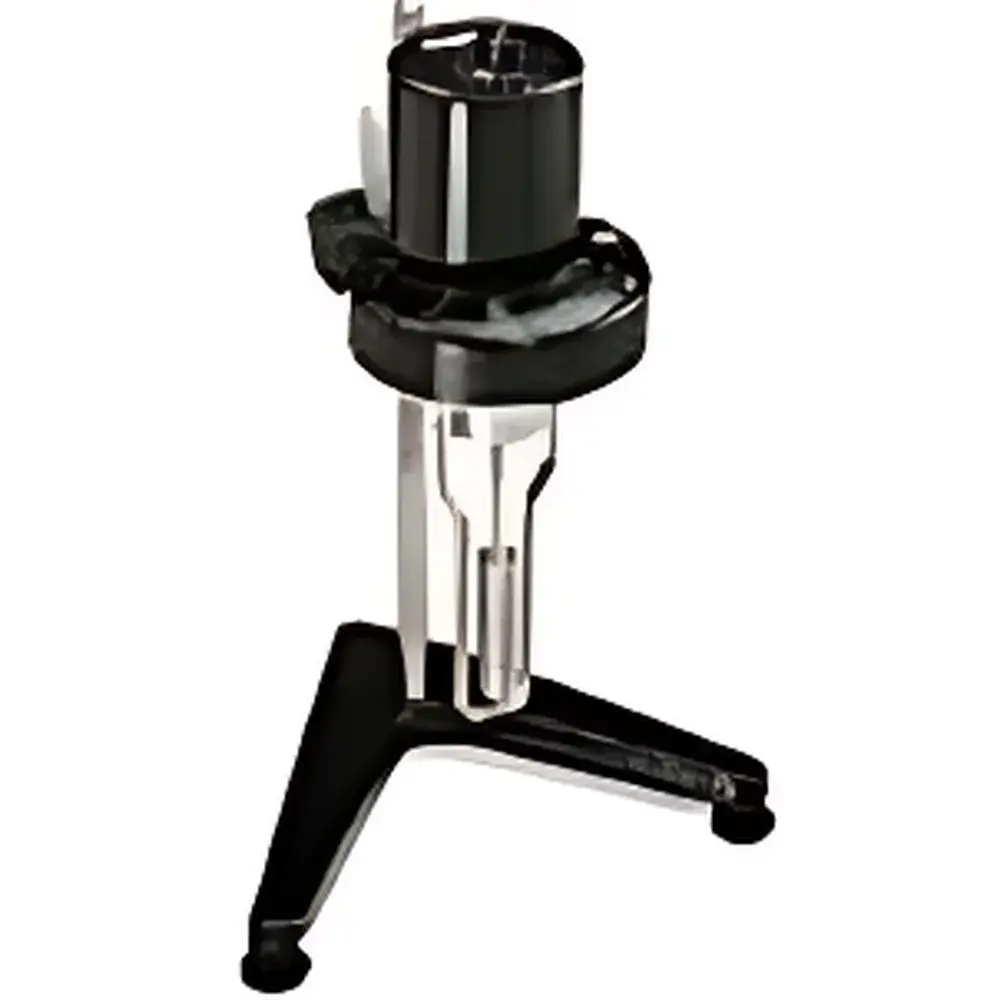
Brookfield LVT Viscometer
| Origin | USA |
|---|---|
| Manufacturer Type | Authorized Distributor |
| Origin Category | Imported |
| Model | LVT |
| Pricing | Available Upon Request |
| Measurement Range | 10–2,000,000 cP |
| Full-Scale Torque | 673.7 dyn·cm |
| Rotational Speeds | 0.3, 0.6, 1.5, 3, 6, 12, 30, 60 rpm (8-speed stepped control) |
| Spindles Included | 4 standard spindles (SC4-14, SC4-21, SC4-27, SC4-29) |
| Accuracy | ±1% of full scale |
| Repeatability | ±0.2% |
| Power Supply | AC 220 V, 50 Hz |
Overview
The Brookfield LVT Viscometer is a precision-engineered, analog rotational viscometer designed for reliable and repeatable viscosity measurement of Newtonian and mildly non-Newtonian fluids in quality control, R&D, and production environments. Operating on the principle of coaxial cylinder (Couette) flow, the instrument measures the torque required to rotate a spindle immersed in a sample at defined angular velocities. This mechanical torque is directly proportional to the fluid’s dynamic viscosity under laminar flow conditions, as governed by fundamental rheological theory. The LVT model—part of Brookfield’s legacy analog viscometer series—delivers robust performance with minimal electronic complexity, making it particularly suited for laboratories requiring stable, low-maintenance instrumentation with proven long-term calibration stability. Its design adheres to internationally recognized test methodologies aligned with ASTM D2196, ISO 2555, and USP , supporting routine compliance in pharmaceutical, chemical, food, and coatings industries.
Key Features
- Eight discrete rotational speeds (0.3–60 rpm) provide flexibility across low-shear and moderate-shear applications without continuous variable speed control.
- Full-scale torque of 673.7 dyn·cm ensures sufficient sensitivity for low-viscosity liquids while maintaining structural integrity during high-torque measurements.
- Included set of four standardized spindles (SC4-14, SC4-21, SC4-27, SC4-29) enables broad range coverage—from thin solvents to semi-solid pastes—without requiring optional accessories for basic operation.
- Analog dial display with mechanical pointer offers immediate visual readout with no warm-up delay or software dependency, enhancing operational simplicity and reducing potential failure points.
- ±1% accuracy (full-scale) and ±0.2% repeatability meet stringent QC requirements for batch-to-batch consistency verification in regulated manufacturing settings.
- Designed for use with standard 220 V, 50 Hz mains power—compatible with laboratory infrastructure across Asia, Europe, and Latin America without voltage conversion.
Sample Compatibility & Compliance
The LVT accommodates samples in standard 600-mL low-form beakers or custom sample cups with adequate depth (>100 mm) and diameter (>70 mm) to satisfy geometry-based immersion criteria per ASTM D1092. It supports aqueous, organic, and suspension-based systems—including polymer solutions, paints, adhesives, syrups, and emulsions—provided they remain stable under static shear conditions during measurement. While not intrinsically compliant with FDA 21 CFR Part 11 due to its analog architecture, the LVT is routinely deployed in GLP- and GMP-aligned facilities where manual data recording, controlled documentation procedures, and periodic third-party calibration (traceable to NIST standards) fulfill audit requirements. Calibration certificates and spindle identification tags are supplied with each unit to support IQ/OQ documentation packages.
Software & Data Management
As a standalone analog instrument, the LVT does not interface with digital software or require drivers, eliminating cybersecurity concerns associated with connected devices. All readings are recorded manually into laboratory notebooks or LIMS-compatible spreadsheets. For users requiring digital capture, optional accessories include the DV-II+ Pro-compatible printer (model CP-100) and the Brookfield Thermosel temperature-controlled bath system (for ASTM D445-compliant kinematic viscosity correlation). When integrated into validated workflows, handwritten records from the LVT may be included in electronic batch records via scanned attachments accompanied by operator signature, date, and instrument ID—fully satisfying ALCOA+ data integrity principles when supported by procedural controls.
Applications
- Quality assurance of raw materials (e.g., glycerin, propylene glycol, silicone oils) prior to formulation.
- Batch release testing of topical pharmaceutical gels, ointments, and suspensions per USP monographs.
- Process monitoring of ink viscosity in flexographic and gravure printing operations.
- Evaluation of shelf-life stability in salad dressings, sauces, and dairy-based beverages.
- Teaching laboratories for fundamental rheology instruction, emphasizing torque–viscosity relationships and spindle selection logic.
- Baseline characterization of drilling muds, sealants, and construction adhesives during product development.
FAQ
Is the LVT suitable for non-Newtonian fluid characterization?
Yes—within limitations. While it does not compute shear rate or shear stress profiles automatically, comparative measurements across multiple speeds allow qualitative assessment of shear-thinning or shear-thickening behavior using apparent viscosity trends.
Can I use spindles from other Brookfield models with the LVT?
Only SC4-series spindles are mechanically and calibration-compatible; using spindles from DV-E, DV2T, or RV models will invalidate torque calibration and void traceability.
What is the minimum sample volume required?
A minimum depth of 100 mm and container inner diameter ≥70 mm are required to minimize wall effects; typical volume is 400–600 mL in a standard low-form beaker.
Does the LVT require annual recalibration?
Yes—Brookfield recommends annual calibration against certified reference oils (e.g., Cannon-Manning series) by an ISO/IEC 17025-accredited laboratory to maintain measurement validity in regulated environments.
Is temperature control integrated?
No—temperature regulation must be achieved externally using water baths, Peltier cells, or environmental chambers; the LVT itself contains no thermal management subsystem.



