
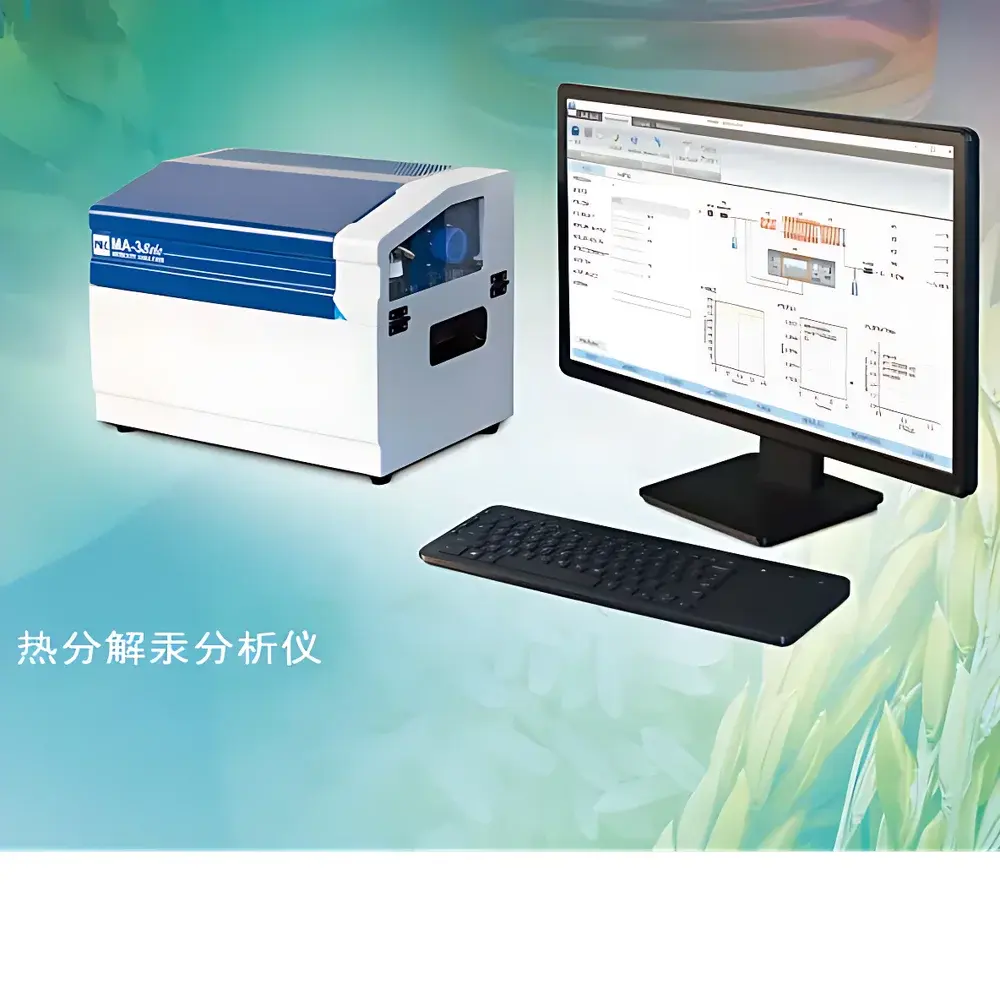
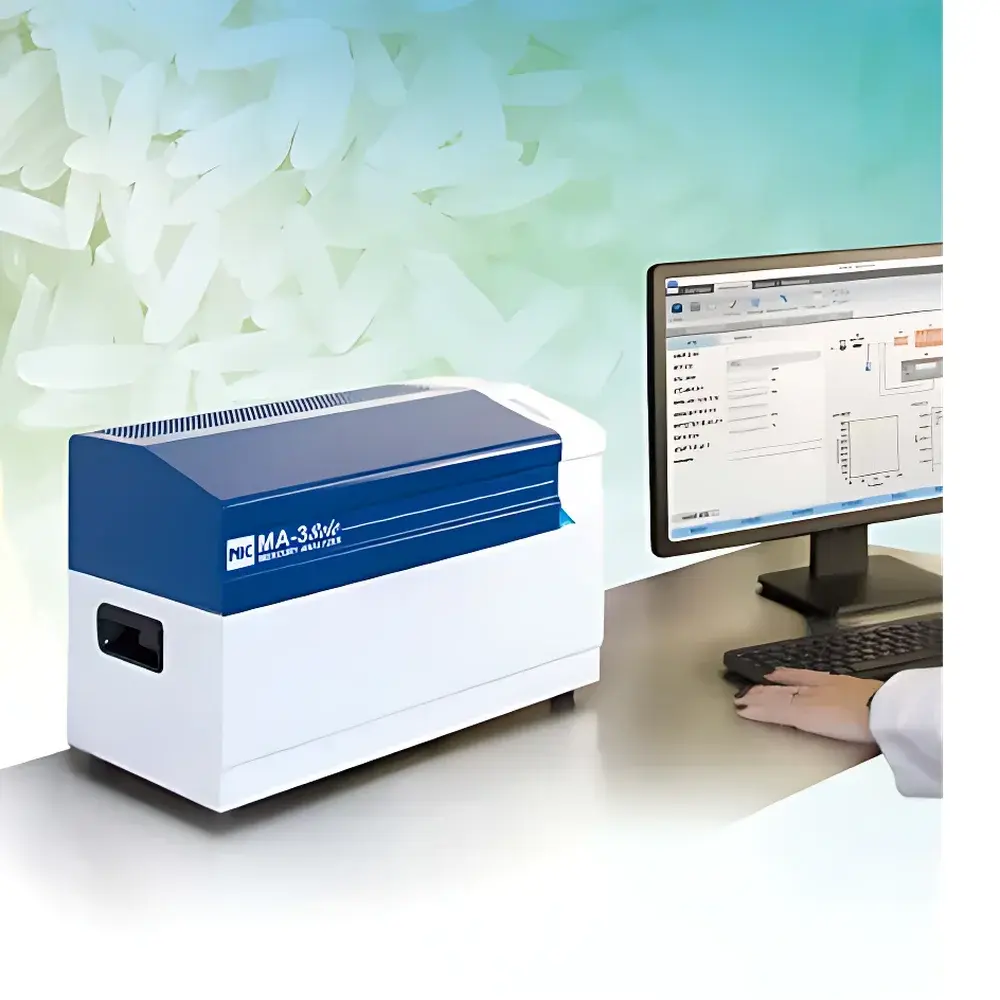
Brookfield MA-3 Solo Thermal Decomposition Mercury Analyzer
| Brand | Brookfield |
|---|---|
| Origin | Beijing, China |
| Manufacturer Type | Manufacturer |
| Origin Category | Domestic (China) |
| Model | MA-3 Solo |
| Instrument Type | Benchtop Laboratory Analyzer |
| Measurement Principle | Cold Vapor Atomic Absorption Spectrometry (CVAAS) after Thermal Decomposition |
| Compliance Standards | USEPA Method 7473, UOP 938-20, ASTM D6722-19, ASTM D7623-20, UOP 1009-15, ISO 15411 |
| Detection Limit | <0.01 ng Hg |
| Sample Form Compatibility | Solids and Liquids |
| Carrier Gas | Ambient Air (Self-Purified) |
| Sample Boat Material | Reusable Ceramic |
| Optical Source | Stabilized Hg Lamp (253.7 nm) |
| Detector Configuration | Dual Semiconductor Detectors (Measurement + Reference) |
| Dimensions & Weight | Compact footprint (~A3 size), 13 kg |
Overview
The Brookfield MA-3 Solo Thermal Decomposition Mercury Analyzer is a benchtop laboratory instrument engineered for precise, trace-level quantification of total mercury in heterogeneous solid and liquid matrices. It employs a two-stage analytical principle: first, high-temperature thermal decomposition (up to 1000 °C) converts all mercury species—elemental, inorganic, and organometallic—into elemental mercury vapor; second, selective capture and subsequent release of mercury onto a gold amalgam trap enables matrix separation, followed by quantitative detection via Cold Vapor Atomic Absorption Spectrometry (CVAAS) at the resonance wavelength of 253.7 nm. This method eliminates wet chemical digestion, reduces reagent consumption, and minimizes analyst exposure to hazardous acids or oxidants. Designed for laboratories requiring regulatory-grade data integrity without infrastructure dependency, the MA-3 Solo operates using self-purified ambient air as both combustion support gas and carrier gas—eliminating the need for compressed gas cylinders or external purification systems.
Key Features
- Thermal decomposition module with programmable multi-step heating profiles (up to 1000 °C), enabling complete volatilization of refractory mercury compounds in complex matrices such as crude oil, coal, sediments, and biological tissues.
- Gold amalgamation trap system providing selective pre-concentration and interference removal—critical for samples containing halogens, sulfur, or transition metals that may otherwise suppress or scatter UV absorption.
- Dual-channel semiconductor photodetector architecture: one channel dedicated to sample absorbance measurement, the other serving as a real-time reference to compensate for lamp drift, optical path fluctuations, and electronic noise—ensuring long-term baseline stability.
- High-stability mercury hollow cathode lamp operating exclusively at 253.7 nm, coupled with precision diffraction grating optics (not broadband mirrors), maximizing photon throughput and signal-to-noise ratio without spectral filtering losses.
- Reusable ceramic sample boats compatible with direct solid sampling (mg–g range) and liquid injection (µL–mL range); resistant to thermal shock and chemically inert across pH 0–14 and oxidative environments.
- Benchtop footprint (~297 × 420 mm), 13 kg mass, and integrated power management—optimized for space-constrained labs, mobile environmental testing units, and field-deployable QA/QC operations.
Sample Compatibility & Compliance
The MA-3 Solo accommodates diverse sample types without derivatization or digestion: petroleum products (crude oil, naphtha, condensate), soils and sediments, fish tissue and hair, pharmaceutical excipients, catalysts, and industrial sludges. Its methodology is formally validated against multiple internationally recognized standards, including USEPA Method 7473 for solids and liquids, UOP 938-20 for hydrocarbon streams, ASTM D6722-19 and D7623-20 for coal and fuel oils, UOP 1009-15 for refinery process streams, and ISO 15411 for water and biota. These validations confirm method accuracy (±5% recovery across 0.01–1000 ng Hg), repeatability (RSD <3% at 10× LOD), and robustness under variable humidity and ambient temperature conditions (15–30 °C). The system supports audit-ready data generation compliant with GLP and GMP requirements, including full electronic records of method parameters, calibration history, run logs, and detector diagnostics.
Software & Data Management
The MA-3 Solo Control Software runs natively on Microsoft Windows 10/11 platforms and provides real-time graphical monitoring of all critical operational parameters: furnace thermocouple feedback, carrier gas flow rate (mass flow controlled), valve sequencing status, lamp voltage, detector gain, and amalgam trap temperature. All measurements are timestamped and stored in a structured SQLite database with configurable export options (CSV, PDF, XML). The software implements user-access levels (Operator, Supervisor, Administrator), electronic signatures, and audit trail logging per FDA 21 CFR Part 11 guidelines—including immutable records of method edits, calibration updates, and result overrides. Automated calibration verification checks (e.g., blank spikes, continuing calibration verification standards) are scheduled and reported within the same interface.
Applications
The MA-3 Solo delivers trace mercury quantification in regulated and research contexts where matrix complexity and low detection demands converge. Key use cases include: monitoring mercury content in U.S. EPA-regulated wastewater influents and effluents; verifying compliance with IMO MARPOL Annex VI limits in marine fuel oils; supporting ASTM D7623-20-based quality control in petrochemical refineries; validating low-Hg specifications in lithium-ion battery cathode materials; assessing bioaccumulation in EPA Region 10 sediment surveys; and conducting method development for ISO 15411-compliant biomonitoring programs. Its ability to analyze sub-milligram soil aliquots or microliter-volume oil samples—without acid digestion—reduces analysis time from hours to minutes while maintaining metrological traceability to NIST SRM 2688a and 2689.
FAQ
What sample preparation is required prior to analysis?
No acid digestion or chemical pretreatment is necessary. Solid samples are weighed directly into the ceramic boat; liquids are pipetted onto quartz wool or absorbed onto cellulose substrate. Homogenization (e.g., grinding, freeze-drying) may be required for heterogeneous solids.
Can the MA-3 Solo quantify methylmercury or other organomercury species?
No—it measures total mercury only. Speciation requires coupling with GC or HPLC separation upstream of the analyzer, or complementary techniques such as LC-ICP-MS.
Is external gas supply required for operation?
No. The system uses filtered and dried ambient air as both combustion support and carrier gas, making it suitable for temporary lab setups and field deployments.
How often must the gold amalgam trap be regenerated?
Under typical usage (≤20 samples/day), regeneration occurs automatically during each analysis cycle. Trap lifetime exceeds 10,000 analyses with routine maintenance.
Does the software support LIMS integration?
Yes—via configurable ODBC drivers and HL7-compliant ASCII output formats, enabling bidirectional data exchange with major laboratory information management systems including Thermo Fisher SampleManager, LabVantage, and STARLIMS.






