
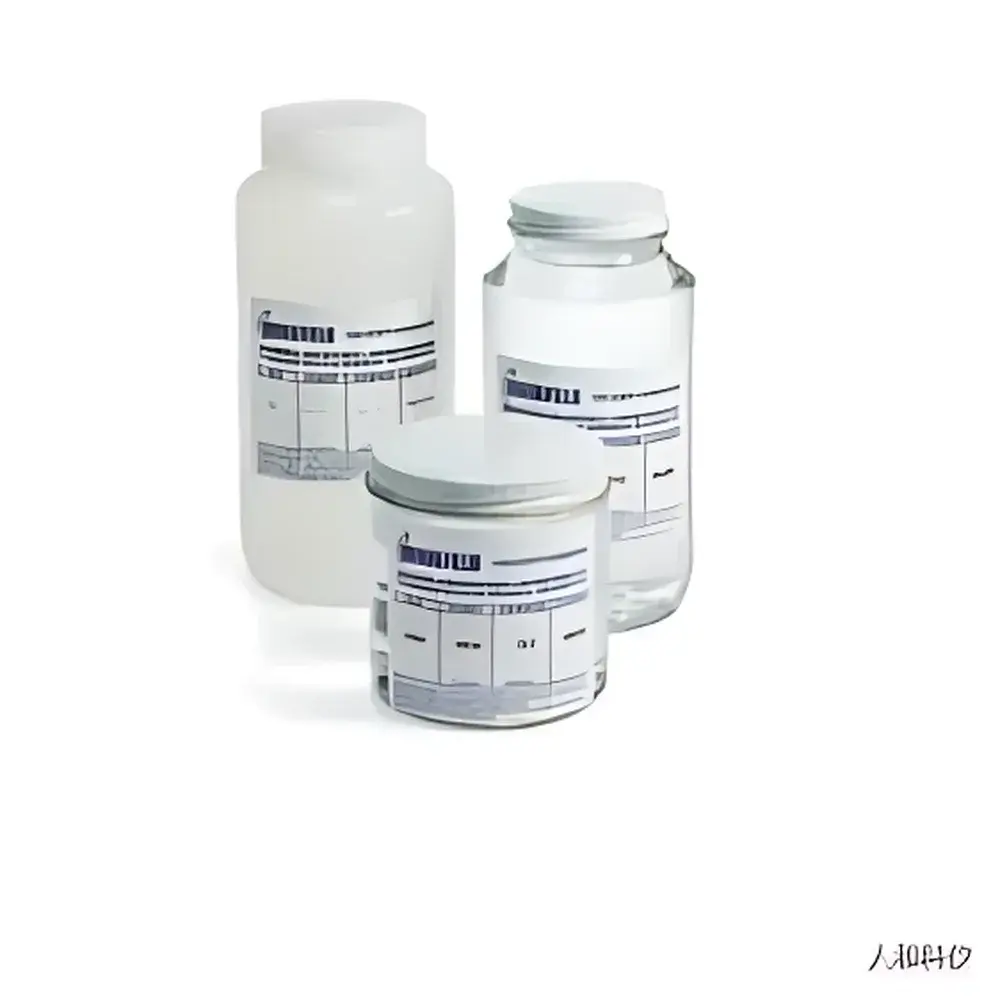
Brookfield Viscometer Calibration Standard Fluids – Silicone Oil and Hydrocarbon-Based Reference Liquids
| Brand | Brookfield |
|---|---|
| Origin | USA |
| Type | Newtonian Calibration Fluids |
| Variants | General-Purpose Silicone Oil Standards, High-Temperature Silicone Oil Standards, Hydrocarbon (Mineral Oil / Polybutene) Standards, CAP-Series Spindle-Specific Standards, KU-2 Krebs Units Standards, RST/RheoStress Coaxial & Cone Standards |
| Viscosity Range | 5–360,000 cP (mPa·s) at 25.0°C |
| Accuracy | ±1% of nominal viscosity |
| Temperature Stability | ≤±0.5% per °C (silicone oils) |
| Certified Traceability | NIST-traceable calibration documentation available upon request |
| Packaging | 600 mL glass or 1000 mL HDPE bottles |
Overview
Brookfield Viscometer Calibration Standard Fluids are precision-engineered Newtonian reference liquids designed to verify and validate the measurement accuracy of rotational viscometers and rheometers across laboratory, QC, and manufacturing environments. These standards operate on the fundamental principle that a Newtonian fluid exhibits constant viscosity under varying shear rates — enabling reliable verification of instrument torque response, spindle geometry correction, and temperature-dependent calibration drift. Unlike non-Newtonian reference materials, Brookfield’s certified silicone oil and hydrocarbon-based standards deliver repeatable shear-independent viscosity values traceable to internationally recognized metrological frameworks. They are essential for maintaining compliance with ISO/IEC 17025, ASTM D2196, ASTM D1084, USP , and FDA 21 CFR Part 11 requirements for instrument qualification and data integrity in regulated industries including pharmaceuticals, coatings, adhesives, and food science.
Key Features
- Two primary chemistries: high-purity dimethyl silicone oils (low thermal coefficient, ideal for general-purpose calibration) and hydrocarbon-based standards (mineral oil/polybutene blends optimized for cone-plate, Krebs unit, and high-shear applications)
- Viscosity certification at 25.0°C (77°F) with full temperature-dependent data tables — including extended-range high-temperature silicone standards calibrated at 93.3°C (200°F) and 149.0°C (300°F)
- ±1% accuracy relative to nominal viscosity value, verified via capillary viscometry and cross-referenced against NIST-traceable primary standards
- Spindle-specific formulations for CAP-series viscometers, with dedicated low-torque (L) and high-torque (H) variants matched to each cone geometry and operating temperature range (5–235°C)
- Krebs Unit (KU) standards certified at 25.0°C for KU-2 instruments, covering KU 61–106 range with documented correlation to cP equivalents per ASTM D562
- Comprehensive RST/RheoStress calibration sets for both cone-and-plate (RCT) and coaxial cylinder (CCT) geometries, with spindle-specific part numbering and shear-rate-appropriate viscosity grades
Sample Compatibility & Compliance
These calibration fluids are validated for use with all Brookfield rotational viscometers (DVNext, DV2T, AMETEK CAP series), rheometers (RST, RheoStress), and third-party instruments employing standard spindles, cones, or concentric cylinder geometries. Silicone oil standards are compatible with stainless steel, anodized aluminum, and PTFE-coated components; hydrocarbon standards require compatibility verification with elastomeric seals. All fluids meet RoHS Directive 2011/65/EU and are supplied with Safety Data Sheets (SDS) compliant with GHS Rev. 7. For GLP/GMP environments, batch-specific certificates of analysis (CoA) include uncertainty budgets, homogeneity testing reports, and stability data supporting 24-month shelf life when stored unopened at 15–30°C. Traceability documentation supports audit readiness for ISO 9001, ISO 13485, and FDA inspections.
Software & Data Management
While calibration fluids themselves are passive reference materials, their integration into digital workflows is supported through Brookfield’s Rheo3000 and ViscoQC software platforms. Users may import standard viscosity values directly into instrument calibration routines, assign unique lot numbers to each fluid batch, and generate electronic calibration records with timestamped operator ID, ambient temperature/humidity logs, and pass/fail thresholds aligned with internal SOPs. Audit trails comply with 21 CFR Part 11 requirements when deployed on validated Windows-based systems — including electronic signatures, version-controlled CoA attachments, and immutable storage of calibration event metadata.
Applications
- Periodic verification of viscometer zero point, full-scale torque linearity, and temperature sensor accuracy
- Performance qualification (PQ) of new instruments prior to routine use in QC labs
- Revalidation after maintenance, spindle replacement, or firmware updates
- Inter-laboratory comparison studies and proficiency testing programs
- Supporting method validation per ICH Q5C for viscosity-related release testing of biopharmaceutical formulations
- Calibration of inline process viscometers using offline reference correlation protocols
FAQ
What is the shelf life of Brookfield calibration standards?
Unopened bottles retain certified accuracy for 24 months when stored between 15–30°C, away from direct sunlight and moisture.
Can I use silicone oil standards for cone-plate instruments?
Silicone oils are suitable for most cone-plate systems; however, hydrocarbon standards are preferred for CAP-series and KU-2 instruments due to optimized wetting behavior and shear-thinning compensation.
Do you provide NIST-traceable certificates?
Certificates of Analysis with NIST-traceable uncertainty statements are available as optional add-ons — contact technical support to specify required coverage (e.g., expanded uncertainty at k=2).
How do I select the correct standard for my CAP viscometer?
Select based on both torque class (L = low-torque, H = high-torque) and temperature rating (L = 5–75°C, H = 50–235°C), then match the spindle number (CAP1–CAP10) to the corresponding part number in the CAP-specific table.
Are cleaning reagents included in all calibration kits?
Cleaning solutions are supplied only with kits shipped to U.S.-based addresses due to shipping regulations; international customers receive solvent-compatible instructions and alternative cleaning protocols.



