
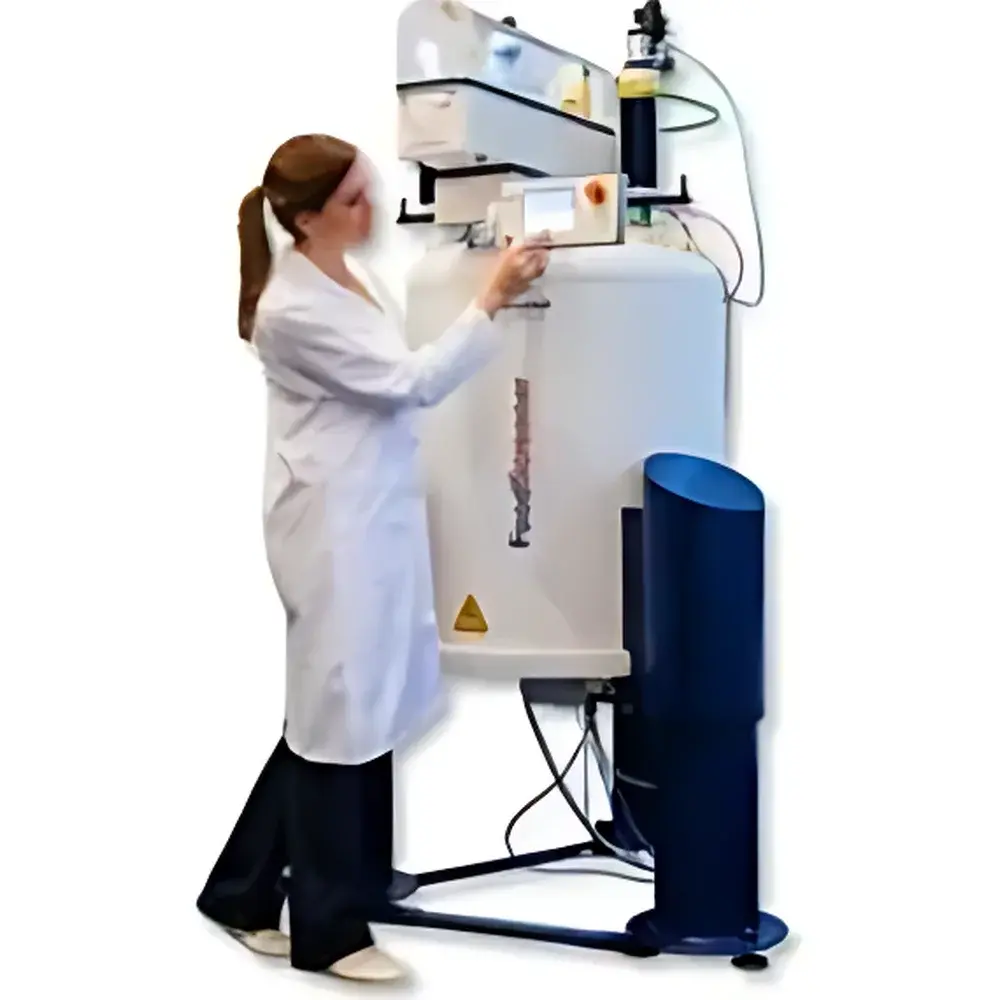
Bruker FoodScreener Honey Profiling Module
| Brand | Bruker |
|---|---|
| Origin | Germany |
| Model | Honey Profiling Module |
| Application Domain | NMR-based food authenticity and quality screening for honey |
| Core Technology | 400 MHz benchtop nuclear magnetic resonance (NMR) spectroscopy |
| Analysis Approach | Combined targeted quantification and untargeted statistical fingerprinting |
| Compliance Framework | Designed to support GLP/GMP workflows, ISO/IEC 17025 method validation, and FDA 21 CFR Part 11–compliant data integrity requirements |
Overview
The Bruker FoodScreener Honey Profiling Module is a dedicated, fully automated NMR-based analytical solution engineered for routine honey authenticity verification, origin assignment, adulteration detection, and compositional quality control. Built upon Bruker’s validated 400 MHz benchtop NMR platform, the system acquires high-resolution 1H NMR spectra from minimally prepared honey samples—requiring only dilution and centrifugation—to generate sample-specific spectral fingerprints. These fingerprints encode quantitative and qualitative information across >50 endogenous metabolites, including fructose, glucose, sucrose, maltose, organic acids (e.g., gluconic acid), amino acids (e.g., proline), and minor botanical markers. Unlike chromatographic or isotopic methods, NMR delivers inherent reproducibility, absolute quantification without matrix-matched standards, and resistance to operator-dependent variability—making it ideal for centralized reference laboratories, regulatory bodies, and high-throughput QC environments.
Key Features
- Automated, push-button workflow: From sample loading to final PDF report in under 15 minutes per sample, with no user calibration or spectral interpretation required.
- Integrated dual-mode analysis engine: Simultaneous targeted quantification (e.g., sugar ratios, proline concentration, HMF levels) and untargeted chemometric classification (PCA, PLS-DA, OPLS-DA) against Bruker’s globally curated Honey Reference Database (>12,000 authentic samples from 68 countries and 32 botanical origins).
- Benchtop 400 MHz NMR spectrometer with permanent magnet and active shimming: Delivers robust field homogeneity (<0.15 Hz linewidth for DSS internal standard) and long-term stability suitable for daily operation in non-NMR-specialist labs.
- Pre-validated, matrix-specific method packages: Includes SOPs compliant with ISO 11862-1 (NMR for honey authenticity), AOAC Official Method 2021.01 (NMR screening for honey adulteration), and EU Commission Regulation (EU) No 1169/2011 labeling requirements.
- Secure, audit-ready software architecture: Full electronic signature support, role-based access control, automated audit trail generation, and raw data immutability—all aligned with FDA 21 CFR Part 11 and EU Annex 11 expectations.
Sample Compatibility & Compliance
The Honey Profiling Module accepts raw, filtered, or centrifuged liquid honey (minimum volume: 600 µL). It accommodates viscous, crystallized, or thermally stressed samples without derivatization or hydrolysis. All sample preparation follows ISO 11862-1:2022 guidelines. The system is routinely deployed in laboratories accredited to ISO/IEC 17025 for food testing, and its method performance characteristics—including limit of detection (LOD) for C4/C3 syrup adulteration (≥7% w/w), repeatability (RSD < 2.1% for major sugars), and inter-laboratory reproducibility (Horwitz ratio ≤ 1.5)—are documented in Bruker’s Method Validation Report (Ref. FSH-VAL-2023-04). Regulatory acceptance includes endorsement by the German Federal Office of Consumer Protection and Food Safety (BVL) and inclusion in the European Reference Laboratory for Honey (EURL-Honey) recommended techniques list.
Software & Data Management
Operation is governed by Bruker’s FoodScreener Software Suite v4.2, a CE-IVD marked application running on Windows 10/11 with TLS 1.2+ encrypted client-server communication. The suite provides real-time spectral acquisition monitoring, automated peak integration using deconvoluted reference libraries, and dynamic reporting templates compliant with ISO 22000 and BRCGS Food Safety Standard Issue 9. All raw FID data, processed spectra, chemometric models, and final reports are stored in a tamper-evident SQLite database with SHA-256 hashing. Backups follow NIST SP 800-88 Rev. 1 sanitization protocols. Remote instrument monitoring and method updates are delivered via Bruker’s secure Firmware-as-a-Service (FaaS) portal—accessible only to authorized service engineers and designated lab administrators.
Applications
- Detection of exogenous sugar adulteration: C3 syrups (corn, rice), C4 syrups (cane, sorghum), inverted sugar, beet sugar, and novel adulterants (e.g., tapioca, agave, or maple-derived syrups) via multivariate outlier detection.
- Geographic origin verification: Discrimination of monofloral honeys (e.g., acacia, clover, manuka) and regional classifications (e.g., Alpine vs. Mediterranean, New Zealand vs. Australian manuka) using orthogonal partial least squares discriminant analysis (OPLS-DA).
- Quality parameter quantification: Fructose/glucose ratio (F/G), sucrose content (for thermal degradation assessment), hydroxymethylfurfural (HMF), proline (marker of ripening and storage stability), and gluconic acid (indicator of enzymatic activity).
- Regulatory compliance reporting: Generation of EU-harmonized Certificates of Authenticity, US FDA Prior Notice submissions, and China GB 14963–2011 conformity statements.
- Supply chain transparency: Integration with LIMS (e.g., Thermo Fisher SampleManager, LabVantage) via ASTM E1578-compliant API endpoints for traceability across producer, processor, and importer tiers.
FAQ
Does the Honey Profiling Module require cryogens or external cooling systems?
No. The 400 MHz permanent magnet operates at ambient temperature and requires no liquid helium, nitrogen, or chiller units.
Can the system detect adulteration with ‘unknown’ or newly developed sweeteners?
Yes. Untargeted pattern recognition identifies statistically significant deviations from the reference population—even for uncharacterized additives—triggering automatic flagging for expert review.
Is method transfer between instruments supported?
Yes. Bruker’s Spectral Alignment Protocol (SAP) ensures cross-platform comparability across all FoodScreener installations using standardized pulse sequences and referencing (DSS at 0.00 ppm).
What training and support options are available?
Bruker offers on-site installation qualification (IQ), operational qualification (OQ), and user certification programs—plus 24/7 remote diagnostics and annual method revalidation services.
How frequently is the Honey Reference Database updated?
Quarterly updates include newly acquired authentic samples, expanded geographical coverage, and revised chemometric models—delivered automatically via the FaaS portal.



