
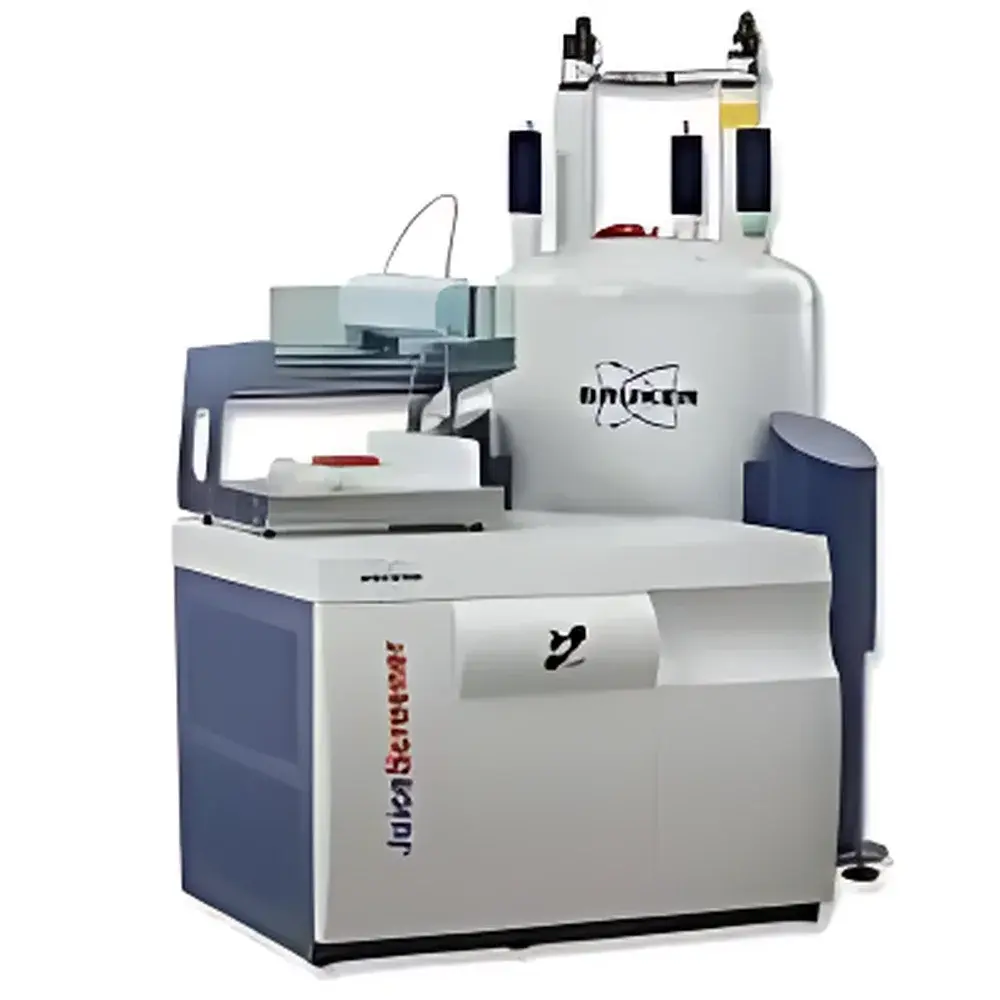
Bruker FoodScreener Wine Profiling Module
| Brand | Bruker |
|---|---|
| Origin | Germany |
| Model | Wine Profiling Module |
| Instrument Type | NMR-based Alcoholic Beverage Authenticity & Quality Analyzer |
| Application Domain | Wine Authentication, Origin Verification, Vintage Determination, Adulteration Screening (e.g., water dilution), Metabolite Quantification |
| Regulatory Alignment | Designed for GLP-compliant workflows |
Overview
The Bruker FoodScreener Wine Profiling Module is a dedicated nuclear magnetic resonance (NMR) spectroscopy platform engineered for comprehensive, non-targeted authenticity assessment and targeted quantitative analysis of wine. Unlike conventional chromatographic or sensor-based methods, this system leverages high-field ¹H-NMR spectroscopy to acquire a full molecular fingerprint—capturing endogenous small-molecule metabolites (e.g., organic acids, sugars, alcohols, phenolics, amino acids) in a single, solvent-free, non-destructive measurement. The resulting spectral profile is intrinsically linked to varietal composition, geographical origin, vintage, agronomic practice, and post-harvest processing. By comparing acquired spectra against Bruker’s proprietary, continuously curated reference database—comprising over 20,000 authenticated wine samples from major European producing regions—the module delivers statistically robust classification and quantification outcomes grounded in multivariate chemometrics (PCA, PLS-DA, OPLS). It is not a screening “test kit” but a validated analytical platform designed for routine use in quality control laboratories, regulatory testing facilities, and research institutions requiring traceable, reproducible, and defensible results.
Key Features
- Single-acquisition dual-mode analysis: Simultaneous targeted quantification of 56 key wine metabolites—including ethanol, tartaric acid, malic acid, glycerol, glucose, fructose, quercetin, and resveratrol—with concentration values benchmarked against official reference ranges and empirical population distributions.
- Non-targeted authenticity verification: Automated comparison of unknown spectra against the global FoodScreener Wine Reference Database using model validation protocols compliant with ISO/IEC 17025 principles.
- Geographic origin authentication: Validated classification models for country-level (France, Italy, Spain, Germany, Portugal) and sub-regional origin (e.g., Bordeaux AOC, Tuscany IGT, Rioja DOCa) based on region-specific metabolic signatures.
- Vintage determination: Discrimination capability for white wine vintages across a 10-year span (2013–2023), trained on climate- and harvest-condition-adjusted spectral trends.
- Adulteration detection: Rapid identification of water dilution (≥5% v/v) via stoichiometric deviations in ethanol/water peak ratios and osmotic metabolite dilution patterns.
- Automated reporting engine: Generation of standardized PDF reports containing raw spectra, quantitative tables, statistical confidence scores (e.g., Mahalanobis distance, classification probability), and interpretive annotations aligned with EU Regulation (EU) No 1308/2013 and OIV Method CEC-IV-1.
Sample Compatibility & Compliance
The Wine Profiling Module accepts standard 5 mm NMR tubes with 600 µL of clarified, filtered wine (0.45 µm PVDF filter)—no derivatization, extraction, or calibration standards required. It accommodates red, white, rosé, sparkling, and fortified wines, including those with high polyphenol content or residual CO₂. All analytical procedures follow OIV Resolution OIV/OENO 562A-2022 for NMR-based wine authentication and are compatible with ISO 21569 (food authenticity) and ISO 21748 (guidance on repeatability and reproducibility of analytical methods). The system architecture supports 21 CFR Part 11-compliant user access control, electronic signatures, and immutable audit trails—enabling deployment in GMP/GLP-regulated environments.
Software & Data Management
Operation is fully integrated within Bruker’s FoodScreener software suite (v3.0+), featuring a validated, locked-down workflow interface with role-based permissions. Data files (.fid, .jdx, .csv) are stored in a secure, timestamped repository with SHA-256 hash verification. The software includes built-in tools for method transfer, inter-laboratory reproducibility assessment (via round-robin test sets), and periodic model retraining using customer-contributed anonymized data—subject to Bruker’s Data Governance Framework. All statistical models undergo annual external verification by independent metrology institutes (e.g., PTB Germany, LNE France).
Applications
- Regulatory compliance testing for PDO/PGI wine labeling claims (EU Commission Delegated Regulation (EU) 2021/1407)
- Supply chain due diligence: Verification of bulk wine origin prior to bottling or blending
- Counterfeit detection in premium and auction markets
- Research into terroir expression and climate change impact on metabolomic profiles
- QC release testing for commercial wineries seeking ISO 22000 or BRCGS certification
- Supporting legal proceedings involving wine fraud allegations through court-admissible analytical evidence
FAQ
Is sample preparation required before NMR analysis?
Yes—samples must be centrifuged (10,000 × g, 5 min) and filtered (0.45 µm PVDF) to remove particulates and colloidal haze. No chemical modification or internal standard addition is needed.
Can the system detect adulteration with grape juice concentrate or synthetic additives?
The current Wine Profiling Module v3.0 is optimized for water dilution and origin/vintage verification. Detection of exogenous sugar addition or flavor compounds requires supplemental targeted LC-MS/MS assays; Bruker offers integrated workflow guidance for hybrid NMR–MS strategies.
How frequently is the reference database updated?
The core database is refreshed biannually, incorporating newly authenticated samples from OIV-accredited reference labs and certified producers. Customers with active support contracts receive automatic model updates via secure HTTPS push.
Does the system comply with EU accreditation requirements for testing laboratories?
Yes—the platform meets the technical criteria outlined in EN ISO/IEC 17025:2017 for competence of testing and calibration laboratories, particularly clauses 7.2 (method validation), 7.7 (result reporting), and 8.9 (data protection). Full validation documentation is supplied upon installation.
What hardware configuration is required?
The module operates on Bruker’s AVANCE™ IVDr platform (400–600 MHz), equipped with a QCI CryoProbe™ and SampleJet™ autosampler. Minimum configuration includes TopSpin 4.2+, FoodScreener v3.0+, and a validated Windows 10/11 LTSB environment.
Related Products






