
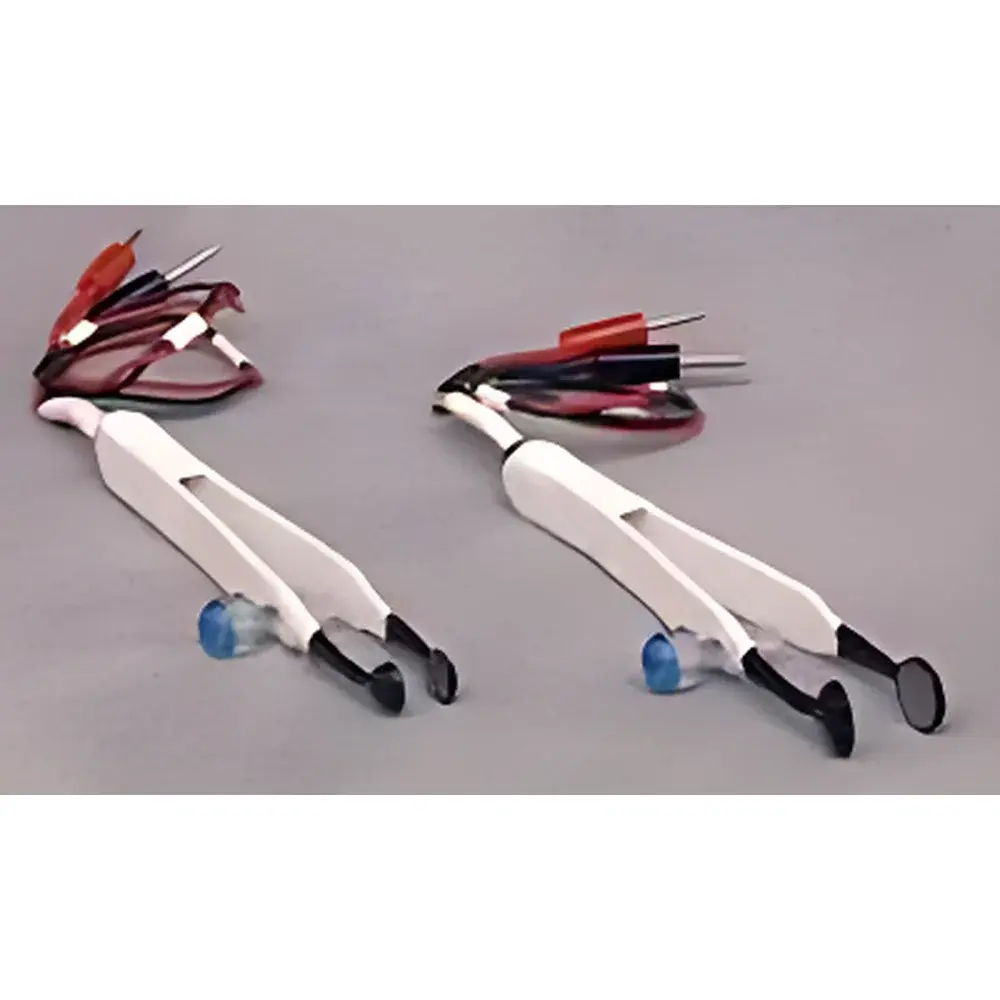
BTX Model 524 Tweezertrode In Vivo Electroporation Electrode
| Brand | BTX |
|---|---|
| Origin | USA |
| Model | BTX Model 524 |
| Electrode Type | Reusable tweezer-style in vivo electroporation electrode |
| Electrode Disk Diameter Options | 7 mm (Model 520) or 10 mm (Model 523) |
| Adjustable Inter-Electrode Gap | <1 mm to >20 mm |
| Compatible Pulse Generators | BTX ECM 830, ECM 630, ECM T820, ECM 2001 |
| Electrode Material | Stainless steel |
| Sterilization Method | Ethanol or ethylene oxide |
| Connection | BTX Model 524 Cable |
| Compliance | Designed for GLP-compliant preclinical research workflows |
Overview
The BTX Model 524 Tweezertrode is a precision-engineered, reusable in vivo electroporation electrode system designed for targeted molecular delivery into intact animal tissues. It operates on the well-established principle of reversible electroporation—applying controlled, high-voltage, short-duration electric pulses across biological tissue to transiently increase cell membrane permeability. This enables efficient intracellular delivery of plasmid DNA, siRNA, CRISPR-Cas ribonucleoprotein complexes, proteins, or small-molecule therapeutics directly into cells located at the electrode–tissue interface. Unlike needle-based or plate-type electrodes, the Tweezertrode’s mechanical clamping geometry ensures consistent, localized field distribution across heterogeneous or anatomically constrained tissues—including liver lobes, skeletal muscle, testis, skin, and embryonic tissues—without requiring surgical exposure or implantation. Its stainless-steel disk electrodes are electrochemically stable under pulsed DC conditions (0–200 V, 1 µs–200 ms), minimizing Faradaic side reactions and enabling reproducible pore formation kinetics across repeated use.
Key Features
- Adjustable inter-electrode gap (sub-millimeter to over 20 mm) for precise adaptation to tissue thickness and anatomical geometry
- Two interchangeable electrode disk diameters: 7 mm (Model 520) and 10 mm (Model 523), optimized for differential current density requirements in small- versus large-volume tissues
- Robust stainless-steel construction with passivated surface finish, ensuring corrosion resistance during repeated electroporation cycles and compatibility with standard sterilization protocols (70% ethanol immersion or ethylene oxide gas)
- Integrated anode indicator for unambiguous polarity identification during setup—critical for directional transfection and avoidance of electrochemical tissue damage
- Direct compatibility with BTX electroporation generators (ECM 830, ECM 630, ECM T820, ECM 2001) via the proprietary Model 524 connection cable, supporting both monophasic and biphasic pulse waveforms
- No integrated electronics or power source—designed as a passive, field-applicable tool that maintains full compliance with IEC 61010-1 safety standards for laboratory equipment
Sample Compatibility & Compliance
The BTX Model 524 Tweezertrode is validated for use in rodent models (mice, rats), rabbits, and ex-utero/in-utero embryonic preparations. It supports both localized intratissue injection followed by electroporation and transdermal delivery protocols where molecules are administered subcutaneously prior to electrode application. The device meets material biocompatibility requirements per ISO 10993-5 (cytotoxicity) and ISO 10993-10 (irritation/sensitization) when used with approved sterilants. While not a medical device under FDA 21 CFR Part 820, it is routinely employed in GLP-regulated preclinical studies supporting IND-enabling toxicology and biodistribution assessments. Documentation—including calibration logs, sterilization records, and pulse parameter traceability—can be maintained in alignment with FDA 21 CFR Part 11 requirements when integrated into validated LIMS or ELN environments.
Software & Data Management
As a hardware-only electrode, the Tweezertrode does not include embedded firmware or onboard data logging. However, it fully interoperates with BTX’s ECM series generator software (e.g., ECM 830 Control Software v3.2+), which provides audit-trail-enabled parameter storage, user-defined protocol libraries, and export of pulse timing/voltage metadata in CSV format. When deployed within automated electroporation workstations or integrated with third-party imaging systems (e.g., IVIS, confocal platforms), pulse initiation timestamps can be synchronized via TTL triggers—enabling precise correlation between electroporation events and downstream readouts such as GFP expression kinetics or luciferase activity decay profiles.
Applications
- In vivo gene delivery to liver parenchyma, demonstrated in rat models using pEGFP-N1 plasmid with sustained reporter expression for ≥14 days post-electroporation
- CRISPR-Cas9-mediated somatic editing in mouse testis, achieving germline transmission rates comparable to microinjection-based approaches
- Electroporation-assisted transdermal delivery of insulin and monoclonal antibodies in diabetic rabbit models, enhancing bioavailability while reducing systemic exposure
- Ex-utero electroporation of E9.5 mouse embryos for rapid functional genomics screening without uterine surgery
- Localized delivery of chemotherapeutic prodrugs combined with nanosecond pulsed electric fields (nsPEF) for synergistic tumor ablation in orthotopic glioblastoma models
FAQ
Is the BTX Model 524 Tweezertrode suitable for human clinical use?
No. It is designated exclusively for non-clinical, preclinical research applications in animal models and adheres to ISO 10993 biocompatibility standards for research-grade devices—not FDA 510(k) or CE-marked medical device requirements.
Can the electrode disks be replaced independently?
No. The stainless-steel disks are permanently integrated into the tweezer arms. Replacement requires ordering a new Model 520 or 523 assembly.
What is the maximum recommended pulse voltage for in vivo use?
BTX specifies a safe operating range of 0–200 V DC. Exceeding 200 V may cause irreversible tissue damage or arcing, particularly in low-resistance tissues such as liver or heart.
How should the Tweezertrode be cleaned between animals?
Rinse with deionized water, immerse in 70% ethanol for ≥5 minutes, air-dry under laminar flow, and verify sterility via biological indicator testing if required by institutional IACUC protocols.
Does the Model 524 cable support synchronization with external imaging systems?
Yes. The Model 524 cable includes a dedicated TTL trigger output line compatible with most commercial fluorescence imaging systems and high-speed cameras for event-locked acquisition.





