
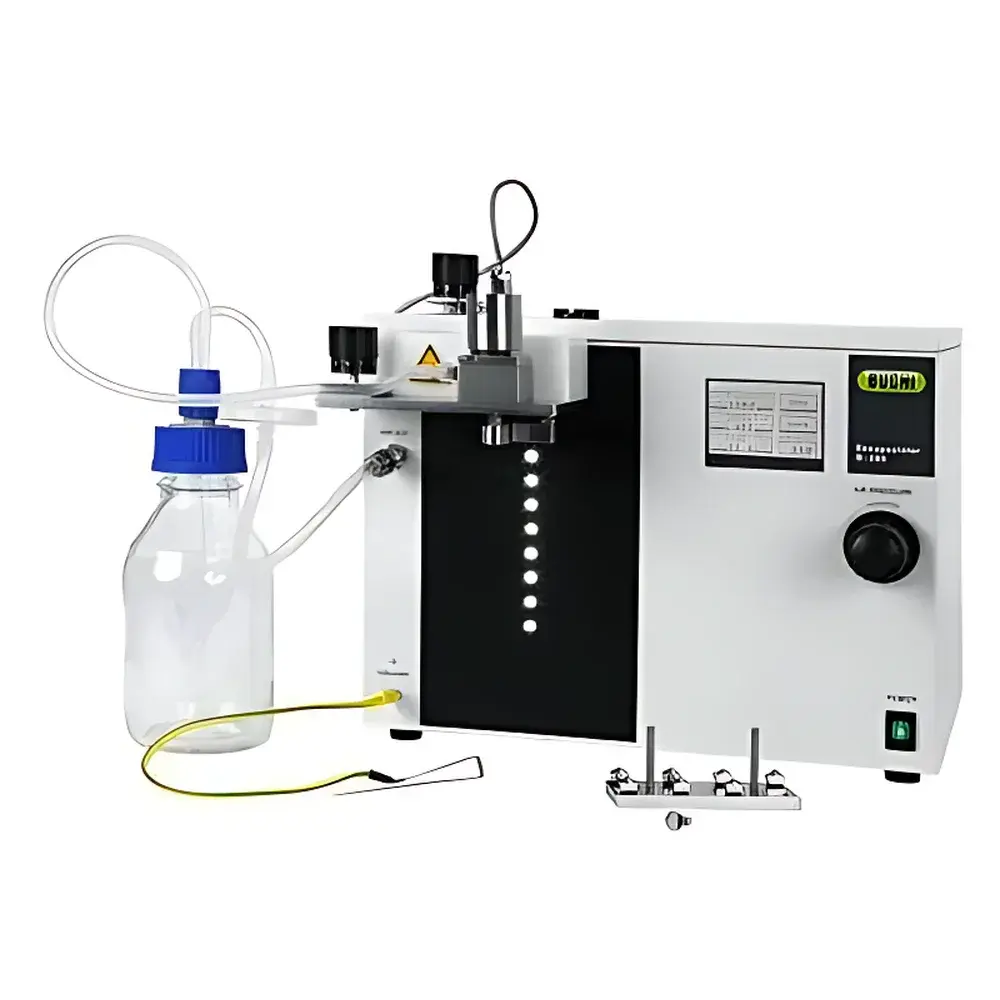
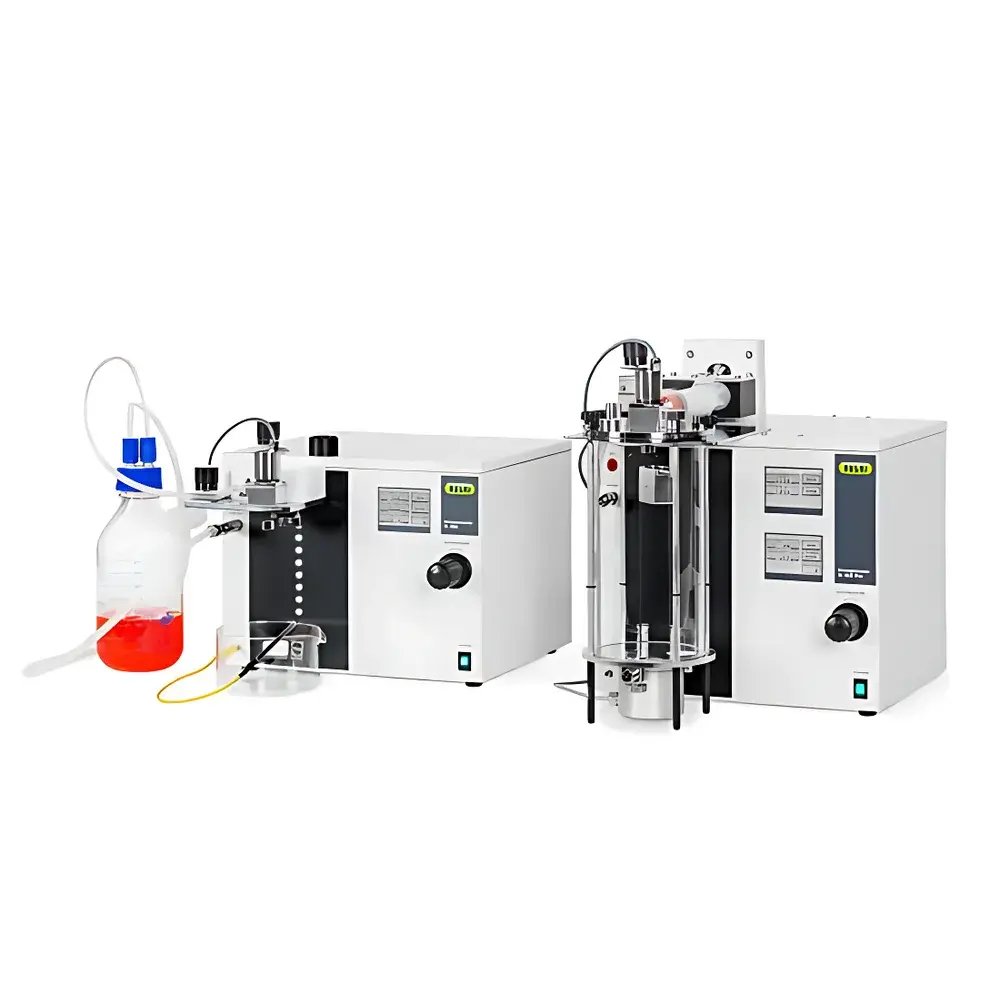
BUCHI B-390 Microencapsulation System
| Brand | BUCHI |
|---|---|
| Origin | Switzerland |
| Manufacturer | BUCHI AG |
| Type | Imported Instrument |
| Model | B-390 |
| Pricing | Upon Request |
Overview
The BUCHI B-390 Microencapsulation System is a precision-engineered, benchtop electrospraying and vibrational jetting platform designed for reproducible, scalable production of monodisperse microcapsules under mild, non-denaturing conditions. Operating on the principle of controlled laminar liquid jet breakup induced by high-frequency piezoelectric vibration—combined optionally with electrostatic charging—the system generates uniform droplets from a single or coaxial nozzle assembly, which solidify in situ via ionic crosslinking (e.g., Ca²⁺-mediated alginate gelation), thermal setting, solvent evaporation, or enzymatic polymerization. Unlike high-shear homogenization or spray drying, the B-390 avoids thermal stress, mechanical shear, and organic solvent exposure, preserving the structural integrity and bioactivity of sensitive payloads—including live cells, labile enzymes, peptides, probiotics, and volatile flavor compounds. Its modular architecture supports both research-scale process development and GMP-aligned pilot production, making it a critical tool for formulation scientists developing oral delivery systems, controlled-release fertilizers, encapsulated probiotics, and functional food ingredients.
Key Features
- High-precision piezoelectric vibration generator enabling stable jet formation at frequencies from 1–5 kHz, ensuring narrow droplet size distribution (RSD < 5%)
- Interchangeable stainless-steel nozzle sets—including standard single-orifice, concentric dual-fluid, and vibrating tip configurations—for core-shell, matrix, or multi-compartment encapsulation
- Integrated stroboscopic illumination system for real-time visualization and optimization of jet breakup dynamics during method development
- Temperature-controlled sample handling (ambient to 40 °C) and optional sterile operation mode compliant with ISO 5 cleanroom standards
- Modular fluid delivery: dual syringe pumps with independent flow rate control (0.01–10 mL/h per channel), compatible with viscous biopolymer solutions (up to 5% w/v sodium alginate)
- Robust stainless-steel and borosilicate glass construction; fully cleanable and autoclavable components where applicable
Sample Compatibility & Compliance
The B-390 accommodates a broad spectrum of wall materials—including sodium alginate, low-methoxy pectin, chitosan, gellan gum, cellulose sulfate, gelatin, and molten waxes—as well as diverse core payloads such as mammalian and microbial cells, plasmid DNA, liposomes, essential oils, vitamins (A, D, E, K), and heat-sensitive APIs. Encapsulation efficiency routinely exceeds 85% for hydrophilic actives and >70% for hydrophobic compounds, depending on matrix compatibility and crosslinking kinetics. The system meets fundamental design requirements for Good Manufacturing Practice (GMP) environments per Annex 11 and ICH Q5C guidelines. While not a certified GMP device out-of-the-box, its documentation package—including IQ/OQ protocols, material traceability records, and electronic logbook functionality—supports validation under FDA 21 CFR Part 11 and EU Annex 11 when deployed with compliant software modules.
Software & Data Management
The B-390 operates via BUCHI’s proprietary LabX® Microencapsulation Software, providing full parameter logging (vibration frequency, amplitude, flow rates, temperature, ambient humidity), audit-trail-enabled user access control, and export to CSV or PDF formats. All experimental metadata—including nozzle ID, batch number, operator ID, and timestamped process videos (via optional camera integration)—are stored with cryptographic integrity. The software supports method templates, version-controlled SOPs, and automatic report generation aligned with GLP and internal quality management systems. Data export complies with ALCOA+ principles (Attributable, Legible, Contemporaneous, Original, Accurate, Complete, Consistent, Enduring, Available), facilitating regulatory submissions and cross-departmental collaboration.
Applications
- Pharmaceutical R&D: Development of enteric-coated microparticles for gastric protection and colonic targeting
- Biotechnology: Immobilization of whole-cell biocatalysts (e.g., E. coli, S. cerevisiae) for continuous-flow biotransformation
- Food Science: Encapsulation of omega-3 fatty acids, anthocyanins, and probiotics to enhance shelf-life and gastric survival
- Cosmetics: Sustained release of retinol, niacinamide, or fragrance oils in aqueous emulsions
- Agriculture: Controlled-release formulations of biopesticides and micronutrients for seed coating and foliar application
- Materials Science: Fabrication of stimuli-responsive hydrogel beads for drug-eluting scaffolds and biosensors
FAQ
What is the minimum and maximum achievable capsule diameter?
The B-390 achieves a validated particle size range of 80 µm to 5 mm, with optimal reproducibility between 150 µm and 2 mm using standard nozzles and common biopolymer concentrations.
Can the system produce core-shell structures?
Yes—using the optional concentric nozzle kit, the B-390 enables simultaneous co-axial extrusion of core and shell fluids, supporting double-emulsion and interfacial polymerization strategies.
Is sterilization of the fluid path possible?
All wetted parts are autoclavable (121 °C, 20 min); the system supports aseptic operation with pre-sterilized nozzles, tubing, and collection vessels under laminar flow hood conditions.
Does the B-390 comply with 21 CFR Part 11?
When configured with LabX® Microencapsulation Software and appropriate IT infrastructure (e.g., network authentication, electronic signatures), the system supports Part 11 compliance through configurable audit trails, role-based access, and data integrity controls.
What wall materials are most commonly used with this system?
Sodium alginate remains the most widely adopted matrix due to its rapid, calcium-triggered gelation; however, chitosan–tripolyphosphate, gelatin–glutaraldehyde, and pectin–Ca²⁺ systems are routinely implemented without hardware modification.




