
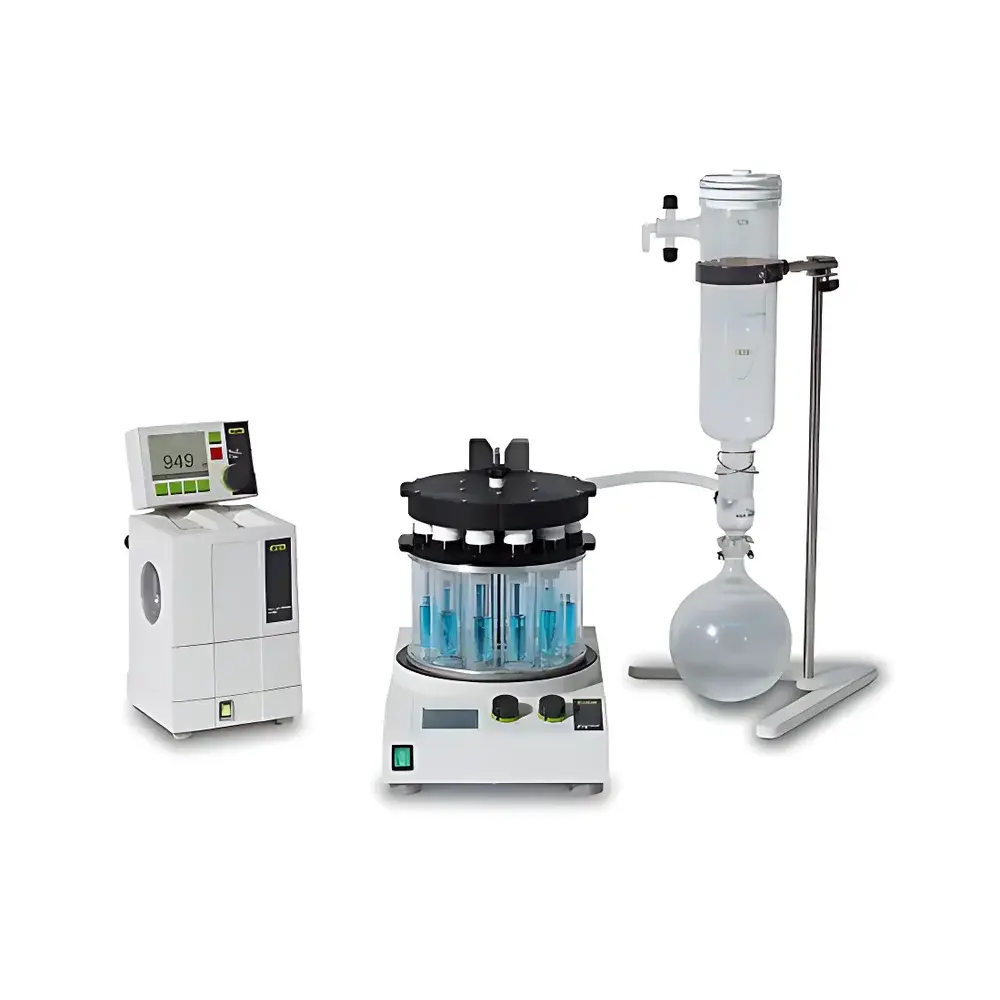
BUCHI Multivapor P-12 Parallel Evaporator
| Brand | BUCHI |
|---|---|
| Origin | Switzerland |
| Manufacturer | BUCHI AG |
| Type | Imported |
| Model | Multivapor P-12 |
| Capacity | 12 × 30 mL |
| Ultimate Vacuum | 1 mbar |
| Rotation Speed | 20–485 rpm |
| Temperature Range | 20–95 °C |
| Temperature Control Accuracy | ±3 °C (max) |
| Condenser Cooling Surface Area | 1700 cm² |
| Power Consumption | 800 W |
| Electrical Supply | 100–240 V, 50–60 Hz |
| Sample Vessel ID | 16–30 mm |
| Sample Vessel Length | 110–170 mm |
| Wetted Materials | PETP (or PEEK), PTFE, PFA, Borosilicate Glass |
Overview
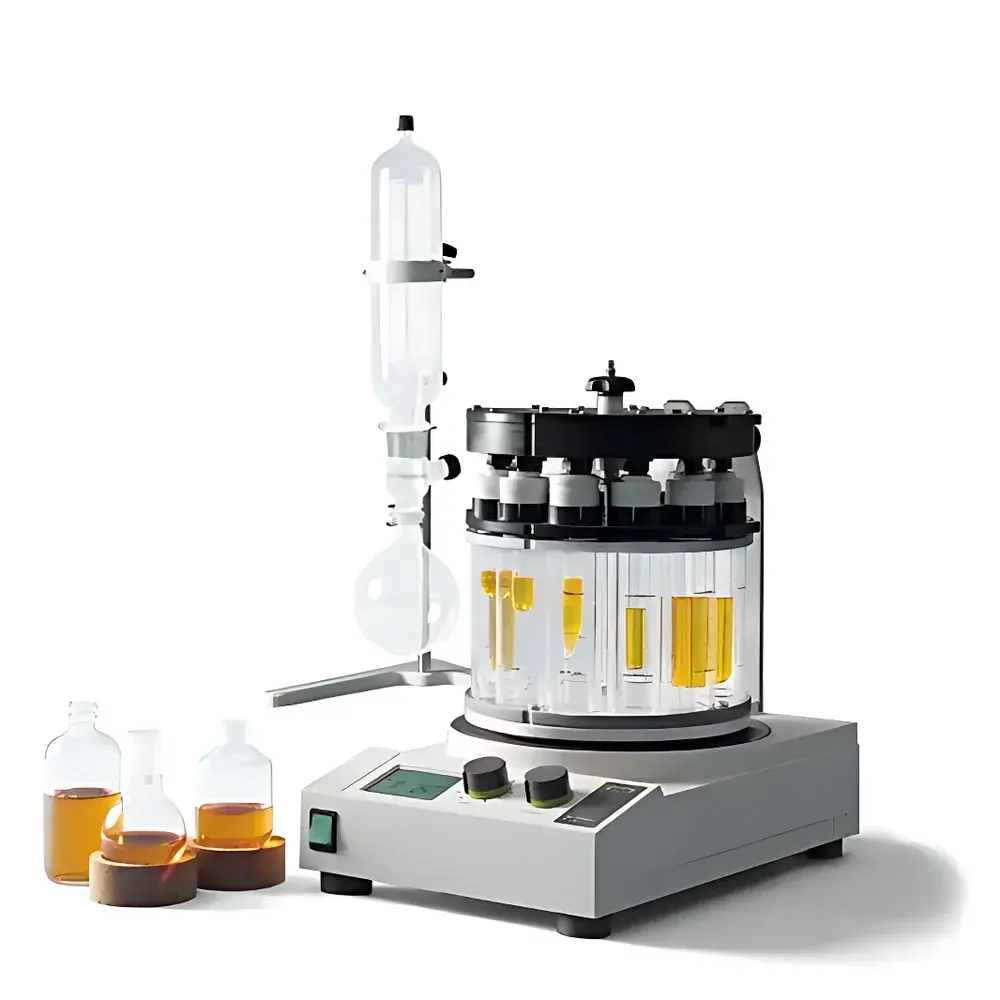
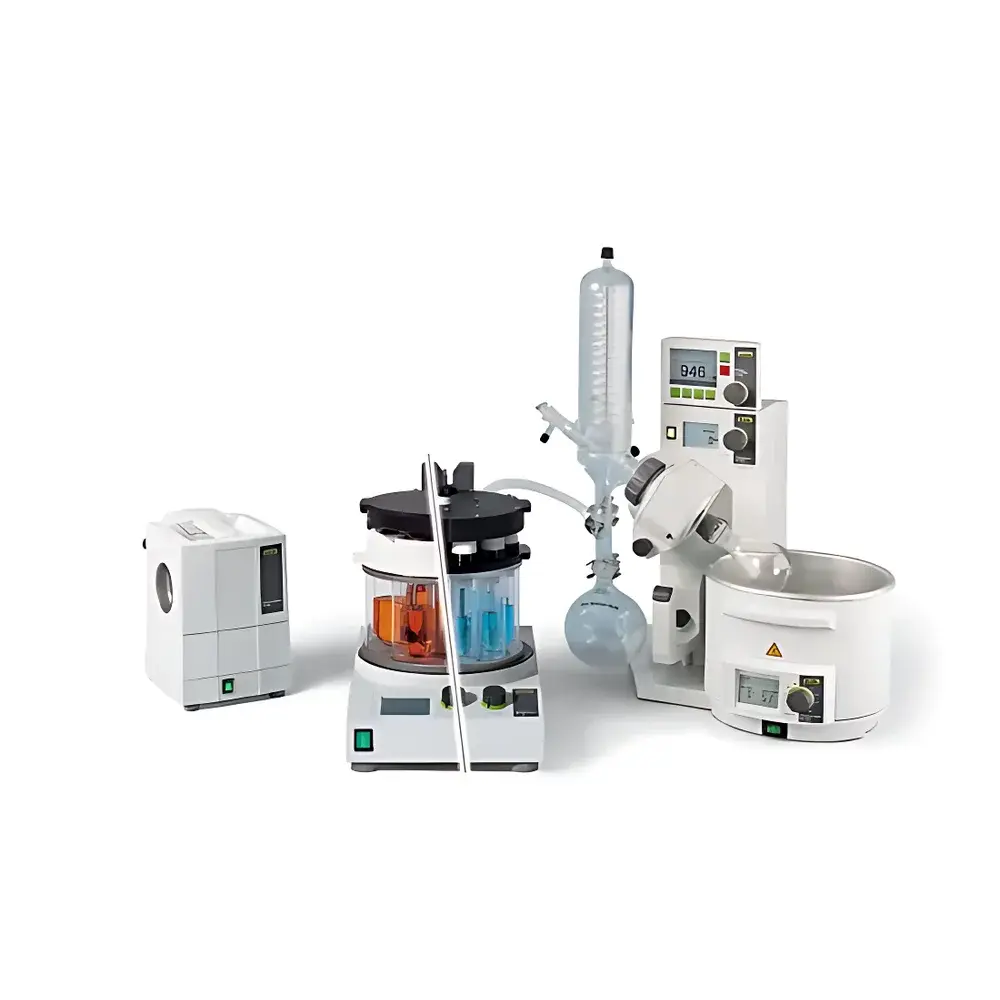
The BUCHI Multivapor P-12 is a compact, benchtop parallel evaporation system engineered for high-throughput solvent removal under controlled vacuum conditions. Unlike conventional rotary evaporators that process one sample per unit, the Multivapor P-12 enables simultaneous, independent evaporation of up to 12 samples—each sealed in its own vessel—within a single footprint. Its design leverages established principles of vacuum-assisted rotary evaporation, where reduced pressure lowers the boiling point of solvents, while controlled heating and rotation enhance surface area exposure and mass transfer efficiency. The system operates as either a standalone solution or an integrated module within a Rotavapor® workflow: vapor generated from the P-12’s sample tubes is routed directly to the Rotavapor’s condenser and vacuum system, eliminating the need for redundant cooling or pumping infrastructure. This architecture supports scalable, resource-efficient sample preparation in analytical chemistry, pharmaceutical development, environmental testing, and natural product isolation laboratories.
Key Features
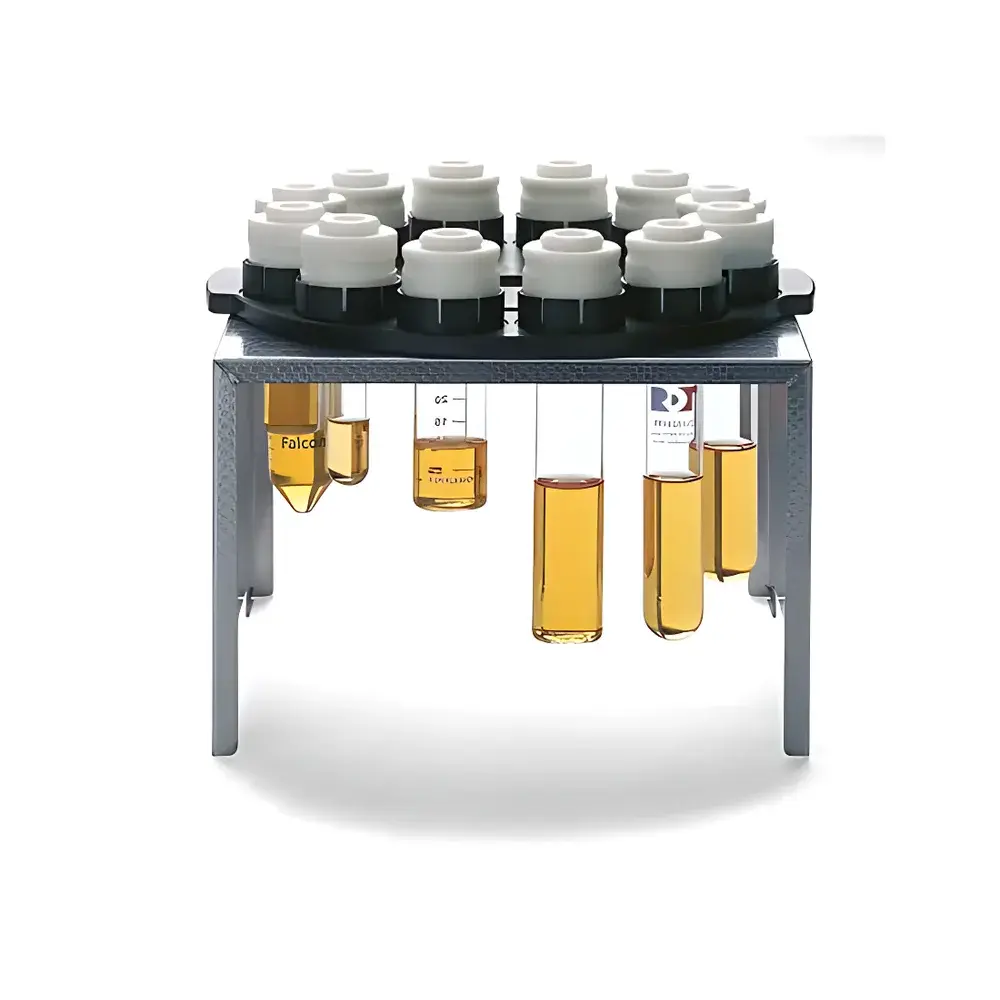
- Parallel processing of 12 samples (30 mL max per vial) with individual sealing—preventing cross-contamination and enabling heterogeneous solvent mixtures
- Integrated temperature-controlled heating block with precise setpoint regulation (20–95 °C) and thermal stability ≤ ±3 °C
- Variable-speed rotation drive (20–485 rpm) optimized for gentle agitation of sensitive analytes and viscous matrices
- High-efficiency condenser with 1700 cm² active cooling surface, compatible with standard Rotavapor® condensers or optional external chillers
- Modular vacuum interface supporting integration with BUCHI I-300/I-300 Pro vacuum controllers for automated pressure ramping and endpoint detection
- Compact footprint (26 × 40 cm additional space required) minimizing lab real estate impact without compromising throughput
- Chemically resistant wetted materials—including borosilicate glass, PTFE, PFA, and PETP (or PEEK)—ensuring compatibility with aggressive solvents (e.g., chlorinated, acidic, or basic media)
- Energy-efficient operation (800 W nominal power) compliant with IEC 61000-3-2 harmonic emission standards
Sample Compatibility & Compliance
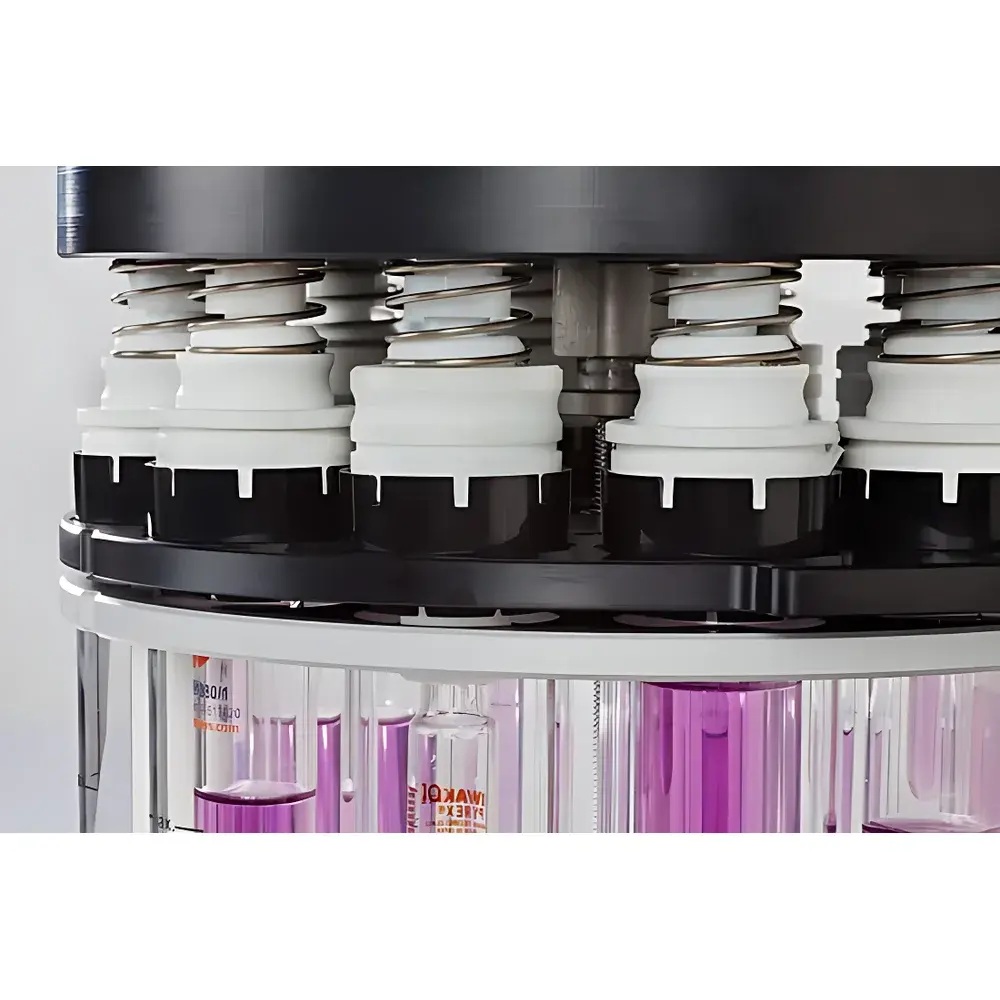
The Multivapor P-12 accommodates standard round-bottom flasks and custom vials with inner diameters of 16–30 mm and lengths of 110–170 mm. Its modular sealing design ensures reproducible vacuum integrity across all 12 channels, validated per ISO 2859-1 sampling plans for leak-tightness verification. The system meets key regulatory expectations for method robustness and documentation traceability: when paired with I-300 Pro and BUCHI LabX® software, it supports 21 CFR Part 11-compliant electronic records, including audit trails for temperature, vacuum, rotation, and runtime parameters. All materials contacting samples comply with USP , FDA extractables/leachables guidance, and EU Directive 2002/72/EC for food-contact polymers. Operation under ≤1 mbar vacuum aligns with ISO 14001 environmental management protocols by reducing solvent emissions versus nitrogen blow-down methods.
Software & Data Management
When operated with BUCHI LabX® software and I-300 Pro vacuum controller, the Multivapor P-12 delivers full digital control and data capture. LabX enables method-driven workflows—including multi-step temperature ramps, pressure gradients, and rotation profiles—with automatic logging of all critical process variables. Each run generates timestamped, user-attributed datasets stored in encrypted SQLite or SQL Server databases. Audit trail functionality satisfies GLP and GMP requirements, recording operator actions, parameter changes, and system events with immutable timestamps. Export options include CSV, PDF reports, and direct LIMS integration via ASTM E1384-compliant interfaces. Optional PT100 temperature probe support allows real-time monitoring of individual sample headspace temperatures—critical for thermolabile compound recovery.
Applications
- Routine concentration of HPLC fractions, SPE eluates, and LC-MS extracts in pharmaceutical QC labs
- Parallel solvent exchange during peptide synthesis and oligonucleotide purification
- High-throughput residual solvent analysis (ICH Q3C) sample prep in API development
- Environmental analysis workflows—including EPA Method 502.2 and 8082A—where multi-sample extraction and cleanup are required
- Natural product isolation involving sequential polarity-based fractionation under inert atmosphere
- Academic research labs performing combinatorial library synthesis or metabolomics sample preparation
FAQ
Can the Multivapor P-12 operate independently without a Rotavapor®?
Yes—it includes a dedicated heating block, rotation mechanism, and vacuum interface; however, optimal condensation requires connection to an external condenser and vacuum pump.
Is the system compatible with corrosive solvents such as hydrochloric acid or trifluoroacetic acid?
Wetted components (PTFE, PFA, borosilicate glass) provide broad chemical resistance; consult BUCHI’s Solvent Compatibility Guide for specific concentration/temperature limits.
Does the P-12 support programmable multi-step evaporation methods?
Yes—when used with LabX® and I-300 Pro, users can define time-dependent temperature, vacuum, and rotation profiles for complex solvent mixtures.
What safety certifications does the instrument carry?
CE marked per EN 61010-1:2010, UL 61010-1, and RoHS 2011/65/EU compliant; factory-tested for dielectric strength and earth continuity.
How is calibration verified for temperature and vacuum accuracy?
BUCHI provides optional IQ/OQ documentation packages, and temperature uniformity across the block is verified per ASTM E220 using NIST-traceable PT100 probes.



