
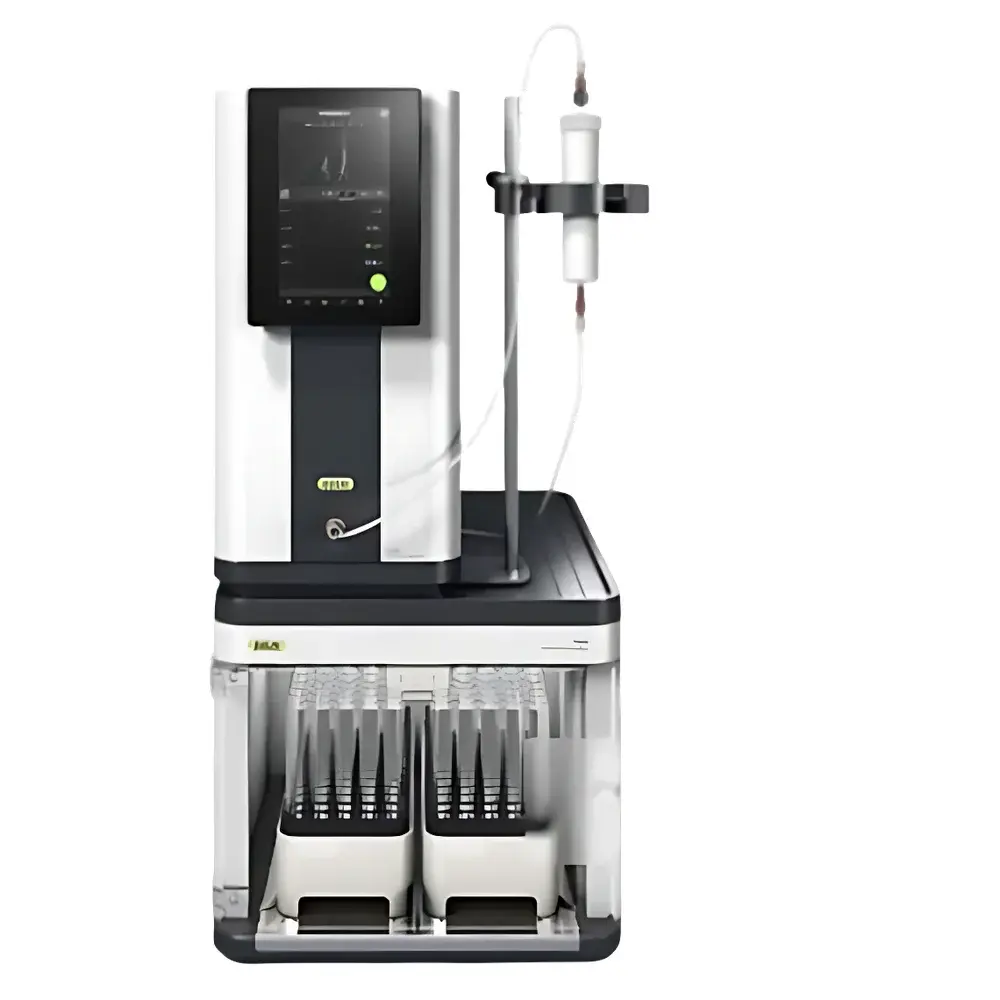
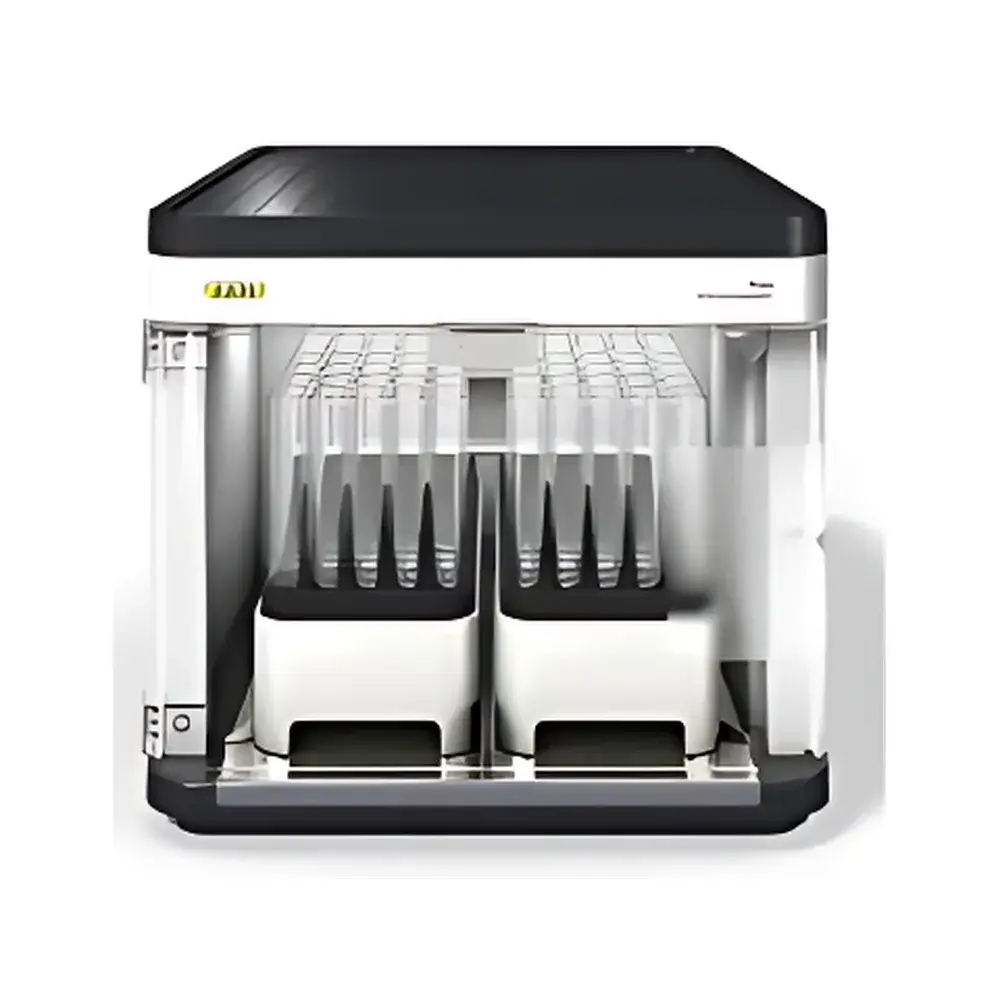
BUCHI Pure Essential Preparative Liquid Chromatography System
| Brand | BUCHI |
|---|---|
| Origin | Switzerland |
| Manufacturer Type | Direct Manufacturer |
| Origin Category | Imported |
| Model | Pure Essential System |
| Application Level | Laboratory Grade |
| Instrument Type | Medium-to-Low Pressure Preparative LC |
| Flow Rate Range | 0–300 mL/min |
| Flow Accuracy | ±1% |
| Flow Precision | ±1% at 5–250 mL/min |
| Maximum Pressure | 50 bar |
| UV Wavelength Options | Fixed wavelengths at 254, 275, 325, and 365 nm |
Overview
The BUCHI Pure Essential Preparative Liquid Chromatography System is a modular, medium-to-low pressure preparative HPLC platform engineered for robust, reproducible purification of synthetic organic compounds, natural product isolates, pharmaceutical impurities, and biomolecules—including peptides and small proteins—under laboratory-scale conditions. Based on classical liquid chromatographic separation principles, the system utilizes high-precision solvent delivery, multi-wavelength UV detection, and intelligent fraction collection to support both analytical method translation and scalable purification workflows. Its architecture adheres to fundamental chromatographic design tenets: laminar flow control, minimized extra-column volume, and thermally stable optical path alignment—ensuring retention time stability and peak fidelity across repeated runs. Designed and manufactured in Switzerland, the Pure Essential System complies with core mechanical and electrical safety standards (IEC 61010-1) and supports traceable operation under GLP-compliant environments when integrated with validated software protocols.
Key Features
- Tri-plunger solvent pump with dual independent channels enables real-time binary gradient formation without pre-mixing—supporting isocratic, linear, or step-gradient elution profiles with on-the-fly adjustment capability.
- Four-channel fixed-wavelength UV detector (254 nm, 275 nm, 325 nm, 365 nm) allows simultaneous signal monitoring across orthogonal absorption bands; individual channels can be enabled or disabled per run to optimize signal-to-noise ratio and avoid saturation.
- Sealed fraction collector with directional exhaust port and integrated ventilation fan eliminates ambient solvent vapor accumulation—meeting OSHA PEL and EU Directive 2004/40/EC occupational exposure requirements for volatile organic compounds.
- Dual sample introduction modes: liquid injection via loop-based autosampler-compatible interface and solid-phase loading using dedicated cartridge adapters—enabling direct crude mixture application without prior dissolution.
- Modular hardware configuration permits flexible integration of optional components including mass-directed triggering interfaces, pH-controlled fraction collection modules, and evaporative light-scattering detection (ELSD) add-ons.
- Collection rack compatibility includes standard formats (18 × 150 mm, 16 × 150 mm), high-capacity trays (480 mL × 8), and rotary evaporation-ready vial holders—reducing post-run handling steps and minimizing sample transfer losses.
Sample Compatibility & Compliance
The Pure Essential System accommodates a broad polarity range of analytes—from nonpolar hydrocarbons (e.g., PAHs, steroids) to moderately polar alkaloids and glycosides, as well as ionizable compounds under buffered mobile phase conditions. It supports both reversed-phase (C18, C8, phenyl-hexyl) and normal-phase (silica, cyano, diol) columns up to 50 mm internal diameter. Column temperature control is available via optional column oven (range: ambient +5°C to 80°C). All wetted parts are chemically resistant to common solvents (acetonitrile, methanol, THF, dichloromethane, ethyl acetate) and compatible with 0.1–1.0 M aqueous buffers (pH 2–9). The system meets ISO/IEC 17025 documentation requirements for calibration traceability and supports audit-ready operation under FDA 21 CFR Part 11 when paired with BUCHI’s certified LabX software suite.
Software & Data Management
Control and data acquisition are managed through BUCHI’s LabX Pure software—a validated, role-based platform supporting electronic signatures, audit trail logging, and user permission hierarchies. Method templates include built-in gradient optimization wizards, peak tracking algorithms for baseline correction, and customizable fraction trigger logic (threshold-based, time-windowed, or multi-signal OR/AND conditions). Reports are exportable in PDF, CSV, and XML formats; users may embed institutional logos, regulatory disclaimers, and SOP reference numbers into report headers. Raw chromatograms and collection logs are stored with SHA-256 checksum integrity verification and support long-term archival per ISO 15489-1 information governance standards.
Applications
- Synthetic chemistry: isolation of reaction intermediates and final products from complex mixtures; removal of catalyst residues and unreacted starting materials.
- Natural product research: dereplication-guided fractionation of plant extracts; isolation of novel secondary metabolites for structural elucidation (NMR, HRMS).
- Pharmaceutical development: purification of genotoxic impurities per ICH Q3A(R2); preparation of reference standards for assay validation.
- Biotechnology: desalting and buffer exchange of peptide fractions; polishing steps following solid-phase synthesis or enzymatic cleavage.
- Academic teaching labs: hands-on instruction in chromatographic theory, method development, and scale-up principles—with intuitive workflow guidance and real-time parameter visualization.
FAQ
What pressure rating does the Pure Essential System support, and how does it affect column selection?
The system operates up to 50 bar, making it suitable for silica- and polymer-based columns with particle sizes ≥10 µm and inner diameters up to 50 mm—ideal for flash and medium-pressure purification.
Can the UV detector monitor multiple wavelengths simultaneously during a single run?
Yes—the four fixed-wavelength channels operate in parallel, enabling concurrent absorbance measurement at 254 nm (aromatics), 275 nm (nucleic acid bases), 325 nm (cinnamates), and 365 nm (UV-active excipients).
Is the system compliant with FDA 21 CFR Part 11 requirements?
Full compliance is achieved when used with LabX Pure software configured in validated mode, including electronic signatures, audit trails, and secure user authentication.
Does the system support method transfer from analytical to preparative scale?
Yes—its flow accuracy (±1%), gradient reproducibility, and low dwell volume (<2 mL) ensure reliable retention time scaling using standard geometric and linear velocity models.
What maintenance intervals are recommended for the tri-plunger pump and UV flow cell?
Pump seals require inspection every 6 months or 1,000 hours of operation; quartz UV flow cells should be cleaned monthly with appropriate solvent flushes and inspected for scratches or deposits before critical purity assessments.
Related Products



