
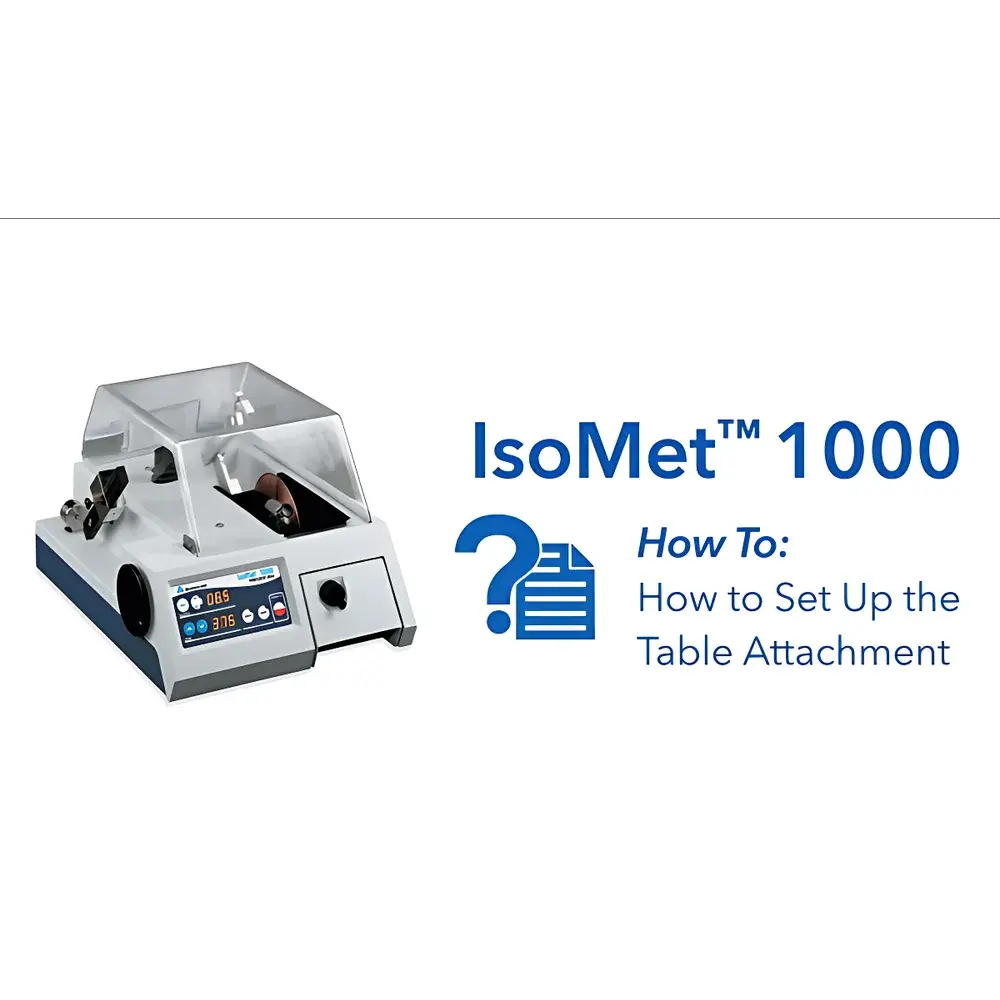
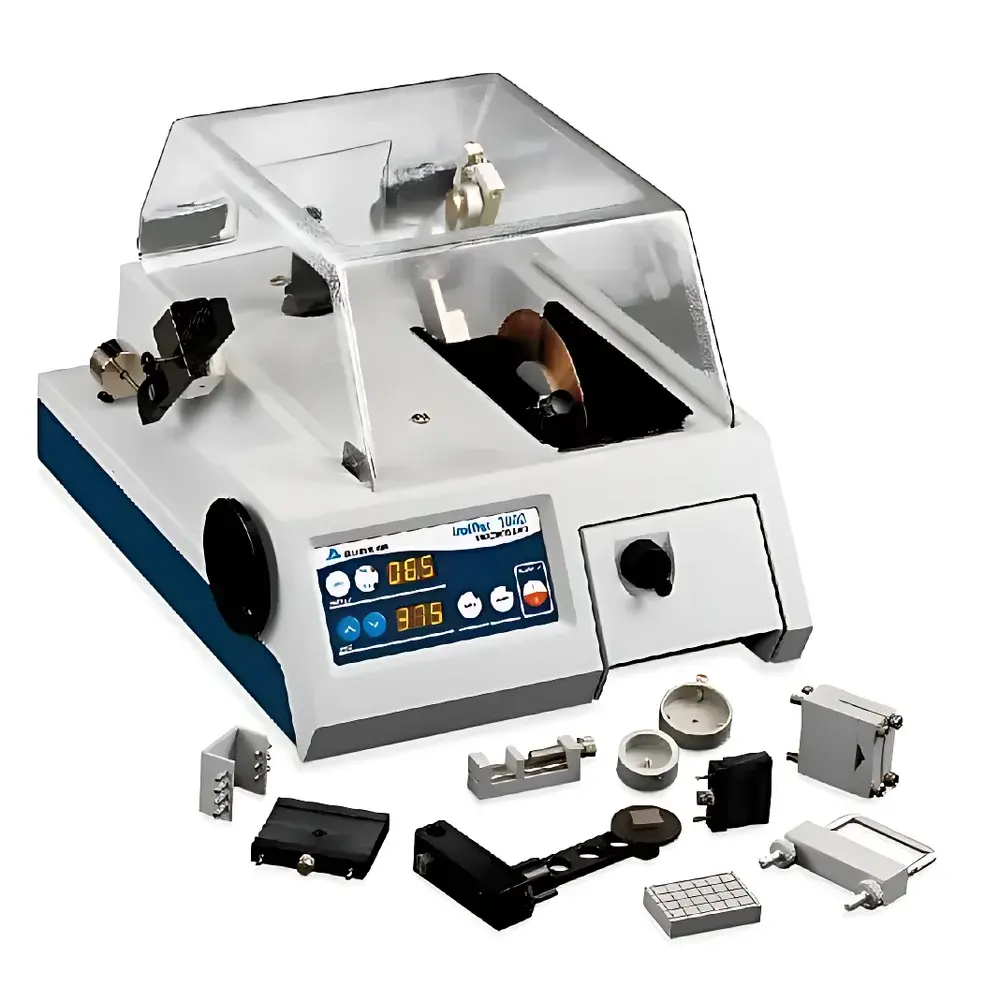
Buehler IsoMet 1000 Precision Cut-Off Machine
| Brand | Buehler |
|---|---|
| Origin | USA |
| Model | IsoMet 1000 |
| Instrument Type | Precision Cut-Off Machine |
| Enclosure | Fully Enclosed Cutting Chamber |
| Feed Mechanism | Gravity-Driven Loading |
| Optional Accessories | Rotary/Vibratory Chuck, Benchtop Saw Module, Precision Angle Gauge, Diamond Blade Dressing Unit |
| Cooling System | Front-Accessible Removable Coolant Reservoir |
| Compliance | Designed for ASTM E3, ISO 148-1, and ASTM E1245 sample preparation workflows |
| Software Control | Touchscreen Interface with Programmable Depth/Time Termination |
Overview
The Buehler IsoMet 1000 Precision Cut-Off Machine is an engineered solution for high-fidelity material sectioning in analytical laboratories, research facilities, and quality control environments. Operating on a gravity-fed feed principle, it delivers controlled, low-stress material removal without forced blade engagement—minimizing thermal distortion, microcracking, and plastic deformation at the cut interface. This mechanical design ensures reproducible kerf width, planar integrity, and subsurface damage-free surfaces essential for subsequent metallographic analysis, SEM imaging, XRD characterization, or failure analysis. The fully enclosed cutting chamber meets OSHA-compliant safety standards while enabling effective coolant containment and operator protection during high-speed diamond-blade operation (up to 3,000 rpm). Its architecture supports both routine bulk-sectioning and delicate thin-section preparation across heterogeneous material classes—including brittle ceramics, soft polymers, laminated composites, sintered carbides, biological tissues, and multilayer electronic substrates.
Key Features
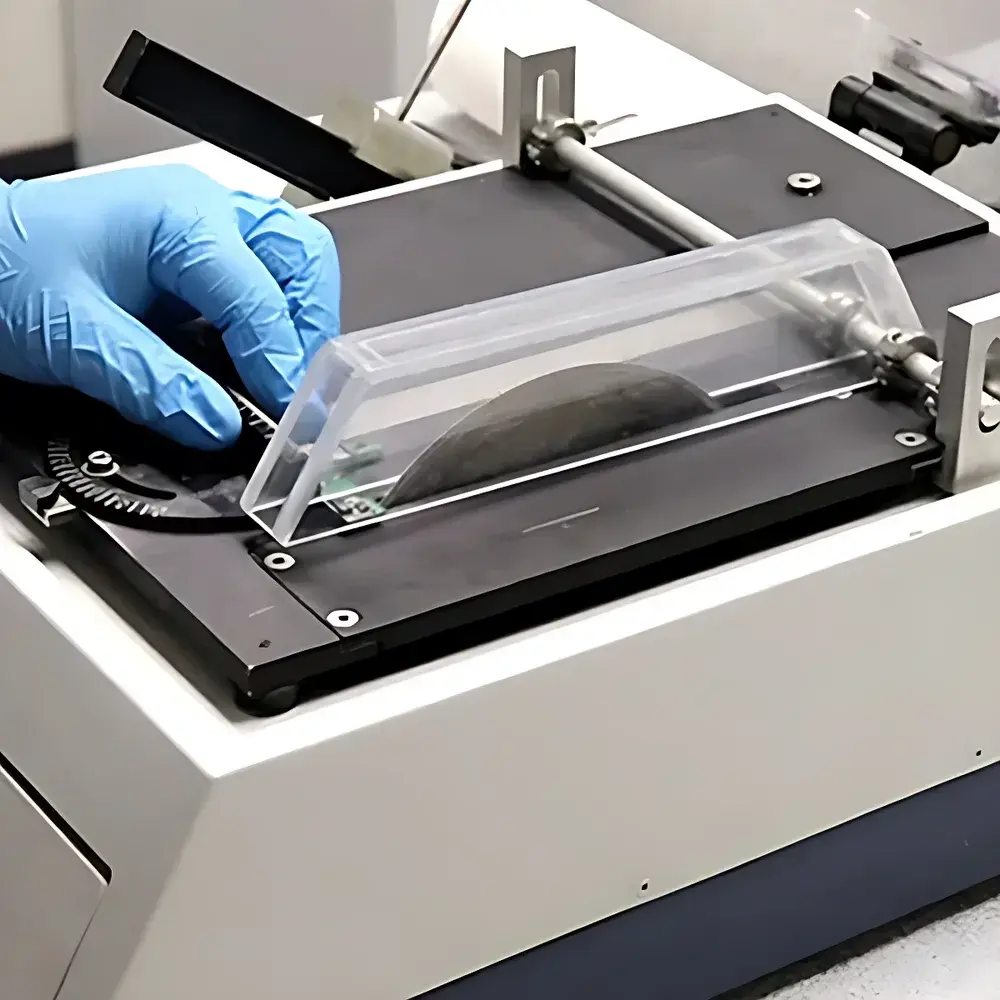
- Fully enclosed, transparent polycarbonate cutting chamber with quick-release latch for safe access and splash containment
- Intuitive touchscreen interface with LED status indicators for real-time monitoring of speed, load, elapsed time, and programmed depth termination
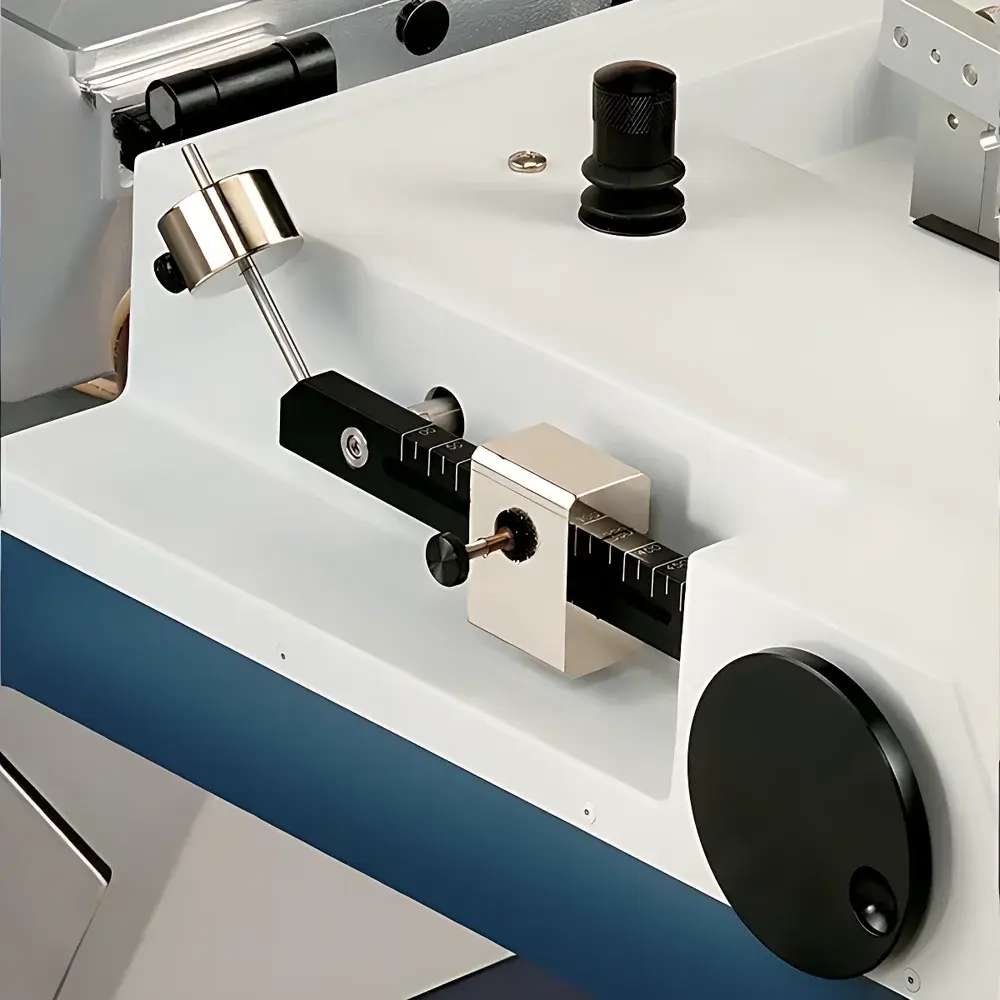
- Gravity-driven feed system eliminates hydraulic or motorized pressure—preventing overloading, chatter, and edge roll on fragile specimens
- Front-access removable coolant reservoir with integrated diamond blade dressing station for in-situ conditioning without interrupting workflow
- Modular accessory ecosystem: rotary/vibratory chuck for large-diameter or irregular samples; benchtop saw module for PCB depaneling and micro-electronic sampling; precision angle gauge (±0.1° resolution) for crystallographic plane alignment per ASTM E112
- Tool-free blade change mechanism compatible with standard 10″ (254 mm) diamond-impregnated or resin-bonded abrasive wheels
Sample Compatibility & Compliance
The IsoMet 1000 accommodates specimens ranging from 0.5 mm thick wafers to 100 mm diameter cylinders, supporting diverse geometries via interchangeable clamping fixtures—including V-blocks, flat jaws, and custom-machined inserts. It is routinely employed in laboratories adhering to ASTM E3 (Standard Guide for Preparation of Metallographic Specimens), ISO 148-1 (Metallic Materials – Charpy Impact Testing), and ASTM E1245 (Standard Practice for Determining Microstructural Banding). When configured with traceable calibration records and audit-ready operation logs, the system satisfies GLP and GMP documentation requirements under FDA 21 CFR Part 11 for regulated materials testing. All coolant handling components are chemically resistant to aqueous and oil-based lubricants commonly used in metallurgical sectioning.
Software & Data Management
The embedded control firmware enables programmable cutting protocols—including multi-stage speed ramping, dwell time at critical depths, and automatic shutdown upon reaching preset cut-through depth or elapsed duration. While the IsoMet 1000 does not feature cloud connectivity or third-party API integration, its onboard memory retains up to 50 user-defined methods with timestamped execution history. Each protocol stores rotational speed (rpm), applied load (N), coolant flow rate (mL/min), and total cutting time—facilitating method transfer between instruments and internal QA review. For laboratories requiring electronic record retention, optional USB export allows CSV-formatted log files to be archived within LIMS or ELN platforms compliant with ALCOA+ data integrity principles.
Applications
- Metallography: Cross-sectional preparation of weld joints, heat-affected zones, and coated systems without interfacial delamination
- Electronics: Singulation of ceramic substrates, SiC power modules, and flexible PCBs with minimal solder mask chipping
- Geosciences: Thin-sectioning of mineral aggregates and sedimentary rock cores preserving grain boundary continuity
- Biomedical: Sectioning of calcified tissue, dental implants, and polymer-based scaffolds for histomorphometric analysis
- Advanced Materials: Kerf-controlled slicing of additively manufactured Ti-6Al-4V lattices and carbon fiber-reinforced thermoplastics
- Forensic Engineering: Failure site isolation in fractured turbine blades or composite aircraft components
FAQ
What types of diamond blades are compatible with the IsoMet 1000?
The machine accepts standard 10-inch (254 mm) diameter diamond blades with 1-inch (25.4 mm) arbor holes, including Buehler’s proprietary Accu-Blade series optimized for specific material families (e.g., Accu-Blade Cu for copper alloys, Accu-Blade Bio for hydrated tissues).
Can the IsoMet 1000 perform angled cuts for crystallographic analysis?
Yes—when equipped with the optional precision angle gauge accessory, it achieves repeatable angular orientation from 0° to 90° in 0.1° increments, meeting requirements for preparing cleavage planes in single-crystal semiconductors per ASTM F1470.
Is coolant recycling supported?
The removable reservoir permits manual filtration and reuse of water-glycol or synthetic coolants; however, no built-in filtration or recirculation pump is included.
How is blade wear compensated during extended cutting cycles?
The integrated dressing station allows on-machine truing and sharpening of diamond blades using silicon carbide or borosilicate rods—restoring cutting efficiency without disassembly.
Does the IsoMet 1000 meet CE or UL certification requirements?
Units shipped to North America comply with UL 61010-1; EU-bound configurations include CE marking per Machinery Directive 2006/42/EC and EMC Directive 2014/30/EU.



