

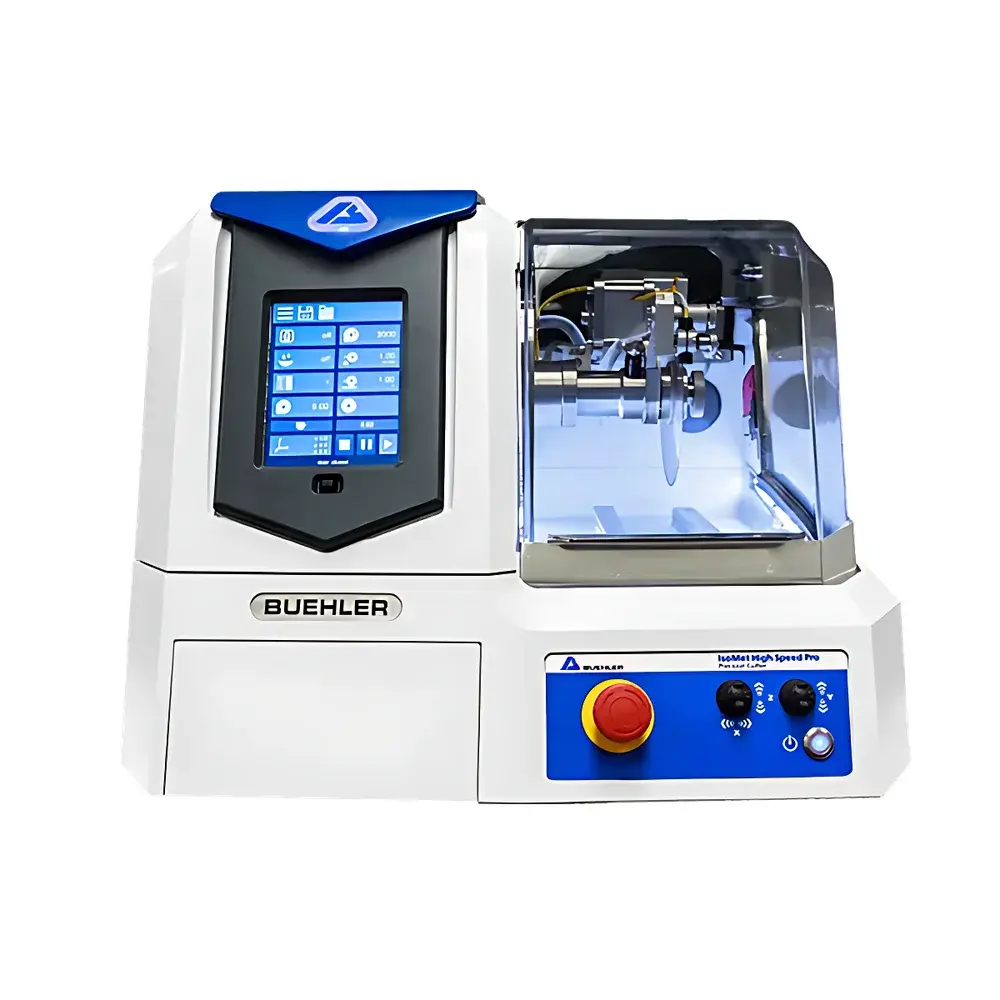
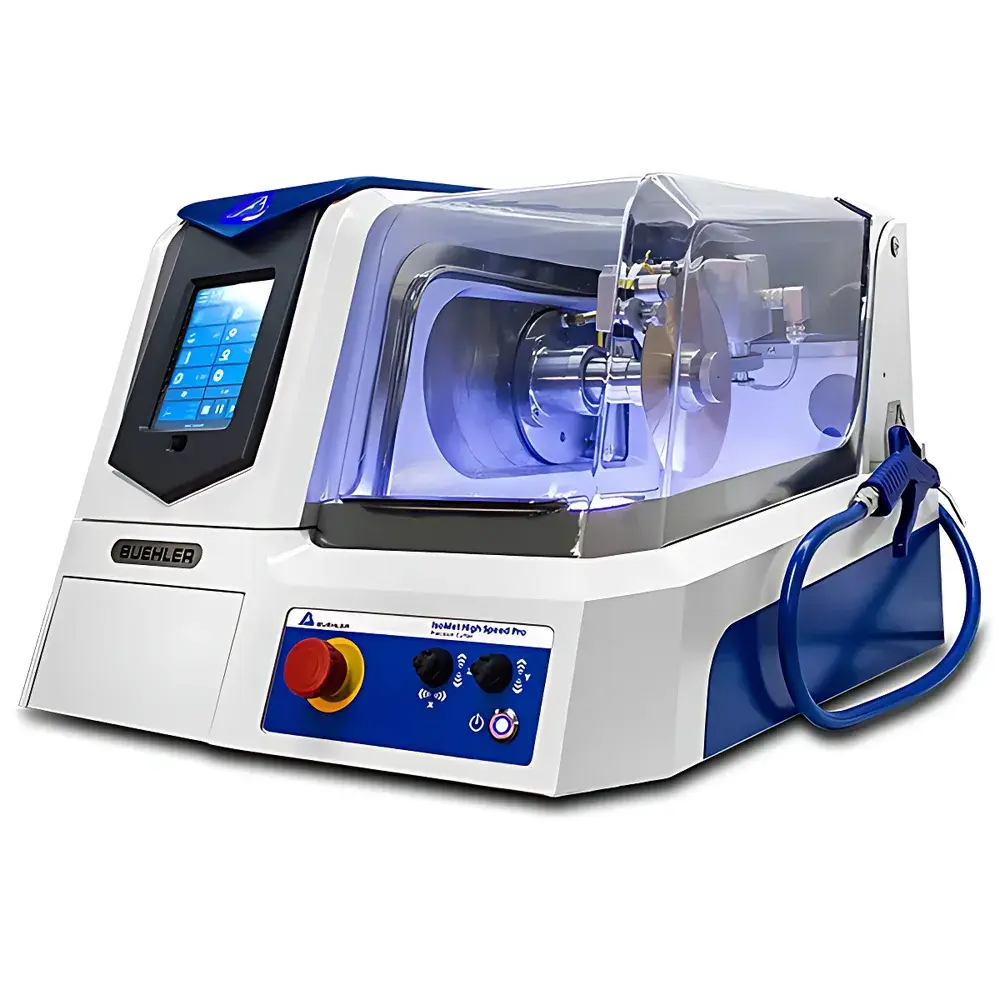
Buehler IsoMet HS High-Speed Precision Cutting Machine
| Brand | Buehler |
|---|---|
| Origin | USA |
| Model | IsoMet HS |
| Instrument Type | Precision Cutting Machine |
| Motor Power | 2.68 HP (2 kW) |
| Input Voltage | 100–240 VAC, 50–60 Hz, Single Phase |
| Blade Travel Axes | Horizontal & Linear (X, Y) |
| Horizontal Position Range | 0–2 in (0–50 mm) |
| Feed Rate Range | 0.04–1 in/min (1.2–25.4 mm/min) |
| Feed Increment | 0.01 in (0.25 mm) |
| Blade Speed | 200–5000 rpm |
| Cut Length Range | 0.01–7.5 in (0.25–190 mm) |
| Cut Length Increment | 0.01 in (0.25 mm) |
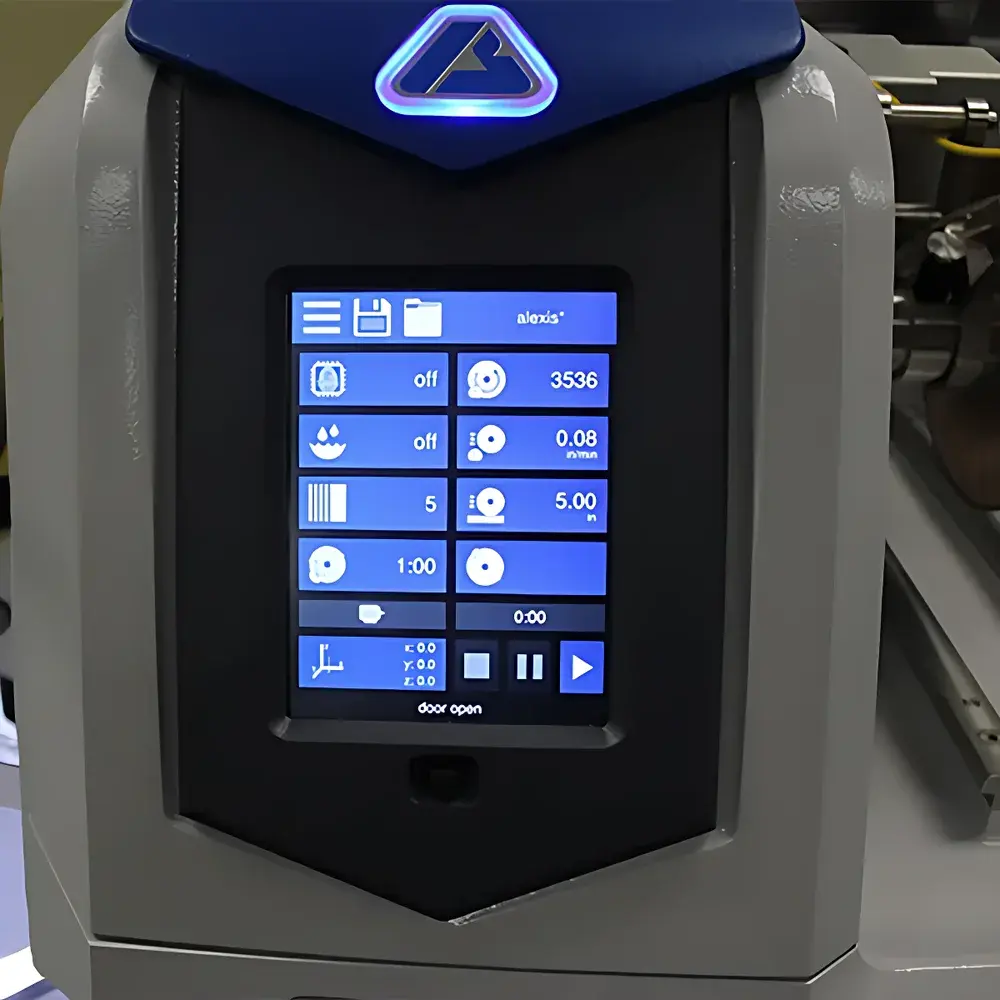
| Display | 6.5″ LCD with LED backlight |
| Control Interface | Touchscreen + Precision Motion Controller |
| Cooling System | Integrated recirculating reservoir (4 L capacity) |
| Coolant Flow Rate (in tubing) | 2 L/min |
| Coolant Flow Rate (at blade) | 2.5 L/min |
| Illumination | Adjustable-intensity dual-LED light strips |
| Optional | Green alignment laser |
| Continuous Cutting Mode | Yes |
| Thin-Section Blade Diameter | 3–8 in (75–200 mm) |
| Abrasive Wheel Diameter | 5–8 in (125–200 mm) |
| Arbor Size | 0.5 in |
| Cutting Chamber Dimensions | 9 in × 20 in (228 mm × 508 mm) |
| Max Sample Diameter | 2.8 in (71 mm) |
| Unit Dimensions (W×D×H, lid open/closed) | 24 in × 30 in × 36 in / 19 in (609.6 mm × 762 mm × 914.4 mm / 482.6 mm) |
| Weight | Not specified |
| Noise Level | Not specified |
| Safety Features | Interlocked safety hood, emergency stop button |
| Compliance | CE Directive |
Overview
The Buehler IsoMet HS High-Speed Precision Cutting Machine is an engineered solution for reproducible, low-damage sectioning of metallurgical, geological, electronic, and advanced ceramic specimens. Designed for laboratories requiring stringent dimensional control and minimal thermal or mechanical artifact generation, the IsoMet HS employs a high-torque linear feed motor coupled with digitally regulated blade rotation to deliver precise material removal under both automated and operator-guided conditions. Its core architecture follows the principles of controlled-force abrasive sectioning—where cutting parameters (feed rate, rotational speed, coolant delivery, and dwell time) are decoupled and independently optimized per specimen class. This enables consistent kerf width, planar surface integrity, and edge preservation—particularly critical when preparing samples for subsequent metallographic analysis, SEM cross-sectioning, or failure analysis workflows.
Key Features
- Intuitive touchscreen interface with icon-driven parameter navigation—enables rapid setup without procedural training.
- SmartCut™ adaptive feed control—dynamically modulates linear advancement based on real-time torque feedback to minimize chipping, cracking, or subsurface deformation in brittle or laminated materials.
- Dual-mode operation: fully automated sequential cutting programs (with programmable pause intervals), manual joystick-controlled positioning, and SmartCut™ semi-automated mode for hybrid precision tasks.
- Integrated recirculating coolant system (4 L reservoir) delivering 2.5 L/min directly to the cut zone—compatible with aqueous, oil-based, and polymer-enhanced coolants; external chillers or filtration units may be connected via standard fittings.
- High-resolution positional feedback across X- and Y-axes ensures sub-0.25 mm repeatability in cut length and horizontal placement—critical for serial sectioning and wafer-level metrology prep.
- CE-compliant safety architecture including interlocked transparent polycarbonate hood, redundant emergency stop circuitry, and automatic spindle shutdown upon lid opening.
Sample Compatibility & Compliance
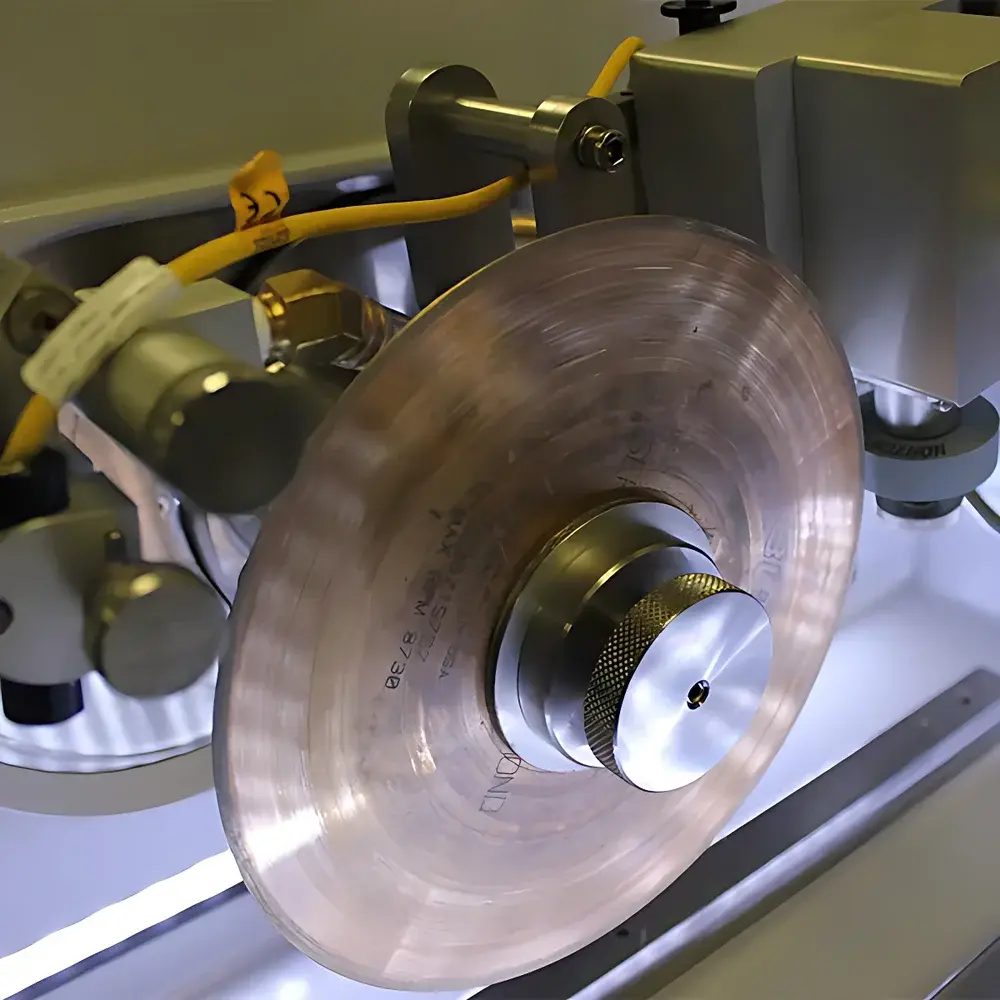
The IsoMet HS accommodates specimens up to 71 mm in diameter and supports thin-sectioning down to 0.25 mm cut length increments—making it suitable for hard alloys (e.g., Ti-6Al-4V, Inconel), composites (CFRP, SiC-reinforced ceramics), semiconductor wafers, and mineralogical thin sections. It accepts standard abrasive wheels (125–200 mm), diamond blades (75–200 mm), and CBN wheels—each secured via ISO 5553-compliant 12.7 mm (0.5 in) arbor mounts. The system meets CE Machinery Directive 2006/42/EC requirements for mechanical safety and electromagnetic compatibility (EMC Directive 2014/30/EU). While not certified to ISO/IEC 17025 or GLP as a standalone instrument, its deterministic motion control, audit-ready parameter logging (via optional software), and traceable calibration pathways support integration into ISO 9001- or ASTM E3-22–compliant sample preparation SOPs.
Software & Data Management
The onboard controller retains the last-used configuration—including feed rate, RPM, cut depth, and coolant activation state—eliminating re-entry errors between sessions. Optional Buehler OmniMet™ Software (v5.0+) provides extended functionality: full parameter scripting, cycle logging with timestamped metadata (operator ID, date/time, specimen ID), exportable CSV reports for QA documentation, and remote firmware updates. All stored protocols adhere to ALCOA+ data integrity principles when deployed in regulated environments. Audit trails include user login events, parameter modifications, and emergency stop triggers—facilitating compliance with FDA 21 CFR Part 11 where electronic records are governed.
Applications
- Metallographic specimen preparation for ASTM E3, ISO 643, and EN 10360–based microstructural evaluation.
- Cross-sectional analysis of PCBs, solder joints, and embedded passive components prior to FIB-SEM or TEM lamella extraction.
- Controlled sectioning of geological thin sections (e.g., petrographic slides) with minimized grain pull-out and resin delamination.
- Preparation of turbine blade coatings, thermal barrier systems, and additively manufactured lattice structures for bond-line inspection.
- Routine quality control slicing of sintered carbides, tungsten heavy alloys, and nuclear fuel pellet segments.
FAQ
What types of blades are compatible with the IsoMet HS?
Standard abrasive wheels (125–200 mm), diamond blades (75–200 mm), and CBN wheels—mounted on 0.5 in (12.7 mm) arbors—are supported. Blade flanges must conform to ISO 5553 for runout control and dynamic balance.
Does the system support external coolant filtration or temperature control?
Yes—the integrated pump manifold includes inlet/outlet ports (¼″ NPT) for connection to external chillers, particle filters, or closed-loop recirculation systems.
Can cut parameters be exported for regulatory documentation?
When used with OmniMet™ Software, all executed protocols—including feed rate, RPM, cut length, and timestamps—are exportable as CSV or PDF for inclusion in QA records or audit submissions.
Is the laser alignment module factory-calibrated?
The optional green laser projector is pre-aligned at the factory to coincide with the blade’s central plane; field recalibration tools and procedures are provided in the service manual.
What maintenance intervals are recommended for the linear feed mechanism?
Buehler recommends biannual inspection of lead screw lubrication and encoder coupling integrity; full preventive maintenance—including belt tension verification and motor encoder calibration—is advised every 12 months or after 2,000 operational hours.



